10 Best Rated U.S. Bank Credit Cards in 2026
The best rated U.S. Bank credit cards in 2026 cover far more ground than a typical bank-card lineup. Consumers can choose flat-rate cash back, customizable bonus categories, dining rewards, travel points, an extended introductory APR, structured installment payments or a secured card that earns meaningful rewards while helping establish credit. Small-business owners also have competitive options for cash back, premium points and short-term financing. That breadth is valuable, but it makes a simple ranking difficult because the card with the highest potential reward rate may require quarterly category management, a sizable U.S. Bank deposit relationship or a business-level spending target. This detailed review compares ten currently marketed U.S. Bank cards using annual fees, introductory offers, reward structures, financing value, travel costs, account requirements and practical ease of use. Our top overall choice is the U.S. Bank Smartly™ Visa Signature® Card for its unlimited 2% base cash back and relationship-based potential, while Cash+ leads for customizable categories, Altitude Connect stands out for travel without an annual fee, and Shield is the strongest option for a long 0% introductory APR. The list also includes three business cards, the unusual Split installment card and a secured rewards card so readers can match the product to the job instead of assuming one card is universally best.
Important Note About U.S. Bank Credit Card Offers in 2026
Credit card bonuses, APRs, category lists, fees and application channels can change at any time, and several U.S. Bank application pages display personalized or dynamically updated pricing only after a reader begins the application process. This article was reviewed on August 14, 2026 and uses publicly marketed offers available at that time; where an exact ongoing APR or fee was not reliably displayed on the public product page, the Quick Facts table says to verify the application disclosure rather than estimating it. The limited-time Cash+ welcome offer, online-versus-branch business promotions and relationship tiers on Smartly deserve especially careful review before applying. Approval is never guaranteed, “recommended credit” is editorial guidance rather than an issuer rule, and preapproval is not final approval. Introductory balance-transfer offers generally require transfers within a specified number of days, charge a transfer fee and do not permit transfers from another U.S. Bank account. Rewards depend on eligible net purchases and merchant category codes, while carrying a balance can erase the value of cash back or points. Readers should open the official product link in each table, review the Schumer box and program rules, and base a decision on the terms shown for their application.
What Are the Best U.S. Bank Credit Cards in 2026?
The best U.S. Bank credit card depends on whether the primary goal is earning, borrowing, traveling, operating a business or building credit. Smartly is the most broadly rewarding personal card because it starts with unlimited 2% cash back, although its headline 2.5% to 4% total rates require eligible U.S. Bank deposit accounts and qualifying balances and apply only to the first $10,000 of eligible purchases per billing cycle. Cash+ is better for a household willing to activate two rotating 5% categories each quarter. Altitude Connect is the strongest no-annual-fee travel choice thanks to bonus points on travel and no foreign transaction fee, while Altitude Go is designed for dining and streaming. Shield prioritizes a long introductory APR rather than everyday rewards. For business owners, Triple Cash emphasizes common operating expenses, Business Altitude Power rewards large and varied spending, and Business Shield helps finance purchases or move eligible non-U.S. Bank balances. Split is a specialized card that automatically places purchases into three-payment plans, and Cash+ Secured combines a refundable deposit with category cash back and credit reporting. U.S. Bank also markets Altitude Go Secured and a basic Secured Visa, but Cash+ Secured takes the single secured position in this ranking because its reward ceiling is more distinctive.
How We Rated the 10 Best U.S. Bank Credit Cards
Our editorial ratings compare each card with the role it is designed to perform rather than awarding points solely for the largest advertised bonus. Reward value and earning breadth receive the most weight, followed by annual fee, introductory financing, ongoing APR clarity, foreign transaction costs, welcome-offer accessibility, redemption flexibility, category caps, account requirements and useful protections. We also considered the effort required to earn the advertised return: a flat 2% rate is easier to realize than a quarterly category rate, and Smartly’s higher tiers are valuable only when a cardholder already wants to maintain substantial qualifying balances at U.S. Bank. Business cards were judged on employee-card value, spending controls, software or travel credits and the practicality of their bonus thresholds. Secured cards were assessed on deposit range, bureau reporting, graduation potential and rewards. Ratings are editorial scores out of 5.0, not guarantees of approval or predictions of credit limits. A lower-ranked card may be the correct choice when its purpose closely matches a reader’s needs—for example, Shield can be more valuable than a rewards card during a planned 0% financing period, and Cash+ Secured can be more attainable and constructive for a credit builder than any unsecured card near the top of the list.
Favorable Details About U.S. Bank Credit Cards
- Strong no-annual-fee selection: Most cards in this ranking charge no annual fee, allowing rewards and introductory financing savings to remain useful without a yearly break-even calculation.
- Multiple cash-back styles: Cardholders can choose flat-rate cash back through Smartly, quarterly selected categories through Cash+, or business-category cash back through Triple Cash.
- Competitive introductory APRs: Shield offers an unusually long consumer promotion, while several rewards cards combine earning with introductory purchase and balance-transfer APR periods.
- Useful travel options: Altitude Connect earns elevated points on travel and eligible gas or EV charging purchases while avoiding foreign transaction fees.
- Relationship rewards: Existing U.S. Bank deposit customers can potentially raise Smartly’s total cash-back rate by meeting eligible account and balance requirements.
- Real business utility: Select business cards include employee cards, Spend Management tools, accounting integration, software credits or travel benefits rather than rewards alone.
- Rewards while building credit: Cash+ Secured offers the same basic selected-category concept as an unsecured cash-back card while reporting account activity to the major credit bureaus.
- Flexible product purposes: The lineup includes conventional revolving cards, balance-transfer tools and the Split Card’s automatic installment structure, giving borrowers more than one repayment model.
Unfavorable Details About U.S. Bank Credit Cards
- Complex top earning rates: Smartly’s best rates require qualifying deposit relationships and balance tiers, while Cash+ requires category selection and activation every quarter.
- Caps apply to headline categories: Smartly relationship bonuses, Cash+ 5% categories, Altitude Go dining and Altitude Connect gas or EV rewards all have spending limits that matter to heavy users.
- Several cards charge foreign transaction fees: Cash+ and Altitude Go are less attractive abroad than Altitude Connect or Business Altitude Power.
- Balance transfers are not free: Introductory APR cards generally charge a percentage fee, impose a transfer deadline and exclude balances owed to U.S. Bank.
- Some prices are dynamically disclosed: Exact ongoing APRs and certain fees may not be visible until the applicant opens the official terms, complicating advance comparison.
- Business bonus thresholds can be high: The $10,000 spending requirement on Business Altitude Power is realistic only for businesses with sufficient planned expenses and cash flow.
1. U.S. Bank Smartly™ Visa Signature® Credit Card – Best Overall U.S. Bank Credit Card
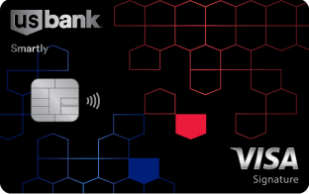
The U.S. Bank Smartly™ Visa Signature® Credit Card ranks first because its unlimited 2% cash-back floor is competitive even before relationship rewards enter the picture. Cardholders who pair it with a Smartly Savings account and qualifying balances in eligible Smartly Checking and/or Safe Debit accounts can raise the total return on the first $10,000 of eligible net purchases per billing cycle to 2.5% with $10,000 to $49,999.99 in qualifying balances, 3% with $50,000 to $99,999.99, or 4% with $100,000 or more. Those rates are compelling for customers who already keep substantial cash at U.S. Bank, but moving money solely for card rewards requires a broader comparison of deposit yields, fees, liquidity and opportunity cost. The card charges no annual fee and provides a 0% introductory APR on purchases and qualifying balance transfers for 12 billing cycles, which gives it both earning and short-term financing value. Transfers must meet the promotional deadline and carry a 5% fee with a $5 minimum. A 3% foreign transaction fee also means Altitude Connect is usually the better U.S. Bank card outside the United States. Smartly’s real advantage is simplicity at the base level: a cardholder who never qualifies for a relationship tier still earns a predictable 2% on eligible purchases. Its weakness is that the advertised maximum is not a universal flat rate and excluded categories may earn only the base amount.
U.S. Bank Smartly Visa Signature Card Facts Table
| Feature | Details |
| Credit Card Issuer | U.S. Bank National Association |
| Payment Network | Visa Signature |
| Card Type | 0% Intro APR – Cash Back Rewards Credit Card |
| Recommended Credit | Good Credit to Excellent Credit Score (690-850) |
| Annual Fee | $0 |
| Welcome Bonus | No standard public welcome bonus |
| Base Rewards | Unlimited 2% cash back equivalent on eligible purchases |
| Relationship Rewards | Up to 4% total cash back on first $10,000 in eligible net purchases each billing cycle |
| 2.5% Tier | $10,000–$49,999.99 qualifying balance |
| 3% Tier | $50,000–$99,999.99 qualifying balance |
| 4% Tier | $100,000+ qualifying balance |
| Intro Purchase APR | 0% for first 12 billing cycles |
| Intro Balance Transfer APR | 0% for first 12 billing cycles on qualifying transfers made within 60 days |
| Regular APR | 18.24%–28.24% variable APR |
| Balance Transfer Fee | 5% of each transfer, $5 minimum |
| Foreign Transaction Fee | 3% |
| Best For | U.S. Bank customers seeking high flat-rate cash back |
| Notable Benefit | Potential 4% cash back on broad everyday spending |
| Security Deposit | None |
Why the U.S. Bank Smartly Card Ranks First
Smartly earns the top position because it offers a strong result to two different audiences without charging an annual fee. A reader who wants uncomplicated rewards receives an unlimited 2% base return, while an established U.S. Bank customer can potentially earn more on a meaningful amount of monthly spending. The card does not force quarterly category activation and includes a useful 12-cycle introductory APR. It is not perfect: the higher tiers require deposit commitments, the relationship bonus is capped by billing-cycle spend and the foreign transaction fee reduces international value. Even so, its combination of a solid floor, exceptional relationship upside and manageable cost makes it the best overall U.S. Bank credit card for 2026.
2. U.S. Bank Cash+® Visa Signature® Credit Card – Best for Customizable Cash Back
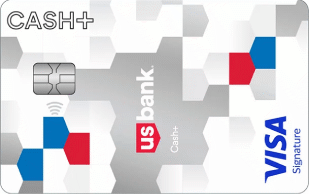
The U.S. Bank Cash+® Visa Signature® Credit Card is one of the most flexible no-annual-fee category cards because cardholders select two 5% cash-back categories and one 2% everyday category each quarter. The 5% rate applies to the first $2,000 in combined eligible purchases in the two selected categories, after which those purchases generally earn 1%; the chosen 2% category and 1% base category do not have the same published quarterly cap. Options can include home utilities, TV, internet and streaming, cell phone providers, department stores, electronics, gyms, furniture, ground transportation, fast food and other listed categories, while the everyday selection can include groceries, restaurants or gas and EV charging. This makes Cash+ unusually good for recurring household bills that many competing cards treat as ordinary spending. The tradeoff is administration: cardholders must choose and activate categories each quarter, merchants must code correctly, and purchases at discount stores, supercenters or wholesale clubs may not qualify for elevated grocery or gas rewards. At review time, the card advertised a limited-time $250 bonus after $1,000 in eligible purchases within 90 days, a $0 annual fee and 0% introductory APR on purchases and balance transfers for 15 billing cycles. Cash+ also earns 5% on eligible prepaid air, hotel and car reservations booked through the U.S. Bank Travel Center. A 3% foreign transaction fee makes it a domestic rewards card rather than a travel companion.
U.S. Bank Cash+ Visa Signature Card Facts Table
| Feature | Details |
| Credit Card Issuer | U.S. Bank National Association |
| Payment Network | Visa Signature |
| Reward Type | Cash-Back Rewards Credit Card |
| Recommended Credit | Good Credit to Excellent Credit Score (690-850) |
| Annual Fee | $0 |
| Rewards | 5% selected categories; 2% selected everyday category; 5% qualifying prepaid Travel Center bookings; 1% other eligible purchases |
| Welcome Bonus | $200 after $1,000 in eligible purchases within 90 days |
| Intro APR | 0% for 15 billing cycles on purchases and qualifying balance transfers |
| Regular APR | 17.74%–27.99% Variable |
| Balance Transfer Fee | 5% of each transfer or $5 minimum, whichever is greater |
| Foreign Transaction Fee | 3% of each foreign transaction |
| Best For | Consumers who can maximize customizable household spending categories |
| Notable Benefits | Custom 5% categories, $0 annual fee, introductory APR, Travel Center rewards and flexible redemptions |
Why the U.S. Bank Cash+ Card Ranks Second
Cash+ ranks second because an organized household can earn 5% on spending that is often difficult to bonus, especially home utilities, internet, streaming or cell phone service. The current welcome bonus and 15-cycle introductory APR strengthen first-year value without introducing an annual fee. It falls just behind Smartly because its best return requires quarterly decisions and is limited to $2,000 of combined 5% spending each quarter, while non-bonus purchases earn only 1%. Readers who enjoy optimizing categories may reasonably prefer Cash+ as their primary household-bills card, but those seeking one-card simplicity will usually get a more consistent result from Smartly.
3. U.S. Bank Altitude® Connect Visa Signature® Credit Card — Best No-Annual-Fee Travel Card
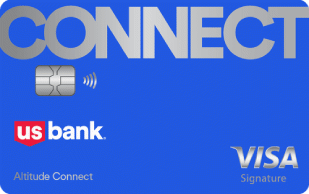
The U.S. Bank Altitude® Connect Visa Signature® Credit Card is the strongest travel-focused personal card in the current U.S. Bank lineup for readers who refuse to pay an annual fee. It earns 5X points on prepaid hotels and car rentals booked directly through the U.S. Bank Travel Center, 4X on eligible travel, 4X at gas stations and EV charging stations on the first $1,000 in combined qualifying purchases each quarter, 2X on dining, streaming and grocery purchases, and 1X on other eligible spending. The breadth makes it useful before, during and after a trip, although the Travel Center requirement for 5X rewards and the quarterly cap on gas or EV charging require attention. At review time, new cardholders could earn 20,000 bonus points after $1,000 in eligible net purchases within 90 days. The card also offered 0% introductory APR on purchases and qualifying balance transfers for 15 billing cycles, followed by a variable ongoing APR. Most importantly for international use, Altitude Connect does not charge a foreign transaction fee. Redemption values can vary by option, so points should not automatically be treated as equal to cash without checking current program rules. Travelers who prefer a premium airport-lounge experience may want a different product, but for cost-conscious users who want a practical mix of travel, gas, grocery, dining and streaming rewards, Altitude Connect provides an unusually complete package at a $0 annual price.
U.S. Bank Altitude Connect Visa Signature Card Facts Table
| Feature | Details |
| Credit Card Issuer | U.S. Bank National Association |
| Payment Network | Visa Signature |
| Rewards Type | Travel Rewards Credit Card |
| Recommended Credit | Good Credit to Excellent Credit Score (690-850) |
| Annual Fee | $0 |
| Welcome Bonus | 20,000 points after $1,000 in eligible net purchases within 90 days |
| Rewards | 5X prepaid hotels and car rentals through the Travel Center; 4X travel; 4X gas/EV charging on first $1,000 per quarter; 2X dining, grocery stores and eligible streaming; 1X other purchases |
| Intro Purchase APR | 0% for first 15 billing cycles |
| Intro Balance Transfer APR | 0% for first 15 billing cycles on qualifying transfers made within 60 days |
| Regular APR | 17.49%–27.49% variable APR |
| Balance Transfer Fee | 5% of each transfer, $5 minimum |
| Foreign Transaction Fee | $0 |
| Airport Lounge Benefit | Priority Pass Select membership with four complimentary visits per membership year |
| TSA PreCheck/Global Entry Benefit | Eligible application-fee statement credit |
| Best For | Travelers, commuters, road trips, international purchases and consumers seeking travel perks without an annual fee |
| Notable Benefits | Travel protections, lounge access, security-program reimbursement, Real-Time Rewards and no foreign transaction fees |
Why the U.S. Bank Altitude Connect Card Ranks Third
Altitude Connect ranks third because it solves the most common objection to travel rewards cards—the annual fee—while still rewarding travel, fuel, dining, groceries and streaming. Its lack of a foreign transaction fee gives it a clear advantage over Cash+ and Altitude Go when purchases are made abroad. The 20,000-point bonus is attainable for many households, and a 15-cycle introductory APR adds flexibility. It remains behind the two leading cash-back cards because point values vary, the 5X rate requires U.S. Bank Travel Center bookings and the 4X gas or EV category is capped each quarter. For frequent but value-conscious travelers, however, it is the best U.S. Bank travel card currently available without a yearly charge.
4. U.S. Bank Altitude® Go Visa Signature® Credit Card – Best for Dining and Streaming

The U.S. Bank Altitude® Go Visa Signature® Credit Card is designed for consumers whose largest discretionary expense is food. It earns 4X points on dining, takeout and restaurant delivery on the first $2,000 in qualifying purchases each quarter, followed by the base rate, plus 2X at eligible grocery stores, gas stations, EV charging stations and streaming services and 1X on other eligible purchases. That quarterly dining cap is generous enough for many individuals and couples but can constrain large families or frequent business diners, who should estimate actual quarterly restaurant spend before assuming every meal earns 4X. The card also offers a $15 annual streaming-service statement credit after qualifying purchases, which is modest but easy to value. At review time, the welcome offer was 20,000 points after $1,000 in eligible net purchases within 90 days, and the card charged no annual fee. A 0% introductory APR on purchases and balance transfers for 15 billing cycles makes it useful for planned expenses as long as the balance is repaid before the promotion ends and any transfer fee is included in the calculation. The principal drawback is a 3% foreign transaction fee, an awkward limitation for a card that might otherwise appeal to travelers dining abroad. Altitude Go is therefore best used as a domestic food-and-entertainment card paired with Altitude Connect or another no-foreign-fee card for international trips.
U.S. Bank Altitude Go Visa Signature Card Facts Table
| Feature | Details |
| Credit Card Issuer | U.S. Bank National Association |
| Payment Network | Visa Signature |
| Card Type | Balance Transfer Credit Card – Dining and Everyday Rewards Credit Card |
| Recommended Credit | Good Credit to Excellent Credit Score (690-850) |
| Annual Fee | $0 |
| Welcome Bonus | 20,000 bonus points after $1,000 in eligible purchases within 90 days |
| Dining Rewards | 4X points on first $2,000 in qualifying restaurant, fast-food restaurant and bar purchases each quarter |
| Grocery Rewards | 2X points at qualifying grocery stores and supermarkets |
| Gas / EV Rewards | 2X points at qualifying gas stations and EV charging stations |
| Streaming Rewards | 2X points on qualifying streaming services |
| Other Purchases | 1X point per $1 |
| Streaming Credit | $15 after meeting consecutive eligible streaming-purchase requirements |
| Intro Purchase APR | 0% for first 15 billing cycles |
| Intro Balance Transfer APR | 0% for first 15 billing cycles on qualifying transfers made within 60 days |
| Regular APR | 17.49%–27.49% variable |
| Balance Transfer Fee | 5% of transfer amount, $5 minimum |
| Foreign Transaction Fee | 3% |
| Best For | Dining-focused consumers seeking rewards without an annual fee |
Why the U.S. Bank Altitude Go Card Ranks Fourth
Altitude Go earns fourth place by delivering a focused, high-value dining category without an annual fee. Its bonus is easier to earn than many premium-card offers, and 2X grocery, fuel and streaming categories make the card useful beyond restaurants. The annual streaming credit adds a small predictable return. Altitude Connect ranks higher because it has broader travel utility and no foreign transaction fee, while Smartly and Cash+ can be stronger all-purpose earners. Still, a consumer who spends less than $2,000 per quarter on dining and wants simple domestic food rewards may find Altitude Go more rewarding than every card above it for that specific spending pattern.
5. U.S. Bank Shield® Visa® Credit Card – Best for Balance Transfers and Long Introductory APR

The U.S. Bank Shield® Visa® Credit Card is a financing tool first and a rewards card second. Its defining feature at the time of review was a 0% introductory APR on both purchases and eligible balance transfers for the first 21 billing cycles, after which a 16.99% to 27.99% variable APR applied. Transfers had to be completed within the specified introductory window, carried a 5% fee with a $5 minimum and could not be used to pay another U.S. Bank account. The fee means a transfer should be compared with the interest that would otherwise accrue; on a large high-APR balance, the savings can still be substantial if the debt is eliminated before the promotion ends. Shield has no annual fee and includes 4% cash back on prepaid air, hotel and car reservations booked through the U.S. Bank Travel Center. It also offers a $20 annual statement credit after 11 consecutive calendar months of qualifying purchases, along with protections that may include cell phone coverage, purchase security, extended warranty and auto rental collision damage waiver under their respective terms and exclusions. Those extras are welcome, but Shield is not built for everyday reward maximization. The ideal applicant has a defined purchase or debt-paydown plan, divides the amount by the promotional billing cycles and automates a payment large enough to finish on schedule without adding unnecessary new charges.
U.S. Bank Shield Visa Card Facts Table
| Feature | Details |
| Credit Card Issuer | U.S. Bank National Association |
| Payment Network | Visa Signature |
| Card Type | 0% Intro APR – Balance Transfer – Low Interest Card |
| Recommended Credit | Good Credit to Excellent Credit Score (690-850) |
| Annual Fee | $0 |
| Welcome Bonus | No Traditional Cash or Points Bonus |
| Intro Purchase APR | 0% for 21 Billing Cycles |
| Intro Balance Transfer APR | 0% for 21 Billing Cycles on Qualifying Transfers |
| Regular APR | 16.99%–27.99% Variable APR |
| Balance Transfer Fee | 5% of Each Transfer, $5 Minimum |
| Travel Rewards | 4% Cash Back on Eligible Prepaid Travel Center Reservations |
| Annual Statement Credit | $20 After 11 Consecutive Months of Purchases |
| Cell Phone Protection | Up to $600 on Eligible Damage or Theft |
| ExtendPay Benefit | Eligible 3-Month $0-Fee Plan Opportunity Annually After Intro APR |
| Foreign Transaction Fee | 3% |
| Best For | Long-Term 0% APR Financing and Balance Transfers |
Why the U.S. Bank Shield Card Ranks Fifth
Shield ranks fifth overall but first for balance transfers because its 21-billing-cycle introductory period can produce more concrete value than rewards when a cardholder is replacing expensive debt. It has no annual fee and retains a small travel earning feature plus several protections, so it is not entirely bare after the promotion. Its position is lower than the leading rewards cards because it lacks a conventional welcome bonus and offers little everyday earning outside Travel Center bookings. The card is excellent when paired with a disciplined payoff schedule, but it becomes expensive if a balance remains after the promotional period and the assigned variable APR begins.
6. U.S. Bank Triple Cash Rewards Visa® Business Credit Card – Best for Small-Business Cash Back
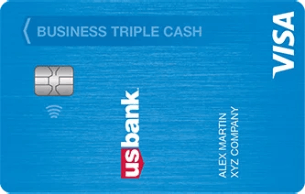
The U.S. Bank Triple Cash Rewards Visa® Business Credit Card is the most approachable business rewards option in this ranking because it combines a $0 annual fee with elevated cash back in categories that many small companies use every month. It earns 3% cash back on eligible purchases at office supply stores, cell phone service providers and restaurants, plus gas and EV charging transactions of $200 or less, and 1% on other eligible net purchases. Wholesale clubs, supercenters and certain merchants may not code as eligible, so a business should review its transaction history rather than relying on store names. The card also offers a $100 annual statement credit for recurring eligible software subscriptions such as qualifying accounting platforms after the required sequence of monthly purchases. At review time, the welcome offer was $750 cash back after $6,000 in eligible net purchases on the Account Owner’s card within 180 days, a threshold that allows more time than many 90-day offers. The online promotion also included 0% introductory APR on purchases and qualifying balance transfers for 12 billing cycles, with transfers generally required within 30 days and subject to a 5% fee with a $5 minimum. Free employee cards and U.S. Bank Spend Management features can help separate, monitor and categorize expenses. The card is strongest for service businesses with steady fuel, phone, restaurant and office-supply spending, but a flat-rate business card may win when most expenses fall outside those categories.
U.S. Bank Triple Cash Rewards Visa Business Card Facts Table
| Feature | Details |
| Credit Card Issuer | U.S. Bank National Association |
| Payment Network | Visa |
| Reward Type | Business Cash Back Rewards |
| Recommended Credit | Good Credit to Excellent Credit Score (690-850) |
| Annual Fee | $0 |
| Employee Card Fee | $0 |
| Welcome Bonus | $750 cash back after $6,000 in eligible Account Owner purchases within 180 days |
| Maximum Reward Rate | 5% cash back |
| Travel Center Rewards | 5% on eligible prepaid hotels and car rentals |
| Business Bonus Categories | 3% at eligible gas/EV charging stations, office supply stores, cell phone service providers and restaurants |
| Other Purchases | 1% cash back |
| Rewards Limit | No overall limit on total cash back earned |
| Software Credit | $100 per 12-month period after qualifying recurring software purchases |
| Intro Purchase APR | 0% for 12 billing cycles |
| Intro Balance Transfer APR | 0% for 12 billing cycles |
| Regular APR | 17.24%–26.24% variable APR |
| Balance Transfer Fee | 5% of each transfer, $5 minimum |
| Foreign Transaction Fee | 3% |
| Expense Management | U.S. Bank Spend Management |
| Best For | Small businesses spending on office supplies, gas, cell service, restaurants and software |
Why the U.S. Bank Triple Cash Business Card Ranks Sixth
Triple Cash is the highest-ranked business card because it has no annual fee, a sizable but attainable bonus window and recognizable bonus categories for ordinary operating expenses. The annual software credit can further improve value for a company that already uses an eligible recurring service. It ranks below the five leading consumer cards only because business eligibility narrows its audience and non-category expenses earn 1%. Compared with Business Altitude Power, Triple Cash is easier to justify for a smaller operation because it avoids a $195 yearly charge and requires $4,000 less spending to earn its introductory bonus.
7. U.S. Bank Business Altitude® Power Visa Signature® Credit Card – Best for High-Spend Business Rewards
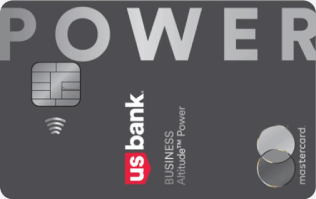
The U.S. Bank Business Altitude® Power Visa Signature® Credit Card is built for companies that want strong rewards on varied expenses rather than monitoring several merchant categories. It earns an unlimited 2X points on eligible net purchases, 2.5X on the first $5,000 in combined mobile-wallet and virtual-card purchases each quarter, and 6X on prepaid hotel and car rentals booked directly through the U.S. Bank Travel Center. The 2X base rate is the central attraction because inventory, professional services, equipment and other purchases that often miss category bonuses still earn more than a typical 1X baseline. New accounts could earn 75,000 bonus points—advertised as up to a $750 value—after $10,000 in eligible purchases on the Account Owner’s card within 120 days. That is a valuable offer, but only if the business can reach the threshold through planned expenses and pay responsibly. The $195 annual fee creates a break-even test and makes this the only card in the ranking with a confirmed substantial yearly price. Offsetting features include no foreign transaction fee, U.S. Bank Spend Management, point transfers among eligible personal and business Altitude cards, and a Priority Pass Digital annual membership subject to program terms and possible visit charges. Redemption values vary, and current public application disclosures should be checked for APR details. For a high-spend firm that values simple 2X earning, centralized controls and travel benefits, the annual fee can be justified; for a low-spend sole proprietor, Triple Cash is usually the safer choice.
U.S. Bank Business Altitude Power Visa Signature Card Facts Table
| Feature | Details |
| Credit Card Issuer | U.S. Bank National Association |
| Payment Network | Visa Signature |
| Reward Type | Business Rewards Credit Card |
| Recommended Credit | Good Credit to Excellent Credit Score (690-850) |
| Annual Fee | $195 |
| Employee Card Fee | $0 |
| Welcome Bonus | 75,000 points after $10,000 in eligible Account Owner net purchases within 120 days |
| Maximum Welcome Bonus Value | Up to approximately $750 depending on redemption |
| Base Rewards | Unlimited 2X points on eligible purchases |
| Mobile Wallet/Virtual Card Rewards | 2.5X on first $5,000 in combined qualifying purchases each quarter |
| Travel Center Rewards | 6X on eligible prepaid hotels and car rentals |
| Foreign Transaction Fee | $0 |
| Intro Purchase APR | None |
| Intro Balance Transfer APR | None |
| Regular APR | 18.24%–25.24% variable APR |
| Balance Transfer Fee | Generally 5%, $5 minimum |
| Airport Lounge Benefit | Priority Pass Digital annual membership |
| Expense Management | U.S. Bank Spend Management |
| Real-Time Rewards | Yes |
| Point Transfers | Between eligible U.S. Bank Altitude cards |
| Best For | High-spending businesses wanting simple 2X rewards and travel benefits |
Why the U.S. Bank Business Altitude Power Card Ranks Seventh
Business Altitude Power ranks seventh because its unlimited 2X base rate and 75,000-point offer can generate excellent value, but both the $195 annual fee and $10,000 spending requirement demand meaningful business scale. It is the best U.S. Bank card here for a company with diverse expenses that do not consistently fit Triple Cash categories, especially when mobile-wallet, virtual-card or Travel Center purchases add more points. No foreign transaction fee improves its international usefulness. Its audience is narrower than the no-fee consumer and small-business choices above it, yet among established companies seeking uncomplicated points and expense-management features, it can be the lineup’s strongest long-term earner.
8. U.S. Bank Business Shield™ Visa® Credit Card – Best for Business Financing
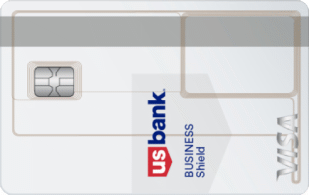
The U.S. Bank Business Shield™ Visa® Credit Card is designed for business owners who place cash-flow flexibility ahead of a large welcome bonus. The online offer reviewed provided 0% introductory APR on purchases and eligible balance transfers for 12 billing cycles, with balance transfers generally required within 30 days and a 5% fee with a $5 minimum. U.S. Bank has also promoted longer branch-based introductory periods at times, so applicants should compare the actual branch and digital disclosures rather than assuming the offers match. The card charges no annual fee for the account owner or employee cards and adds business-oriented controls through U.S. Bank Spend Management. It earns 5% cash rewards on prepaid airfare, hotel and car reservations booked directly through the U.S. Bank Travel Center and provides a $50 annual statement credit after $5,000 in qualifying Travel Center purchases during the applicable 12-month account period. Purchase security and other Visa benefits can add protection, subject to exclusions and coverage requirements. The weakness is everyday earning: outside eligible Travel Center bookings, this is not positioned as a general cash-back powerhouse. It is most useful for a company with a specific inventory, equipment or launch expense that can be paid off during the introductory period, or for moving eligible high-interest debt from another issuer. The card should not be used to postpone an expense that the business has no realistic plan to repay before its variable APR begins.
U.S. Bank Business Shield Visa Card Facts Table
| Feature | Details |
| Credit Card Issuer | U.S. Bank National Association |
| Payment Network | Visa Signature |
| Reward Type | 0% Intro APR – Business Credit Card |
| Card Type | Good Credit to Excellent Credit Score (690-850) |
| Annual Fee | $0 |
| Employee Card Annual Fee | $0 |
| Online Intro Purchase APR | 0% for 12 Billing Cycles |
| In-Branch Intro Offer | Up to 18 Billing Cycles |
| Intro Balance Transfer APR | 0% on Qualifying Transfers |
| Regular APR | 16.24%–25.24% Variable |
| Balance Transfer Fee | 5% of Transfer, $5 Minimum |
| Travel Rewards | 5% Cash Back on Eligible Travel Center Bookings |
| Annual Travel Credit | $50 After $5,000 in Qualifying Travel Center Purchases |
| Business Management Tools | U.S. Bank Spend Management |
| Purchase Protection | Purchase Security on Eligible Purchases |
| Installment Feature | U.S. Bank ExtendPay® |
| Traditional Welcome Bonus | None Currently Advertised |
| Best For | Small Businesses Seeking Intro APR Financing |
Why the U.S. Bank Business Shield Card Ranks Eighth
Business Shield takes eighth place because its best value is temporary but potentially substantial. A company with a reliable 12-cycle payoff plan can conserve cash and avoid introductory interest without paying an annual fee, while employee cards and Spend Management help control purchases. It trails Triple Cash and Business Altitude Power for ongoing rewards because the 5% rate is limited to eligible Travel Center bookings and no standard cash welcome bonus was advertised. The possibility of a different branch promotion is useful but also adds complexity. For disciplined financing, it is the top U.S. Bank business choice; for routine paid-in-full spending, one of the two business rewards cards above it is usually better.
9. U.S. Bank Split™ World Mastercard® Credit Card – Best for Automatic Installment Payments
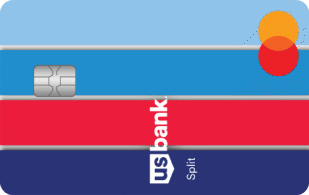
The U.S. Bank Split™ World Mastercard® Credit Card is fundamentally different from a conventional revolving rewards card. Every posted purchase is placed into a payment Plan: purchases of $100 or more are automatically divided into three payments across three billing cycles with no Plan Fee and no interest, while purchases under $100 are combined into a Small Purchase Plan and likewise split into three payments. Before the billing cycle closes, an eligible purchase of at least $100 can be extended to six or 12 months in online banking or the U.S. Bank Mobile App for a fixed monthly Plan Fee disclosed when the extension is selected. Small Purchase Plans cannot be extended, and a Plan generally cannot be shortened or canceled unless its balance is paid off. This predictable structure may appeal to consumers who want mandatory installment discipline for every purchase, but it sacrifices the flexibility of choosing which transactions to finance after the fact. The card offers no rewards or standard welcome bonus, and its pricing should be evaluated through Plan fees and other disclosed account charges rather than a typical revolving purchase APR. The official public page does not consistently surface every fee before the application flow, so applicants should verify the annual fee, foreign transaction fee, late fee and complete payment calculation in the current disclosure. Split is not a substitute for budgeting: multiple overlapping plans can create a large combined minimum payment, and automatic three-cycle repayment can be aggressive for major purchases.
U.S. Bank Split World Mastercard Card Facts Table
| Feature | Details |
| Credit Card Issuer | U.S. Bank National Association |
| Payment Network | Mastercard |
| Reward Type | Cash Back Rewards Credit Card |
| Recommended Credit | Good Credit to Excellent Credit Score (690-850) |
| Annual Fee | $0 |
| Traditional Purchase APR | None |
| Standard 3-Month Plan | No Interest and No Plan Fee |
| Extended Plans | 6 or 12 Months |
| Extended Plan Cost | Fixed Monthly Plan Fee |
| Purchases $100+ | Automatically Placed Into Individual 3-Month Plans |
| Purchases Under $100 | Combined Into a Small Purchase Plan |
| Rewards Program | No Traditional Cash-Back, Points or Miles Program |
| Welcome Bonus | None Currently Advertised |
| Best For | Consumers Seeking Automatic Structured Installment Payments |
| Account Management | U.S. Bank Online Banking and Mobile App |
Why the U.S. Bank Split Card Ranks Ninth
Split ranks ninth because it is innovative but intentionally narrow. Automatic fee-free, interest-free three-payment plans can make cash flow more predictable, and longer Plan options provide flexibility for eligible purchases. However, the lack of rewards, the inability to opt out of Plan treatment for individual purchases and the potential for several plans to stack into a demanding monthly payment limit its appeal. The card is best for someone who understands installment accounting and wants enforced short repayment periods, not a consumer seeking cash back or a traditional revolving balance. Its unusual structure earns a place in the top ten, but most readers will receive broader value from the cards ranked above it.
10. U.S. Bank Cash+® Secured Visa® Credit Card – Best for Building Credit With Rewards
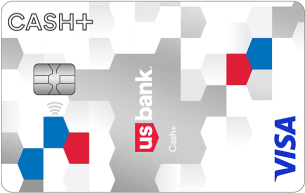
The U.S. Bank Cash+® Secured Visa® Credit Card brings an unusually capable rewards structure to consumers who are building or rebuilding credit. Approval requires a refundable security deposit from $300 to $5,000, and the resulting credit limit generally matches the deposit held in a secured savings account. The card has a $0 annual fee and earns 5% cash back on the first $2,000 in combined eligible quarterly purchases in two selected categories, 2% in one selected everyday category and 1% on other eligible purchases. It can also earn 5% on eligible prepaid air, hotel and car reservations booked through the U.S. Bank Travel Center. As with the unsecured Cash+ card, the cardholder must select and activate categories, the quarterly cap matters, and merchant coding can determine whether a purchase earns the expected rate. U.S. Bank reports account activity to the three major credit bureaus and periodically monitors the account; responsible use may eventually lead to automatic graduation to the unsecured Cash+ Visa Signature Card and return of the security deposit. There is no standard welcome bonus or public introductory APR, and applicants should read the current application disclosure for the variable APR, balance-transfer and foreign transaction pricing. Because the primary goal is credit building, the ideal routine is small recurring charges, low utilization and full on-time payment—not spending more merely to collect cash back.
U.S. Bank Cash+ Secured Visa Card Facts Table
| Feature | Details |
| Credit Card Issuer | U.S. Bank National Association |
| Payment Network | Visa |
| Reward Type | Credit Build Credit Card |
| Recommended Credit | Poor Credit to Fair Credit Score (300-669) |
| Best For | Building or rebuilding credit while earning customizable cash back |
| Annual Fee | $0 |
| Security Deposit | $300–$5,000 |
| Credit Limit | Generally equal to refundable security deposit |
| Welcome Bonus | No standard public welcome bonus |
| Maximum Rewards Rate | 5% cash back |
| 5% Categories | Two eligible categories selected each quarter |
| 5% Spending Limit | First $2,000 in combined eligible purchases each quarter |
| 2% Rewards | One selected everyday category |
| Base Rewards | 1% cash back |
| Travel Center Rewards | 5% on eligible prepaid air, hotel and car reservations |
| Credit Bureau Reporting | Three major credit bureaus |
| Potential Upgrade | U.S. Bank Cash+® Visa Signature® Card |
| Rewards Redemption Minimum | Generally begins at $25 |
| Credit Profile | Limited, developing or rebuilding credit |
| Regular APR | Variable APR disclosed with the current application offer |
| Intro APR | No standard public introductory APR promoted |
| Foreign Transaction Fee | Review current application disclosure before international use |
Why the U.S. Bank Cash+ Secured Card Ranks Tenth
Cash+ Secured ranks tenth only because it requires a deposit and targets a narrower credit-building audience, not because its reward design is weak. In fact, few secured cards let users choose two 5% categories while charging no annual fee. Reporting to all three major bureaus and possible graduation to unsecured Cash+ give the card a clear long-term purpose. It is the best ranked U.S. Bank option for someone who cannot yet qualify for a competitive unsecured product, provided the deposit is affordable and payments are always made on time. For an applicant with established good credit, the unsecured Cash+ avoids tying up cash and adds a welcome bonus and introductory APR.
10 Best Rated U.S Bank Credit Cards in 2026 Comparison Table
| Credit Card | Intro Offer | Reward Rate | Annual Fee | Intro APR | Regular APR |
| U.S. Bank Smartly™ Visa Signature® Card | No public cash bonus | 2% base; up to 4% total with qualifying relationship | $0 | 0% on purchases and balance transfers for 12 billing cycles | 18.24%–28.24% variable |
| U.S. Bank Cash+® Visa Signature® Card | $250 after $1,000 in eligible purchases in 90 days | 1%–5% cash back | $0 | 0% on purchases and balance transfers for 15 billing cycles | 17.74%–27.99% variable |
| U.S. Bank Altitude® Connect Visa Signature® Card | 20,000 points after $1,000 in 90 days | 1X–5X points | $0 | 0% on purchases and balance transfers for 15 billing cycles | 17.49%–27.49% variable |
| U.S. Bank Altitude® Go Visa Signature® Card | 20,000 points after $1,000 in 90 days | 1X–4X points | $0 | 0% on purchases and balance transfers for 15 billing cycles | 17.49%–27.49% variable |
| U.S. Bank Shield® Visa® Card | No standard cash bonus | 4% cash back on eligible Travel Center bookings | $0 | 0% on purchases and balance transfers for 21 billing cycles | 16.99%–27.99% variable |
| U.S. Bank Triple Cash Rewards Visa® Business Card | $750 after $6,000 in 180 days | 1%–3% cash back | $0 | 0% on purchases and balance transfers for 12 billing cycles | Variable APR; verify application disclosure |
| U.S. Bank Business Altitude® Power Visa Signature® Card | 75,000 points after $10,000 in 120 days | 2X–6X points | $195 | No broadly advertised intro APR | Variable APR; verify application disclosure |
| U.S. Bank Business Shield™ Visa® Card | No standard cash bonus | 5% cash back on eligible Travel Center bookings | $0 | 0% on purchases and balance transfers for 12 billing cycles online | Variable APR; verify application disclosure |
| U.S. Bank Split™ World Mastercard® | No standard bonus | No rewards | Verify current application disclosure | Purchases automatically use three-payment plans with no Plan Fee or interest | Plan-based pricing; longer plans have a disclosed fixed monthly fee |
| U.S. Bank Cash+® Secured Visa® Card | No standard bonus | 1%–5% cash back | $0; $300–$5,000 refundable security deposit | No public intro APR | Variable APR; verify application disclosure |
How to Choose the Best U.S. Bank Credit Card for Your Spending
Start by giving the card one primary job and calculating value from actual spending rather than headline percentages. A consumer who wants one simple card should compare Smartly’s 2% base rate with the deposit relationship required for higher tiers. A household that can direct utilities, streaming, cell phone or other eligible bills into selected categories may earn more with Cash+, but should confirm that quarterly activation is realistic. Frequent domestic diners should calculate whether their spending remains under Altitude Go’s $2,000 quarterly 4X cap, while travelers should prioritize Altitude Connect’s no-foreign-fee structure and understand which bookings require the Travel Center. Borrowers should ignore welcome bonuses until they have compared Shield’s transfer fee, promotional deadline and monthly payoff requirement with their current interest expense. Business owners should separate personal and company purchases, identify whether expenses fall into Triple Cash categories, and decide whether Business Altitude Power’s 2X base rewards offset its $195 annual fee. Credit builders should focus on deposit affordability, bureau reporting and on-time payments with Cash+ Secured. In every case, compare the official application’s current APR, fees and bonus terms, and avoid applying simply because a card ranks highly for a different type of user.
U.S. Bank Personal Credit Cards Versus U.S. Bank Business Credit Cards
Personal and business U.S. Bank cards can share rewards technology, but they serve different accounting and underwriting purposes. A personal card is intended for household spending and is evaluated primarily through the applicant’s consumer credit and income. A business card asks for information about the company—such as legal structure, revenue, industry, formation date, Employer Identification Number when applicable and beneficial owners—and may still require a personal guarantee or personal credit review. Triple Cash, Business Altitude Power and Business Shield can simplify employee purchasing through additional cards, controls, receipt capture, transaction tagging and accounting integration, making them more useful than a personal card for operating expenses. Their welcome offers also assume higher business spending: $6,000 in 180 days for Triple Cash and $10,000 in 120 days for Business Altitude Power. A sole proprietor may be eligible for a business card even without a large corporation, but should provide accurate information and use the card for legitimate business activity. Rewards are generally not worth mixing household and company transactions if doing so complicates bookkeeping, substantiation or cash-flow management. The right comparison is therefore not merely which card earns more, but which account structure supports clean records, affordable repayment and appropriate controls.
How to Apply or Check for U.S. Bank Credit Card Preapproval
The safest application sequence is to identify one or two suitable cards, review each official terms page and use a U.S. Bank preapproval tool when it is offered. U.S. Bank advertises the ability to check preapproval for certain personal products without affecting the consumer’s credit score, but a preapproved result is not a final approval, does not guarantee the displayed credit limit and may not be available for every card. A completed application can involve a hard credit inquiry and requires accurate identity, housing, income and employment information. Business applicants should prepare company revenue, address, industry, ownership and tax-identification details, as well as personal information for the authorized officer and qualifying owners. Before submitting, applicants should verify that the welcome offer shown in the application matches the offer they intend to accept, especially when a limited-time bonus or branch-only promotion is involved. They should also review balance-transfer deadlines, because requesting a transfer after the allowed window can forfeit the introductory rate. Applying for several cards close together can increase inquiries and reduce approval odds, so a targeted application based on credit profile and purpose is generally more effective than submitting multiple speculative applications.
What Credit Score Is Needed for a U.S. Bank Credit Card?
U.S. Bank states that its general unsecured credit card products are usually intended for customers in the good-to-excellent credit range, but it does not promise approval at a single score and evaluates more than the number shown by a consumer app. A FICO score around 670 or higher is commonly considered “good” in general credit education, yet approval can still depend on income, existing debt, utilization, recent inquiries, account history, payment behavior, identity verification and the specific product. Premium or high-limit business products may require a stronger overall profile and sufficient business capacity. Consumers with limited or damaged credit should consider Cash+ Secured, Altitude Go Secured or the basic U.S. Bank Secured Visa rather than repeatedly applying for unsecured cards. A secured card still requires approval and a deposit, but responsible use can establish positive payment history and lower utilization over time. Before applying, review credit reports for errors, bring revolving balances down when possible, avoid unnecessary new inquiries and confirm that the expected card benefit justifies opening another account. The “recommended credit” entries in this article are editorial ranges, not U.S. Bank underwriting rules.
U.S. Bank Credit Card Annual Fees, Prices and Break-Even Value
Nine of the ten cards in this ranking either advertise a $0 annual fee or use a fee structure that must be confirmed in the current Split application; Business Altitude Power is the clear premium exception at $195 per year. A no-annual-fee card can still be costly through interest, balance-transfer fees, foreign transaction fees, late fees or installment Plan fees, so “free” should never be interpreted as costless. For Business Altitude Power, calculate the incremental value over a no-fee alternative: if the card earns 2X where Triple Cash would earn 1%, the additional point return on non-category spending must contribute enough value—together with the bonus, travel earning, Priority Pass access and operating tools—to exceed $195. For Smartly, the economic cost is different: the card itself is free, but maintaining balances to reach a higher tier can have an opportunity cost if the money could earn more elsewhere. Cash+ Secured has no annual fee, yet it ties up a $300 to $5,000 refundable deposit. Split’s longer plans disclose a fixed monthly fee at extension, making the repayment term itself part of the price. Readers should evaluate total annual and financing cost, not just the annual-fee row.
Best U.S. Bank Credit Card for Cash Back in 2026
The best U.S. Bank cash-back card for most readers is Smartly because unlimited 2% base cash back is easy to understand and competitive on mixed spending. It becomes especially powerful for an existing U.S. Bank customer who meets the relationship requirements without moving money solely to chase rewards: 2.5%, 3% or 4% total cash back on the first $10,000 of eligible net purchases each billing cycle can exceed many flat-rate alternatives. Cash+ can beat Smartly in selected categories, earning 5% on up to $2,000 in combined eligible purchases each quarter, so the best two-card strategy may be Cash+ for utilities, internet, streaming or other selected bills and Smartly for everything else. Triple Cash is the business cash-back leader for companies with frequent phone, office supply, restaurant and sub-$200 gas or EV transactions. Cash+ Secured is the best choice when building credit is the priority. The important distinction is realized return: a theoretical 5% category does not help when a cardholder forgets activation, exceeds the cap or shops at a merchant whose category code is excluded, while Smartly’s relationship return is only valuable if the qualifying account and balance conditions are actually met.
Best U.S. Bank Credit Card for Balance Transfers in 2026
The U.S. Bank Shield Visa Card is the strongest balance-transfer choice in this ranking because its online offer provided 0% introductory APR for 21 billing cycles on eligible transfers and purchases. That period can create meaningful savings, but only after including the 5% transfer fee and confirming that the transfer is completed within the promotional deadline. A $10,000 transfer, for example, may add a $500 fee before any repayment begins, so the borrower should compare that cost with the interest avoided and divide the new balance by the number of promotional billing cycles to set a target payment. Transfers from another U.S. Bank account are not permitted. Cash+, Altitude Connect and Altitude Go offered 15-cycle promotions, while Smartly, Triple Cash and online Business Shield offered 12 cycles at review time, making them secondary choices when rewards or business features matter alongside financing. No introductory offer makes debt disappear, and making only minimum payments can leave a large balance exposed to the regular variable APR after the promotion. The best balance-transfer strategy is a fixed payoff schedule, no avoidable new charges and automatic payments that protect the promotional terms.
Best U.S. Bank Credit Card for International Travel in 2026
Altitude Connect is the best personal U.S. Bank card in this ranking for international travel because it charges no foreign transaction fee, has no annual fee and earns bonus points across travel, gas or EV charging, dining, streaming and groceries. Its 5X rate on prepaid hotels and car rentals requires booking through the U.S. Bank Travel Center, while general eligible travel earns 4X, so travelers should compare portal price, flexibility and cancellation terms with direct bookings before chasing extra points. Business Altitude Power is the strongest business travel option because it also has no foreign transaction fee, offers 6X on eligible Travel Center hotel and car rentals and includes Priority Pass Digital membership, although its $195 annual fee and the membership’s specific access charges must be considered. Altitude Go, Cash+ and Smartly may charge foreign transaction fees even though they are useful domestically, which can erase rewards abroad. Travelers should also carry a backup card on a different network or from a different issuer, decline dynamic currency conversion when a merchant offers to charge in U.S. dollars, and review benefit guides for rental-car, trip or purchase coverage instead of assuming that a Visa Signature label guarantees identical protections on every product.
Final Verdict: Which U.S. Bank Credit Card Is Best in 2026?
The U.S. Bank Smartly Visa Signature Card is the best overall U.S. Bank credit card in 2026 because it offers a dependable unlimited 2% cash-back base, meaningful relationship upside, no annual fee and a useful introductory APR without requiring quarterly categories. The U.S. Bank Cash+ Visa Signature Card is the better choice for optimizers who can consistently use two selected 5% categories, while Altitude Connect is the strongest no-fee travel card and Altitude Go is the most focused dining option. Shield should be chosen for a carefully planned balance transfer or large purchase rather than ordinary rewards. Among business products, Triple Cash is the most accessible no-fee earner, Business Altitude Power fits high-spend companies that can justify $195, and Business Shield is a financing specialist. Split offers a distinctive automatic installment system but lacks broad rewards, and Cash+ Secured is the most compelling U.S. Bank path for building credit while earning cash back. No ranking replaces the applicant’s actual budget, credit profile or current disclosure. Choose the card whose earning categories and repayment structure match expenses already planned, verify all official terms immediately before applying, and pay the statement balance in full whenever an introductory financing strategy is not being used.