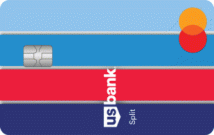

The U.S. Bank Split™ World Mastercard® Credit Card is an unconventional financing-focused credit card designed for consumers who prefer predictable installment payments instead of traditional revolving credit card debt. Rather than charging a conventional purchase APR and allowing cardholders to decide whether to carry a balance, the Split Card automatically converts purchases into payment Plans. Purchases of $100 or more are automatically divided into three monthly payments with no interest and no Plan Fee, while purchases below $100 made during the same billing cycle are combined into a Small Purchase Plan and similarly divided across three billing cycles. Eligible purchases of at least $100 can also be extended to six or 12 months for a fixed monthly Plan Fee. With a $0 annual fee, Mastercard acceptance, digital Plan management and World Mastercard benefits, the Split Card provides an unusual alternative to both traditional credit cards and standalone buy now, pay later services, although consumers give up conventional cash-back or travel rewards in exchange for its structured financing model.
- $0 Annual Fee
- No Interest on 3-Month Plans
- No Plan Fee on 3-Month Plans
- Automatic Installment Payments
- 6- and 12-Month Plan Options
- No Traditional Cash-Back Rewards
- No Points or Miles Program
- No Standard Welcome Bonus
- SLonger Plans Charge Monthly Plan Fees
- Small Purchase Plans Cannot Be Extended
Favorable Details:
- Automatic Three-Month Payment Plans: Every eligible purchase is automatically placed into a payment Plan, eliminating the need to manually convert transactions after making them.
- No Interest on Three-Month Plans: Standard three-month Plans do not charge traditional credit card interest, giving cardholders a predictable repayment structure.
- No Plan Fee on Three-Month Plans: Purchases automatically divided across three billing cycles are not subject to a Plan Fee.
- $0 Annual Fee: There is no annual membership fee to keep the account open.
- Extended Payment Options: Purchases of $100 or more can potentially be extended to six or 12 months when the cardholder needs additional repayment time.
- Predictable Monthly Payments: Structured installments can make budgeting easier than carrying an open-ended revolving credit card balance.
- Mastercard Acceptance: The Split Card can be used wherever Mastercard is accepted, providing broader usability than many merchant-specific buy now, pay later programs.
- Digital Plan Dashboard: U.S. Bank online banking and the mobile app allow cardholders to view and manage individual payment Plans.
- World Mastercard Benefits: Cardholders can receive eligible Mastercard World shopping, travel, entertainment and protection benefits.
- Pre-Approval Option: Prospective applicants may be able to check whether they are pre-approved before completing a full application.
Unfavorable Details:
- No Traditional Rewards Program: The Split Card is built primarily around financing rather than earning cash back, points or travel miles.
- No Standard Welcome Bonus: Consumers looking for a large introductory cash or points bonus will generally find more value from traditional rewards cards.
- Extended Plans Cost Money: Six- and 12-month Plans charge a fixed monthly Plan Fee, reducing the cost advantage compared with the free three-month option.
- Small Plans Cannot Be Extended: Purchases below $100 are grouped into a Small Purchase Plan at the end of the billing cycle and cannot be extended to six or 12 months.
- Plans Cannot Normally Be Shortened: Once a Plan duration is established, it generally cannot simply be changed to a shorter term, although the remaining Plan can be paid off.
- Every Purchase Is Automatically Split: Consumers who prefer paying individual purchases entirely on the next statement may find the automatic installment system unnecessary.
- Multiple Plans Can Accumulate: Frequent card use can create numerous overlapping Plans, potentially making future monthly obligations larger than expected.
- Limited Appeal for Rewards Enthusiasts: Consumers who pay every credit card balance in full and prioritize rewards can usually earn more value from a cash-back or travel card.
U.S. Bank Split™ World Mastercard® Credit Card Facts Table
| Feature | Details |
| Credit Card Issuer | U.S. Bank National Association |
| Payment Network | Mastercard |
| Reward Type | Cash Back Rewards Credit Card |
| Recommended Credit | Good Credit to Excellent Credit Score (690-850) |
| Annual Fee | $0 |
| Traditional Purchase APR | None |
| Standard 3-Month Plan | No Interest and No Plan Fee |
| Extended Plans | 6 or 12 Months |
| Extended Plan Cost | Fixed Monthly Plan Fee |
| Purchases $100+ | Automatically Placed Into Individual 3-Month Plans |
| Purchases Under $100 | Combined Into a Small Purchase Plan |
| Rewards Program | No Traditional Cash-Back, Points or Miles Program |
| Welcome Bonus | None Currently Advertised |
| Best For | Consumers Seeking Automatic Structured Installment Payments |
| Account Management | U.S. Bank Online Banking and Mobile App |
How the U.S. Bank Split™ World Mastercard® Works
The U.S. Bank Split World Mastercard operates differently from a conventional revolving credit card because purchases are automatically converted into installment Plans. When a purchase of at least $100 posts to the account, U.S. Bank divides that transaction into three payments to be repaid over three billing cycles. Purchases under $100 are grouped together at the end of the billing cycle into a Small Purchase Plan that is also divided across three billing cycles. Instead of applying a traditional purchase APR to these Plans, the standard three-month structure carries no interest and no Plan Fee, creating a predictable repayment schedule from the moment purchases post.
Automatic Three-Month Payment Plans
Automatic three-month payment Plans are the defining feature of the U.S. Bank Split Card. Cardholders do not need to manually enroll qualifying purchases or request installment financing because transactions are automatically converted into Plans as they post. A $600 qualifying purchase, for example, would generally be divided into approximately three $200 installments across three billing cycles rather than appearing as a conventional revolving balance subject to purchase interest. This structure can make larger expenses easier to incorporate into a household budget.
No Interest on Three-Month Plans
The standard three-month Plans charge no traditional purchase interest, making the Split Card fundamentally different from most general-purpose credit cards. Consumers who occasionally need several months to pay for an expense can therefore avoid the potentially high variable APR associated with traditional revolving balances. The benefit is strongest when cardholders stay with the standard three-month schedule, make every required payment on time and avoid extending purchases unnecessarily.
No Plan Fees on Three-Month Plans
In addition to carrying no interest, the automatic three-month Plans do not charge a Plan Fee. This allows a qualifying purchase to be spread across three billing cycles without adding a financing charge specifically for the standard installment arrangement. Consumers should still make every required monthly payment by its due date because account-level penalty fees may apply when payments are late or returned.
Purchases of $100 or More
Each purchase of $100 or more is generally treated as its own individual payment Plan. Once the transaction posts, it is automatically divided into three payments and scheduled across the next three billing cycles. This individual Plan structure makes it easier to track larger purchases separately and provides the option to extend an eligible Plan before the required deadline when additional repayment time is needed.
Purchases Under $100
Individual purchases below $100 are handled differently. Rather than creating a separate Plan for every cup of coffee, grocery purchase or other smaller transaction, qualifying purchases under $100 made during the billing cycle are combined at the end of the cycle into a single Small Purchase Plan. That combined amount is then divided into three payments over three billing cycles without interest or a Plan Fee.
Small Purchase Plans
The Small Purchase Plan simplifies account management by combining multiple transactions below $100 rather than generating dozens of separate installment schedules. If a cardholder makes ten qualifying purchases of $40 during a billing cycle, for example, the combined $400 could become one Small Purchase Plan that is divided across three billing cycles. The important limitation is that the repayment duration for a Small Purchase Plan cannot be extended to six or 12 months.
Six-Month Payment Plans
Purchases of at least $100 may qualify to have their three-month repayment schedule extended to six months. Cardholders generally need to select the extended duration through U.S. Bank online banking or the mobile app before the end of the billing cycle in which the eligible Plan was created. The six-month option does not use a conventional interest rate, but U.S. Bank charges a fixed monthly Plan Fee that is disclosed when the extension is selected.
Twelve-Month Payment Plans
Eligible purchases of $100 or more can also potentially be extended to 12 months, providing additional flexibility for larger expenses that would be difficult to repay in three or six installments. Like the six-month option, the 12-month structure uses a fixed monthly Plan Fee instead of conventional purchase interest. Consumers should calculate the total amount of Plan Fees over the full 12 months before extending a purchase because the longer repayment period can significantly increase the total cost compared with the free three-month Plan.
Extended Plan Fees
U.S. Bank charges a fixed monthly Plan Fee when an eligible purchase is extended beyond the standard three-month schedule to six or 12 months. The applicable fee is disclosed when the cardholder chooses the extended Plan, allowing the consumer to see the financing cost before confirming the longer repayment period. Because the amount can depend on account terms and the selected Plan, consumers should compare the total fee against other financing options before extending a large purchase.
No Traditional Purchase APR
Unlike most credit cards, the U.S. Bank Split World Mastercard does not center its financing model around a conventional purchase APR. Instead, purchases are automatically structured into installment Plans. Three-month Plans carry no interest or Plan Fee, while six- and 12-month Plans use fixed monthly Plan Fees. This can make repayment costs easier to understand than a revolving balance with compounding interest, although consumers must still compare the total cost of longer Plans carefully.
$0 Annual Fee
The Split World Mastercard has a $0 annual fee, allowing cardholders to maintain the account without paying a yearly membership charge. This is especially important because the card does not provide a conventional rewards program that would otherwise need to offset an annual cost. Consumers can therefore keep the card primarily as a financing and budgeting tool without needing to generate a specific amount of rewards each year to justify ownership.
No Traditional Cash-Back Rewards
The Split Card is not designed as a cash-back credit card and does not offer a standard percentage of cash back on every purchase. Consumers who routinely pay their balances in full and have no need for installment financing can potentially sacrifice substantial rewards by using Split instead of a card earning 1.5%, 2% or more cash back. Its primary value comes from payment flexibility rather than purchase rewards.
No Traditional Points or Miles
Travel enthusiasts looking to accumulate airline miles, hotel points or transferable bank rewards will not find a conventional points program on the Split Card. This makes the product less attractive for consumers who strategically use credit cards to fund travel. The tradeoff is that Split focuses on predictable financing rather than requiring cardholders to understand redemption values, transfer partners or complex reward categories.
No Standard Welcome Bonus
The U.S. Bank Split World Mastercard does not currently emphasize a conventional new-card welcome offer such as cash back or bonus points after meeting an introductory spending requirement. This can make its first-year value lower than competing no-annual-fee rewards cards that may offer substantial bonuses. Applicants should therefore choose Split because they specifically value its payment structure rather than because they are pursuing a sign-up incentive.
Mastercard World Benefits
As a World Mastercard, the U.S. Bank Split Card can include a collection of eligible Mastercard benefits related to travel, shopping, entertainment, identity protection and other services. Exact benefits and eligibility requirements can vary, so cardholders should review their current Guide to Benefits rather than assuming every Mastercard promotion applies. These secondary perks provide additional value but remain less important than the card’s core installment financing feature.
Mastercard Acceptance
The card’s Mastercard network gives it an important advantage over many standalone buy now, pay later services because consumers can generally use Split wherever Mastercard is accepted rather than being limited to participating retailers. This flexibility allows one account to handle installment financing across numerous merchants, potentially reducing the need to open separate BNPL arrangements with multiple providers.
Contactless Payments
The U.S. Bank Split World Mastercard supports modern Mastercard payment capabilities, including eligible contactless transactions. Cardholders can use the physical card at compatible payment terminals and may be able to add the account to supported digital wallets. Regardless of how the purchase is initiated, qualifying posted transactions follow the card’s automatic payment Plan structure.
Digital Wallet Compatibility
Consumers increasingly rely on digital wallets for everyday purchases, and a Mastercard account can generally be added to supported mobile payment platforms when eligible. Using a digital wallet does not eliminate the Split Card’s financing structure; qualifying purchases still post to the credit card account and are placed into the applicable Plan. Digital wallets primarily add convenience and additional payment security.
U.S. Bank Mobile App
The U.S. Bank Mobile App plays a central role in managing the Split Card because it allows cardholders to see individual Plans, review upcoming payments and extend eligible purchases. A consumer considering a six- or 12-month Plan can access the transaction digitally and review the applicable Plan Fee before selecting the longer term. Mobile notifications can also alert users when Plans are eligible for extension.
Online Banking
Cardholders who prefer desktop account management can use U.S. Bank online banking to review the same essential Split Card information. The online dashboard can display Plans, payment obligations and eligible extension options, making it easier to understand how multiple purchases are contributing to the upcoming minimum payment. This digital visibility is particularly important with a card that may have several overlapping installment schedules.
Plan Notifications
U.S. Bank can provide mobile notifications when eligible Plans are available to be extended. This can help prevent cardholders from missing the relatively short decision window for changing a qualifying $100-or-more purchase from three months to six or 12 months. Consumers should still review their accounts regularly rather than depending entirely on notifications because merchant posting dates can affect Plan eligibility.
Deadline for Extending a Plan
An eligible purchase generally needs to be extended before the end of the billing cycle in which the Plan was established. Waiting until after the billing cycle closes can mean losing the opportunity to select a longer repayment duration. Consumers expecting to extend an expensive purchase should therefore monitor when it posts and make their financing decision promptly.
Merchant Posting Dates
Merchant processing time can affect the ability to extend a purchase. U.S. Bank does not control when a merchant submits a transaction for posting, and a transaction that posts on the same day a billing cycle closes may not provide enough time to choose a six- or 12-month option. In that situation, the transaction generally remains on its automatic three-month payment schedule.
Paying Plans Early
Cardholders can pay off individual Plans early, but account procedures require the current minimum payment obligation to be satisfied appropriately before additional amounts are directed toward specific Plan balances. Paying an extended Plan early can potentially reduce how long a consumer remains obligated to make Plan payments, making early payoff worth considering whenever additional funds become available.
Plans Generally Cannot Be Shortened
Once a six- or 12-month Plan has been selected, cardholders generally cannot simply convert it to a different shorter scheduled duration. Instead, the consumer can pay off the applicable Plan balance according to U.S. Bank’s available account-management options. This makes it important to choose Plan lengths carefully rather than automatically selecting the longest possible repayment term.
Minimum Payment
The monthly minimum payment on a Split Card account is built around scheduled Plan obligations rather than the small percentage-of-balance formula commonly associated with traditional revolving credit cards. It includes the monthly payments due on applicable Plans, monthly Plan Fees when applicable, outstanding missed payments and qualifying account fees. As more purchases are made, additional Plans can increase future minimum payments, so cardholders need to monitor cumulative obligations closely.
Multiple Simultaneous Plans
One of the most important budgeting considerations is that the Split Card can create multiple installment Plans simultaneously. A cardholder might have separate three-month Plans for furniture, electronics and travel while also carrying a Small Purchase Plan consisting of everyday expenses. Each Plan contributes to monthly payment obligations, meaning repeated use can produce a surprisingly large required payment even though no individual purchase appears difficult to finance.
Predictable Monthly Payments
The strongest argument for Split is predictability. With a traditional revolving card, minimum payments can leave balances outstanding for years while interest continues accumulating. Split establishes defined repayment schedules, helping consumers see when individual purchases will be paid off. This structure may be especially attractive for people who prefer fixed financial commitments rather than open-ended revolving debt.
Budgeting With the Split Card
A disciplined consumer can use Split as a budgeting tool by making a planned purchase and immediately accounting for the next three monthly installments. For example, someone buying a $900 appliance can anticipate roughly $300 of principal entering each of the following three billing-cycle obligations under the standard Plan. The structure can be simpler to budget for than an uncertain revolving balance, but only if the consumer avoids adding more Plans than monthly income can support.
Avoiding Overspending
Installment payments can make expensive purchases appear more affordable because the consumer initially focuses on the smaller monthly amount rather than the full purchase price. Cardholders should therefore evaluate affordability based on the original transaction amount and their total future obligations. A $1,200 purchase is still a $1,200 financial commitment even when it is divided into smaller payments.
Managing Cash Flow
Split may help consumers manage short-term cash flow when an essential expense occurs before enough money is available to pay for it immediately. Rather than paying a conventional high credit card APR, the consumer can potentially spread the expense over three months without interest or Plan Fees. The card should not be treated as additional income, however, because every financed purchase creates mandatory payments in future months.
Large Purchases
Large purchases are where the Split Card’s structure can be particularly useful. Appliances, furniture, electronics, home equipment and other expensive items can automatically receive three-month financing, while purchases of at least $100 can potentially be extended to six or 12 months. Consumers should compare Split with retailer financing and 0% introductory APR credit cards before deciding which method produces the lowest total cost.
Everyday Purchases
Using the Split Card for routine expenses works differently from using a conventional credit card. Small purchases under $100 are grouped into a Small Purchase Plan, which means ordinary groceries, transportation, subscriptions and miscellaneous spending can continue affecting monthly payments for several billing cycles. Consumers who prefer paying routine expenses entirely each month may find a traditional rewards card easier to manage.
Emergency Expenses
The Split Card can provide another financing option when an unexpected expense cannot be paid immediately. An urgent $600 expense could be divided across three billing cycles without Plan Fees or interest under the standard structure, potentially making the situation more manageable than carrying a balance on a high-interest credit card. Emergency savings remain preferable whenever available because even interest-free financing creates future obligations.
Credit Building
Because the Split World Mastercard is a credit account issued by a major financial institution, responsible account management can contribute to a consumer’s broader credit history. Paying required amounts on time, keeping overall debt manageable and avoiding serious delinquency are important practices. The installment-like payment structure does not eliminate the potential credit consequences associated with missed obligations.
Payment History
Payment history is one of the most influential elements considered by major credit scoring systems. Consumers should make the Split Card’s required payment by the due date every month even though the standard Plans do not charge interest. Automatic payments and account alerts can help reduce the risk of forgetting a payment while several Plans are active.
Credit Utilization
Although purchases are placed into payment Plans, transactions still use the account’s available credit. Large outstanding Plan balances can therefore affect how much credit remains available and may influence reported utilization depending on how the account is reported. Consumers focused on maintaining strong credit should avoid treating the credit limit as a spending target.
Credit Limit
U.S. Bank determines each approved applicant’s credit limit based on underwriting factors that can include credit history, income, debt obligations and other financial information. The Split Card’s installment structure does not guarantee enough credit for every large purchase. Consumers should review available credit before attempting a major transaction and should leave adequate room for existing Plans.
Good-to-Excellent Credit
U.S. Bank indicates that its general credit card products are typically intended for consumers with credit in the good-to-excellent range. No particular score guarantees approval because underwriting can consider numerous additional factors. Applicants with recent missed payments, high revolving balances or limited credit history may face different approval odds even when their numeric score appears competitive.
Checking for Pre-Approval
Prospective applicants may be able to use U.S. Bank’s pre-approval process to determine whether they appear eligible before completing a full application. A pre-approval check can help consumers evaluate their chances without blindly applying for multiple products, although it does not guarantee final approval. Applicants should review the exact terms presented during the application process before accepting an account.
Applying for the U.S. Bank Split Card
The application process generally requires identifying and financial information such as name, address, Social Security number, employment information, annual income and housing details. U.S. Bank evaluates the applicant’s creditworthiness before making an approval decision and establishing a credit limit. Consumers should submit accurate information and avoid applying for financing they do not reasonably expect to repay.
No Security Deposit
The standard U.S. Bank Split World Mastercard is an unsecured credit card, so approved applicants are not generally required to provide a refundable security deposit before receiving a credit line. Consumers who need to build or rebuild credit and cannot qualify for the standard card may need to consider secured credit cards specifically designed for less-established credit profiles.
First-Time Credit Card Users
Split may appeal to first-time cardholders because its scheduled repayment system discourages the indefinite revolving balances that can occur with traditional credit cards. A defined three-month schedule can make the relationship between purchases and future payments more obvious. However, beginners must still understand that making multiple purchases creates overlapping obligations and should never assume interest-free financing makes purchases automatically affordable.
Young Adults
The Split Card’s combination of Mastercard acceptance, app-based management and installment payments may appeal to younger consumers familiar with buy now, pay later platforms. Unlike using separate BNPL services at multiple merchants, Split centralizes eligible purchases within a single U.S. Bank account. Young adults should nevertheless compare the value of this financing model with student or cash-back cards that can provide rewards while encouraging full monthly payment.
Consumers Who Dislike Revolving Interest
Consumers who are uncomfortable with conventional credit card APR calculations may appreciate the Split Card’s more structured approach. Standard three-month Plans have no purchase interest or Plan Fee, while longer Plans disclose a fixed monthly fee rather than charging traditional purchase interest. This can make financing costs easier to understand, although the cardholder must still review all applicable fees.
Consumers Who Pay in Full Every Month
Consumers who already pay traditional credit card balances in full every month are less likely to benefit from Split because they already avoid purchase interest. Such cardholders can generally use a rewards credit card, receive a grace period, pay the statement balance in full and earn cash back or points without financing charges. For disciplined pay-in-full users, Split’s automatic installment structure may add complexity without delivering enough additional value.
Rewards Enthusiasts
Rewards enthusiasts are generally not the target audience for the U.S. Bank Split World Mastercard. There is no traditional ongoing rewards rate comparable with the cash-back, airline-mile or transferable-points programs available from numerous competing cards. Someone spending $20,000 annually could potentially give up hundreds of dollars in rewards compared with using a 2% cash-back card, making Split best reserved for situations where its financing structure provides greater value than the rewards being sacrificed.
Domestic Shopping
The Split Card can work well for domestic purchases at merchants accepting Mastercard, especially when financing flexibility matters more than earning rewards. Its broad acceptance distinguishes it from store financing programs that can only be used with one retailer. Consumers can potentially use the same account for furniture, electronics, appliances and other purchases rather than opening several individual financing accounts.
International Travel
Although Mastercard enjoys broad worldwide acceptance, Split is primarily a financing card rather than a dedicated travel product. Travelers should check the current foreign transaction fee and account terms before relying on the card outside the United States. Consumers who frequently travel internationally may receive more value from travel-oriented credit cards offering no foreign transaction fees, travel rewards and additional insurance protections.
Cash-Back Deals
Eligible U.S. Bank cardholders can sometimes receive merchant-specific cash-back deals that are activated separately from a traditional rewards program. These offers can provide incremental value when available, but they should not be confused with an ongoing cash-back earning rate on every Split Card purchase. Availability, merchants and offer terms can change and require activation.
U.S. Bank Smart Rewards®
Eligible consumers with qualifying U.S. Bank relationships may have access to Smart Rewards benefits associated with their broader banking relationship. These banking benefits are separate from a conventional Split Card rewards program. Consumers should evaluate the credit card primarily on its financing structure rather than assuming bank relationship benefits will replace the value of a dedicated rewards card.
Discounted Gift Cards
Current cardmember benefits may include access to select discounted gift card opportunities, adding a small amount of shopping value beyond the primary financing feature. These offers can change over time and should be considered secondary benefits rather than a reason to open the card. The central value proposition remains automatic no-interest three-month payment Plans.
Mastercard ID Theft Protection
Eligible Mastercard cardholders may receive identity theft monitoring and assistance benefits under applicable World Mastercard terms. These services can provide additional peace of mind by helping monitor potentially suspicious use of personal information and offering assistance if identity theft occurs. Coverage limitations and enrollment requirements should be reviewed in the current Guide to Benefits.
Zero Fraud Liability
Eligible unauthorized transactions can receive protection under applicable U.S. Bank and Mastercard zero-liability policies. Cardholders should report suspected fraud promptly and continue monitoring their statements and mobile alerts. Fraud protection is particularly useful on a card used across numerous merchants because unauthorized transactions could otherwise create additional Plans and payment obligations.
Account Security
U.S. Bank provides digital security features designed to help cardholders monitor accounts and identify suspicious activity. Strong passwords, multifactor authentication when available, transaction alerts and regular statement reviews can further reduce risk. Consumers should contact U.S. Bank quickly after noticing transactions they do not recognize.
U.S. Bank Split vs. Buy Now, Pay Later Services
The Split Card has significant similarities to popular buy now, pay later services but centralizes financing within one general-purpose Mastercard. Many BNPL providers require consumers to establish separate arrangements for individual transactions or use participating merchants, whereas Split automatically creates Plans for purchases made wherever Mastercard is accepted. The tradeoff is that Split is a credit card account with underwriting, a credit limit and account-management obligations, so consumers should not assume it operates identically to every BNPL product.
U.S. Bank Split vs. Traditional Credit Cards
Traditional credit cards typically provide a monthly grace period when balances are paid in full and charge a variable APR when balances revolve. Split replaces that structure for purchases with automatic installment Plans. Consumers who regularly need several months to repay expenses may prefer Split’s predictable schedules, while consumers who pay statements in full may prefer a traditional rewards card that earns cash back, points or miles.
U.S. Bank Split vs. 0% Intro APR Credit Cards
A traditional 0% introductory APR card can potentially provide more repayment flexibility because the cardholder may receive 12, 15, 18, 21 or even more months of promotional financing without being locked into individual fixed Plans. Split provides an ongoing three-month interest-free structure instead of a temporary introductory promotion. A 0% intro APR card may therefore be stronger for a single major purchase, while Split may appeal to consumers wanting repeatable short-term installment financing after an introductory period would normally expire.
U.S. Bank Split vs. U.S. Bank Cash+® Visa Signature® Card
The U.S. Bank Cash+ Visa Signature focuses on cash-back rewards, including elevated earning opportunities in selected spending categories, while Split focuses almost entirely on structured financing. Consumers who pay balances in full and want rewards will generally find Cash+ more compelling. Consumers who frequently need predictable three-month payment schedules may find Split’s financing model more useful despite the absence of traditional rewards.
U.S. Bank Split vs. U.S. Bank Smartly™ Visa Signature® Card
The U.S. Bank Smartly Visa Signature is built around cash-back earning and can provide substantially more value for ordinary paid-in-full spending, while the Split Card prioritizes installment payments instead of rewards. Someone spending heavily on everyday purchases and avoiding debt would generally benefit more from Smartly’s rewards structure. Split becomes more competitive when predictable no-interest three-month financing is more important than earning cash back.
U.S. Bank Split vs. Store Financing
Store financing can sometimes provide long promotional periods for purchases from a specific retailer, but the account may have limited usefulness elsewhere. Split provides the flexibility of Mastercard acceptance, allowing the same financing-focused account to be used across many merchants. Consumers should compare the total financing cost and promotional terms before choosing Split because some retailer offers may provide longer fee-free payment periods.
Is the U.S. Bank Split Card a Buy Now, Pay Later Card?
The U.S. Bank Split World Mastercard effectively combines characteristics of a conventional credit card and buy now, pay later financing. It is a general-purpose Mastercard issued by U.S. Bank, but purchases are automatically divided into scheduled installments rather than functioning as a traditional revolving purchase balance. This hybrid structure gives consumers broad card acceptance while maintaining the predictable repayment schedule commonly associated with BNPL services.
Is There Interest on the U.S. Bank Split Card?
Standard three-month purchase Plans do not charge interest, and U.S. Bank describes the card as using no traditional purchase APR for these Plans. Purchases extended to six or 12 months remain structured without conventional purchase interest but are subject to a fixed monthly Plan Fee. Consumers should therefore distinguish between “no interest” and “no financing cost,” because extended Plans can still cost money through Plan Fees.
Does the U.S. Bank Split Card Have an Annual Fee?
The U.S. Bank Split World Mastercard currently has a $0 annual fee, making it inexpensive to keep open from a membership-fee standpoint. The absence of an annual charge is particularly appropriate given that the card does not offer a standard rewards program. Potential costs are more closely tied to optional extended Plans and account-level fees than to annual ownership.
Does the U.S. Bank Split Card Earn Cash Back?
The card does not provide a traditional ongoing cash-back rewards rate on ordinary purchases. Its value is primarily generated by no-interest, no-Plan-Fee three-month financing rather than rewards. Merchant-specific U.S. Bank offers may occasionally provide separate savings opportunities, but these should not be confused with a permanent cash-back earning structure.
Can You Extend a U.S. Bank Split Payment Plan?
Yes. Qualifying purchases of $100 or more can generally be extended from the standard three-month schedule to six or 12 months before the applicable billing-cycle deadline. U.S. Bank charges a fixed monthly Plan Fee for these longer repayment periods, and the amount is disclosed when the extension is selected. Small Purchase Plans consisting of transactions below $100 cannot be extended.
Can You Pay a U.S. Bank Split Plan Off Early?
Yes. Cardholders can pay off specific Plans early using available U.S. Bank account-management tools after satisfying the required account payment procedures. Early payoff can be attractive when a consumer’s financial situation improves and continuing an extended Plan is no longer necessary. Reviewing the account dashboard can help determine the amount needed to satisfy an individual Plan.
Is the U.S. Bank Split Card Worth It?
The U.S. Bank Split World Mastercard can be worth considering for consumers who specifically want an ongoing, automatic installment-payment system and expect to use the free three-month Plans regularly. The $0 annual fee and lack of interest or Plan Fees on standard three-month Plans create a distinctive financing proposition. Its value is considerably weaker for people who pay traditional credit cards in full every month, because those consumers can often earn meaningful rewards without paying purchase interest anyway.
Who Should Get the U.S. Bank Split Card?
The strongest candidates are consumers with good-to-excellent credit who want predictable installment payments, prefer a single financing account instead of multiple BNPL providers, and can reliably manage overlapping monthly obligations. The card can also appeal to people who occasionally need three months to repay medium or large purchases and want to avoid traditional revolving APR charges. Applicants should be comfortable sacrificing cash-back or travel rewards for financing flexibility.
Who Should Avoid the U.S. Bank Split Card?
Consumers focused on maximizing rewards, earning airline miles, receiving large welcome bonuses or obtaining premium travel benefits should generally consider other cards. Split may also be inappropriate for consumers who already struggle with overspending, because dividing every purchase into smaller payments can make accumulating debt easier. Those who consistently pay credit cards in full may receive more financial value from a no-annual-fee rewards card.
Best Strategy for Using the U.S. Bank Split Card
The most cost-conscious strategy is generally to use Split selectively for planned purchases that genuinely benefit from three months of repayment flexibility while keeping the standard no-interest, no-Plan-Fee schedule. Cardholders should track every Plan, account for future installments before making additional purchases and extend to six or 12 months only when the additional flexibility is worth the disclosed Plan Fees. Using a separate rewards card for ordinary expenses may provide better overall value.
Long-Term Value
The Split Card’s long-term value depends almost entirely on whether the cardholder repeatedly benefits from structured interest-free financing. Because there is no annual fee, keeping the card can be inexpensive even when usage is occasional. However, consumers who rarely need installment payments may generate little ongoing value because the card does not provide a conventional rewards rate. Its strongest role may therefore be as a specialized financing tool rather than a primary everyday credit card.
Final Verdict
The U.S. Bank Split™ World Mastercard® Credit Card is one of the more unusual consumer credit cards available because it replaces the traditional revolving-purchase model with automatic installment financing. Purchases of $100 or more are automatically divided into three payments across three billing cycles with no interest and no Plan Fee, while smaller purchases are combined into a Small Purchase Plan and similarly divided across three months. Eligible transactions of at least $100 can be extended to six or 12 months for a fixed monthly Plan Fee, giving cardholders additional flexibility when financing larger purchases. The card also carries a $0 annual fee and provides the broad acceptance and eligible benefits associated with a World Mastercard. Overall, the U.S. Bank Split World Mastercard is best viewed as a specialized financing and budgeting credit card rather than a rewards credit card. Consumers with good-to-excellent credit who prefer predictable payments and want three-month interest-free financing available automatically on purchases may find the card’s structure highly useful. Those who prioritize rewards, travel benefits or maximum return on everyday spending will generally be better served by another credit card. Used selectively and responsibly, however, Split provides an innovative alternative to traditional revolving debt and standalone buy now, pay later programs while maintaining the convenience and broad acceptance of a major Mastercard.