10 Best Rated Credit Reporting Companies in 2026
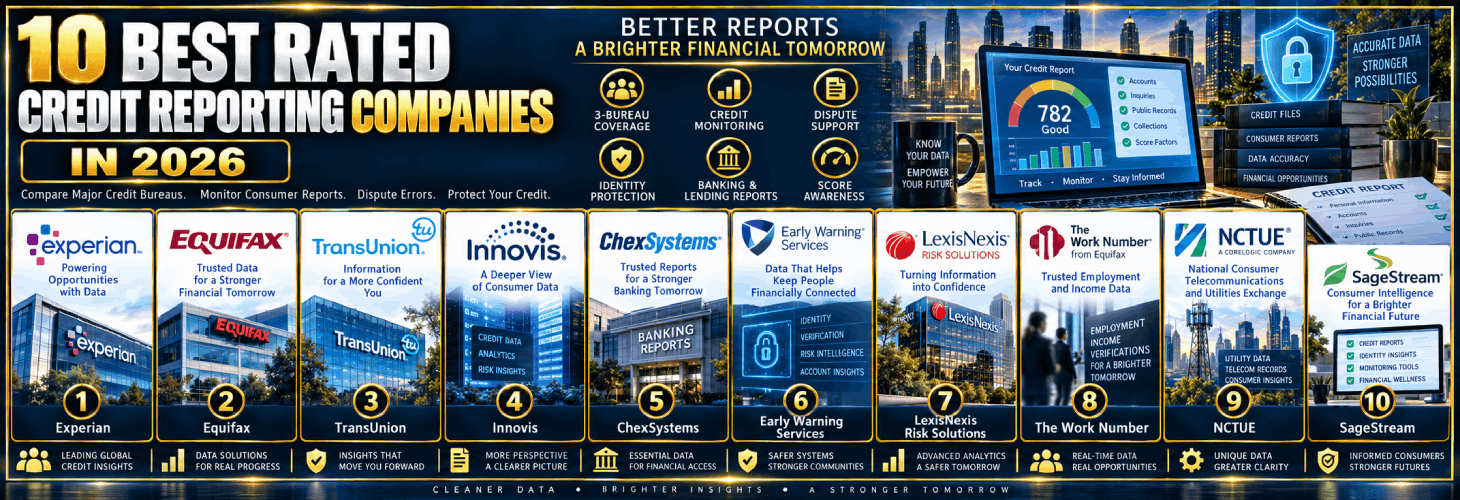
Credit reporting companies play a major role in the U.S. financial system because the information they collect and distribute can influence decisions involving credit cards, mortgages, auto loans, personal loans, bank accounts, apartments, utilities, employment verification, telecommunications, insurance, identity verification, and other financial services. While Experian, Equifax, and TransUnion are the three major nationwide credit bureaus most consumers recognize, they represent only part of a much larger consumer-reporting industry that includes specialty agencies focused on checking accounts, employment and income, telecommunications, utilities, public records, fraud risk, identity data, and other consumer activity. Our 10 Best Rated Credit Reporting Companies in 2026 ranking includes Experian, Equifax, TransUnion, Innovis, ChexSystems, Early Warning Services, LexisNexis Risk Solutions, The Work Number, National Consumer Telecom & Utilities Exchange, and SageStream. Because consumers generally do not choose which reporting company a lender, employer, landlord, bank, insurer, utility provider, or service company uses, our rankings focus on consumer relevance, reporting coverage, access to personal reports, dispute procedures, security-freeze options, identity-protection capabilities, and the importance of each company in major financial decisions.
Important Note
Credit reporting companies do not directly approve or deny consumers for loans, bank accounts, housing, employment, utilities, insurance, or other services. Instead, they collect and provide information that authorized businesses may use as one component of their decision-making process. Different lenders and service providers can use different consumer reports, scoring models, underwriting criteria, income information, identity-verification tools, and internal risk systems, which means two companies can reach different decisions using different data. Consumers should not assume that reviewing only one traditional credit report provides a complete picture of the information that may affect them. Federal consumer-protection laws provide important rights involving access to consumer reports, disputes of inaccurate information, fraud alerts, and security freezes in many circumstances. Reviewing reports before major financial applications can help consumers identify inaccurate, outdated, incomplete, or fraudulent information before it causes delays or denials.
What Are the Best Credit Reporting Companies in 2026?
The 10 most important credit reporting companies consumers should know in 2026 are Experian, Equifax, TransUnion, Innovis, ChexSystems, Early Warning Services, LexisNexis Risk Solutions, The Work Number, National Consumer Telecom & Utilities Exchange, and SageStream. Experian earns our number-one ranking because it combines nationwide credit reporting with extensive consumer-facing tools, monitoring services, identity features, educational resources, and broad relevance to lenders. Equifax ranks second because of its traditional credit reporting capabilities and broader employment and income verification ecosystem, while TransUnion ranks third because of its extensive credit, identity, rental, telecommunications, fraud, and consumer-risk operations. Innovis serves as an important supplementary credit-reporting company, ChexSystems specializes in deposit-account screening, Early Warning Services focuses heavily on banking and payment risk, LexisNexis Risk Solutions provides public-record and identity-related information, The Work Number specializes in employment and income verification, NCTUE focuses on telecommunications and utility reporting, and SageStream provides supplementary consumer risk information used by selected lenders and service providers.
How We Rated the Best Credit Reporting Companies in 2026
Our 2026 credit reporting company rankings consider the importance of each company within the consumer financial system, the breadth of information maintained, the types of financial decisions the information can influence, consumer access to reports, dispute procedures, security-freeze options where available, fraud-prevention tools, identity-verification capabilities, industry coverage, and overall usefulness for consumers preparing for major applications. Unlike a traditional bank, credit card, or loan product, consumers normally do not voluntarily select a credit reporting company. A lender, bank, employer, landlord, insurer, utility company, or other business determines which reports it uses. Therefore, our ranking is based primarily on relevance and impact rather than customer preference. The highest-ranked companies are those most likely to affect significant borrowing and financial decisions, while specialty agencies rank according to how important their reports can become in specific areas such as banking, employment, utilities, and identity verification.
Favorable Aspects of Credit Reporting
Credit reporting companies can provide meaningful benefits to consumers and financial institutions by creating standardized information systems that help businesses evaluate applications, verify identities, reduce fraud, and make risk decisions more efficiently while giving consumers mechanisms to review and challenge information associated with them.
- Nationwide credit bureaus help lenders evaluate borrowing history, payment behavior, outstanding debt, account balances, and other financial information when reviewing credit applications.
- Consumers can review their own credit and specialty consumer reports to identify inaccurate accounts, balances, payment histories, inquiries, addresses, employment records, and other potentially harmful errors.
- Federal consumer protections provide dispute rights that allow individuals to challenge information they believe is inaccurate or incomplete.
- Credit freezes can help restrict unauthorized access to certain consumer reports and make it more difficult for identity thieves to open new accounts.
- Fraud alerts can warn potential creditors that additional identity verification may be appropriate before granting new credit.
- Specialty reporting companies provide information not always available through the three major credit bureaus, including banking activity, employment records, utility payments, telecommunications accounts, and public-record information.
- Reviewing consumer reports before applying for a mortgage, auto loan, apartment, bank account, or other important financial product can provide time to correct errors before an application is submitted.
- Employment and income reporting services can streamline verification when consumers apply for mortgages, apartments, loans, or other services requiring proof of income.
- Bank-account reporting systems can help financial institutions detect suspected fraud, account abuse, unpaid negative balances, and other deposit-account risks.
- Telecommunications and utility reporting can help providers evaluate new-service applications and identify fraudulent activity.
- Public-record and supplementary reporting services can assist with identity verification and fraud prevention when traditional credit data alone is insufficient.
- Consumers can often request their own reports without causing a hard credit inquiry or lowering their credit score.
- Credit reporting systems allow lenders to make more consistent underwriting decisions by relying on standardized historical information rather than subjective assumptions.
- Consumers who monitor several reports can gain a more complete understanding of how their financial information appears across different reporting systems.
- Identity-theft victims can use freezes, disputes, fraud alerts, and report reviews as part of a broader strategy for limiting additional fraudulent activity.
Unfavorable Aspects of Credit Reporting
Consumer reporting can be complicated because dozens of companies may maintain different information about the same individual, and consumers often do not know which report a business will review until an application has already been submitted, delayed, or denied.
- Errors in credit reports can potentially affect loan approvals, interest rates, credit limits, insurance decisions, rental applications, bank-account openings, and other important financial outcomes.
- A consumer may need to dispute the same or similar inaccurate information with multiple reporting companies when it appears in more than one database.
- Identity theft can create fraudulent accounts, inquiries, addresses, employment records, utility accounts, bank accounts, or other information that may take time to correct.
- Specialty reports are less familiar to many consumers than traditional credit reports, making errors harder to discover before they cause problems.
- Different reporting companies may contain different account information because creditors and service providers do not necessarily report to every bureau.
- Credit scores can vary by bureau and scoring model, creating confusion when consumers compare scores from different sources.
- A score provided by a consumer monitoring service may not be the same score used by a mortgage lender, auto lender, bank, or credit-card issuer.
- Security freezes generally must be placed separately with each reporting company and do not automatically apply across all specialty agencies.
- A freeze can create inconvenience when consumers later apply for legitimate credit and need to temporarily lift restrictions.
- Public-record or identity information can sometimes be linked incorrectly to consumers with similar names, addresses, or identifying details.
- Employment and income reports may contain outdated or incorrect information that can complicate mortgage underwriting, rental applications, or other verification processes.
- Deposit-account reports can affect checking-account applications even when a consumer has an excellent traditional credit score.
- Telecom and utility reports can influence service applications independently of conventional credit reports.
- Disputes may require documentation, follow-up, and repeated communication before inaccurate information is fully corrected.
- Consumers can become overwhelmed by the number of different reporting companies and may not know which report is relevant to a particular denial or problem.
- Negative information that is accurate generally cannot be removed simply because it is unfavorable.
- Monitoring only Experian, Equifax, and TransUnion does not provide complete visibility into all specialty consumer reporting databases.
- Businesses can use internal underwriting models in addition to consumer reports, meaning correcting a report does not automatically guarantee approval.
- Some reporting systems contain information collected from third parties, creating the possibility that an original data error can be repeated downstream.
- Consumer reporting laws provide important protections, but consumers still need to actively review their reports and respond when they identify problems.
1. Experian – Best Overall Credit Reporting Company

Experian ranks first among our Best Rated Credit Reporting Companies in 2026 because it is one of the three nationwide credit bureaus and combines traditional credit reporting with one of the strongest consumer-facing credit platforms in the industry. Experian credit files can contain information involving credit cards, mortgages, auto loans, personal loans, installment accounts, balances, payment histories, inquiries, collections, credit limits, account status, and other information supplied by creditors and data furnishers. The company also offers consumers credit monitoring, identity-related services, credit education, security freezes, fraud alerts, and dispute capabilities. Experian is especially important because its data can influence major borrowing decisions, yet the company also makes it relatively easy for consumers to interact with their information compared with less visible specialty reporting agencies. Consumers preparing for a major loan should review Experian along with Equifax and TransUnion because the information reported to one bureau can differ from what appears at another.
Experian Credit Reporting Company Facts Table
| Features | Details |
| Major Credit Bureau | Yes |
| Other Major Bureaus | Equifax and TransUnion |
| Free Membership | Available |
| Experian Free Price | $0 |
| Experian Core | $4.99 per month |
| Experian Money Plus℠ | $14.99 per month |
| Experian Premium | $29.99 per month |
| Free Experian Credit Report | Included |
| Free FICO Score | Included |
| Primary Free Score | FICO Score 8 based on Experian data |
| Free Credit Monitoring | Included |
| Experian Boost | Free |
| Experian Go | Free credit-building guidance |
| Online Credit Disputes | Free |
| Experian Security Freeze | Free |
| Fraud Alerts | Free |
| Experian CreditLock | Paid-plan feature |
| Industry-Specific Scores | Available through qualifying paid membership |
| FICO Score Simulator | Available through qualifying paid membership |
| Three-Bureau Credit Information | Available through Premium or separate products |
| One-Time Three-Bureau Report | $39.99 |
| Identity Protection | Available |
| Dark Web Monitoring | Available |
| Identity Theft Insurance | Up to plan limits |
| Mobile App | Available |
| Best For | Credit reports, FICO Scores, monitoring, credit building, and credit protection |
Why Choose Experian?
Experian deserves particular attention because its credit information can affect some of the largest financial decisions consumers make, including applications for mortgages, auto financing, personal loans, and credit cards. Its consumer tools make it relatively convenient to review accounts, monitor changes, identify suspicious activity, and dispute inaccurate information. Someone preparing to apply for major financing should check an Experian report for incorrect balances, unfamiliar accounts, inaccurate late payments, duplicate collections, fraudulent inquiries, outdated personal information, or other inconsistencies before submitting an application. Experian should still be viewed as one part of a larger reporting system because creditors do not always report identical information to all three major bureaus.
2. Equifax – Best for Credit and Employment Data
Equifax ranks second because it is one of the three major nationwide credit reporting companies and also operates within a broader data ecosystem that includes employment and income verification services. Traditional Equifax credit reports can contain information about credit accounts, balances, repayment history, inquiries, collections, account openings, and other data used by lenders when evaluating applicants. Consumers can access their reports, dispute incorrect information, place security freezes, and use fraud-protection tools. Equifax is particularly important in major financial transactions because the broader organization also operates employment and income verification services through The Work Number. A mortgage applicant, for example, could encounter Equifax-related data in both the credit-evaluation and income-verification portions of underwriting.
Equifax Credit Reporting Company Facts Table
| Features | Details |
| Major Credit Bureau | Yes |
| Other Nationwide Bureaus | Experian and TransUnion |
| Free Credit Report | Available |
| Free Weekly Report Access | Available through the authorized three-bureau report service |
| myEquifax Account | Available |
| myEquifax Mobile App | Available |
| Core Credit | Free consumer credit tools |
| Equifax Credit Monitor | $4.95 per month |
| Equifax Complete | $9.95 per month |
| Equifax Complete Premier | $19.95 per month |
| Equifax Complete Family | $29.95 per month |
| Daily Equifax VantageScore | Available on qualifying plans |
| Credit Score Model | VantageScore 3.0 on qualifying Equifax consumer products |
| Equifax Report Monitoring | Available |
| Three-Bureau Monitoring | Complete Premier and Family |
| Equifax Credit Report Lock | Available through qualifying products |
| Security Freeze | Free |
| Freeze Placement and Removal | Free |
| Credit Disputes | Free |
| Fraud Alerts | Available |
| Three-Bureau Reports | Available through federal free-report access and qualifying premium services |
| Identity Restoration | Available through qualifying Complete plans |
| Identity Theft Insurance | Available on qualifying plans |
| Family Coverage | 2 adults plus up to 4 children on Complete Family |
| Checking Own Report Hurts Score | No |
| Best For | Credit reports, FICO Scores, credit monitoring, credit building, and credit protection |
Why Choose Equifax?
Equifax is especially important for consumers preparing for mortgages, auto loans, credit cards, and other major borrowing decisions because its files are widely used throughout the financial industry. Reviewing an Equifax report can help identify incorrect balances, late payments, collection accounts, inquiries, personal information, or other issues that could affect underwriting. Consumers should also understand that employment and income information may exist within related Equifax services, making the broader Equifax ecosystem especially relevant during transactions requiring verification of both creditworthiness and income. Keeping Equifax information accurate can therefore be an important part of preparing for major financial applications.
3. TransUnion – Best for Broad Consumer Risk Reporting
TransUnion ranks third and completes the group of the three nationwide credit bureaus. Its traditional credit reporting operations provide lenders and other authorized companies with information involving borrowing history, credit accounts, payment behavior, balances, inquiries, collections, and other consumer data. TransUnion also has a broad presence in fraud detection, identity services, tenant screening, telecommunications, and other risk-management areas. Consumers can obtain their information, dispute errors, place security freezes, and use monitoring and identity tools. Because lenders and creditors do not necessarily report the same information to each bureau, a TransUnion report can contain differences from Experian and Equifax that make it essential to review all three rather than relying on only one.
TransUnion Credit Reporting Company Facts Table
| Features | Details |
| Free Membership | TransUnion Credit Essentials |
| Free Membership Cost | $0 |
| Paid Membership | TransUnion Credit Premium |
| Credit Premium Cost | $29.95/month plus applicable tax |
| Credit Essentials Report | TransUnion |
| Credit Premium Reports | TransUnion, Equifax and Experian |
| Free TransUnion Report Refresh | Daily |
| Free TransUnion Score Refresh | Daily |
| Credit Score Model | VantageScore 3.0 |
| Free Credit Monitoring | TransUnion |
| Premium Credit Monitoring | Three bureaus |
| Three-Bureau Report Refresh | Quarterly with Credit Premium |
| Credit Score Potential | Included |
| Credit Score Factor Grades | Included |
| Credit Score Estimator | Credit Premium |
| Credit Calendar | Credit Premium |
| Dark Web Monitoring | Credit Premium |
| Criminal Activity Monitoring | Credit Premium |
| Name & Address Change Monitoring | Credit Premium |
| SSN Change Monitoring | Credit Premium |
| Identity Resolution Specialist | Credit Premium |
| Identity Theft Insurance | Up to $1 million with Credit Premium, subject to policy terms |
| Credit Freeze | Free |
| Fraud Alerts | Free |
| Credit Disputes | Free |
| Credit Lock | Discontinued in TransUnion’s consumer memberships |
| AnnualCreditReport Access | Available |
| Best For | Direct credit-bureau access, credit monitoring, disputes, freezes and credit education |
Why Choose TransUnion?
TransUnion should be included in every comprehensive credit review because information on a TransUnion file may differ from what appears on Experian or Equifax. A lender can also choose TransUnion as the primary bureau for a credit decision, making errors on that report potentially important even when the other two files are accurate. Consumers should review TransUnion for incorrect payment history, inaccurate balances, fraudulent accounts, outdated collections, unfamiliar inquiries, mixed-file information, or personal details that do not belong to them. Its broader involvement in identity and fraud services also makes TransUnion relevant to consumers focused on preventing unauthorized credit activity.
4. Innovis – Best Supplementary Credit Reporting Company
Innovis ranks fourth because it is an important supplementary consumer reporting company that many consumers do not recognize even though its data can be relevant to identity verification, credit-related risk analysis, fraud prevention, and other consumer decisions. Innovis is not one of the three nationwide credit bureaus most commonly used for traditional lending decisions, but consumers can still request their information, dispute inaccuracies, and place a security freeze. Innovis becomes particularly important for consumers attempting to build a more comprehensive identity-theft defense because freezing Experian, Equifax, and TransUnion does not automatically restrict access to every supplementary reporting database.
Innovis Credit Reporting Company Facts Table
| Features | Details |
| Credit Report | Available |
| Consumer Report Cost | Free |
| Credit Scores | Not offered as mortgage or educational credit scores |
| Account History Information | May be included |
| Personal Information | Included |
| Report Inquiry Information | Included |
| Online Report Request | Available |
| Phone Report Request | Available |
| Mail Report Request | Available |
| Dispute Resolution | Available |
| Online Disputes | Available |
| Telephone Disputes | Available |
| Mail Disputes | Available |
| Security Freeze | Available |
| Security Freeze Cost | Free |
| Temporary Freeze Lift | Available |
| Permanent Freeze Removal | Available |
| Initial Fraud Alert | 12 months |
| Extended Fraud Alert | 7 years |
| Active-Duty Alert | 12 months |
| Identity-Theft Information Block | Available |
| Human-Trafficking Block | Available |
| Minor Child Freeze | Available |
| Protected-Consumer Freeze | Available |
| Prescreen Opt-Out | Available |
| Prescreen Opt-In | Available |
| Dark Web Monitoring | Not offered as a consumer subscription feature |
| Three-Bureau Monitoring | Not offered |
| Identity Theft Insurance | Not offered |
| VPN | Not offered |
| Antivirus | Not offered |
| Password Manager | Not offered |
| Professional Identity Restoration Membership | Not offered |
| Primary Consumer Assistance Number | 1-800-540-2505 |
| Best For | Reviewing and protecting an Innovis consumer credit file |
Why Choose Innovis?
Innovis is worth reviewing for consumers who want to look beyond the traditional three-bureau system, especially after identity theft, suspicious credit activity, or unexplained verification problems. Because supplementary reporting companies can maintain information that differs from the major bureaus, an issue can potentially remain hidden from a consumer who only monitors Experian, Equifax, and TransUnion. Placing an Innovis freeze can also provide another layer of security for consumers who believe their personal identifying information has been compromised. While Innovis will not be relevant to every transaction, knowing it exists can help consumers respond more effectively when traditional credit reports do not explain an unexpected problem.
5. ChexSystems – Best for Checking Account Screening
ChexSystems ranks fifth because it is one of the most important specialty reporting companies for consumers opening checking and savings accounts. Instead of focusing primarily on traditional credit-card or loan repayment history, ChexSystems collects information involving deposit-account applications, account openings, closures, suspected fraud, unpaid negative balances, and other banking activity. Banks and credit unions can use ChexSystems reports when deciding whether to approve a new deposit account. This means someone can have excellent traditional credit while still experiencing difficulty opening a checking account because of information maintained in a specialty bank-account report.
ChexSystems Credit Reporting Company Facts Table
| Features | Details |
| Company | Chex Systems, Inc. |
| Reporting Type | Nationwide specialty consumer reporting agency |
| Primary Focus | Checking, savings and deposit-account screening |
| Federal Regulation | Fair Credit Reporting Act |
| Consumer Disclosure Cost | Free |
| Consumer Score Cost | Free |
| Consumer Score Range | 100 to 899 |
| Higher Score Meaning | Generally represents lower risk |
| Negative Information Retention | Generally 5 years |
| Inquiry Retention | Certain inquiries can remain up to 3 years |
| Traditional FICO Score | Not provided as the ChexSystems Consumer Score |
| Bank Account Approval | Determined by individual financial institutions |
| Disputes | Available |
| Typical Reinvestigation | Approximately 30 days |
| Maine Reinvestigation | Generally 21 days |
| Possible Extension | Up to 15 additional days in qualifying circumstances |
| Security Freeze | Available |
| Temporary Freeze Lift | Available |
| Identity-Theft Security Alert | Available |
| Identity-Theft Block | Available for qualifying information |
| Consumer Statement | Available following qualifying unresolved disputes |
| Online Consumer Portal | Available |
| Primary Users | Banks, credit unions and other qualifying institutions |
| Parent Organization | Part of FIS-related operations |
| Best For | Understanding and protecting deposit-account reporting history |
Why Choose ChexSystems?
ChexSystems is especially important for consumers who have been denied a checking or savings account or who have experienced past problems involving overdrafts, unpaid account balances, suspected fraud, or bank-account closures. Reviewing the report can reveal whether a banking issue rather than a conventional credit problem is causing difficulty. Identity-theft victims should also consider checking ChexSystems because fraudulent deposit accounts can be opened independently of fraudulent credit cards or loans. Correcting inaccurate ChexSystems information can therefore be essential for restoring access to normal banking services even when a consumer’s traditional credit score remains strong.
6. Early Warning – Best for Bank Fraud and Deposit Risk Reporting

Early Warning Services ranks sixth because it provides financial institutions with information used to evaluate deposit-account risk, fraud, account activity, and payment behavior. It is particularly relevant when consumers encounter unexplained bank-account closures, denied account applications, suspicious payment activity, or suspected identity theft involving checking or savings accounts. Early Warning operates in an area that overlaps with some ChexSystems functions but uses its own data and systems, which means consumers experiencing banking problems may need to review both companies rather than assuming they contain identical information.
Early Warning Services Facts Table
| Features | Details |
| Service Type | Specialty consumer reporting, banking intelligence, fraud and payment risk |
| Primary Focus | Deposit accounts, banking activity, identity and payment risk |
| Traditional Credit Bureau | No |
| Specialty Consumer Reporting | Yes |
| Checking Account Screening | Yes |
| Savings Account Screening | Yes |
| Deposit Account Information | Yes |
| Deposit Score | Yes |
| Traditional FICO Score | No |
| VantageScore | No |
| Free Consumer File Disclosure | Yes |
| Consumer Dispute Process | Yes |
| FCRA Rights | Yes |
| Account History Information | Yes |
| Transaction Information | May be included |
| Account Balance Information | May be included |
| Inquiry History | Yes |
| Identity Information | Yes |
| Negative Record Limit | Generally no negative records older than five years |
| Account Opening Risk | Yes |
| Identity Verification | Yes |
| Fraud Detection | Yes |
| Deposit Risk Screening | Yes |
| Payment Risk Screening | Yes |
| Account Ownership Verification | Yes |
| Check and ACH Analysis | Yes |
| Identity Theft Resources | Yes |
| Identity Theft Insurance | No |
| Traditional Three-Bureau Credit Monitoring | No |
| Antivirus | No |
| VPN | No |
| Password Manager | No |
| Parent Company | Independent bank-owned financial technology company |
| Major Brands | Zelle, Paze and Certos |
| Co-Owners | Bank of America, Capital One, JPMorgan Chase, PNC, Truist, U.S. Bank and Wells Fargo |
| Best For Consumers | Reviewing deposit-account reporting after account problems or denials |
| Best For Financial Institutions | Deposit, identity, payment and fraud-risk analysis |
Why Choose Early Warning Services?
Consumers should consider reviewing Early Warning Services when they encounter an unexpected bank-account denial, account closure, fraud investigation, or payment-related problem that is not explained by a traditional credit report. Because the company specializes in banking and payment data, it can reveal issues that Experian, Equifax, and TransUnion may not show. Someone who suspects identity theft involving checking accounts should also investigate Early Warning because fraudulent deposit activity can create problems separate from credit-account fraud. Understanding the report can make it easier to dispute incorrect information and determine why a financial institution made a particular account decision.
7. LexisNexis Risk Solutions – Best for Public-Record and Identity Data

LexisNexis Risk Solutions ranks seventh because it provides supplementary consumer information used by financial institutions, insurers, government agencies, healthcare organizations, and other authorized businesses. Its data can include public records, historical addresses, property information, liens, judgments, bankruptcies, professional-license information, identity relationships, and other risk-related records. These categories go beyond standard credit-account histories and can become important when a business is verifying identity or reviewing broader risk factors. Consumers can request applicable disclosures and can use security-freeze options for certain LexisNexis consumer-reporting products.
LexisNexis Risk Solutions Facts Table
| Features | Details |
| Parent Organization | RELX |
| Company Type | Data analytics, risk management and specialty consumer reporting |
| Traditional Credit Bureau | No |
| FCRA Consumer Reporting Products | Yes |
| Consumer Disclosure | Available |
| Consumer Disclosure Cost | Free qualifying disclosure |
| Free Annual Report | Yes |
| Report Request Methods | Online, telephone and mail |
| Security Freeze | Available |
| Freeze Cost | Free |
| Temporary Freeze Lift | Available |
| Permanent Freeze Removal | Available |
| SageStream Freeze | Included with applicable LexisNexis freeze request |
| Disputes | Available |
| Primary Data Sources | Public records, public data, proprietary data and third-party sources |
| Real Estate Data | May be included |
| Historical Addresses | May be included |
| Bankruptcy Information | May be included |
| Lien and Judgment Information | May be included |
| Professional-License Information | May be included |
| Insurance Claim Reporting | C.L.U.E. |
| C.L.U.E. Auto History | Up to seven years |
| Property Claims Information | Available through C.L.U.E. Property |
| Vehicle Telematics | Available through qualifying insurance products |
| Identity Verification | Major business use |
| Fraud Prevention | Major business use |
| Prescreen Opt-Out | Available for qualifying lists |
| FCRA Dispute Rights | Yes |
| Consumer Center | Available |
| Best For | Reviewing specialty consumer, public-record, identity-risk and insurance information |
Why Choose LexisNexis Risk Solutions?
LexisNexis is worth reviewing when a consumer encounters an unexplained identity-verification problem, insurance issue, public-record concern, or other financial decision that cannot be explained by the traditional credit bureaus. Incorrect addresses, property records, identity associations, bankruptcy information, liens, or other public-record details can create complications that may not appear the same way on a standard credit report. Identity-theft victims may also find LexisNexis important because identity information can spread across multiple databases. Reviewing the relevant disclosure allows consumers to identify potentially inaccurate or unfamiliar records and begin the dispute process when necessary.
8. The Work Number – Best for Employment and Income Verification

The Work Number ranks eighth because it is one of the most important specialty consumer reporting services for employment and income information. Operated within the Equifax Workforce Solutions ecosystem, The Work Number receives information from participating employers and payroll providers and can be used by lenders, landlords, employers, government agencies, and other authorized users to verify employment and earnings. This information can become especially important during mortgage underwriting, rental applications, employment screening, benefit determinations, and other situations in which consumers must prove where they work and how much they earn.
The Work Number Facts Table
| Features | Details |
| Operator | Equifax Workforce Solutions |
| Primary Service | Employment and income verification |
| Consumer Report | Employment Data Report |
| Consumer Report Cost | Free |
| Current Employment Information | May be included |
| Historical Employment Information | May be included |
| Income Information | May be included |
| Verifier History | Previous two years |
| Employment Data Freeze | Available |
| Freeze Removal | Available |
| Data Dispute | Available |
| Online Employee Portal | Available |
| Salary Key | Available when required |
| Salary Key Type | Single-use authorization code |
| Salary Key Expiration | 90 days if unused |
| Credit Score | Not provided as part of the EDR |
| Three-Bureau Credit Monitoring | Not provided |
| Dark Web Monitoring | Not provided |
| Identity Theft Insurance | Not provided |
| VPN | Not provided |
| Antivirus | Not provided |
| Password Manager | Not provided |
| Major Users | Lenders, employers, government agencies, property managers and background screeners |
| Mortgage Verification | Supported |
| Auto/Personal Loan Verification | Supported |
| Credit Card Verification | Supported in qualifying workflows |
| Rental Verification | Supported |
| Government Benefit Verification | Supported |
| FCRA Consumer Rights | Applicable to qualifying consumer-report activity |
| Best For | Reviewing and controlling employment and income verification information |
Why Choose The Work Number?
The Work Number is particularly important for consumers preparing for mortgages, apartments, certain loans, employment screenings, or other situations where employment and income must be independently verified. An incorrect employer, outdated job status, inaccurate salary, or other employment-data error can create delays even when the consumer’s traditional credit report is perfect. Mortgage applicants may find it especially valuable to review employment information before underwriting begins because lenders frequently require current and historical income verification. Consumers concerned about privacy or identity theft can also consider whether a security freeze is appropriate based on their circumstances.
9. National Consumer Telecom & Utilities Exchange – Best for Telecom and Utility Reporting

The National Consumer Telecom & Utilities Exchange, commonly called NCTUE, ranks ninth because it focuses on consumer information involving telecommunications, pay-TV, electricity, natural gas, water, and other utility services. Member companies can use shared information involving service requests, account history, payments, delinquencies, and charge-offs when evaluating customers. This makes NCTUE particularly relevant when a consumer is denied wireless phone service, utility service, or another telecommunications-related product despite having a reasonable traditional credit profile.
NCTUE Credit Reporting Company Facts Table
| Features | Details |
| Service Type | Specialty consumer reporting agency and data exchange |
| Primary Market | Telecommunications, pay TV and utilities |
| Traditional Credit Bureau | No |
| Consumer Subscription Fee | None |
| Consumer Report | NCTUE Disclosure Report |
| Free Report | Available upon qualifying request |
| Data Manager | Equifax Information Services |
| Equifax an NCTUE Member? | No |
| Telecommunications Data | Yes |
| Wireless Account Data | May be included when reported by members |
| Pay TV/Cable Data | Yes |
| Electric Utility Data | Yes |
| Gas Utility Data | Yes |
| Water Utility Data | Yes |
| New Service Applications | May be included |
| Account History | May be included |
| Payment History | May be included |
| Paid-As-Agreed Accounts | May be reported |
| Past-Due Accounts | May be reported |
| Unpaid Closed Accounts | May be included |
| Delinquencies | May be included |
| Charge-Offs | May be included |
| Security Freeze | Available free |
| Temporary Freeze Lift | Available |
| Freeze Removal | Available |
| Fraud Alerts | Available free |
| Active-Duty Alert | Available |
| Extended Fraud Alert | Available for qualifying identity-theft victims |
| Consumer Disputes | Available free |
| Prescreened Offer Opt-Out | Available |
| Consumer-Facing Credit Score | Not a traditional three-bureau consumer credit score service |
| Identity Theft Insurance | Not offered as a consumer membership benefit |
| Antivirus/VPN | Not offered |
| Best For | Reviewing telecom and utility consumer-reporting information |
Why Choose NCTUE?
NCTUE is particularly useful when consumers experience unexpected problems obtaining a mobile-phone plan, utility service, cable account, or other telecommunications service. An excellent credit score does not necessarily mean every specialty report is clean because utility and telecom providers can use additional information separate from traditional lending data. Consumers should also consider NCTUE after identity theft because fraudulent mobile-phone or utility accounts can create negative specialty records. Reviewing the report can help identify unfamiliar accounts, incorrect payment histories, or outdated information before applying for new services.
10. SageStream – Best for Additional Supplementary Risk Reporting

SageStream completes our ranking because it provides supplementary consumer risk information used by selected auto lenders, credit-card issuers, retailers, utilities, telecommunications providers, and other businesses. SageStream operates within the LexisNexis Risk Solutions organization and focuses on data that can supplement more traditional credit information. Consumers may encounter SageStream when a financial or service provider uses additional risk tools beyond Experian, Equifax, and TransUnion. Consumers can request their report and use a security freeze, making SageStream another company worth knowing for people seeking a broad identity-protection strategy.
SageStream Credit Reporting Company Facts Table
| Features | Details |
| Company Type | Specialty / supplementary consumer reporting agency |
| Owner | LexisNexis Risk Solutions |
| Traditional Big-Three Bureau | No |
| Main Category | Supplementary consumer reporting |
| Traditional Bureau Alternatives | Equifax, Experian and TransUnion |
| Potential Users | Auto lenders, credit card issuers, retailers, utilities, wireless providers and other businesses |
| Consumer Report | Available upon request |
| Free Report | One free applicable report every 12 months |
| Self-Request Hurts Credit Score | No |
| Security Freeze | Available |
| Freeze Cost | Free |
| Freeze Lift | Available |
| Freeze Removal | Available |
| Dispute Process | Available |
| Dispute Cost | Free |
| Identity Theft Blocking | Available |
| Prescreen Opt-Out | Available |
| Governing Consumer Law | Fair Credit Reporting Act and other applicable laws |
| Current Consumer Service Integration | LexisNexis Risk Solutions Consumer Center |
| Traditional FICO Score | Not the same as a conventional FICO Score |
| Best For | Consumers reviewing specialty reports or investigating a SageStream-based credit or service decision |
Why Choose SageStream?
SageStream is worth checking when a consumer experiences a denial or verification problem that does not appear to be explained by traditional credit reports. Because specialty lenders and service providers can use supplementary risk information, an error may exist in SageStream even when Experian, Equifax, and TransUnion appear accurate. Identity-theft victims may also consider placing a SageStream freeze alongside freezes at other consumer reporting companies to reduce opportunities for fraudulent applications. SageStream illustrates why consumers should think of credit reporting as a network of databases rather than one single report.
2026 Best Credit Reporting Companies Comparison Table
| Credit Reporting Company | Best For | Traditional Credit | Specialty Reporting | Consumer Report Access | Freeze Available |
| Experian | Best Overall | Yes | Yes | Yes | Yes |
| Equifax | Credit and Employment Data | Yes | Yes | Yes | Yes |
| TransUnion | Broad Consumer Risk Reporting | Yes | Yes | Yes | Yes |
| Innovis | Supplementary Credit Reporting | No | Yes | Yes | Yes |
| ChexSystems | Bank Account Screening | No | Yes | Yes | Yes |
| Early Warning | Bank Fraud and Deposit Risk | No | Yes | Yes | Varies |
| LexisNexis Risk Solutions | Public Records and Identity Data | No | Yes | Yes | Yes |
| The Work Number | Employment and Income Verification | No | Yes | Yes | Yes |
| NCTUE | Telecom and Utility Reporting | No | Yes | Yes | Yes |
| SageStream | Supplementary Risk Reporting | No | Yes | Yes | Yes |
What Is a Credit Reporting Company?
A credit reporting company collects information about consumers and prepares reports that authorized businesses can use for legally permitted purposes. Traditional credit bureaus primarily focus on borrowing and repayment information, including credit cards, mortgages, auto loans, installment accounts, balances, payment history, inquiries, and collections. Specialty reporting companies can focus on entirely different categories, such as bank-account history, employment and income, telecommunications, utility payments, tenant records, public records, insurance information, identity verification, or fraud. This means there is no single universal consumer report containing every piece of information used throughout the financial system.
What Are the Three Major Credit Bureaus?
Experian, Equifax, and TransUnion are the three major nationwide consumer credit reporting companies in the United States. Their reports can contain information supplied by banks, credit-card issuers, mortgage lenders, auto lenders, collection agencies, and other creditors, but those reports are not always identical because companies can choose which bureaus receive their data. Lenders can also choose different reports and scoring models depending on the product and applicant. Consumers preparing for important borrowing decisions should therefore review all three rather than assuming that one accurate report means the other two are also correct.
What Are Specialty Consumer Reporting Companies?
Specialty consumer reporting companies focus on particular industries or types of consumer activity rather than general credit history. ChexSystems and Early Warning Services concentrate heavily on banking activity, The Work Number provides employment and income verification, NCTUE reports telecommunications and utility information, and LexisNexis Risk Solutions supplies supplementary public-record and identity data. Other specialty reporting companies can focus on tenant screening, insurance claims, employment background information, fraud, subprime lending, or other areas. These reports can be especially important after a consumer receives an unexpected denial that cannot be explained by traditional credit information.
Why Should You Check Your Credit Reports?
Checking consumer reports allows people to identify information that may be inaccurate, incomplete, outdated, or fraudulent before it affects an important decision. Common issues can include accounts belonging to another person, incorrect balances, payments incorrectly reported as late, duplicated collections, unfamiliar inquiries, fraudulent accounts, incorrect addresses, outdated employment information, banking records that do not belong to the consumer, or utility accounts opened through identity theft. Reviewing reports before applying for a mortgage, vehicle loan, apartment, bank account, or major credit product can provide additional time to dispute errors and gather supporting documentation.
Does Checking Your Own Credit Report Hurt Your Credit Score?
Reviewing your own credit report does not lower your credit score because consumer-initiated report access is generally treated as a soft inquiry rather than a hard credit application. This allows consumers to monitor their reports regularly without worrying that routine self-review will harm their credit standing. The same general principle applies when consumers request many specialty reports directly for personal review. Hard inquiries normally occur when a lender or creditor checks credit as part of an application for new financing, although exact procedures can vary depending on the company and service involved.
How Do Credit Report Disputes Work?
When consumers identify information they believe is inaccurate or incomplete, they can generally dispute the information with the reporting company and may also contact the organization that originally supplied the data. A strong dispute clearly identifies the incorrect information, explains why it is wrong, and includes supporting documentation when available. Examples can include account statements, payment records, identity-theft documentation, correspondence from creditors, bank records, or proof that an account does not belong to the consumer. Consumers should keep copies of dispute submissions, supporting documents, confirmation numbers, and updated reports so they can verify that approved corrections were actually completed.
What Is a Credit Freeze?
A credit or security freeze restricts access to a consumer report and can make it more difficult for an identity thief to open certain new accounts using stolen personal information. A freeze does not remove negative information, increase a credit score, or prevent all forms of fraud, but it can be a valuable tool after identity theft or a major data breach. Consumers should remember that freezing Experian does not automatically freeze Equifax, TransUnion, Innovis, ChexSystems, LexisNexis, NCTUE, SageStream, or other specialty reporting companies. Someone seeking broad protection may need to place freezes individually with multiple companies.
Credit Freeze Versus Fraud Alert
A credit freeze generally restricts access to a consumer’s report until the consumer temporarily lifts or removes it, while a fraud alert tells potential creditors that additional identity verification may be appropriate before granting credit. Freezes usually provide a stronger barrier against new-account fraud, while fraud alerts can offer an additional layer of caution without restricting report access as extensively. Consumers dealing with identity theft may use one or both tools depending on their circumstances. Neither option replaces regular monitoring of existing bank, credit-card, loan, and utility accounts because unauthorized activity can occur on accounts that are already open.
Do All Lenders Use the Same Credit Bureau?
Lenders do not all use the same credit bureau. A credit-card issuer may obtain Experian for one applicant and TransUnion or Equifax for another depending on geography, lending product, business relationships, underwriting systems, or other factors. Mortgage lenders may review broader information from multiple bureaus, while specialty lenders can use additional consumer reports. Because consumers generally cannot predict exactly which report a lender will review, maintaining accurate information across all major reports provides stronger protection than focusing on only one bureau.
Why Are Credit Scores Different Between Bureaus?
Credit scores can differ because Experian, Equifax, and TransUnion may contain different underlying information and because different scoring models calculate risk differently. Creditors can report information at different times, accounts may appear on one report but not another, balances may update on different dates, and lenders may use different versions of FICO or other scoring systems. Consumers should therefore focus on healthy long-term credit behavior and accurate underlying information rather than becoming overly concerned about small numerical differences among scores from different sources.
What Information Is Included in a Credit Report?
A traditional credit report can include identifying information, open and closed credit accounts, payment histories, balances, credit limits, original loan amounts, collections, inquiries, and other relevant financial records. Specialty reports can contain very different information. ChexSystems can show deposit-account history, The Work Number can include employment and income data, NCTUE can include telecommunications and utility information, and LexisNexis can contain public-record and identity data. Understanding these differences is important because a denial blamed on a “consumer report” may involve a specialty database rather than a conventional credit bureau.
How Often Should You Review Consumer Reports?
Consumers should review their major credit files regularly and should consider additional reviews before important applications or after suspected identity theft. Specialty reports do not necessarily need to be checked on the same schedule unless circumstances make them relevant. Someone planning to open a bank account may want to review ChexSystems, a homebuyer may want to confirm employment information, and someone having difficulty obtaining wireless service may want to investigate NCTUE. Reviewing the appropriate report before an important transaction can reduce surprises and provide additional time for corrections.
What Should You Do After Being Denied Credit?
After a denial, consumers should carefully read the adverse-action notice or decision explanation to identify the reasons provided and determine whether a consumer reporting company supplied information used in the decision. Instead of immediately submitting several new applications, the consumer should obtain the relevant report and review it for accuracy. If the information is correct, the applicant can focus on improving the underlying factors such as high debt, credit utilization, limited history, recent late payments, or insufficient income. If the information is inaccurate, the consumer should dispute it before applying again when possible.
Can Specialty Reports Affect a Bank Account Application?
Specialty consumer reports can significantly affect checking and savings account applications because banks often use systems designed specifically for deposit-account risk. ChexSystems and Early Warning Services are two of the most important examples. A consumer can have excellent traditional credit and still be denied a checking account because of banking information involving unpaid negative balances, suspected fraud, previous account closures, or other deposit-account concerns. Consumers who experience an unexpected banking denial should review the reporting company identified by the bank rather than assuming their regular credit score explains the decision.
Can Employment Reports Affect a Mortgage?
Employment and income verification can play an important role in mortgage underwriting because lenders need to confirm that borrowers have sufficient and reasonably stable income to repay the loan. The Work Number can provide employment and income information obtained from participating employers and payroll systems. An inaccurate employment status, incorrect income amount, or outdated employer record can create underwriting delays or additional documentation requirements even when a borrower’s credit is excellent. Homebuyers preparing for mortgage applications can therefore benefit from reviewing both credit information and relevant employment data.
Which Credit Reporting Companies Should Identity-Theft Victims Check?
Identity-theft victims should begin by reviewing and securing Experian, Equifax, and TransUnion, but they may need to expand their investigation depending on the type of fraud involved. Fraudulent bank accounts can make ChexSystems and Early Warning Services relevant, unauthorized utility or mobile-phone accounts can make NCTUE important, suspicious employment records can justify checking The Work Number, and broader identity concerns can make Innovis, LexisNexis, and SageStream worth reviewing. Identity theft can spread across multiple reporting systems, which is why monitoring only the three major credit bureaus may not reveal every unauthorized account or application.
What Is the Best Credit Reporting Company for Traditional Credit?
Experian, Equifax, and TransUnion are the three most important companies for traditional consumer credit because they maintain nationwide credit files used by banks, credit-card companies, mortgage lenders, auto lenders, and other creditors. Experian earns our top overall ranking because of its combination of credit reporting and consumer-facing tools, but consumers should not think of it as a replacement for Equifax or TransUnion. All three can contain different information, and each can potentially influence lending decisions. The strongest approach is to review all three and correct inaccuracies wherever they appear.
What Is the Best Credit Reporting Company for Banking?
ChexSystems earns our strongest recommendation for consumers focused on deposit-account screening, while Early Warning Services is another extremely important company in the banking and payment-risk space. Consumers who have experienced checking-account closures, suspected bank fraud, unpaid account balances, or unexpected denials should consider reviewing both. These companies do not function like traditional credit bureaus, but their information can strongly influence whether a bank or credit union opens a new deposit account.
What Is the Best Credit Reporting Company for Employment Verification?
The Work Number is one of the most important employment and income reporting systems because participating employers and payroll providers can supply information that authorized users rely on for verification. The service can become important during mortgage underwriting, rental applications, employment screening, benefit determinations, and other financial situations in which consumers must prove income or employment. Anyone preparing for an important transaction involving income verification may benefit from making sure employment information is accurate before the application process begins.
Frequently Asked Questions About Credit Reporting Companies
Consumers frequently ask whether there is one definitive credit report, whether every lender sees identical information, and whether specialty reports affect traditional credit scores, but the consumer reporting system is considerably more complex. Experian, Equifax, and TransUnion provide the primary nationwide credit files, while specialty agencies maintain additional information involving banking, employment, utilities, identity, public records, fraud, insurance, and other areas. A ChexSystems report can affect a checking-account application without changing a conventional FICO score, while The Work Number can affect income verification without functioning as a traditional credit bureau. Consumers receive the greatest protection by identifying which reporting company is relevant to the financial decision they are preparing to make.
Final Verdict
Experian earns our number-one position among the 10 Best Rated Credit Reporting Companies in 2026 because of its nationwide importance, extensive consumer tools, monitoring capabilities, identity features, and broad relevance to major lending decisions. Equifax and TransUnion remain equally important components of the traditional three-bureau credit system, while Innovis gives consumers an additional supplementary credit and identity report worth knowing about. ChexSystems and Early Warning Services are particularly important for checking-account and deposit-risk screening, LexisNexis Risk Solutions provides extensive supplementary public-record and identity information, The Work Number can influence employment and income verification, NCTUE covers telecommunications and utility accounts, and SageStream provides additional specialty risk information. The most important lesson is that consumers do not have just one credit report. Maintaining accurate traditional credit information, reviewing relevant specialty reports, disputing errors, using security freezes when appropriate, and monitoring for identity theft can help consumers protect their financial opportunities and reduce surprises when applying for credit, banking services, housing, employment, utilities, or other important products in 2026.