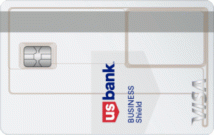

The U.S. Bank Business Shield™ Visa® Credit Card is a no-annual-fee business credit card designed primarily for small-business owners who want flexible financing, extended introductory interest savings, business expense-management tools and a handful of useful travel and purchase protections. Its biggest attraction is a 0% introductory APR on purchases and qualifying balance transfers for 12 billing cycles when applying through digital channels, while eligible applicants applying at a U.S. Bank branch may qualify for an extended 18-billing-cycle introductory offer. The card also earns 5% cash back on eligible prepaid airfare, hotel stays and car rentals booked directly through the U.S. Bank Travel Center, provides an opportunity to earn a $50 annual statement credit after $5,000 in qualifying Travel Center purchases, includes access to U.S. Bank Spend Management and charges no annual fee for the primary card or employee cards. Although it is not a traditional high-powered business rewards card, the Business Shield can be especially valuable for entrepreneurs who prioritize cash-flow flexibility and temporary interest savings over large welcome bonuses or broad everyday rewards.
- 0% Intro APR for 21 Billing Cycles
- $0 Annual Fee
- 0% APR For Purchases & Balance Transfers
- 4% Cash Back on Travel Center Bookings
- $20 Annual Statement Credit Opportunity
- 5% Balance Transfer Fee, $5 Minimum
- Limited Everyday Rewards
- Travel Rewards Require U.S. Bank Travel Center
- 3% Foreign Transaction Fee
- No Traditional Cash Welcome Bonus
Favorable Details:
- 0% Intro APR on Purchases: Digital applicants currently receive a 0% introductory APR on purchases for 12 billing cycles, giving businesses additional time to pay for qualifying operating expenses without introductory interest charges.
- Up to 18 Billing Cycles In Branch: Small-business owners who apply through an eligible U.S. Bank branch may qualify for a longer 0% introductory APR period of up to 18 billing cycles.
- 0% Intro APR on Balance Transfers: Qualifying balance transfers can receive the introductory 0% APR, potentially helping businesses refinance higher-interest revolving debt.
- $0 Annual Fee: There is no annual fee for the Business Shield Card, making it inexpensive to keep for long-term business use.
- No Annual Fee for Employee Cards: Businesses can provide cards to authorized employees without adding a recurring annual card fee.
- 5% Cash Back on Travel Center Bookings: Cardholders earn 5% cash back on eligible prepaid airfare, hotels and rental cars booked through the U.S. Bank Travel Center.
- $50 Annual Travel Statement Credit: Businesses can earn a $50 statement credit after making at least $5,000 in qualifying Travel Center purchases during the applicable annual period.
- U.S. Bank Spend Management: Businesses receive access to tools that can help track spending, capture receipts, control employee cards and integrate expenses with accounting software.
- Purchase Security: Eligible purchases may be protected against qualifying theft or damage when card benefit requirements are satisfied.
- ExtendPay® Flexibility: Eligible businesses may receive an annual opportunity to establish a three-month U.S. Bank ExtendPay® Plan with a $0 plan fee after the introductory purchase APR period ends.
Unfavorable Details:
- Limited Everyday Rewards: The card’s headline 5% cash-back rate is limited to eligible Travel Center bookings rather than ordinary business purchases.
- 5% Balance Transfer Fee: Qualifying balance transfers are subject to a fee equal to 5% of the transferred amount with a $5 minimum.
- Short Balance Transfer Window: Balance transfers generally must be completed within 30 days of account opening to qualify for the promotional introductory APR.
- No Traditional Welcome Bonus: The Business Shield does not currently emphasize a large cash-back or points bonus after meeting an introductory spending requirement.
- Travel Must Be Booked Through U.S. Bank: Businesses must use the U.S. Bank Travel Center to earn the advertised 5% travel cash-back rate.
- $5,000 Travel Requirement for Annual Credit: Businesses must spend at least $5,000 on qualifying Travel Center bookings during the applicable annual period to earn the $50 statement credit.
- Regular APR Applies After Promotion: Any qualifying revolving balance remaining after the introductory period becomes subject to the card’s regular variable APR.
- Balance Transfers From U.S. Bank Are Restricted: Balances from other U.S. Bank National Association accounts generally cannot be transferred to the Business Shield.
- Branch Visit Required for Longest Offer: Businesses seeking the potential 18-billing-cycle introductory APR generally need to apply through a qualifying U.S. Bank branch rather than entirely online.
- Not Designed for Maximum Rewards: Companies with substantial spending on advertising, shipping, telecommunications, dining or office expenses may earn considerably more with a dedicated business rewards card.
U.S. Bank Business Shield™ Visa® Card Quick Facts
| Feature | Details |
| Credit Card Issuer | U.S. Bank National Association |
| Payment Network | Visa Signature |
| Reward Type | 0% Intro APR – Business Credit Card |
| Card Type | Good Credit to Excellent Credit Score (690-850) |
| Annual Fee | $0 |
| Employee Card Annual Fee | $0 |
| Online Intro Purchase APR | 0% for 12 Billing Cycles |
| In-Branch Intro Offer | Up to 18 Billing Cycles |
| Intro Balance Transfer APR | 0% on Qualifying Transfers |
| Regular APR | 16.24%–25.24% Variable |
| Balance Transfer Fee | 5% of Transfer, $5 Minimum |
| Travel Rewards | 5% Cash Back on Eligible Travel Center Bookings |
| Annual Travel Credit | $50 After $5,000 in Qualifying Travel Center Purchases |
| Business Management Tools | U.S. Bank Spend Management |
| Purchase Protection | Purchase Security on Eligible Purchases |
| Installment Feature | U.S. Bank ExtendPay® |
| Traditional Welcome Bonus | None Currently Advertised |
| Best For | Small Businesses Seeking Intro APR Financing |
How the U.S. Bank Business Shield Visa Card Works
The U.S. Bank Business Shield Visa functions as a revolving business credit card that allows a company to charge eligible business expenses, assign employee cards, monitor spending and repay balances over time. Its defining feature is the introductory 0% APR period, which can temporarily eliminate interest charges on eligible purchases and qualifying balance transfers while the promotional offer remains active. Digital applicants currently receive 12 billing cycles at 0%, while businesses applying through an eligible U.S. Bank branch may receive an extended introductory period of up to 18 billing cycles. After the promotional period expires, remaining balances become subject to the regular variable APR, so the card works best when business owners establish a repayment schedule designed to eliminate promotional debt before standard interest begins.
0% Intro APR on Business Purchases
The 0% introductory purchase APR is one of the strongest reasons to consider the Business Shield because it allows qualified businesses to finance operating expenses without paying introductory purchase interest for a limited period. A company could potentially use the promotional period to purchase inventory, replace equipment, fund seasonal expenses, upgrade technology, pay for business travel or cover other planned expenditures while preserving more cash in its operating account. The financing benefit can be especially useful for companies with predictable future revenue that need to make necessary investments today, but business owners should still avoid charging more than they can realistically repay before the introductory period expires.
Up to 18 Billing Cycles When Applying In Branch
One unusual feature of the Business Shield is that the introductory APR period can depend on how the business applies. Digital applications currently advertise 12 billing cycles of 0% introductory APR, while U.S. Bank has offered up to 18 billing cycles to applicants applying through its physical branch network. Six additional billing cycles can make a significant difference for a business financing a substantial expense because the same balance can be divided across more monthly payments. Business owners interested in the longest available promotional period should check the current in-branch offer before applying online because credit card promotions can change.
0% Intro APR on Balance Transfers
The U.S. Bank Business Shield Visa also extends its introductory 0% APR to qualifying balance transfers, making the card potentially useful for consolidating existing high-interest business credit card debt. Moving an eligible balance from a card charging a high variable APR to a temporary 0% rate can reduce interest expenses and direct more of each payment toward principal. This strategy is most effective when the business has enough predictable cash flow to repay the transferred balance within the promotional period and avoids creating new revolving debt on the accounts that were paid down.
Balance Transfer Fee
Each qualifying balance transfer is generally subject to a fee of 5% of the amount transferred with a minimum charge of $5. For example, transferring $10,000 could result in approximately $500 in transfer fees, meaning business owners should calculate whether the expected interest savings are greater than the upfront transfer cost. A company currently paying a very high APR may still save substantially despite the fee, while a business expecting to repay its existing debt in only a few months may discover that transferring the balance provides less financial benefit.
Balance Transfer Deadline
Qualifying balance transfers generally need to be completed within 30 days of opening the Business Shield account to receive the introductory rate, so business owners should be prepared to initiate transfers soon after approval. Waiting too long can result in a transfer being processed outside the promotional eligibility period and potentially subjecting it to standard account terms. Businesses should therefore gather existing account numbers, payoff information and approximate transfer amounts before applying if balance consolidation is one of the primary reasons for opening the card.
$0 Annual Fee
The U.S. Bank Business Shield Visa charges no annual fee, which makes its introductory financing offer particularly attractive because businesses do not need to pay a yearly membership charge to access the card. Once the introductory APR period ends, the absence of an annual fee can also make it practical to keep the account open for occasional business expenses, employee spending controls or Travel Center purchases. Companies should still periodically evaluate whether every business credit card continues to provide operational value, but there is no recurring annual fee creating pressure to justify the account through rewards alone.
Free Employee Cards
U.S. Bank does not charge an annual fee for additional employee cards on the Business Shield account, allowing owners to provide authorized employees with payment access without increasing annual card costs. Employee cards can help centralize company purchasing, reduce reimbursement paperwork and improve visibility into how different departments or employees are spending company money. Business owners should combine employee cards with appropriate spending limits, internal expense policies and U.S. Bank Spend Management controls to reduce unnecessary or unauthorized business expenses.
5% Cash Back on Travel
The Business Shield earns 5% cash back on eligible prepaid airfare, hotel reservations and rental cars booked directly through the U.S. Bank Travel Center using the card. This earning rate can be attractive for businesses with regular travel needs, especially because many financing-focused business cards offer little or no rewards value. A company spending $10,000 annually on qualifying Travel Center reservations could potentially earn $500 in cash rewards before considering any applicable annual statement credit, although businesses should compare the Travel Center’s rates and booking conditions with prices available directly from airlines, hotels and rental car companies.
$50 Annual Travel Statement Credit
Businesses can earn a $50 annual statement credit after charging at least $5,000 in qualifying purchased travel through the U.S. Bank Travel Center during the applicable 12-month account period. The credit effectively provides an additional layer of value for companies that already book significant travel through U.S. Bank, although it should not encourage a business to move travel bookings to the portal when pricing or terms are materially less favorable. Because the spending requirement resets according to the account’s annual cycle, owners should monitor qualifying travel expenses if they want to make sure they reach the required threshold.
Everyday Rewards
Outside eligible Travel Center purchases, the Business Shield is not positioned as a high-earning everyday rewards card. Businesses spending heavily on office supplies, internet services, software subscriptions, advertising, shipping, fuel or dining will generally find stronger category-specific earning opportunities on other business credit cards. This limited everyday rewards structure reinforces the Business Shield’s role primarily as a financing and cash-flow management card rather than a card intended to maximize returns from every company purchase.
U.S. Bank Spend Management
One of the Business Shield’s most useful operational benefits is access to U.S. Bank Spend Management, a platform designed to help companies track expenses, capture receipts, control employee spending and streamline financial administration. Business owners can use centralized spending information to gain a clearer view of where company money is going, while integrations with accounting software may reduce manual expense entry and reconciliation work. For a growing company with several employees making purchases, these tools can potentially be as valuable as traditional credit card rewards because improved expense visibility can reduce administrative time and help identify unnecessary spending.
Accounting Software Integration
U.S. Bank Spend Management can help businesses connect card spending with accounting workflows, reducing the need to manually transfer every transaction into bookkeeping software. Integrated transaction data can make account reconciliation more efficient, assist with categorizing expenses and provide owners or accounting teams with more current information about company spending. Businesses should still maintain accurate records and review imported transactions, but automated expense synchronization can simplify bookkeeping for companies processing a substantial number of card transactions each month.
Receipt Capture
Receipt management is another useful feature of the U.S. Bank Spend Management platform. Employees and business owners can capture and associate receipts with transactions, helping create a more organized record of business spending and reducing the chance that paper receipts will be lost before reconciliation or tax preparation. Maintaining detailed records can also make it easier for a company to enforce internal expense policies, answer bookkeeping questions and provide supporting documentation when needed.
Employee Spending Controls
Business owners can use available card controls to place greater structure around employee spending. Instead of allowing employees to use personal cards and request reimbursement later, a company can issue authorized employee cards and monitor expenses centrally. Appropriate controls can help reduce accidental overspending, prevent purchases outside approved business purposes and simplify reporting across departments. The ability to manage employee cards without paying an annual fee for each additional card makes the Business Shield potentially attractive to smaller companies beginning to formalize their expense-management processes.
Purchase Security
The Business Shield includes Purchase Security that may reimburse eligible purchases if qualifying items are stolen or damaged within the coverage period, subject to applicable terms, exclusions and claim requirements. This type of protection can be particularly useful when businesses purchase electronics, office equipment or other physical assets using the card. Owners should keep invoices, receipts and other documentation for major purchases because benefit administrators typically require evidence of the transaction and loss when evaluating a claim.
Extended Protection
Eligible purchases made with the Business Shield may receive additional warranty protection under applicable card benefits, potentially extending a qualifying manufacturer’s warranty. This feature can provide extra value for businesses buying computers, electronics, office equipment or other products with eligible warranties. Coverage varies according to the card’s current Guide to Benefits, so businesses purchasing expensive equipment should review the applicable terms rather than assuming every product or warranty automatically qualifies.
Cell Phone Protection
The Business Shield may provide eligible cell phone protection when applicable benefit requirements are satisfied, potentially helping cover qualifying theft or damage to covered devices. For small businesses paying multiple wireless bills, built-in card protection can add meaningful value if the benefit covers eligible company phones and the business follows the required payment conditions. Coverage limits, deductibles, exclusions and claim procedures apply, so owners should review current benefit terms before relying on the card as a substitute for separate device insurance.
Auto Rental Collision Coverage
Eligible rental vehicles paid for with the Business Shield may qualify for auto rental collision-related protection under the card’s applicable benefits. This can be valuable for employees who rent vehicles for business travel and want an additional layer of protection against qualifying damage or theft. Exact coverage can depend on the country, rental type, rental duration and whether required rental-company coverage is declined, making it important to understand the current Guide to Benefits before relying on the protection.
Zero Fraud Liability
U.S. Bank provides zero fraud liability for qualifying unauthorized transactions, giving businesses additional protection when card information is compromised. The account also benefits from advanced chip technology and continuous fraud monitoring designed to identify unusual activity. Business owners should still review transactions frequently, establish account alerts and report suspicious activity promptly because quick detection can reduce disruption and make it easier to address unauthorized spending.
U.S. Bank ExtendPay® Plan
U.S. Bank ExtendPay allows eligible businesses to divide qualifying purchases into fixed monthly payments for a predetermined period rather than carrying those purchases as standard revolving debt. After the introductory purchase APR promotion expires, eligible Business Shield accounts may receive an opportunity once per calendar year to establish a three-month ExtendPay Plan with a $0 plan fee. Eligibility and purchase requirements apply, but the benefit adds another potential financing tool for businesses facing periodic cash-flow needs after the introductory APR is no longer available.
Cash Rewards Redemption
Cash rewards earned with the Business Shield can generally be redeemed through several available methods, including statement credits, deposits into eligible U.S. Bank checking, savings or money market accounts, Rewards Cards, charitable contributions and Real-Time Rewards. Multiple redemption choices make it easier for businesses to use their rewards according to their preferred accounting or cash-flow strategy. A statement credit can reduce the card balance, while a deposit into an eligible business banking account can provide more direct access to the value of earned rewards.
Real-Time Rewards
Real-Time Rewards provides an additional redemption method that can allow enrolled cardholders to use available rewards toward qualifying purchases through text-message prompts. When an eligible transaction occurs and sufficient rewards are available, U.S. Bank may send a notification allowing the business to redeem rewards against that purchase. This feature can make redemption more convenient for owners who prefer immediate use of rewards rather than accumulating a large balance in the rewards account.
Welcome Bonus
The Business Shield currently does not emphasize a traditional welcome bonus such as a large amount of cash back or points after meeting a spending requirement. Instead, its primary introductory value comes from the temporary 0% APR on purchases and balance transfers. For a company financing a large expense, the interest savings generated by an extended introductory period can potentially exceed the value of a conventional welcome bonus, while businesses that never carry balances may prefer a card offering substantial upfront rewards.
Regular Variable APR
After the introductory financing period ends, remaining qualifying balances become subject to the Business Shield’s standard variable APR, currently advertised in the 16.24%–25.24% range depending on creditworthiness and other applicable factors. Carrying a large balance at the upper end of that range can quickly become expensive, so businesses using the card for promotional financing should calculate their required monthly payments when the account is opened rather than waiting until the introductory offer is nearing expiration.
Paying Off the Introductory Balance
A business that charges $12,000 during a 12-billing-cycle online promotional period would need to pay approximately $1,000 per billing cycle to eliminate the balance before the introductory period ends, assuming no additional charges or fees. If the same business qualified for an 18-billing-cycle in-branch offer, the required average payment would fall to roughly $667 per billing cycle. These examples illustrate why the longer branch promotion can be valuable, but businesses should always build a repayment buffer because revenue can fluctuate and unexpected expenses can disrupt even a carefully planned payoff strategy.
Financing Equipment and Inventory
The Business Shield can be particularly useful for companies that need to purchase inventory or equipment before the resulting revenue is collected. A retailer preparing for a busy season, for example, might need to purchase merchandise several months before customers generate the corresponding sales revenue. Similarly, a service business may need computers, machinery or specialized equipment before accepting additional clients. Temporary 0% financing can help bridge the gap between expenditure and revenue, provided the company has a reasonable expectation that future cash flow will support repayment.
Managing Seasonal Business Cash Flow
Seasonal businesses frequently experience periods when expenses and revenue do not occur at the same time. A landscaping company may invest heavily before spring, a retailer may purchase holiday inventory months before year-end sales, and a tourism-related business may need to prepare for its peak season in advance. The Business Shield’s introductory APR can provide a temporary cash-flow buffer during these cycles, although owners should avoid using revolving credit as a permanent substitute for sufficient working capital.
Business Debt Consolidation
Companies carrying balances across several high-interest business credit cards may be able to consolidate qualifying debt onto the Business Shield during its promotional period. Combining eligible balances can simplify repayment and potentially reduce interest expense, but successful consolidation requires discipline. Paying off three existing cards and then immediately using them again can leave a business with even more debt than it had originally, so the best strategy is typically to transfer only an amount the company can realistically eliminate during the introductory period.
Separating Personal and Business Expenses
Using a dedicated business credit card can make it easier to separate company expenses from personal spending. Maintaining clearer financial records can simplify bookkeeping, help owners understand the company’s actual operating costs and reduce confusion during tax preparation. A dedicated business account can also create more professional expense-management processes as a company grows and begins issuing cards to employees or delegating purchasing responsibilities.
Employee Expense Management
For businesses with employees who travel, purchase supplies or pay recurring company expenses, the Business Shield can replace cumbersome reimbursement processes with centrally managed employee cards. Transactions can flow into the company’s expense-management platform, making it easier to track purchases and associate expenses with the appropriate employee or business purpose. The absence of annual fees on employee cards increases the practicality of using this approach even for relatively small teams.
Eligibility Requirements
The U.S. Bank Business Shield Visa is intended for qualifying business owners, including owners of established companies and potentially newer businesses that meet underwriting requirements. Applicants typically need to provide information about the business, including its legal structure, annual revenue, industry, time in business, address and tax identification information, along with personal information for the responsible business owner. Startups may still qualify even without a long operating history because business credit card underwriting can rely substantially on the owner’s personal creditworthiness.
Personal Credit Requirements
Applicants will generally have the strongest approval odds with good to excellent personal credit, although U.S. Bank does not guarantee approval at any specific credit score. Credit history, existing debt, income, available credit, recent inquiries, payment history and the overall relationship between the applicant’s financial obligations and resources can influence the decision. Owners preparing to apply may want to reduce high personal credit card utilization and avoid unnecessary new credit applications immediately beforehand.
Personal Guarantee
Like many small-business credit cards, approval may require the business owner or responsible applicant to provide a personal guarantee. A personal guarantee can make the individual responsible for business card debt if the company does not pay according to the account agreement. Owners should understand this obligation before using a business credit card for substantial financing because incorporation or formation of an LLC does not necessarily eliminate personal responsibility for guaranteed credit card debt.
New Businesses and Startups
A startup does not necessarily need several years of operating history to qualify for the Business Shield. U.S. Bank acknowledges that newly formed businesses can potentially obtain business credit cards, with approval sometimes relying more heavily on the owner’s personal credit history, financial profile and expected business activity. This makes the Business Shield potentially appealing to entrepreneurs who need temporary financing for startup equipment or early operating expenses, but new companies should be particularly conservative about borrowing because future revenue is often less predictable.
Digital Account Management
U.S. Bank’s online and mobile banking tools allow business cardholders to monitor balances, review transactions, make payments, manage employee cards and access available account-management features remotely. Digital access is particularly useful for small-business owners who need to monitor company spending while traveling or managing multiple employees. Regular account review can also help identify duplicate charges, unexpected subscriptions, fraudulent transactions or employees exceeding internal spending expectations.
Business Credit Building
Responsible use of a business credit card can contribute to a company’s broader financial record, but owners should understand that business credit reporting does not operate exactly like consumer credit reporting. Maintaining low balances, paying bills on time and managing debt responsibly can strengthen the overall financial profile of a business, while missed payments or excessive borrowing can make future financing more difficult. Business owners who personally guarantee the account should also remember that serious delinquency may potentially affect their personal finances or credit.
U.S. Bank Business Shield vs. U.S. Bank Triple Cash Rewards Visa® Business Card
The Business Shield and U.S. Bank Triple Cash Rewards Visa Business Card serve different priorities. The Business Shield is primarily designed for companies seeking an extended introductory APR, cash-flow management and Travel Center rewards, while the Triple Cash Rewards card is generally more attractive to businesses focused on earning cash back across recurring operating expenses. Businesses planning a major purchase or balance transfer may favor the Shield, while companies paying their statement balances in full every month may receive more ongoing value from the stronger everyday rewards structure of the Triple Cash Rewards card.
U.S. Bank Business Shield vs. U.S. Bank Business Altitude® Power Visa Signature® Card
The Business Altitude Power card is oriented more heavily toward ongoing rewards and business spending, whereas the Business Shield prioritizes introductory financing. Companies with substantial recurring purchases that want to accumulate rewards may prefer the Altitude Power, while businesses anticipating a large capital expense, inventory purchase or temporary cash-flow shortfall may benefit more from the Business Shield’s 0% APR period. The right choice depends primarily on whether avoiding interest or earning ongoing rewards creates greater value for the company’s spending pattern.
U.S. Bank Business Shield vs. Chase Ink Business Cash®
The Chase Ink Business Cash Credit Card is a strong competitor for businesses interested in earning elevated rewards across common operating categories, while the Business Shield focuses more heavily on financing flexibility. Businesses spending substantially on office supplies, internet, cable or phone services may find greater everyday rewards potential with Ink Business Cash. Companies primarily interested in transferring debt or financing a large business purchase may prefer the Shield, especially if they can access the longer introductory period through a U.S. Bank branch.
U.S. Bank Business Shield vs. American Express Blue Business Cash™
The Blue Business Cash Card from American Express can be more attractive for companies seeking simple everyday cash back, while the Business Shield may be the better choice for businesses seeking balance-transfer capability and extended introductory financing. A company that pays every statement in full may place greater importance on ongoing rewards, while a business financing a major expense may save considerably more through a 0% promotional APR than it could earn from additional cash back. Visa acceptance can also be a consideration for companies purchasing from vendors that do not accept every payment network.
Is the U.S. Bank Business Shield Good for Balance Transfers?
The Business Shield can be a strong balance-transfer option for qualifying business debt because eligible transfers can receive a temporary 0% APR. The main drawbacks are the 5% transfer fee and relatively short window for completing qualifying transfers. A business carrying a substantial balance at a high interest rate may still generate meaningful savings, but owners should calculate the transfer fee and determine the monthly payment necessary to eliminate the debt before the regular variable APR applies.
Is the U.S. Bank Business Shield Good for Large Purchases?
The card is particularly well suited to planned large business purchases because the introductory 0% purchase APR allows qualified cardholders to spread repayment across multiple billing cycles without introductory purchase interest. Equipment, computers, inventory, furniture, marketing expenses and other necessary investments could potentially be financed through the promotion. The strategy works best when the business can forecast when revenue will be available to repay the expense rather than relying on uncertain future growth.
Is the U.S. Bank Business Shield Good for Travel?
The Business Shield provides better travel rewards than many financing-focused business cards because eligible prepaid airfare, hotels and rental cars booked through the U.S. Bank Travel Center earn 5% cash back. Businesses spending at least $5,000 annually on qualifying Travel Center reservations can also earn the $50 annual statement credit. However, companies should compare portal pricing with direct booking rates and consider whether they value airline or hotel loyalty benefits that may be affected by third-party bookings.
Is the U.S. Bank Business Shield Good for Rewards?
The Business Shield is best viewed as a financing card with a travel rewards feature rather than a comprehensive rewards business card. The 5% Travel Center rate is competitive, but the lack of elevated earnings across ordinary business expenses limits the card’s reward potential for companies that rarely travel. Businesses looking to maximize returns from every purchase may prefer another business rewards card once their introductory financing needs have been satisfied.
Is the U.S. Bank Business Shield Good for Startups?
The Business Shield can be attractive for startups because new companies often need to make significant purchases before revenue becomes consistent. The introductory 0% APR can provide temporary flexibility for equipment, initial inventory or operating expenses, while Spend Management can help establish organized expense processes from the beginning. Startup owners should nevertheless be careful about using introductory financing to support an unproven business model because the debt remains payable even if expected revenue never materializes.
Is the U.S. Bank Business Shield Worth It?
For the right small-business owner, the U.S. Bank Business Shield Visa can provide substantial value despite having limited everyday rewards. A $0 annual fee eliminates a recurring ownership cost, while the introductory APR can potentially save hundreds or thousands of dollars in interest on qualifying purchases or transferred balances. The card becomes even more useful for businesses that use U.S. Bank Spend Management or regularly book qualifying travel through the Travel Center. Businesses that always pay in full and primarily want maximum cash back may find a dedicated rewards card more valuable.
Who Should Get the U.S. Bank Business Shield Visa?
The Business Shield is best suited to small-business owners with good to excellent credit who anticipate a large upcoming expense, want to refinance qualifying high-interest business debt, need temporary cash-flow flexibility or value expense-management tools for employee spending. It is particularly compelling for applicants who can qualify for the extended in-branch introductory offer and have a defined strategy for eliminating their promotional balance before the standard APR applies.
Who Should Avoid the U.S. Bank Business Shield Visa?
Businesses should consider other cards if they have no need for promotional financing and primarily want high everyday rewards, a large welcome bonus or premium travel benefits. Companies that expect to carry balances long after the introductory period may also find the regular variable APR too expensive for long-term borrowing. Businesses unable to repay transferred debt within the promotional period should compare traditional business loans or lines of credit rather than relying exclusively on revolving credit card financing.
How to Maximize the U.S. Bank Business Shield Visa
The best way to maximize the Business Shield is to treat each major benefit according to its intended purpose. Use the introductory APR for necessary expenses with a predetermined payoff schedule, compare the in-branch and digital introductory offers before applying, use qualifying Travel Center reservations when pricing is competitive, track progress toward the $5,000 annual travel threshold, issue employee cards only with clear spending controls, connect Spend Management with accounting workflows where appropriate and avoid carrying large balances after the promotional period expires.
Frequently Asked Questions
Does the U.S. Bank Business Shield Visa Have an Annual Fee?
No. The U.S. Bank Business Shield Visa currently has a $0 annual fee, and additional employee cards can also be issued without an annual card fee. This makes the card relatively inexpensive to keep after the introductory APR period ends, even if the business eventually shifts most everyday spending to another rewards card.
How Long Is the U.S. Bank Business Shield 0% Intro APR?
The current digital offer provides 0% introductory APR on eligible purchases and qualifying balance transfers for 12 billing cycles. U.S. Bank has also offered an extended promotional period of up to 18 billing cycles for qualifying applicants who apply through a U.S. Bank branch, so business owners interested in the longest available offer should compare application channels before submitting an application.
Does the U.S. Bank Business Shield Earn Cash Back?
Yes. The card currently earns 5% cash back on eligible prepaid airfare, hotels and rental cars booked directly through the U.S. Bank Travel Center using the Business Shield Card. The card is not designed to provide elevated rewards across most everyday business purchases.
Does the Business Shield Have a Welcome Bonus?
The card currently does not emphasize a conventional cash or points welcome bonus tied to an initial spending requirement. Its introductory value is concentrated primarily in the 0% APR promotion, which can be substantially more valuable than a traditional welcome bonus for businesses financing a large qualifying purchase.
What Is the Business Shield Balance Transfer Fee?
Qualifying balance transfers are generally subject to a fee equal to 5% of the amount transferred with a minimum charge of $5. Business owners should include this fee when comparing the potential savings from transferring existing higher-interest debt.
How Quickly Must a Balance Transfer Be Made?
Qualifying balance transfers generally must be completed within 30 days of account opening to receive the promotional introductory APR. Businesses planning a transfer should therefore have the necessary account and payoff information ready soon after approval.
Can I Transfer Another U.S. Bank Credit Card Balance?
Balances from other U.S. Bank National Association accounts generally cannot be transferred to the Business Shield under the promotional balance-transfer offer. Businesses with existing U.S. Bank card debt may need to consider a balance-transfer product from another financial institution.
Can I Get Employee Cards?
Yes. Eligible businesses can add employee cards without paying an additional annual card fee. U.S. Bank Spend Management can also help the business monitor spending, collect expense information and establish greater control over employee purchases.
What Credit Score Is Needed for the Business Shield?
There is no publicly guaranteed minimum credit score that ensures approval, but applicants with good to excellent personal credit generally have stronger approval prospects. U.S. Bank can consider the applicant’s broader credit profile, business information, income, debt obligations and other underwriting factors.
Is the Business Shield a Good Credit Card for a New Business?
It can be. Startups and newly formed businesses may potentially qualify for business credit cards even without years of operating history, although the owner’s personal credit profile may play an important role in approval. New businesses should use introductory financing carefully because startup revenue can be unpredictable.
Final Verdict
The U.S. Bank Business Shield™ Visa® Credit Card is one of the more distinctive business financing cards available in 2026 because it combines a lengthy introductory 0% APR offer with no annual fee, useful travel rewards and a comprehensive business expense-management platform. Online applicants currently receive a 0% introductory APR on purchases and qualifying balance transfers for 12 billing cycles, while businesses that apply through an eligible U.S. Bank branch may qualify for an extended introductory period of up to 18 billing cycles. The card also delivers 5% cash back on eligible prepaid Travel Center airfare, hotels and rental cars, a $50 annual statement credit after $5,000 in qualifying Travel Center purchases, free employee cards, Purchase Security, zero fraud liability and access to U.S. Bank Spend Management. Its primary disadvantages are the 5% balance-transfer fee, limited everyday cash-back categories, lack of a traditional welcome bonus and regular variable APR that can become expensive after the promotional period. Overall, the Business Shield is best for disciplined small-business owners who value cash-flow flexibility and have a specific plan for paying down financed purchases or transferred balances before the introductory APR ends.