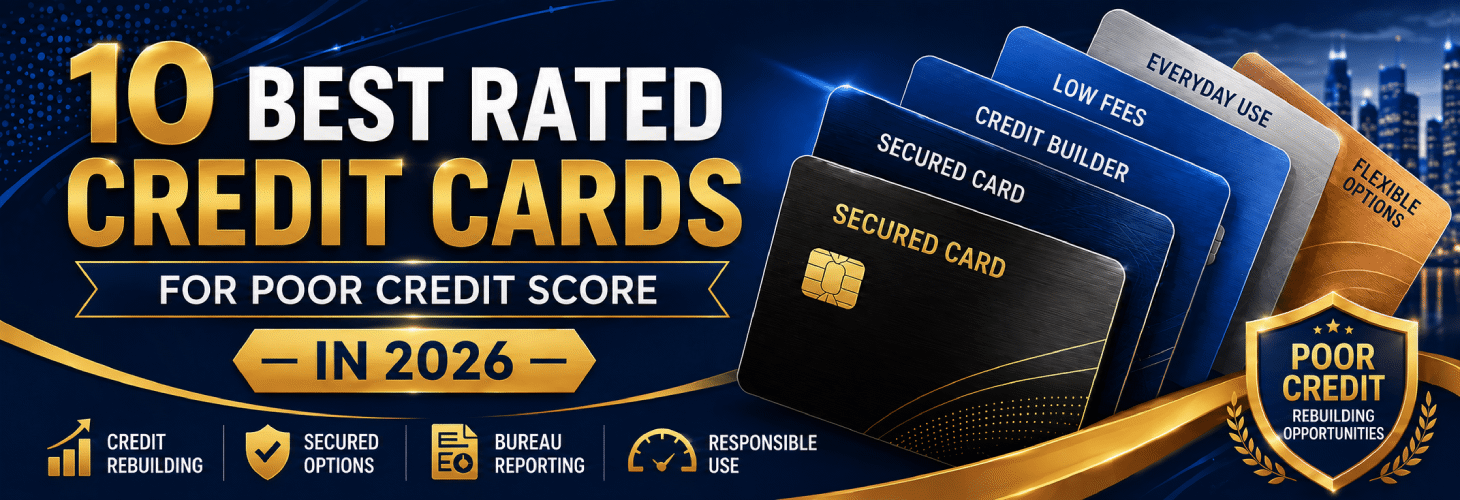
10 Best Rated Credit Cards for Poor Credit Score in 2026
The 10 best rated credit cards for a poor credit score in 2026 are designed to help applicants establish positive payment history without accepting unnecessary fees, confusing subscriptions or rewards that encourage overspending. Most cards in this ranking are secured, meaning the applicant provides refundable collateral that normally determines the spending limit, but Chime Card and Varo Believe use funded secured accounts without a conventional minimum deposit, and OpenSky Plus does not require a credit check. Our best overall choice is the Discover it® Secured Cash Back Credit Card because it combines a potentially low required deposit, no annual fee, quarterly 5% cash-back categories, first-year Cashback Match and a documented path to an unsecured account after responsible use. Capital One Quicksilver Secured takes second place for simple unlimited 1.5% cash back, while Chime Card stands out for no interest, no annual fee, no credit check and rewards for members who meet direct-deposit tiers. Bank of America Customized Cash Rewards Secured and U.S. Bank Cash+ Secured offer the highest category-reward potential, while Varo Believe prioritizes predictable fee-free credit building. Every card reports or is designed to report account activity to the major credit bureaus, but no product can guarantee an approval or a higher score. The best card is the one a consumer can afford to fund, keep open at low cost and pay on time every month.
Important Note About Credit Cards for Poor Credit Score in 2026
This article was reviewed on August 14, 2026, but secured-card offers, deposit rules, rewards, APRs, graduation policies and issuer ownership can change without notice. “Poor credit” commonly refers to a FICO score below 580, yet issuers do not approve or decline applications using one universal cutoff, and a secured deposit never guarantees approval. Income, existing debt, recent delinquencies, identity verification, bankruptcy history and banking relationships may also affect the result. Several issuers display APRs and transaction fees dynamically inside an application; when an exact current number was not consistently visible on the public product page, the Quick Facts table tells readers to verify the application disclosure instead of presenting an estimate. A refundable deposit is not a fee, but it ties up money and does not pay the monthly bill unless the card specifically uses a funded-account model. Because most poor-credit cards carry high interest rates and no introductory APR, they should normally be paid in full rather than used for long-term borrowing or balance transfers. Review the official product link, cardholder agreement and exact offer before applying, and use prequalification when available to reduce avoidable hard inquiries.
What Are the Best Credit Cards for Poor Credit Score in 2026?
The best poor-credit credit card depends on the applicant’s cash available for a deposit, willingness to open a linked account, desire for rewards and need to avoid a hard credit inquiry. Discover it Secured is the strongest all-around conventional card because some approved applicants may qualify for a deposit as low as $49 to unlock at least a $200 line, while the card earns rotating-category cash back and matches first-year rewards. Quicksilver Secured is better for users who prefer the same 1.5% rate on every eligible purchase. Chime Card and Varo Believe are the leading funded-account alternatives: neither charges interest or an annual fee, but each requires a deposit account relationship, and Chime’s highest reward rate requires substantial qualifying direct deposits. Bank of America Customized Cash Rewards Secured and U.S. Bank Cash+ Secured reward users willing to manage categories, while Altitude Go Secured emphasizes dining and streaming. Capital One Platinum Secured is the best traditional low-deposit, no-rewards option. Bank of America Travel Rewards Secured is the most travel-friendly choice because it charges no annual or foreign transaction fee, and OpenSky Plus is the most accessible conventional secured card here for consumers who want no credit check and can provide at least $300.
How We Rated the 10 Best Credit Cards for Poor Credit Score
Our ratings prioritize safe, affordable credit building over promotional excitement. The largest weights go to annual fee, minimum deposit, whether the issuer performs a credit check, reporting to all three major credit bureaus, interest cost, transparency, account requirements and a documented opportunity to return the deposit or graduate to an unsecured card. Rewards matter, but only after core credit-building value: earning 5% cash back is not helpful if a card’s fee, high carried balance or late payment damages the consumer’s finances. We also evaluated foreign transaction charges, deposit flexibility, redemption restrictions, mobile-account tools, automatic payment options, merchant-category caps and whether a linked checking account or qualifying direct deposit is required. Conventional secured cards were compared with Chime and Varo’s funded-account structures, which reduce borrowing risk but require consumers to move money into the provider’s ecosystem. Editorial ratings are out of 5.0 and reflect each card’s intended role, not a prediction of approval, credit-limit size or score improvement. No score increase is guaranteed because credit models consider the entire report. The most effective card is generally a low-cost account used for one or two planned purchases, kept well below its limit when utilization is reported, and paid in full before the due date.
Favorable Details About Credit Cards for Poor Credit Score
- No annual fee dominates the ranking: Every selected product charges $0 annually, allowing responsible cardholders to keep accounts open without paying merely for access.
- All three bureaus receive reporting: The leading cards report payment activity to Equifax, Experian and TransUnion or publicly state that they report to the three major bureaus.
- Low or flexible funding options exist: Discover and Capital One Platinum may require as little as $49 for some approved applicants, while Chime has no conventional minimum deposit.
- Rewards are widely available: Eight ranked cards offer cash back or points, proving that rebuilding credit does not always require sacrificing purchase rewards.
- No-credit-check choices are available: Chime, Varo and OpenSky Plus provide application paths that do not depend on a traditional credit inquiry.
- Graduation opportunities can return deposits: Discover, Capital One, U.S. Bank and Bank of America describe reviews or upgrade possibilities that may release collateral after responsible use.
- Automatic payment tools reduce mistakes: Chime Safer Credit Building and Varo Safe Pay can use set-aside funds to cover balances when properly enabled and funded.
- Travel-friendly options exist: Bank of America Travel Rewards Secured, Capital One secured cards and other selected products can avoid foreign transaction fees.
Unfavorable Details About Credit Cards for Poor Credit Score
- Most cards require collateral: Conventional secured cards can tie up $49 to $5,000, and the deposit generally remains unavailable until graduation or account closure.
- Regular APRs are often high: A carried balance can cost far more than the rewards earned, making full monthly payment essential.
- Approval is never guaranteed: Issuers may still consider income, debt, bankruptcy, identity, banking history and available credit information.
- Rewards may be complicated: Discover and U.S. Bank require category activation, while Chime’s cash-back rate depends on membership and qualifying direct deposits.
- Linked banking can be mandatory: Chime and Varo require their own deposit accounts, and Varo requires at least $200 of incoming deposits during the qualifying period.
- Graduation timing is uncertain: Periodic review does not promise that a deposit will be released within a specific number of months.
1. Discover it® Secured Cash Back Credit Card – Best Overall Credit Card for Poor Credit Score
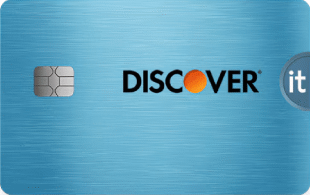
The Discover it Secured Cash Back Credit Card ranks first because it combines broad accessibility, meaningful rewards and an explicit unsecured-upgrade path without an annual fee. No credit score is required to apply, although the issuer may use a score when available and can still deny an application based on other factors. Depending on creditworthiness, the required refundable deposit may be $49, $99 or $200 to open a credit line starting at $200, which is unusually flexible among conventional secured cards. The card earns 5% cash back in changing quarterly categories up to the published maximum after activation and 1% on other eligible purchases. New cardholders receive an automatic dollar-for-dollar match of all cash back earned during the first 365 days, with no spending minimum, making the first-year reward structure especially strong for a rebuilding product. Account status is reported to all three major credit bureaus, and a positive track record can lead to return of the deposit and an upgrade to the unsecured Discover it Cash Back card. The card also includes free score access, account-freeze controls and fraud monitoring. Its weaknesses are a variable APR that must be confirmed during application, category activation and a Discover network that may have less international acceptance than Visa or Mastercard. The correct strategy is to earn modest rewards on planned purchases, keep reported utilization low and pay the statement balance in full.
Discover it Secured Cash Back Credit Card Quick Facts Table
| Quick Fact | Details |
| Card Name | Discover it® Secured Cash Back Credit Card |
| Company and Issuer | Discover, a Capital One company; Capital One, N.A. |
| Official Website | View the official Discover it Secured page |
| Card Type | Personal secured cash-back credit card |
| Payment Network | Discover |
| Annual Fee or Price | $0; refundable deposit of $49, $99 or $200 based on creditworthiness for a line starting at $200 |
| Rewards | 5% in activated quarterly categories up to the published quarterly maximum; 1% on other eligible purchases |
| Welcome Bonus | Unlimited dollar-for-dollar Cashback Match after the first 365 days for new cardholders |
| Intro APR | None publicly advertised for purchases |
| Regular APR | Variable APR shown in the current application disclosure |
| Balance Transfer Fee | Verify the current application disclosure |
| Foreign Transaction Fee | $0 |
| Recommended Credit | Poor, limited, rebuilding or no established score; approval still required |
| Best For | Overall credit rebuilding with rewards and a possible low deposit |
| Notable Benefits | Three-bureau reporting, refundable deposit, potential unsecured upgrade, free score and security alerts |
| Editorial Rating | 4.9 out of 5 |
Why Discover it Secured Ranks First
Discover it Secured wins because few rebuilding cards offer all four of the features that matter most: no annual fee, a potentially low deposit, high-category cash back and a documented route to an unsecured product. First-year Cashback Match can effectively double the rewards earned without imposing a large spending requirement, while reporting to all three bureaus supports the account’s primary purpose. The card is not effortless—5% categories require activation, the quarterly cap limits bonus earnings and approval remains conditional—but its costs and benefits are better balanced than the alternatives. A consumer who wants one conventional secured card with long-term potential should begin the comparison here.
2. Capital One Quicksilver Secured Cash Rewards Credit Card – Best for Flat-Rate Cash Back
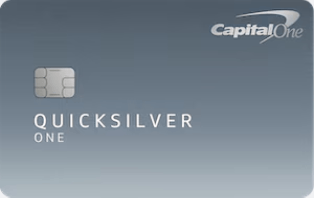
The Capital One Quicksilver Secured Cash Rewards Credit Card is the best poor-credit card for consumers who want straightforward rewards without tracking quarterly categories. It earns unlimited 1.5% cash back on eligible purchases and charges no annual fee, so every dollar of rewards can contribute to real value when the balance is paid in full. Approval requires a refundable minimum security deposit of $200, and the account is reported regularly to Equifax, Experian and TransUnion. Capital One can return the deposit as a statement credit and convert the account to unsecured after responsible use, although no fixed graduation date is promised. The card does not advertise a conventional welcome bonus or introductory APR, and its regular variable APR should be confirmed in the application disclosure; like most rebuilding cards, it is expensive if used to carry debt. Capital One’s U.S.-issued cards do not charge foreign transaction fees, giving Quicksilver Secured an advantage over many secured rewards competitors for online international purchases or travel. Applicants can check eligibility before proceeding, which may help reduce unnecessary hard inquiries, but preapproval is not final approval. Compared with Discover, Quicksilver offers a lower maximum cash-back rate but much less work. It is ideal for someone who wants one predictable card for a recurring bill, grocery purchase or fuel transaction and values consistency more than category optimization.
Capital One Quicksilver Secured Credit Card Quick Facts Table
| Quick Fact | Details |
| Card Name | Capital One Quicksilver Secured Cash Rewards Credit Card |
| Company and Issuer | Capital One, N.A. |
| Official Website | View the official Capital One Quicksilver Secured page |
| Card Type | Personal secured flat-rate cash-back credit card |
| Payment Network | Mastercard |
| Annual Fee or Price | $0; $200 minimum refundable security deposit |
| Rewards | Unlimited 1.5% cash back on eligible purchases |
| Welcome Bonus | No public welcome bonus advertised |
| Intro APR | None publicly advertised |
| Regular APR | Variable APR shown in the current application disclosure |
| Balance Transfer Fee | No fee at the standard transfer APR; a fee may apply to promotional transfer offers |
| Foreign Transaction Fee | $0 |
| Recommended Credit | Poor, rebuilding or limited credit; approval still required |
| Best For | Simple flat-rate cash back while rebuilding credit |
| Notable Benefits | Three-bureau reporting, no annual fee, eligibility check and potential deposit return |
| Editorial Rating | 4.8 out of 5 |
Why Capital One Quicksilver Secured Ranks Second
Quicksilver Secured ranks second because its unlimited 1.5% cash back is easier to realize than rotating or selected-category rewards. The $0 annual and foreign transaction fees keep the long-term cost low, while three-bureau reporting and possible deposit return support eventual movement beyond secured credit. Discover remains first because its required deposit can be lower for some applicants and its reward ceiling plus first-year match are richer. Quicksilver is nevertheless the better practical choice for a cardholder who does not want to activate categories or open a new checking account. Its high variable APR is the primary caution, so the balance should be paid in full.
3. Chime Card™ Secured Visa® Credit Card – Best No-Credit-Check Card With Cash Back
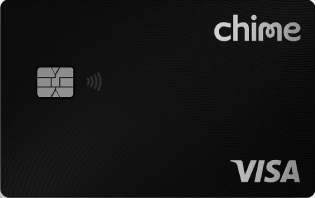
The Chime Card is a secured Visa Credit Card built around a Chime Checking Account and Secured Deposit Account rather than a conventional fixed credit line. It requires no credit check, charges no annual fee or interest and has no conventional minimum security deposit; the amount transferred into the secured account becomes the amount available to spend. Chime reports monthly payment information to all three major credit bureaus but does not report a utilization percentage because the card has no preset limit. Safer Credit Building can automatically use set-aside funds to pay the statement balance, reducing the chance of a missed payment when properly enabled and funded. The 2026 rewards structure depends on membership status: qualifying Chime Prime members can earn 5% cash back and qualifying Chime Plus members can earn 2% in a monthly selected category on up to $1,500 of eligible card purchases. Prime generally requires at least $3,000 of qualifying direct deposits within the applicable period, while Plus has lower direct-deposit thresholds, so the headline 5% rate is not automatic. Chime requires users to open its checking account, and closing the Chime Card may prevent reopening it. There are no late fees or interest, but unpaid balances can pause new purchases and late information may eventually be reported. Chime is ideal for applicants who already want its banking ecosystem and prefer a funded spending model that limits debt risk.
Chime Card Secured Visa Credit Card Quick Facts Table
| Quick Fact | Details |
| Card Name | Chime Card™ Secured Visa® Credit Card |
| Company and Issuer | Chime Financial technology platform; issued by The Bancorp Bank, N.A. or Stride Bank, N.A. |
| Official Website | View the official Chime Card page |
| Card Type | Funded secured credit-builder card |
| Payment Network | Visa |
| Annual Fee or Price | $0; no conventional minimum deposit, but spending requires funded secured-account money |
| Rewards | 5% for qualifying Prime or 2% for qualifying Plus members in a monthly selected category on up to $1,500 of eligible purchases |
| Welcome Bonus | No traditional welcome bonus advertised |
| Intro APR | Not applicable; no interest charged |
| Regular APR | 0% |
| Balance Transfer Fee | Balance transfers are not offered as a standard card feature |
| Foreign Transaction Fee | $0 international transaction fee; ATM or third-party fees may apply |
| Recommended Credit | Poor, rebuilding, limited or no credit; no credit check to apply |
| Best For | Credit building without interest or a hard inquiry, with direct-deposit rewards |
| Notable Benefits | Three-bureau reporting, utilization not reported, Safer Credit Building and no minimum funding amount |
| Editorial Rating | 4.7 out of 5 |
Why Chime Card Ranks Third
Chime ranks third because its funded-account structure removes interest, annual fees and traditional credit-check risk while still supporting all-three-bureau reporting. The ability to earn 2% or 5% in a selected category can make it more rewarding than most fintech credit builders. It does not rank higher because users must open a Chime Checking Account, the top reward rate requires substantial qualifying direct deposits, and the card does not behave like a conventional revolving line. For a consumer already using Chime who wants automatic payment protection and no utilization reporting, those differences can be strengths rather than drawbacks.
4. Bank of America® Customized Cash Rewards Secured Credit Card – Best for Choice-Category Rewards
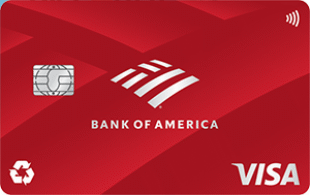
The Bank of America Customized Cash Rewards Secured Credit Card offers the highest first-year category rate in this ranking for applicants who can match spending to one selected category. During the first year, the card earns 6% cash back in the choice category through a 3% base rate plus a 3% first-year bonus, 2% at grocery stores and wholesale clubs, and 1% on other purchases. After the first year, the choice category returns to 3%. The 6% or later 3% category and the 2% categories share a $2,500 combined quarterly purchase limit, after which purchases earn 1%. Available choice categories include gas and EV charging, online shopping and eligible cable, internet, phone or streaming, dining, travel, drugstores, and home improvement or furnishings, and the selection can generally be changed monthly. The card has no annual fee, but a refundable deposit from $200 to $5,000 is required, and the credit limit depends on the deposit, income and ability to pay. There is no conventional new-account cash bonus or introductory APR; the first-year category boost is the secured product’s promotional feature. The variable purchase APR was 27.49% at review time, balance transfers cost 5%, and foreign purchases normally carry a fee. Bank of America periodically reviews accounts and may return the deposit, but graduation is not guaranteed. The card best suits organized domestic spenders who pay in full.
Bank of America Customized Cash Rewards Secured Credit Card Quick Facts Table
| Quick Fact | Details |
| Card Name | Bank of America® Customized Cash Rewards Secured Credit Card |
| Company and Issuer | Bank of America, N.A. |
| Official Website | View the official Bank of America Customized Cash Rewards Secured page |
| Card Type | Personal secured category cash-back credit card |
| Payment Network | Visa |
| Annual Fee or Price | $0; $200–$5,000 refundable security deposit |
| Rewards | First year: 6% selected category, 2% groceries and wholesale clubs, 1% otherwise; 6% and 2% share a $2,500 quarterly cap; selected category becomes 3% after year one |
| Welcome Bonus | Extra 3% cash back in the selected category during the first year; no traditional cash bonus |
| Intro APR | None |
| Regular APR | 27.49% variable |
| Balance Transfer Fee | 5% of each transfer |
| Foreign Transaction Fee | 3% |
| Recommended Credit | Poor, rebuilding or limited credit; approval still required |
| Best For | High first-year rewards in a chosen spending category |
| Notable Benefits | Monthly category choice, periodic deposit-return reviews and cash-reward flexibility |
| Editorial Rating | 4.6 out of 5 |
Why Bank of America Customized Cash Rewards Secured Ranks Fourth
Customized Cash Rewards Secured takes fourth place because a 6% first-year choice category is exceptional for a credit-building product, and users can align the category with fuel, online purchases, dining, travel or another recurring expense. The no-annual-fee structure and periodic deposit reviews add long-term value. It ranks below Chime and the top two cards because at least $200 must be tied up, the best categories share a quarterly cap, foreign purchases cost extra and the 27.49% variable APR is expensive. For a disciplined domestic spender who pays in full and monitors the cap, it can produce the highest first-year cash return in the list.
5. U.S. Bank Cash+® Secured Visa® Credit Card – Best for Household Bills

The U.S. Bank Cash+ Secured Visa Credit Card is particularly valuable for rebuilding consumers who want elevated cash back on household expenses that many cards treat as ordinary purchases. It earns 5% cash back on the first $2,000 in combined eligible purchases each quarter in two selected 5% categories, 2% in one selected everyday category and 1% on other eligible purchases. Categories can include home utilities, TV, internet and streaming, cell phone providers, fast food, department stores, electronics, gyms, furniture, movie theaters and other listed options, while the 2% selection can include groceries, restaurants or gas and EV charging. Quarterly enrollment is required; without it, eligible spending may earn only the base rate. The card also earns 5% on qualifying prepaid air, hotel and car reservations through the U.S. Bank Travel Center. A $300 to $5,000 refundable deposit establishes the credit limit, and there is no annual fee. U.S. Bank reports account activity to the three major bureaus and may automatically graduate a responsible account to the unsecured Cash+ Visa Signature Card, returning the deposit. No public welcome bonus or introductory APR is advertised, and applicants should confirm the variable APR, balance-transfer fee and foreign transaction fee inside the current application disclosure. Cash+ Secured is ideal for someone who can fund at least $300 and deliberately place two predictable bill categories on the card each quarter.
U.S. Bank Cash+ Secured Visa Credit Card Quick Facts Table
| Quick Fact | Details |
| Card Name | U.S. Bank Cash+® Secured Visa® Card |
| Company and Issuer | U.S. Bank National Association |
| Official Website | View the official U.S. Bank Cash+ Secured page |
| Card Type | Personal secured customizable cash-back credit card |
| Payment Network | Visa |
| Annual Fee or Price | $0; $300–$5,000 refundable security deposit |
| Rewards | 5% on first $2,000 in combined quarterly purchases in two selected categories; 2% in one everyday category; 1% otherwise; 5% on eligible Travel Center bookings |
| Welcome Bonus | No standard welcome bonus advertised |
| Intro APR | None publicly advertised |
| Regular APR | Variable APR shown in the current application disclosure |
| Balance Transfer Fee | Verify the current application disclosure |
| Foreign Transaction Fee | Verify the current application disclosure before foreign use |
| Recommended Credit | Poor, rebuilding or limited credit; approval still required |
| Best For | Utilities, internet, streaming, phone and other selected household expenses |
| Notable Benefits | Three-bureau reporting, potential automatic graduation, chosen due date and zero fraud liability |
| Editorial Rating | 4.5 out of 5 |
Why U.S. Bank Cash+ Secured Ranks Fifth
Cash+ Secured ranks fifth because its selected 5% categories can reward bills that are difficult to bonus elsewhere, and the card can graduate automatically to the unsecured Cash+ product. It has no annual fee and a wide $300 to $5,000 deposit range. The card falls behind Bank of America Customized Cash Rewards because its minimum funding requirement is higher, categories must be activated every quarter and exact dynamic financing terms require an additional disclosure check. For a household willing to manage selections and pay in full, however, Cash+ Secured can earn more on utilities and communications expenses than nearly every other rebuilding card.
6. Varo Visa® Believe Credit Card – Best Fee-Free Funded Credit Builder
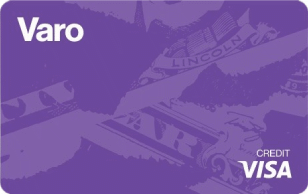
The Varo Visa Believe Credit Card is a secured credit builder that avoids conventional interest, annual fees, hard credit checks and minimum security deposits. Instead of borrowing against a bank-assigned limit, the cardholder moves money into a Varo Believe Secured Account, and those funds determine the available spending amount. Varo reports activity to all three major credit bureaus, while the optional Safe Pay feature can use the secured funds to pay the monthly balance in full. The structure makes it difficult to spend more than the money already set aside and removes revolving interest, which is valuable for someone recovering from past debt problems. Eligibility requires a Varo Bank Account with money available, no overdue Varo Advance and at least $200 of incoming deposits during the previous 31 days. That account and deposit requirement is the main barrier: Believe is not a stand-alone card for consumers who prefer their current bank. It also does not advertise a general card-rewards program, so its value comes from cost control and reporting rather than cash back. Varo states that the card has no annual, foreign transaction, replacement or penalty fees, although ATM operators and separate Varo products can have their own charges. Consumers should enable Safe Pay only after understanding how funds are held and confirm sufficient money remains available to cover every posted purchase.
Varo Visa Believe Credit Card Quick Facts Table
| Quick Fact | Details |
| Card Name | Varo Visa® Believe Credit Card |
| Company and Issuer | Varo Bank, N.A. |
| Official Website | View the official Varo Believe page |
| Card Type | Funded secured credit-builder card |
| Payment Network | Visa |
| Annual Fee or Price | $0; no conventional minimum security deposit, but spending requires funded secured-account money and eligibility requires incoming deposits |
| Rewards | No general credit-card rewards program advertised |
| Welcome Bonus | No standard welcome bonus advertised |
| Intro APR | Not applicable; no interest charged |
| Regular APR | 0% |
| Balance Transfer Fee | Balance transfers are not allowed |
| Foreign Transaction Fee | $0 |
| Recommended Credit | Poor, rebuilding, limited or no credit; no credit check to apply |
| Best For | Fee-free, interest-free credit building with money already set aside |
| Notable Benefits | Three-bureau reporting, Safe Pay, no credit check and user-funded spending limit |
| Editorial Rating | 4.4 out of 5 |
Why Varo Believe Ranks Sixth
Varo Believe ranks sixth because it offers one of the cleanest cost structures available to a poor-credit applicant: no interest, annual fee, foreign transaction fee or traditional credit check. Its funded limit and Safe Pay feature can discourage debt accumulation while three-bureau reporting builds history. Chime ranks higher because it adds potential cash back and requires no stated minimum incoming deposit simply to begin the card application, although Chime has its own account requirements. Varo’s $200 recent incoming-deposit qualification and absence of purchase rewards narrow its audience. For an existing Varo customer seeking control rather than borrowing capacity, Believe can be the best card in the entire ranking.
7. U.S. Bank Altitude® Go Secured Visa® Credit Card – Best for Dining and Streaming

The U.S. Bank Altitude Go Secured Visa Credit Card is the strongest restaurant-focused credit card in this poor-credit ranking. It earns 4X points on the first $2,000 in eligible dining, takeout and restaurant-delivery purchases each quarter, 2X at qualifying grocery stores, gas stations, EV charging stations and streaming services, and 1X on other eligible purchases. After 11 consecutive months of qualifying streaming-service purchases, the account can receive a $15 annual statement credit. The card charges no annual fee and requires a refundable deposit from $300 to $5,000, which becomes the credit limit and is held in a secured savings account. U.S. Bank reports to all three major bureaus and may automatically graduate a qualifying account to the unsecured Altitude Go Visa Signature Card, at which point the deposit is returned. Point redemption values can vary, and merchants at supercenters, discount stores or wholesale clubs may not receive the expected grocery or fuel category code. Dining rewards are capped each quarter, while the $300 minimum deposit is higher than the lowest possible Capital One or Discover requirement. No public introductory APR or welcome bonus is advertised, and current APR and transaction fees must be verified in the application disclosure. The card works best for a consumer who spends modestly on dining and streaming and pays every statement in full.
U.S. Bank Altitude Go Secured Visa Credit Card Quick Facts Table
| Quick Fact | Details |
| Card Name | U.S. Bank Altitude® Go Secured Visa® Card |
| Company and Issuer | U.S. Bank National Association |
| Official Website | View the official U.S. Bank Altitude Go Secured page |
| Card Type | Personal secured dining-rewards credit card |
| Payment Network | Visa |
| Annual Fee or Price | $0; $300–$5,000 refundable security deposit |
| Rewards | 4X dining, takeout and delivery on first $2,000 per quarter; 2X grocery, gas, EV charging and streaming; 1X otherwise |
| Welcome Bonus | No standard welcome bonus advertised |
| Intro APR | None publicly advertised |
| Regular APR | Variable APR shown in the current application disclosure |
| Balance Transfer Fee | Verify the current application disclosure |
| Foreign Transaction Fee | Verify the current application disclosure before foreign use |
| Recommended Credit | Poor, rebuilding or limited credit; approval still required |
| Best For | Dining, takeout, delivery and recurring streaming purchases |
| Notable Benefits | $15 annual streaming credit, three-bureau reporting and potential automatic graduation |
| Editorial Rating | 4.3 out of 5 |
Why U.S. Bank Altitude Go Secured Ranks Seventh
Altitude Go Secured takes seventh place because its 4X dining category and $15 streaming credit are unusually generous for a secured card, and automatic graduation can provide a clear long-term destination. It ranks below Cash+ Secured because household bill categories are useful to a broader rebuilding audience and below Varo because Varo requires no interest or annual fee and avoids a traditional credit check. The $300 deposit, quarterly dining cap and variable point values also reduce universal appeal. A restaurant-heavy user who can afford the deposit may reasonably rank Altitude Go much higher than seventh.
8. Capital One Platinum Secured Credit Card – Best for a Low Upfront Deposit
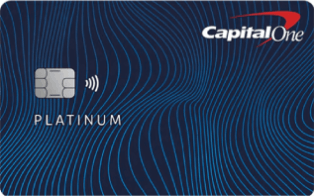
The Capital One Platinum Secured Credit Card is a simple credit-building account with no rewards and no annual fee, but its deposit structure can make it more accessible than cards requiring the full credit line in cash. Based on creditworthiness, an approved applicant may need to provide $49, $99 or $200 to open an initial credit line of at least $200. Additional deposits can raise the opening line up to the applicable maximum, and the required deposit can be paid in installments of at least $20 within 35 days of approval. Capital One reports the account to all three major bureaus, may consider the card for a credit-line increase in as little as six months and can return the deposit through an upgrade to an unsecured Platinum card after responsible use. None of those outcomes is guaranteed, and some users may remain secured longer than expected. The card has no welcome bonus or purchase rewards, and its high variable APR makes carrying a balance costly; applicants must verify the current rate during the application. Capital One does not charge foreign transaction fees on U.S.-issued cards, and CreditWise provides access to credit-monitoring tools. Platinum Secured is best for an applicant who qualifies for the $49 or $99 deposit, wants a conventional Mastercard and values low entry cost more than rewards.
Capital One Platinum Secured Credit Card Quick Facts Table
| Quick Fact | Details |
| Card Name | Capital One Platinum Secured Credit Card |
| Company and Issuer | Capital One, N.A. |
| Official Website | View the official Capital One Platinum Secured page |
| Card Type | Personal secured credit-building card |
| Payment Network | Mastercard |
| Annual Fee or Price | $0; refundable $49, $99 or $200 minimum deposit based on creditworthiness for at least a $200 line |
| Rewards | No rewards program |
| Welcome Bonus | No standard welcome bonus advertised |
| Intro APR | None publicly advertised |
| Regular APR | Variable APR shown in the current application disclosure |
| Balance Transfer Fee | No fee at the standard transfer APR; a fee may apply to promotional offers |
| Foreign Transaction Fee | $0 |
| Recommended Credit | Poor, rebuilding or limited credit; no score required to apply, but approval criteria apply |
| Best For | Applicants who qualify for a deposit below the opening credit line |
| Notable Benefits | Three-bureau reporting, possible six-month credit-line review, deposit installments and potential unsecured upgrade |
| Editorial Rating | 4.2 out of 5 |
Why Capital One Platinum Secured Ranks Eighth
Platinum Secured ranks eighth because its possible $49 deposit can be the most important feature for a consumer who cannot comfortably lock up $200 or $300. It reports to all three bureaus, charges no annual or foreign transaction fee and offers possible credit-line growth and unsecured conversion. The product ranks below Quicksilver Secured because it earns no cash back and below Discover because Discover now combines a similar low-deposit possibility with category rewards and first-year matching. For applicants who fail to qualify for a discounted deposit, Platinum’s value becomes less distinctive, but its simple pricing and major issuer support still make it a credible rebuilding tool.
9. Bank of America® Travel Rewards Secured Credit Card – Best for International Travel
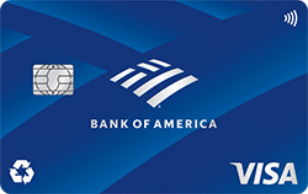
The Bank of America Travel Rewards Secured Credit Card gives rebuilding consumers a rare combination of no annual fee, no foreign transaction fee and unlimited travel points. It earns 1.5 points per dollar on every eligible purchase, and points do not expire while the account remains open. Redemptions can offset qualifying travel and dining purchases through a statement credit, allowing the cardholder to book with a preferred airline, hotel or travel site rather than being restricted to a single loyalty program. The card requires a refundable deposit from $200 to $5,000, and the credit limit is determined using the deposit, income and ability to pay. Bank of America periodically reviews the account and may return the deposit, although not every cardholder qualifies and no fixed graduation timetable is promised. Secured products do not receive a traditional points bonus or introductory APR. At review time, the standard variable APR was 27.49%, and balance transfers cost 5%, so the card should be paid in full and not used for debt consolidation. The Visa network and lack of foreign transaction fees make it the best international option here, but a low limit can complicate hotel or rental-car authorization holds. Travelers should maintain extra available credit, notify the issuer when appropriate and carry a backup payment method.
Bank of America Travel Rewards Secured Credit Card Quick Facts Table
| Quick Fact | Details |
| Card Name | Bank of America® Travel Rewards Secured Credit Card |
| Company and Issuer | Bank of America, N.A. |
| Official Website | View the official Bank of America Travel Rewards Secured page |
| Card Type | Personal secured travel-rewards credit card |
| Payment Network | Visa |
| Annual Fee or Price | $0; $200–$5,000 refundable security deposit |
| Rewards | Unlimited 1.5 points per $1 on eligible purchases |
| Welcome Bonus | No new-account bonus advertised for the secured product |
| Intro APR | None |
| Regular APR | 27.49% variable |
| Balance Transfer Fee | 5% of each transfer |
| Foreign Transaction Fee | $0 |
| Recommended Credit | Poor, rebuilding or limited credit; approval still required |
| Best For | International purchases and flexible travel or dining statement credits |
| Notable Benefits | No foreign transaction fee, points that do not expire while open and periodic deposit-return reviews |
| Editorial Rating | 4.1 out of 5 |
Why Bank of America Travel Rewards Secured Ranks Ninth
Travel Rewards Secured ranks ninth overall but first for international travel because its Visa acceptance, $0 annual fee and $0 foreign transaction fee are difficult to match among conventional secured cards. Unlimited 1.5X earning is simple, and flexible travel or dining credits avoid a single-airline commitment. It ranks below broader cash-back products because points are most useful when redeemed for eligible purchases, at least $200 must be deposited and the 27.49% variable APR is high. Rebuilding consumers who rarely travel will generally earn more practical value from Quicksilver or a category card, while international users may place this card near the top.
10. OpenSky® Plus Secured Visa® Credit Card – Best Conventional Card With No Credit Check

The OpenSky Plus Secured Visa Credit Card is the most accessible conventional revolving card in this ranking for an applicant who wants no credit check and can afford a $300 refundable deposit. The deposit normally becomes the credit limit, and eligible users can fund up to $3,000 subject to approval. OpenSky reports payment activity to all three major credit bureaus and charges no annual fee. The issuer also advertises up to 10% cash back through eligible merchant offers rather than a universal cash-back rate, so rewards should be viewed as occasional discounts instead of guaranteed earnings on every purchase. A limited-time promotion offered a $30 statement credit for same-day funding of $500 or $70 for same-day funding of $1,000, with the account required to remain open and in good standing; applicants should verify whether that offer is still displayed. The current product page showed a variable APR around 28.99%, but the application disclosure controls because variable rates can change. OpenSky does not require a bank account for its traditional secured application in the same way some competitors do, although a payment method and identity verification are still necessary. The card’s main disadvantages are the $300 minimum deposit, high APR, transaction fees that require disclosure review and less attractive general rewards than Discover or Quicksilver. Its value is access: no traditional credit check can help consumers whose recent report would otherwise trigger an immediate rejection.
OpenSky Plus Secured Visa Credit Card Quick Facts Table
| Quick Fact | Details |
| Card Name | OpenSky® Plus Secured Visa® Credit Card |
| Company and Issuer | OpenSky division of Capital Bank, N.A. |
| Official Website | View the official OpenSky Plus Secured page |
| Card Type | Personal secured credit-building card |
| Payment Network | Visa |
| Annual Fee or Price | $0; $300–$3,000 refundable security deposit subject to approval |
| Rewards | Up to 10% cash back through eligible OpenSky merchant offers; not a flat rate on all purchases |
| Welcome Bonus | Limited funding offer: $30 after same-day $500 funding or $70 after same-day $1,000 funding; verify availability |
| Intro APR | None |
| Regular APR | 28.99% variable shown on the product page; verify the current application disclosure |
| Balance Transfer Fee | Verify the current application disclosure |
| Foreign Transaction Fee | Verify the current application disclosure before foreign use |
| Recommended Credit | Poor, rebuilding, limited or no credit; no credit check to apply |
| Best For | A conventional secured Visa without a traditional credit inquiry |
| Notable Benefits | Three-bureau reporting, no annual fee, deposit-controlled limit and no credit check |
| Editorial Rating | 4.0 out of 5 |
Why OpenSky Plus Secured Ranks Tenth
OpenSky Plus ranks tenth because its no-credit-check application can be valuable after denials elsewhere, and the $0 annual fee makes it preferable to OpenSky’s fee-charging secured versions for consumers who can fund $300. Three-bureau reporting fulfills the central credit-building purpose, while limited merchant rewards and funding credits add modest value. It ranks below every other card because the minimum deposit is comparatively high, the APR is expensive and there is no standard flat reward rate or clearly documented automatic graduation path. OpenSky Plus is best treated as an accessibility backstop after using soft prequalification with lower-deposit, higher-reward alternatives.
10 Best Rated Credit Cards for Poor Credit Score in 2026 Comparison Table
| Credit Card | Intro Offer | Reward Rate | Annual Fee | Intro APR | Regular APR |
|---|---|---|---|---|---|
| Discover it® Secured Cash Back Credit Card | Unlimited first-year Cashback Match | 1%–5% cash back | $0 | None advertised | Variable APR; verify application disclosure |
| Capital One Quicksilver Secured Cash Rewards Credit Card | None advertised | Unlimited 1.5% cash back | $0 | None advertised | Variable APR; verify application disclosure |
| Chime Card™ Secured Visa® Credit Card | No traditional welcome bonus | Up to 5% cash back with qualifying tier | $0 | Not applicable; no interest | 0% |
| Bank of America® Customized Cash Rewards Secured Credit Card | Extra 3% choice-category cash back for the first year | 1%–6% first year; 1%–3% afterward | $0 | None | 27.49% variable |
| U.S. Bank Cash+® Secured Visa® Card | None advertised | 1%–5% cash back | $0 | None advertised | Variable APR; verify application disclosure |
| Varo Visa® Believe Credit Card | None advertised | No card rewards advertised | $0 | Not applicable; no interest | 0% |
| U.S. Bank Altitude® Go Secured Visa® Card | None advertised | 1X–4X points | $0 | None advertised | Variable APR; verify application disclosure |
| Capital One Platinum Secured Credit Card | None advertised | No rewards | $0 | None advertised | Variable APR; verify application disclosure |
| Bank of America® Travel Rewards Secured Credit Card | None advertised | Unlimited 1.5X points | $0 | None | 27.49% variable |
| OpenSky® Plus Secured Visa® Credit Card | Limited funding credits up to $70 | Up to 10% cash back through eligible offers | $0 | None | 28.99% variable shown; verify disclosure |
How to Choose the Best Credit Card for a Poor Credit Score
Choose a poor-credit card by starting with approval risk and total cost, not rewards. First, review credit reports for errors and use a soft prequalification tool when available. Next, decide whether a conventional secured card or funded account is the better model. A conventional card can help demonstrate management of a reported limit, but the deposit may remain locked for months or years; Chime and Varo let users spend from funded accounts and avoid interest, but require linked banking relationships. Deposit affordability is critical: never use rent, emergency savings or money needed for bills to fund a secured card. Compare annual fee, APR, foreign fee, reporting to all three bureaus and documented graduation policy, then look at rewards. If utilization is reported, keep the statement balance low relative to the limit—often below 30%, and preferably lower—by making early payments. Put one predictable subscription or small recurring purchase on the card, enable alerts and autopay at least the minimum while aiming to pay the full statement. After six to twelve months, review progress and upgrade options before opening another account. A card should create positive history, not new debt.
Secured Credit Cards Versus Unsecured Credit Cards for Poor Credit
A secured credit card requires collateral, while an unsecured card relies primarily on the issuer’s willingness to extend credit without a deposit. The deposit on a conventional secured card usually equals or helps establish the limit and is refundable if the account graduates or closes in good standing; it does not normally pay monthly charges. Funded cards such as Chime and Varo are different because the money moved into the secured account supports current spending and repayment. Unsecured subprime cards avoid tying up cash, but many charge annual, monthly, processing or credit-limit-increase fees, and a small starting line can be reduced further by upfront charges. For that reason, a no-annual-fee secured card is usually safer than an unsecured fee-heavy card when the applicant can afford the refundable deposit. An unsecured prequalification offer can still be competitive if it has no annual fee and transparent terms. Consumers should calculate the first two years of fees, not only the opening cost, and reject products that obscure pricing. The goal is to graduate to a mainstream unsecured account after positive history, not to remain indefinitely in an expensive subprime product.
How to Apply or Check for Credit Card Preapproval With Poor Credit
Begin with the issuer’s official prequalification or eligibility tool because a soft inquiry can indicate likely fit without lowering the score, although it never guarantees final approval. Gather Social Security number, income, housing payment, employment and bank-funding information, and make sure names and addresses match the credit reports. For a secured card, confirm that the deposit can be paid from an acceptable account within the issuer’s deadline; Capital One may allow deposit installments during its funding window, while Citi and other banks may require electronic transfer within a shorter period. No-credit-check cards can still verify identity, income, bank activity and prior account behavior. Chime requires its checking account, and Varo requires a Varo Bank Account plus qualifying incoming deposits. Avoid applying for several cards after each rejection, because hard inquiries can accumulate and the underlying issue remains. Instead, read the denial notice, correct report errors, reduce debt or choose a no-credit-check product. Before submitting, capture the exact annual fee, APR, deposit, rewards and offer terms shown in the application so the account received matches the product expected.
What Credit Score Is Needed for a Credit Card for Poor Credit?
Poor credit is often described as a FICO score below 580, but there is no single minimum score for the cards in this ranking. Discover and Capital One state that no credit score is required to apply for their secured products, yet they can use a score if available and evaluate income, debt and other conditions. Chime, Varo and OpenSky do not require a traditional credit check, but they impose identity, banking, funding or account-eligibility rules. Bank of America and U.S. Bank secured cards are designed to establish or rebuild credit, although approval remains subject to underwriting. A low score caused by high utilization may recover faster than one accompanied by recent charge-offs, unpaid collections or bankruptcy, and Citi’s secured product, for example, specifically restricts recent bankruptcy histories even though it targets builders. Consumers should not pay for a questionable “guaranteed approval” claim. Instead, use soft prequalification, verify income and debt information, and choose a card whose deposit is affordable. On-time payments, low reported balances and time—not opening many accounts—are the foundations of score improvement.
Credit Card Annual Fees, Deposits and Break-Even Value for Poor Credit
Every card in this top ten has a $0 annual fee, but the economic cost can still include a refundable deposit, interest, transaction fees, account requirements and the opportunity cost of locked cash. Discover or Capital One Platinum may require only $49 for some approved applicants, while Quicksilver and Bank of America begin at $200 and U.S. Bank or OpenSky Plus begin at $300. A $300 deposit returned after responsible graduation is not the same as a $300 fee, but it cannot earn or cover other priorities while held. Chime and Varo do not require a conventional minimum deposit, yet spending depends on funded account money, and their linked checking or incoming-deposit rules may require changing financial routines. Rewards should be compared with this cost: earning $30 annually does not justify carrying a $500 balance at an APR near 28%. Foreign transaction and balance-transfer fees also matter when relevant. The simplest break-even rule for rebuilding credit is to select the lowest-cost card that reports to all three bureaus, fund only an affordable limit, pay in full and retain the account long enough to establish positive history.
Best Credit Card for Poor Credit Score for Cash Back in 2026
Discover it Secured is the best overall cash-back card for poor credit because its activated 5% quarterly categories, 1% base rate and unlimited first-year Cashback Match create a high ceiling without an annual fee. Bank of America Customized Cash Rewards Secured can produce an even higher 6% rate in one chosen category during the first year, but the 6% and grocery or wholesale-club 2% rates share a $2,500 quarterly cap, and the choice category drops to 3% after year one. U.S. Bank Cash+ Secured is strongest for utilities, phone, internet and other selected household bills, while Quicksilver Secured wins for simplicity with unlimited 1.5%. Chime can earn 5% for Prime members or 2% for Plus members on up to $1,500 of eligible selected-category purchases, but those rates require qualifying direct deposits. Cash back should never change the repayment plan: a high secured-card APR can erase a full year of rewards in one or two months. The best realized return comes from normal planned purchases that are paid in full.
Best Credit Card for Poor Credit Score for Balance Transfers in 2026
None of the cards in this ranking is a strong balance-transfer recommendation. Poor-credit and secured cards generally offer no 0% introductory transfer period, charge high regular APRs and may impose a transfer fee even when the transferred balance receives the same expensive rate as purchases. Bank of America’s secured products, for example, charge a 5% transfer fee and then apply a 27.49% variable APR, which is unlikely to improve most high-interest debt situations. Capital One may waive a transfer fee when the standard APR applies, but avoiding a fee does not make a high APR economical. Chime and Varo do not provide conventional balance transfers, and a secured deposit would tie up additional cash that might be better used to reduce the existing balance directly. A consumer with poor credit should contact current lenders about hardship programs, consider a reputable nonprofit credit counselor or build payment history before seeking a true promotional transfer card. Never move debt merely to open another high-cost account.
Best Credit Card for Poor Credit Score for International Travel in 2026
Bank of America Travel Rewards Secured is the best international travel card for poor credit in this list because it uses the Visa network, charges no annual or foreign transaction fee and earns unlimited 1.5 points per dollar. Its points can offset eligible travel and dining purchases, which is more flexible than a single airline or hotel program. Capital One Quicksilver Secured and Platinum Secured also avoid foreign transaction fees, while Quicksilver provides cash back that is easy to value. Chime and Varo advertise no international or foreign transaction fee, but their funded-account structures and ATM rules require extra planning, and third-party ATM operators may still charge. Discover it Secured can avoid a foreign fee but may have weaker acceptance in some destinations than Visa or Mastercard. Regardless of card, a low secured limit can be reduced temporarily by hotel, gas-station or rental-car authorization holds, so travelers should pay balances early, carry a second payment method and maintain emergency funds. Always choose local currency at checkout rather than accepting costly dynamic currency conversion.
Final Verdict: Which Credit Card for Poor Credit Score Is Best in 2026?
The Discover it Secured Cash Back Credit Card is the best overall credit card for a poor credit score in 2026 because it combines a possible deposit as low as $49, no annual fee, quarterly 5% cash back, first-year reward matching, three-bureau reporting and a documented unsecured upgrade path. Capital One Quicksilver Secured is the better choice for unlimited flat-rate rewards, while Chime Card is the strongest no-credit-check option for users who want no interest and can benefit from its checking and direct-deposit ecosystem. Bank of America Customized Cash Rewards Secured and U.S. Bank Cash+ Secured are the best category optimizers, Varo Believe is the leading fee-free funded credit builder, and Altitude Go Secured is best for dining. Capital One Platinum Secured remains valuable for applicants who qualify for a $49 or $99 deposit, Bank of America Travel Rewards Secured leads abroad, and OpenSky Plus provides a no-credit-check conventional Visa when other applications are risky. The correct card is not necessarily the one with the highest reward rate; it is the lowest-cost account the applicant can fund, manage and pay on time. Verify the live disclosure, use soft prequalification where possible, keep utilization low when reported and treat graduation to affordable unsecured credit as the long-term objective.