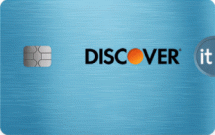

The Discover it® Secured Cash Back Credit Card is one of the most feature-rich secured credit cards available in 2026 because it combines credit-building functionality with a genuine cash-back rewards program, a potentially low refundable security deposit, no annual fee, first-year Cashback Match, automatic consideration for an unsecured upgrade, and reporting to all three major credit bureaus. The updated 2026 version provides 5% cash back in rotating quarterly categories up to the applicable quarterly maximum after activation and unlimited 1% cash back on other eligible purchases, giving consumers building or rebuilding credit access to the same general rewards concept normally associated with mainstream unsecured Discover cash-back cards. Discover states that no credit score is required to apply, although available credit information may still be considered, and the required refundable security deposit can currently be $49, $99, or $200 based on creditworthiness while unlocking a credit line of at least $200. Responsible cardholders can eventually have their deposit returned and transition to the unsecured Discover it Cash Back Credit Card, creating a clear path from secured credit to a conventional rewards account. The primary drawbacks are a relatively high variable APR, the need to activate quarterly 5% categories, potentially low initial credit limits, and the requirement to provide cash collateral, but for consumers whose main objective is establishing positive revolving credit history without sacrificing cash-back rewards, Discover it Secured Cash Back can be one of the strongest secured-card choices in 2026.
- Strong Rewards on Dining and Travel
- Flexible Chase Ultimate Rewards
- Affordable $95 Annual Fee
- 25% Travel Redemption Bonus
- Primary Rental Car Insurance
- No Airport Lounge Access
- Limited Bonus Categories
- No Intro APR Offer
- No Premium Travel Credits
- No In-Person Branch Support
Favorable Details:
- 5% Rotating Cash Back: Earn 5% cash back on eligible purchases in rotating quarterly categories up to the applicable quarterly maximum after activation.
- Unlimited 1% Cash Back: Eligible purchases outside the quarterly 5% categories continue earning unlimited 1% cash back.
- Unlimited Cashback Match: Discover automatically matches qualifying cash back earned during the first 365 days for eligible new cardmembers without a traditional fixed spending requirement.
- Security Deposit as Low as $49: Depending on creditworthiness, the required refundable security deposit can currently be $49, $99, or $200 while providing a minimum credit line of $200.
- $0 Annual Fee: Cardholders can build credit and earn rewards without paying an annual membership charge.
- No Credit Score Required to Apply: Discover states that applicants do not need an established credit score to submit an application, although available credit information may still be considered.
- Reports to All Three Credit Bureaus: Regular account reporting gives responsible cardholders an opportunity to establish payment history with Equifax, Experian, and TransUnion.
- Potential Security Deposit Refund: Cardholders who establish a positive track record can receive their security deposit back and transition to an unsecured Discover account.
- First-Time Late Fee Forgiveness: Discover generally does not charge a late fee the first time an eligible cardholder pays late under applicable account terms.
- Useful Security Features: $0 fraud liability for qualifying unauthorized purchases, account-freeze controls, credit monitoring, Social Security number alerts, and 24/7 customer service add practical value.
Unfavorable Details:
- Security Deposit Required: Even though the minimum deposit can be as low as $49 for qualifying applicants, consumers still need to provide refundable collateral before the account can be fully opened.
- High Regular APR: The latest published secured-card pricing has listed a variable purchase APR around 26.49%, making long-term balance carrying expensive.
- Quarterly Activation Required: The 5% cash-back categories must be activated, so cardholders who forget to activate may receive only the standard rewards rate.
- Quarterly Spending Limit: The 5% rate applies only up to the specified quarterly maximum, after which additional eligible spending generally earns 1%.
- Potentially Small Starting Credit Limit: Credit lines can begin at $200, which can cause utilization to increase quickly when normal monthly purchases are charged.
- Deposit Does Not Pay the Monthly Bill: The security deposit is collateral and does not replace the cardholder’s responsibility to make monthly payments.
- No Guaranteed Graduation Date: Responsible use can lead to deposit return and an unsecured upgrade, but graduation is not guaranteed on a specific date for every cardholder.
- No Premium Travel Benefits: The card does not include airport lounge membership, luxury travel credits, hotel elite status, or premium concierge services.
- International Acceptance Can Vary: Discover has strong domestic acceptance, but Visa and Mastercard can remain easier to use in certain international markets.
- Cash Advances Are Expensive: Cash advances carry a separate high APR and fee and normally do not earn rewards.
Discover it® Secured Cash Back Credit Card Facts Table
| Feature | Details |
| Credit Card Issuer | Discover Bank |
| Payment Network | Discover |
| Card Type | Secured Cash Back Credit Card |
| Credit Requirement | No credit score required to apply |
| Annual Fee | $0 |
| Security Deposit | $49, $99, or $200 based on creditworthiness; credit line starts at $200 |
| Rewards | 5% rotating categories up to quarterly maximum after activation; 1% other purchases |
| Welcome Offer | Unlimited first-year Cashback Match |
| Intro Purchase APR | No 0% purchase promotion prominently advertised |
| Regular APR | Current variable APR disclosed with the specific application offer |
| Credit Bureau Reporting | Reports account status to all three major bureaus |
| Upgrade Potential | Eligible responsible accounts may receive deposit back and move to unsecured Cash Back |
| Best For | Building or rebuilding credit while earning rewards |
| Notable Benefits | Reduced deposit potential, rewards, Cashback Match, upgrade path |
5% Rotating Cash Back Rewards
The updated Discover it Secured Cash Back Credit Card earns 5% cash back on qualifying purchases in rotating quarterly categories up to the applicable quarterly maximum after activation, making its rewards program substantially more competitive than many secured cards that provide no rewards or only a basic 1% rate. Quarterly categories can change throughout the year and may include common spending areas such as grocery stores, restaurants, gas stations, digital wallets, online retailers, home-improvement stores, or other everyday merchant groups depending on the published calendar. Cardholders must activate each quarterly promotion to receive the elevated rate, so consumers who want maximum value should set reminders at the beginning of every quarter and review the current category before making large purchases. The rotating structure requires more effort than a flat-rate rewards card, but receiving access to a 5% cash-back opportunity while simultaneously building or rebuilding credit makes Discover it Secured unusually rewarding for a secured product.
Unlimited 1% Cash Back on Other Purchases
Eligible purchases that do not qualify for the activated quarterly 5% categories earn unlimited 1% cash back, ensuring that ordinary spending continues generating rewards even when it falls outside the current promotional category. Groceries, utilities, clothing, gasoline, dining, streaming services, online purchases, travel, pharmacies, home-improvement expenses, and other transactions can therefore produce cash back when they do not receive the elevated quarterly rate. A 1% base return is lower than the 1.5% or 2% available from many mainstream unsecured rewards cards, but the comparison should account for the fact that Discover it Secured is specifically designed for consumers building or rebuilding credit who may not yet qualify for premium flat-rate products. The combination of a 1% floor and quarterly 5% opportunities gives the card a legitimate rewards proposition instead of treating cash back as a minor secondary feature.
How the Discover it Secured Cash Back Credit Card Works
Discover it Secured works like a conventional credit card after the required refundable security deposit has been provided and the account has been activated. The security deposit serves as collateral protecting the issuer against potential default, while the cardholder receives a revolving credit line that can be used for eligible purchases wherever Discover is accepted. Purchases generate cash-back rewards according to the applicable category structure, monthly statements show the amount owed, and the cardholder must make at least the required payment by each due date regardless of how much money was originally provided as security. Discover regularly reports account status to the three major credit bureaus, allowing responsible use to contribute positive credit history. When the cardholder establishes a qualifying positive track record, Discover can return the security deposit and transition the account to the unsecured Discover it Cash Back card.
$0 Annual Fee
The Discover it Secured Cash Back Credit Card charges no annual fee, which is particularly important for consumers building or rebuilding credit because an expensive recurring membership fee can unnecessarily increase the cost of establishing positive credit history. Many lower-tier credit cards aimed at consumers with damaged credit charge annual fees, monthly maintenance fees, account-opening fees, or other recurring costs while providing few rewards or benefits, whereas Discover allows cardholders to maintain the secured account without paying an annual membership charge. The absence of an annual fee also makes it easier to keep the account open while credit history ages, provided the account remains useful and responsibly managed. Consumers still need to consider interest charges, balance-transfer fees, cash-advance fees, and other account costs, but eliminating the annual membership charge makes the card’s basic ownership economics significantly more attractive.
Refundable Security Deposit
The defining feature of Discover it Secured is its refundable security deposit, which serves as collateral rather than a fee paid permanently to the issuer. Under the current 2026 structure, qualifying applicants may be required to provide $49, $99, or $200 depending on creditworthiness, while receiving access to a credit line beginning at a minimum of $200. This represents a significant change from traditional secured-card structures where the cardholder generally needs to deposit the entire amount of the requested credit limit dollar for dollar. The security deposit remains the cardholder’s money subject to the security agreement and can ultimately be returned when Discover determines the account qualifies to become unsecured or when the account is closed with the balance fully satisfied according to applicable terms. Consumers should therefore distinguish the refundable deposit from an annual fee because the deposit can eventually come back while a fee cannot.
$49, $99, or $200 Security Deposit Structure
Discover’s updated secured-card deposit structure can lower one of the largest barriers traditionally associated with obtaining a secured credit card. Instead of requiring every approved cardholder to deposit at least $200, the required amount can currently be $49, $99, or $200 based on Discover’s evaluation of creditworthiness, while the resulting minimum credit line begins at $200. A qualifying applicant required to provide only $49 therefore receives access to a revolving line larger than the cash collateral contributed, which can make the card more accessible to consumers who do not have several hundred dollars available for a traditional secured-card deposit. Applicants cannot choose the lowest deposit simply by preference because Discover determines the required amount, and providing the security deposit still does not guarantee that every future credit-management decision or limit increase will be approved.
Minimum $200 Credit Line
The minimum starting credit line is currently at least $200, although some cardholders may be able to establish a larger secured credit line by providing additional deposit funds before activating the account subject to Discover’s requirements. A $200 credit line is sufficient for small recurring purchases such as gasoline, streaming subscriptions, or a utility payment, but cardholders need to monitor utilization carefully because even modest purchases can represent a large percentage of such a small limit. A $100 reported balance on a $200 limit represents 50% utilization, for example, which can have a different credit-scoring effect than the same $100 balance on a $2,000 account. Consumers do not need to avoid using the card entirely, but keeping spending controlled and making payments before balances become excessive can make the account easier to manage while building credit.
Security Deposit Does Not Pay the Monthly Balance
One of the most important concepts for new secured-card users is that the refundable security deposit does not function as advance payment for purchases. If a cardholder provides a $200 security deposit and later charges $150 to the card, the monthly statement still requires repayment of that $150 according to the account terms. Discover continues holding the deposit as collateral rather than automatically deducting purchases from the deposited funds. This distinction separates a secured credit card from a prepaid or debit card because the cardholder is borrowing against a revolving credit line and creating payment history rather than simply spending deposited money. Failing to make required payments can cause late-payment reporting, account restrictions, collections activity, or application of security funds to unpaid debt, so the deposit should never be viewed as permission to skip monthly payments.
Potential Security Deposit Refund
A major advantage of Discover it Secured is the opportunity to receive the security deposit back without necessarily closing the credit card account. Discover regularly evaluates eligible accounts, and cardholders who establish a positive track record can have their deposit returned while the account is converted to an unsecured Discover it Cash Back Credit Card. This graduation feature is particularly valuable because it allows consumers to move from secured borrowing into a mainstream unsecured rewards account without necessarily applying for a completely new card and generating another hard credit inquiry. Positive payment history, responsible account use, and broader creditworthiness can influence whether Discover determines that security is no longer required. Graduation is not guaranteed on a particular date for every consumer, so cardholders should focus on consistently responsible behavior rather than assuming that deposit return will occur automatically after a specific number of months.
Upgrade to Discover it® Cash Back
Qualifying Discover it Secured cardholders can transition to the unsecured Discover it Cash Back Credit Card once Discover determines that the account has established a sufficient positive track record. When the account becomes unsecured, Discover returns the security deposit and the cardholder continues with a conventional revolving account that no longer requires cash collateral. Under the current product structure, the secured card already offers rewards similar to Discover’s rotating-category cash-back model, which can make the transition relatively straightforward. An unsecured upgrade can free the security-deposit money for savings, emergencies, or other financial goals while allowing the cardholder to maintain account history. Cardholders should continue paying responsibly after graduation because an unsecured account still carries the same fundamental obligation to repay purchases and can affect credit positively or negatively depending on usage.
Reports to All Three Major Credit Bureaus
Discover reports Discover it Secured account status to Equifax, Experian, and TransUnion, which is essential for a card specifically intended to help consumers establish or rebuild credit history. Regular reporting means payment history, account status, balances, available credit, and other relevant information can become part of the cardholder’s credit reports and influence future lending decisions. On-time payments and manageable utilization can contribute positive information, while late payments, default, or excessive balances can also be reported and potentially damage credit. Consumers should therefore think of Discover it Secured as a genuine credit account rather than merely a temporary financial product. The ability to affect all three major credit files gives responsible use the potential to support applications for future credit cards, auto loans, apartments, and other products where credit history matters.
No Credit Score Required to Apply
Discover currently states that no credit score is required to apply for the Discover it Secured Cash Back Credit Card, making it potentially accessible to applicants who have not yet established enough traditional credit activity to generate a conventional score. Discover may still use a credit score when one is available and can consider other application information, identity verification, income, existing obligations, prior account history, and underwriting factors. No score required therefore does not mean approval is guaranteed, nor does it mean Discover performs no evaluation of the applicant. The feature is especially relevant to young adults, new U.S. credit users, and consumers whose credit files are thin because it allows them to seek a genuine revolving account without needing to reach a particular advertised FICO score before submitting an application.
Unlimited Cashback Match Welcome Offer
Eligible new Discover it Secured cardmembers receive Unlimited Cashback Match, under which Discover automatically matches qualifying cash back earned from account approval through the first 365 days and generally adds the match within the stated processing period afterward. Unlike traditional bonuses requiring $500, $1,000, or several thousand dollars of purchases within three months, Cashback Match scales with the rewards generated through normal first-year spending and does not require a fixed minimum purchase amount. If a cardholder earns $150 in cash back during the first year, Discover can add another $150, producing approximately $300 total reward value. The unlimited structure is particularly attractive on a secured card because consumers working on credit improvement should not be encouraged to rapidly increase spending simply to satisfy a large sign-up-bonus requirement.
Why Cashback Match Matters on a Secured Card
Cashback Match can substantially increase the first-year value of Discover it Secured because qualifying rewards are effectively doubled once the match is credited. A purchase earning 1% base cash back ultimately represents approximately 2% total first-year reward value after the equal match, while spending receiving 5% cash back can effectively represent approximately 10% after the first-year match when all requirements are satisfied. That does not mean cardholders should make unnecessary purchases simply to increase rewards because spending $100 unnecessarily to receive $5 or an eventual $10 in total rewards still leaves the consumer $90 worse off. The best use of Cashback Match is to route ordinary budgeted spending through the card, earn additional rewards without changing consumption habits, and maintain a repayment strategy that supports the primary objective of building credit.
Quarterly 5% Categories
The 5% cash-back program uses rotating categories that change during the year, giving cardholders opportunities to earn elevated rewards across different types of everyday spending. Categories can potentially include merchants such as grocery stores, restaurants, gas stations, home-improvement stores, online retailers, or digital-wallet transactions depending on the calendar announced for each quarter. Because consumer spending varies, some quarterly categories will naturally be more useful than others; a household may easily maximize a grocery-store promotion while receiving little benefit from a category it rarely uses. Consumers building credit should never rearrange their budget simply to maximize a quarterly category, but checking the calendar can help direct purchases already planned toward the card when they qualify for 5%.
Quarterly Activation Requirement
Receiving the elevated 5% reward requires cardholders to activate the quarterly category, making organization important for anyone who wants to maximize the rewards program. Activation can generally be completed through Discover’s online or mobile account tools and should be done each quarter before relying on the bonus. Forgetting to activate can result in qualifying purchases earning only the standard 1% rate instead of 5%, although cardholders should verify the exact activation and earning rules associated with each promotional period. Setting recurring calendar reminders four times per year can make the process relatively easy. Consumers who strongly dislike category activation may prefer a flat-rate secured card even if the maximum potential reward percentage is lower.
Quarterly Rewards Spending Limit
The 5% rate applies only up to the quarterly maximum specified in Discover’s rewards terms, which prevents an unlimited amount of spending from receiving the bonus. Once the applicable spending threshold is reached, additional eligible purchases generally continue earning the standard 1% rate rather than 5%. This limit is unlikely to create a major disadvantage for many cardholders whose secured credit limits are relatively low, because a consumer with a $200 or $500 line may not be able to make thousands of dollars of purchases in one quarter without paying balances down repeatedly. The limit still matters for cardholders whose credit line eventually increases or who frequently make payments during the month, and rewards maximization should remain secondary to maintaining controlled utilization and manageable spending.
Discover Cashback Bonus Program
Cashback Bonus rewards are maintained in straightforward monetary terms, making the Discover it Secured program easier for beginners to understand than travel programs involving airline miles, hotel points, transfer ratios, award charts, or changing redemption values. When a cardholder earns $25 in cash back, the reward represents approximately $25 rather than an abstract balance requiring complicated valuation. Cash back can generally be redeemed through qualifying options such as statement credits, eligible bank deposits, participating merchant transactions, gift cards, or charitable donations. This transparency is especially useful for people new to credit cards because the relationship between spending and reward value remains easy to calculate, reducing the risk of focusing on complex rewards while overlooking the much more important fundamentals of payment history and debt management.
Cash Back Redemption Options
Discover allows cardholders to redeem Cashback Bonus through multiple qualifying methods, including statement credits, eligible deposits to a bank account, participating merchant checkout programs, gift cards or electronic certificates, and charitable contributions. Flexible redemption is particularly valuable for someone building credit because rewards can be directed toward whichever financial priority matters most at the time rather than being locked into travel. A cardholder might use $50 in cash back to reduce the statement balance, deposit the money into emergency savings, or redeem through a merchant for a purchase that was already planned. Consumers should compare the value of non-cash options with straightforward statement-credit or bank-deposit redemptions before using substantial rewards.
Statement Credit Redemptions
Applying Cashback Bonus toward a statement credit provides one of the simplest ways to receive value because the reward directly reduces the card’s outstanding balance. Someone with $40 of accumulated Cashback Bonus can generally apply that value to the account through the supported redemption process, reducing the amount owed by the redeemed amount. However, rewards redemptions should not be confused with required monthly payments because cardholders remain responsible for satisfying the minimum payment shown on their statement according to account rules. Consumers focused on building credit may find statement credits convenient, but they should continue maintaining automatic payments and a clear repayment schedule rather than relying on rewards to manage the account.
Cash Deposit Redemptions
Cashback Bonus can also be redeemed into an eligible bank account, giving consumers the flexibility to move rewards outside the credit card account. This can be useful for building an emergency fund, increasing savings, paying another household expense, or simply making first-year rewards more tangible. Someone using Discover it Secured primarily for credit rebuilding might choose to direct redeemed rewards into savings so that the benefit of responsible card use contributes to a stronger overall financial cushion. The amount earned will generally be modest compared with wages or other income, but consistent savings of cash-back rewards can reinforce positive financial habits while the cardholder establishes credit history.
Gift Card and Merchant Redemptions
Discover may provide gift-card, electronic certificate, or Pay with Rewards opportunities through participating merchants, allowing Cashback Bonus to be used directly for purchases. These options can be convenient when the cardholder already intends to purchase from the participating merchant and the redemption provides value equal to or greater than a cash alternative. Rewards should not encourage unnecessary shopping, particularly for consumers trying to rebuild financial stability, because a promotional gift-card value cannot compensate for buying an item that was not needed. Cash and statement credits remain useful baseline options because they offer broad flexibility without restricting how the cardholder benefits from earned rewards.
Rewards Do Not Require Perfect Credit
One of the most distinctive advantages of Discover it Secured is that consumers building or rebuilding credit can access a meaningful cash-back program without first qualifying for a premium unsecured card. Many competing credit-building products provide no rewards at all or charge annual fees for basic access to credit, while Discover combines its secured structure with a program capable of earning 5% in selected quarterly categories. Rewards are not the primary reason to open a secured card—the main objective should remain establishing positive credit history—but receiving cash back on necessary purchases improves the overall value proposition and can make the transition period before qualifying for unsecured credit more rewarding.
Rewards Expiration
Discover Cashback Bonus generally does not expire for the life of an active account under the program’s standard structure, allowing cardholders to accumulate small balances without feeling pressure to redeem immediately. This is particularly helpful for secured-card users with low credit limits because rewards may accumulate gradually rather than reaching large amounts quickly. Program rules determine how remaining rewards are handled when an account is closed or converted, so cardholders should review their available Cashback Bonus before making major account changes. The lack of routine expiration also means consumers can focus primarily on responsible credit management instead of constantly tracking redemption deadlines.
No Traditional Introductory Purchase APR
Discover it Secured is primarily a credit-building product rather than a low-interest financing card, and consumers should not select it with the expectation of receiving the lengthy 0% introductory purchase APR found on Discover’s mainstream unsecured products. The latest published secured-card pricing has used a regular variable purchase APR around 26.49%, making the cost of carrying balances potentially significant. A consumer spending $300 merely to build credit does not need to carry that $300 from month to month because paying the statement balance in full can still establish payment history and account activity while avoiding purchase interest. Cardholders should therefore treat the card as a payment and credit-building tool rather than a long-term borrowing product.
Balance Transfer Offers
Discover may provide promotional balance-transfer opportunities on secured accounts, but terms can be time-limited and application-specific, making it important to review the exact pricing presented when the account is opened. Previous secured-card offers have included reduced introductory balance-transfer APRs for a limited period followed by the standard purchase APR, but a promotional transfer should not be assumed to remain available indefinitely. Consumers rebuilding credit should also consider whether transferring existing debt onto a relatively small secured credit line could create very high utilization and undermine the credit-building objective. A balance-transfer offer can save interest in the right circumstances, but its value should be measured against transfer fees, available credit, repayment ability, and utilization impact.
Regular Variable APR
The latest official secured-card pricing has listed an approximately 26.49% variable purchase APR, which is high enough that carrying balances can quickly overwhelm the value of cash-back rewards. A consumer earning $50 in rewards during a year could easily pay several times that amount in interest if a large balance is carried for months. The variable rate can change when the underlying benchmark rate changes, and the precise APR offered to new applicants should always be confirmed in current application disclosures. Consumers do not need to pay interest to build credit; consistently paying the statement balance in full generally allows purchase activity and payment behavior to be reported without paying unnecessary finance charges.
Cash Advance APR and Fee
Cash advances are generally one of the most expensive transactions available on Discover it Secured and should normally be avoided. The latest published pricing has used a cash advance APR materially higher than the regular purchase rate along with a fee of the greater of $10 or 5% of the amount advanced. Unlike ordinary purchases that may receive a grace period when the account is paid appropriately, cash advances generally begin accumulating interest quickly and do not earn Cashback Bonus. A consumer with a small $200 or $500 credit line can also consume a meaningful portion of available credit through a single cash advance, potentially increasing utilization sharply. Emergency savings or other lower-cost financing options should generally be considered before using a credit card cash advance.
No Penalty APR
Discover secured-card pricing has historically listed no separate penalty APR, meaning a late payment does not automatically trigger a special higher interest rate solely as a penalty under those terms. This feature is favorable compared with cards that can increase APRs significantly after serious payment problems, but a missing penalty APR does not make late payments harmless. Subsequent late fees can apply, delinquent payment information can potentially be reported to credit bureaus, the account can be restricted or closed, and repeated payment issues can reduce the chance of graduating to an unsecured card. Cardholders should use AutoPay or reminders to make every payment on time rather than relying on the absence of a penalty APR as protection.
First Late Payment Fee Forgiveness
Discover generally waives the late fee on a cardholder’s first qualifying late payment under current secured-card pricing, while subsequent late payments can result in a fee up to the amount stated in the account agreement. First-time forgiveness can reduce the financial impact of an isolated mistake, but it should never be considered part of a normal credit-management strategy. A late payment that remains unpaid long enough can still become a serious credit-reporting issue regardless of whether a fee was initially waived. Consumers using the card to rebuild credit should prioritize an uninterrupted record of on-time payments because avoiding new negative information is substantially more valuable than saving one late fee.
Paying the Balance in Full
Paying the Discover it Secured statement balance in full by the due date is generally the strongest strategy for consumers using the card to establish or rebuild credit because doing so can avoid purchase interest while demonstrating responsible account management. There is a common misconception that carrying a balance and paying interest helps build credit faster, but credit scoring does not require consumers to pay interest. A cardholder can charge a small recurring expense, allow the transaction to appear on a statement, and then pay the balance in full by the due date. This approach preserves the value of cash-back rewards, reduces the risk of accumulating debt, and helps keep the security deposit from becoming exposed to unpaid balances.
Building Credit With Discover it Secured
Credit building is the central purpose of Discover it Secured, and responsible use can contribute positive information to a consumer’s credit profile over time. Payment history is especially important, so every bill should be paid by the due date, while balances should remain manageable relative to the available credit line. Consumers should avoid repeatedly applying for unnecessary new accounts while establishing history because numerous hard inquiries and newly opened accounts can complicate a thin or recovering profile. Credit improvement is not guaranteed and depends on the entire credit report, but a secured card that reports to all three major bureaus can provide an important foundation when there is little positive revolving history available.
Credit Utilization and a Small Credit Limit
Credit utilization deserves particular attention with Discover it Secured because the initial line can start at only $200. Charging $150 to a $200 card means 75% of the available limit is being used, which may appear high on a credit report even when the cardholder intends to pay the balance in full. Consumers can manage utilization by keeping purchases modest, making additional payments during the month, or paying balances before the statement closes when appropriate. There is no universal utilization percentage that guarantees a particular credit score, but allowing a small credit line to remain nearly maxed out can make the credit profile look more leveraged than necessary.
Reporting to Equifax, Experian, and TransUnion
Discover regularly reports secured-card account information to the three major credit bureaus, giving cardholders the opportunity to establish history across all three national credit files rather than relying on an issuer that reports selectively. Lenders do not always use the same bureau when evaluating future applications, so three-bureau reporting increases the likelihood that responsible activity is visible regardless of which report a future creditor reviews. The same reporting can also transmit negative information when an account becomes seriously delinquent, making responsible management essential. Cardholders should review their reports periodically to confirm that account information appears accurate and should use the formal dispute process when they identify legitimate reporting errors.
FICO® Score and Credit Monitoring
Eligible Discover cardholders receive access to credit-related tools that can include a FICO® Score and monitoring resources, allowing consumers to follow changes in their credit profile while working toward improvement. Checking a score through the provided account tool does not itself damage credit, making it useful for observing longer-term trends. Cardholders should avoid becoming overly focused on small day-to-day fluctuations because credit scores naturally change as balances, reporting dates, account ages, and other information are updated. The most useful approach is to monitor broad improvement over months while maintaining consistent positive behaviors such as paying on time, keeping debt controlled, and avoiding unnecessary applications.
CreditWise and Security Monitoring
As Discover and Capital One continue integrating services, eligible users may receive access to CreditWise tools that can provide credit monitoring, credit-report information, FICO Score resources, dark-web monitoring, and alerts related to selected changes in credit files. These tools can be especially useful for someone rebuilding credit because they provide visibility into whether new accounts, inquiries, balances, or potential identity-theft issues appear on the consumer’s reports. Monitoring does not improve credit by itself, but it can help consumers identify inaccurate or suspicious activity more quickly. Users should respond to alerts through official account channels and should never provide passwords or verification codes to unsolicited callers claiming to represent a credit-monitoring service.
Account Freeze Feature
Discover allows cardholders to freeze the account quickly through supported mobile and online controls when the physical card is misplaced, generally preventing most new purchases and cash advances while the account remains frozen. This feature can be particularly useful for consumers who are unsure whether a card has been permanently lost and want immediate protection while searching for it. Certain recurring transactions or previously authorized activity may still process according to account terms, so freezing a card is not always equivalent to formally reporting it stolen. If the card cannot be recovered or unauthorized activity appears, the cardholder should contact Discover promptly and follow replacement or fraud-reporting procedures.
$0 Fraud Liability
Discover provides $0 fraud liability for qualifying unauthorized purchases, meaning eligible cardholders are not held responsible for covered transactions made without authorization, subject to investigation and verification requirements. This protection is valuable for consumers learning to manage credit because unauthorized charges can otherwise create confusion or financial stress. Cardholders still have a responsibility to use reasonable care, protect account information, avoid sharing credentials, and notify Discover promptly when suspicious activity is identified. Transactions voluntarily authorized after a scam or situations where account information was intentionally shared can be more complicated than straightforward card theft, so consumers should remain cautious with unsolicited payment requests and verification-code messages.
Social Security Number Alerts
Eligible Discover users can activate alerts designed to notify them when their Social Security number is detected on monitored dark-web sources, providing an additional identity-security feature at no annual cost. Such alerts do not necessarily mean identity theft has already occurred, but they can signal that personal information may have been exposed and that additional monitoring is appropriate. Consumers receiving an alert should review credit reports, monitor financial accounts, consider available identity-protection steps, and use official channels rather than responding to suspicious messages. This benefit does not directly build credit, but identity protection is particularly important for consumers working to repair a credit profile because fraudulent accounts can complicate years of progress.
24/7 Customer Service
Discover provides access to real-person customer support around the clock, which can be useful for new credit card users who have questions about the security deposit, payment process, quarterly rewards activation, suspected fraud, account graduation, or other features. A secured card can involve concepts unfamiliar to first-time borrowers, so being able to reach support outside normal business hours can improve the ownership experience. Many routine tasks can also be completed through the mobile app or website, including payments, rewards management, and account freezing. Consumers should use the phone number displayed on the physical card or official account interface rather than numbers supplied through unsolicited email or text messages.
Contactless Tap to Pay
Discover it Secured supports contactless tap-to-pay technology, allowing eligible purchases to be completed by tapping the card at compatible payment terminals rather than inserting the chip or swiping the magnetic stripe. Contactless payments use secure transaction technology and can make small everyday purchases faster, which is useful for consumers who use the account for predictable expenses as part of a credit-building routine. Mobile-wallet availability and merchant compatibility can vary, but tap-to-pay functionality gives the secured card the same type of modern payment convenience available on mainstream credit cards. Consumers should still maintain control of the physical card and use the account-freeze feature promptly if it is misplaced.
Applying for Discover it Secured
Applying for Discover it Secured generally requires personal identifying information, taxpayer identification information as required, income or financial information, housing details, contact information, and consent for Discover to evaluate eligibility. Discover currently states that no credit score is required to apply, but approval is not guaranteed and available credit information can still be used. If approved, the applicant receives a required deposit amount of $49, $99, or $200 under the current structure and must provide the security deposit according to the specified timeline before the account is fully activated. Consumers should accurately report application information and should review the final APR, deposit requirement, credit limit, rewards structure, and account disclosures before committing funds.
Paying the Security Deposit
After approval, the required security deposit can be provided through Discover’s supported funding process, and current terms indicate that applicants can complete the minimum required deposit within the permitted funding window before account activation. The deposit is held as collateral rather than used for everyday spending, and Discover does not pay interest to the cardholder merely because those funds are being held as security. Applicants who qualify for a $49 or $99 minimum deposit can obtain a starting credit line of at least $200, while consumers may be able to provide additional funds before activation to establish a larger line within issuer limits. The deposit should come from money the consumer can afford to leave unavailable while the account remains secured.
Preapproval Before Applying
Discover provides a preapproval process that can allow consumers to determine whether they may qualify for available cards without the initial eligibility check affecting the credit score in the same manner as a full application. This can be particularly useful for someone rebuilding credit because unnecessary hard inquiries should generally be minimized while the credit profile is still improving. Preapproval is not a final approval guarantee, and the complete application can still involve additional underwriting, identity verification, and credit review. Consumers should compare any unsecured preapproved Discover offers with the secured card because someone who qualifies for a suitable no-annual-fee unsecured product may not need to tie up money in a security deposit.
Who Should Apply for Discover it Secured?
Discover it Secured is best suited to consumers who have limited credit history, no traditional credit score, past credit problems, or difficulty qualifying for mainstream unsecured rewards cards but have enough cash available to provide the required refundable deposit. It can also be useful for consumers who want a secured card that offers meaningful rewards instead of treating credit building as a completely benefit-free process. Applicants should be able to make every monthly payment on time and should view the security deposit as money temporarily unavailable rather than emergency savings that may be needed immediately. Someone with already good or excellent credit will generally receive greater value from unsecured cards with higher base rewards, larger welcome bonuses, longer introductory APR offers, or premium benefits.
Consumers With No Credit History
Consumers with no established credit history may find Discover it Secured especially attractive because no credit score is required to apply and the account reports activity to all three major credit bureaus. A person who has never used a credit card can begin with a small recurring purchase, maintain a low balance, pay the statement on time, and gradually create a record of responsible revolving credit use. Building credit takes time, so applicants should not expect a dramatic score immediately after opening the account. The combination of three-bureau reporting, free score access, potential deposit refund, and a path to an unsecured Discover card makes the product especially useful as a first step into mainstream credit.
Consumers Rebuilding Poor Credit
Consumers rebuilding after missed payments, collections, high utilization, charge-offs, or other negative information may also benefit from Discover it Secured when they qualify. The security deposit reduces the issuer’s risk, potentially creating an approval pathway that would not exist with a premium unsecured rewards card. Opening a new secured account cannot erase accurate negative information from earlier credit history, but consistent new positive payment behavior can become part of the broader credit profile while older negative items age. Rebuilding consumers should address outstanding obligations when appropriate, avoid adding unnecessary debt, and treat the secured card as one component of a larger financial recovery strategy rather than a quick credit-score fix.
Consumers With Fair Credit
Some consumers with fair credit may qualify for unsecured cards and should compare those alternatives before providing a security deposit, but Discover it Secured can still be useful when the available unsecured options charge high annual fees or provide poor terms. Paying a refundable deposit may be economically preferable to spending $75 or $100 every year on a low-quality unsecured account simply because it does not require collateral. The Discover card’s no annual fee, cash-back rewards, potential deposit refund, and upgrade pathway can create significantly better long-term value. Consumers should compare total ownership costs rather than assuming that unsecured credit is automatically better than secured credit.
Students and Young Adults
Students and young adults beginning their credit journey may consider Discover it Secured when they cannot qualify for a traditional student or unsecured card, although eligible students should also compare Discover’s dedicated student products because those accounts do not require security deposits. A secured card can provide useful structure by limiting initial available credit and requiring the consumer to commit cash upfront, which may discourage excessive spending. Young cardholders should learn how statement balances, due dates, utilization, APRs, and rewards work before making the card a routine payment tool. Building several years of positive credit history early in adulthood can become valuable later when applying for auto financing, apartments, mortgages, or premium rewards cards.
New U.S. Credit Users
Consumers who have recently entered the U.S. financial system may have little or no domestic credit history even if they successfully managed financial accounts in another country. Discover it Secured can provide an opportunity to establish a U.S. revolving account when qualification for mainstream unsecured products is difficult. Applicants still need to satisfy identity, income, residency, and other application requirements, and a lack of U.S. credit history should not be confused with automatic approval. Once the account is established, on-time payment reporting across the three major credit bureaus can begin creating a domestic record that may support future applications.
Credit Limit Increase Potential
Credit limit growth can occur as a Discover secured account matures, although cardholders should not assume that every increase will happen automatically or on a fixed schedule. Before activation, providing additional permitted security funds can potentially establish a larger starting line, while later account reviews and eventual unsecured graduation may create opportunities for different credit-limit treatment. Income, payment history, utilization, account age, broader creditworthiness, and issuer policies can influence decisions. A higher limit can reduce utilization when spending remains unchanged, but consumers should avoid interpreting additional available credit as permission to spend more.
Why Low Utilization Matters
Low or moderate utilization can be especially useful for a secured-card user because credit limits frequently begin small and can become heavily used after only a few purchases. A $180 balance on a $200 credit line leaves almost no available credit and may make the account appear highly leveraged when reported. Making an early payment to reduce the balance before the statement closes can help maintain additional available credit for ordinary expenses while avoiding a very high reported balance. Consumers should not obsess over a single universal utilization target because scoring models are more complex than one percentage, but consistently maxing out a small secured card is generally unnecessary for building a positive credit profile.
Discover it Secured vs. Discover it® Cash Back
Discover it Secured and Discover it Cash Back now share a similar rotating 5% cash-back concept, but they serve substantially different credit profiles. The secured version requires refundable collateral and is designed for building or rebuilding credit, while the standard Discover it Cash Back is an unsecured product intended for consumers who qualify without posting a deposit and can include more competitive promotional financing terms. The secured card’s major advantage is accessibility and its path toward eventually becoming the unsecured version. Consumers who already qualify for Discover it Cash Back generally have little reason to choose the secured version, while someone unable to qualify for the unsecured card can use Discover it Secured as a potential bridge toward it.
Discover it Secured vs. Capital One Platinum Secured
Discover it Secured and Capital One Platinum Secured both offer potential security-deposit structures below the initial credit line for certain qualifying applicants, making them direct competitors for people starting or rebuilding credit. Discover’s major advantage is its cash-back rewards and first-year Cashback Match, while Capital One’s secured product emphasizes straightforward credit building on the Mastercard network. Mastercard can provide broader international acceptance in some regions, whereas Discover offers particularly strong domestic rewards and an explicit path toward returning the deposit when the account becomes eligible to graduate. The better choice depends on approval terms, required deposit, international needs, desired rewards, and the consumer’s broader relationship with each issuer.
Discover it Secured vs. Chime Credit Builder
Discover it Secured functions as a traditional secured revolving credit card with a defined credit line, APR structure, Cashback Bonus rewards, and a refundable collateral deposit, while credit-builder products such as Chime can operate differently and may rely more heavily on money moved into a secured spending account. Discover may be preferable for consumers who want experience managing a conventional statement-based revolving credit card and hope eventually to graduate into a mainstream unsecured account. Alternative credit-builder cards can appeal to users who want less traditional underwriting or different payment mechanics. Consumers should compare how each product reports balances, handles available spending, charges fees, requires deposits, and supports future graduation rather than assuming every credit-building account works identically.
Discover it Secured vs. OpenSky® Secured Visa®
Discover it Secured can be more attractive than many traditional secured cards because it provides cash-back rewards, a $0 annual fee, potential deposit requirements below $200 for qualifying applicants, and a pathway toward an unsecured Discover account. OpenSky secured products may appeal to consumers whose circumstances make traditional credit checks or underwriting particularly difficult, and Visa network acceptance can be advantageous internationally. However, some competing secured products can carry annual fees or offer fewer rewards, increasing long-term ownership costs. Applicants should compare actual approval requirements and total fees rather than choosing solely on the payment network.
Discover it Secured vs. Unsecured Credit Cards for Bad Credit
Some unsecured cards marketed toward consumers with poor credit advertise the absence of a security deposit but compensate for the additional issuer risk through annual fees, monthly maintenance charges, high APRs, low starting limits, and limited benefits. Discover it Secured requires refundable collateral but charges no annual fee and provides meaningful rewards, meaning the secured option can actually cost less over several years when the deposit is ultimately returned. A $200 refundable deposit is economically different from paying a $99 annual fee every year because the deposit remains collateral that may eventually come back. Consumers should therefore evaluate refundable deposits separately from nonrefundable fees when comparing credit-building products.
Discover it Secured vs. Prepaid Debit Cards
Discover it Secured is fundamentally different from a prepaid or debit card because it creates a revolving credit account that is regularly reported to the three major credit bureaus. Prepaid cards generally allow consumers to spend money they have already loaded but do not create a borrowing relationship capable of establishing traditional revolving credit history. With Discover it Secured, the security deposit remains separate collateral while purchases create a balance that must be repaid through monthly payments. This distinction is why responsible secured-card use can contribute to credit building whereas simply using a prepaid card generally cannot create the same revolving credit history.
Is Discover it Secured Good for Building Credit?
Discover it Secured is one of the stronger options for building credit because it combines three-bureau reporting, no credit score requirement to apply, a potentially accessible refundable deposit, no annual fee, monitoring tools, and an opportunity to graduate to an unsecured card. The account itself cannot guarantee a higher credit score because scoring models consider the consumer’s entire credit file, but consistent on-time payments and controlled balances can create positive information over time. Consumers should focus more on establishing good habits than chasing a specific score increase because responsible behavior across all financial accounts produces the strongest foundation for long-term credit improvement.
Is Discover it Secured Good for Rebuilding Credit?
Discover it Secured can also be highly useful for rebuilding credit after previous problems because its secured structure can make approval more realistic than applying immediately for premium unsecured products. A new positive revolving account can help demonstrate responsible current behavior while older negative information gradually becomes less recent, although accurate negative records cannot simply be removed because a new secured card was opened. Rebuilding works best when consumers simultaneously pay bills on time, lower excessive debt, avoid new delinquencies, monitor reports for errors, and keep unnecessary applications to a minimum. The Discover card provides a tool for rebuilding rather than a complete solution by itself.
Is Discover it Secured Good for No Credit?
The current no-credit-score-required application positioning makes Discover it Secured especially relevant for consumers whose credit files are too thin to produce a traditional score. A first-time borrower can establish a revolving line, generate payment history, receive rewards on qualifying purchases, and potentially transition to an unsecured account after demonstrating responsible behavior. Approval remains subject to Discover’s requirements, so no credit history should not be interpreted as an automatic acceptance guarantee. Consumers who qualify for a no-deposit student or starter card should compare both options, but Discover it Secured remains an attractive fallback when conventional unsecured approval is difficult.
Is Discover it Secured Good for Poor Credit?
Discover it Secured can be appropriate for poor-credit consumers because the refundable collateral reduces issuer risk and the account is specifically designed for credit-building purposes. Approval can still be denied, particularly when identity verification, income, serious unresolved obligations, prior issuer relationships, or other underwriting factors create concerns. Consumers with severely damaged credit should avoid submitting repeated applications to multiple issuers in a short period and should instead evaluate preapproval options where available. If approved, the card can become a useful part of a recovery strategy when monthly spending is kept small and every payment is made on time.
Is the Security Deposit Worth It?
The security deposit can be worth providing when Discover it Secured offers a realistic pathway to positive credit history and the consumer can comfortably keep the deposited money unavailable while the account remains secured. A $49, $99, or $200 refundable deposit is materially different from an annual fee because the collateral can ultimately be returned after qualifying graduation or account closure with obligations satisfied. Someone who would otherwise pay recurring fees for a low-quality unsecured credit card may receive significantly more long-term value by temporarily tying up cash in a secured product. The deposit is less appropriate when providing it would drain emergency savings or leave the household unable to cover essential expenses.
How Quickly Can Discover it Secured Graduate?
Discover regularly evaluates responsible secured-card activity and can return the deposit once the account establishes a qualifying positive track record, but applicants should not rely on a guaranteed graduation month because individual circumstances differ and product policies can evolve. Payment history, account management, broader credit information, and other risk factors can influence whether the issuer determines that collateral is no longer required. The strongest approach is to behave as though the account may remain secured for an extended period: keep balances controlled, pay on time, avoid unnecessary cash advances, and maintain responsible behavior across all other credit accounts. Graduation should be viewed as the result of improved creditworthiness rather than the sole reason for responsible use.
Does Discover it Secured Look Like a Secured Card?
The physical Discover it Secured card does not need to advertise the word “secured” prominently simply because collateral backs the account, allowing it to function at the point of sale like another Discover credit card. Merchants generally process the transaction based on the payment network and available credit rather than receiving information about whether the account is secured. This can make the ownership experience feel more like a conventional credit card and reduces any concern that cashiers or other merchants will know the cardholder is rebuilding credit. The secured status matters primarily in the contractual relationship between the consumer and issuer, not in everyday checkout interactions.
Domestic Acceptance
Discover reports broad U.S. acceptance, making the secured card practical for everyday domestic purchases at most merchants that accept credit cards. This is important for credit building because a card that can be used regularly for ordinary spending makes it easier to establish predictable account activity. Consumers can place a subscription, fuel purchase, grocery transaction, or other small budgeted expense on the card rather than seeking unusual merchants merely to keep the account active. Individual businesses may still choose not to accept Discover, so carrying an alternative payment method remains prudent when making important purchases.
International Use
International acceptance for Discover varies more significantly by country and merchant than domestic acceptance, meaning consumers traveling abroad should research the destination before relying on Discover it Secured as their only payment card. Network partnerships provide substantial international coverage in some countries, while Visa and Mastercard may remain easier to use in others. Consumers should also review the exact foreign transaction pricing shown in their current account agreement before international spending because product terms can evolve. Someone who travels internationally frequently may eventually want to add a broadly accepted no-foreign-transaction-fee Visa or Mastercard once credit has improved sufficiently.
Authorized Users
Discover may allow qualifying primary cardholders to add authorized users according to current account policies, but someone using a secured card to build credit should think carefully before giving another person spending access to a small credit line. The primary account holder remains responsible for repayment of authorized purchases, and even a modest additional transaction can consume a significant portion of a $200 or $500 limit. Authorized users should be trusted completely and should understand any spending restrictions established by the primary cardholder. When the main objective is credit recovery, simplicity and controlled account activity are generally more important than distributing cards to multiple users.
Long-Term Value
The long-term value of Discover it Secured comes primarily from its ability to function as a bridge rather than remaining permanently secured. A cardholder can begin with a refundable deposit, earn legitimate cash-back rewards, establish reported payment history, use free monitoring tools, and potentially transition into an unsecured Discover it Cash Back account while maintaining the underlying relationship. The $0 annual fee makes this progression particularly appealing because cardholders are not paying recurring membership costs throughout the rebuilding process. Once credit improves substantially, consumers may eventually qualify for cards offering higher flat-rate rewards, travel benefits, introductory APRs, or larger welcome bonuses, but the history established through Discover can continue contributing to the broader credit profile when the account remains responsibly managed.
Is Discover it Secured Cash Back Worth It in 2026?
Discover it Secured Cash Back is highly competitive in 2026 for consumers who need a secured credit card because the updated combination of a potentially low $49, $99, or $200 refundable deposit, minimum $200 credit line, rotating 5% cash-back categories, unlimited 1% rewards, Unlimited Cashback Match, no annual fee, no credit score requirement to apply, three-bureau reporting, security tools, and potential unsecured graduation provides significantly more value than a bare-bones secured account. Its high regular APR and potentially small initial credit line mean cardholders should avoid revolving debt and control utilization carefully, while quarterly activation requires more attention than a flat-rate rewards program. For someone able to pay the balance in full and use the account primarily as a credit-building tool, the drawbacks are manageable and the rewards can make the process considerably more valuable.
Credit Requirements
Discover does not require an established credit score to apply for the current secured card, making traditional score ranges less important than they are for mainstream unsecured rewards products. Discover can still evaluate available credit information, income, existing obligations, identity, prior account relationships, and other underwriting factors, so consumers should not interpret the absence of a score requirement as guaranteed approval. Applicants should provide complete and accurate information, review their credit reports for potential errors, and consider whether unresolved financial obligations need attention before applying. The card is intended for consumers building or rebuilding credit and therefore can accommodate profiles that may not qualify for prime rewards cards.
Credit-Building Strategy
A strong Discover it Secured credit-building strategy is intentionally simple: use the card for a few normal budgeted purchases, keep the outstanding balance manageable compared with the available limit, make every payment by the due date, preferably pay the full statement balance, monitor credit reports for accuracy, and avoid unnecessary additional applications. The quarterly 5% categories can be used when they naturally overlap with existing purchases but should not drive additional consumption. Cardholders with a very small credit line may make payments during the month to keep available credit high and prevent balances from becoming excessive. Over time, these behaviors can support the positive track record Discover considers when evaluating the account for an unsecured upgrade.
Avoiding Excessive Debt
Consumers using a secured card should be especially cautious about debt because the account is designed to help establish financial stability rather than create a new source of expensive borrowing. A 5% cash-back promotion can appear attractive, but charging $500 of unnecessary purchases to earn $25 in rewards remains financially harmful if the purchases would not otherwise have been made. Carrying those purchases at an APR around 26% can make the decision substantially more expensive. The most valuable “reward” from Discover it Secured is ultimately stronger financial and credit habits, with Cashback Bonus functioning as an additional benefit rather than the reason to spend.
Final Verdict
The Discover it® Secured Cash Back Credit Card is one of the strongest secured credit cards available in 2026 for consumers who want to build or rebuild credit without settling for a high-fee, no-rewards product. The updated card offers 5% cash back in rotating quarterly categories up to the applicable maximum after activation, unlimited 1% cash back on other eligible purchases, and Unlimited Cashback Match that automatically matches qualifying first-year rewards for eligible new cardmembers. Its current security-deposit structure is especially compelling because Discover can require only $49, $99, or $200 depending on creditworthiness while providing a credit line starting at $200, substantially reducing the cash barrier for certain qualifying applicants. The $0 annual fee, no-credit-score-required application positioning, reporting to Equifax, Experian, and TransUnion, potential security-deposit refund, path to an unsecured Discover it Cash Back account, FICO Score access, credit monitoring, Social Security number alerts, account-freeze controls, $0 fraud liability, and 24/7 customer service create an unusually complete package for credit building. The disadvantages include a high regular variable APR, the need to provide refundable collateral, a potentially small initial limit, quarterly activation requirements, and limited premium benefits. Overall, Discover it Secured Cash Back is best for consumers with no credit, limited credit, fair credit, or damaged credit who can afford the refundable deposit, want a card with legitimate rewards, and intend to pay on time and preferably in full while establishing the positive track record needed to eventually graduate to unsecured credit.