10 Best Rated Credit Cards in 2026
The best credit cards in 2026 combine strong rewards, valuable introductory offers, useful travel or purchase protections, competitive introductory APRs, reasonable annual fees, and redemption options that can provide meaningful long-term value when the card matches the consumer’s spending habits. Our ranking of the 10 Best Rated Credit Cards in 2026 includes options for travelers, families, everyday cash-back users, dining enthusiasts, renters, homeowners, balance-transfer customers, and consumers who simply want a dependable card that earns rewards on nearly every purchase. Chase Sapphire Preferred® ranks first overall because its updated 2026 rewards program now covers travel, dining, gas, EV charging, streaming, online groceries, and vacation-home purchases while maintaining a comparatively moderate $95 annual fee. Capital One Venture X Rewards ranks second for premium travelers, while the American Express® Gold Card remains one of the strongest choices for dining and U.S. supermarket spending. Wells Fargo Active Cash®, Chase Freedom Unlimited®, Citi Double Cash®, Blue Cash Preferred®, Capital One Savor, Discover it® Cash Back, and the Bilt Blue Card round out our top ten with different combinations of cash rewards, travel points, introductory APR periods, housing rewards, welcome incentives, and no-annual-fee value. The right credit card ultimately depends on where you spend money, whether you pay balances in full, how often you travel, how much complexity you are willing to manage, and whether the value you receive comfortably exceeds any annual fee.
Important Note About Credit Cards in 2026
Credit card introductory offers, APRs, annual fees, rewards rates, statement credits, transfer partners, qualification standards, and cardholder benefits can change at any time, and targeted or personalized offers may differ from the publicly advertised terms discussed in this review. Applicants should carefully review the specific pricing and rewards disclosures presented during the application process before opening an account. Variable APRs generally move with the Prime Rate and may increase or decrease after account opening, while approval and the final interest rate depend on factors such as credit history, income, existing debt, recent applications, and the issuing bank’s underwriting standards. Rewards can be valuable when cardholders pay their balances in full, but interest charges can quickly exceed the value earned from points, miles, or cash back when balances are carried from month to month. Introductory 0% APR offers also have expiration dates, and unpaid balances can begin accruing interest at the regular variable APR after the promotional period ends.
What Are the Best Credit Cards in 2026?
The best credit cards in 2026 are Chase Sapphire Preferred® for the strongest overall combination of rewards and travel benefits, Capital One Venture X Rewards for premium travel, American Express® Gold for dining and groceries, Wells Fargo Active Cash® for straightforward flat-rate cash rewards, Chase Freedom Unlimited® for flexible everyday cash back, Citi Double Cash® for simple 2% earning potential, Blue Cash Preferred® from American Express for U.S. supermarket spending, Capital One Savor for dining and entertainment, Discover it® Cash Back for rotating 5% categories and first-year matching, and the Bilt Blue Card for earning rewards connected to rent or mortgage payments. These cards are not interchangeable: a consumer who travels frequently may extract substantially more value from transferable points and lounge access, while someone who rarely travels may be better served by a $0-annual-fee cash-back card. Likewise, households that spend heavily at U.S. supermarkets may benefit from a high grocery reward rate even when the card eventually charges an annual fee. The rankings therefore emphasize overall usefulness rather than assuming that the card with the largest welcome bonus is automatically the best.
How We Rated the Best Credit Cards for 2026
We rated the best credit cards in 2026 by examining long-term rewards potential, welcome offers, annual fees, introductory APRs, regular APRs, reward flexibility, travel benefits, statement credits, foreign transaction fees, purchase and travel protections, ease of redemption, transfer opportunities, category limitations, spending caps, and the amount of work required to maximize the card. Greater weight was placed on cards that provide meaningful value after the introductory offer has been earned because an excellent credit card should continue rewarding the cardholder for years rather than functioning solely as a short-term sign-up bonus. We also considered the type of consumer each card serves. Premium travel cards can justify higher annual fees through airport lounge access and annual travel credits, while cash-back cards must generally provide simpler rewards and lower carrying costs. Cards with 0% introductory APR offers were evaluated for both the length of the promotional period and their value after the introductory financing expires.
Favorable Details
The strongest credit cards in 2026 can return substantial value through cash back, transferable points, airline miles, travel credits, introductory bonuses, purchase protections, and promotional financing when used responsibly and matched to the cardholder’s normal spending patterns.
- Several top-rated cards charge no annual fee, allowing consumers to earn ongoing rewards without needing to recover a yearly membership cost.
- Welcome offers can provide hundreds of dollars in potential cash or travel value after required spending is completed within the specified period.
- 0% introductory APR offers on purchases, balance transfers, or both can provide qualified borrowers with additional time to finance major expenses or reduce existing high-interest debt.
- Flat-rate cash-back cards can earn approximately 1.5% to 2% or more on everyday purchases without requiring consumers to track rotating categories.
- Category-focused cards can provide substantially higher earning rates on dining, groceries, travel, entertainment, gas, streaming, and other common household expenses.
- Travel cards can provide transferable points, hotel credits, airport lounge access, travel protections, rental-car benefits, and credits toward selected travel-related services.
- Some rewards programs allow points to be transferred to airline or hotel loyalty partners, potentially producing greater value than standard cash redemption.
- No-foreign-transaction-fee cards can reduce unnecessary costs for consumers who travel internationally or make purchases from foreign merchants.
- Purchase protection, cell-phone protection, trip-delay reimbursement, rental-car coverage, and other cardholder benefits can provide additional value beyond the rewards earned from purchases.
- Consumers who pay statement balances completely and on time can earn rewards while generally avoiding purchase interest charges.
Unfavorable Details
The lowest advertised credit card APRs are generally reserved for applicants with the strongest credit histories, income, debt profiles, and overall financial qualifications.
- Regular credit card APRs can exceed 20%, 25%, 30%, or even higher levels on certain products, making carried balances extremely expensive despite attractive rewards.
- Annual fees can range from less than $100 to several hundred dollars, requiring cardholders to use enough rewards and benefits to justify keeping premium cards.
- Welcome bonuses frequently require hundreds or thousands of dollars in qualifying purchases within a limited period and should not encourage unnecessary spending.
- Completing a full credit card application will generally create a hard inquiry that can temporarily affect the applicant’s credit score.
- Missing payments can lead to late fees, interest charges, damaged credit, account restrictions, collections, or other negative consequences.
- 0% introductory APR offers eventually expire, after which remaining balances can begin accruing interest at the card’s regular variable APR.
- Balance transfers normally involve transfer fees even when the transferred balance qualifies for a promotional 0% APR.
- Bonus reward categories may include spending limits, merchant restrictions, enrollment requirements, exclusions, or requirements to book through the issuer’s travel portal.
- Premium statement credits can be difficult to maximize when they are divided into monthly, quarterly, semiannual, or merchant-specific allowances.
- Foreign transaction fees apply to some otherwise strong rewards cards and can reduce their usefulness for international travel.
- Redeeming points for cash, merchandise, gift cards, or other nontravel options can produce less value than transferring or redeeming them through specific travel programs.
- Approval is never guaranteed even when an applicant has a credit score that appears to fall within the general range associated with a particular card.
1. Chase Sapphire Preferred® Credit Card – Best Overall Credit Card in 2026

The Chase Sapphire Preferred® Credit Card ranks first among the best credit cards in 2026 because its newly expanded rewards structure provides unusually broad earning potential while keeping the annual fee at $95. New applicants can currently earn 75,000 bonus points after spending $5,000 on purchases within the first three months, subject to eligibility. The card earns 5X points on purchases through Chase Travel, 3X points on dining, gas stations, EV charging, eligible vacation homes at participating brands, select streaming services, and eligible online grocery purchases, 2X points on other travel, and 1X point on other purchases. Chase also expanded the card’s benefits in 2026 with an annual Chase Travel hotel credit of up to $100 and a credit of up to $120 every four years toward a qualifying Global Entry, TSA PreCheck, or NEXUS application fee. Points can be transferred to participating airline and hotel loyalty programs, including several major domestic and international programs, giving travelers the opportunity to obtain considerably more value than a basic fixed-value cash-back redemption. (Chase Credit Cards)
Chase Sapphire Preferred® Card Facts Table
| Feature | Details |
| Credit Card Issuer | JPMorgan Chase Bank, N.A. |
| Payment Network | Visa Signature® |
| Rewards Type | Travel Rewards Credit Card |
| Recommended Credit | Good Credit to Excellent Credit Score (690-850) |
| Rewards Program | Chase Ultimate Rewards® |
| Welcome Offer | 75,000 bonus points after $5,000 in purchases within 3 months |
| Chase Travel Rewards | 5X points |
| Dining Rewards | 3X points |
| Gas Station Rewards | 3X points |
| EV Charging Rewards | 3X points |
| Vacation Home Rewards | 3X points at qualifying top brands |
| Online Grocery Rewards | 3X points, exclusions apply |
| Streaming Rewards | 3X points on eligible services |
| Other Travel Rewards | 2X points |
| General Purchases | 1X point |
| Lyft Rewards | 5X total points through September 30, 2027 |
| Peloton Rewards | 5X total points on qualifying purchases through December 31, 2027 |
| Annual Fee | $95 |
| Authorized-User Annual Fee | $0 |
| Intro Purchase APR | None |
| Regular Purchase APR | 19.24%–27.49% variable |
| Intro Balance Transfer APR | None |
| Foreign Transaction Fee | $0 |
| Annual Chase Travel Hotel Credit | Up to $100 each account anniversary year |
| Global Entry/TSA PreCheck/NEXUS Credit | Up to $120 every 4 years |
| Travel Transfer Partners | Yes |
| Points Boost | Up to 1.5X value on qualifying Chase Travel offers |
| Airport Lounge Membership | Not included |
| Primary Rental Car Coverage | Yes, on qualifying rentals |
| Trip Cancellation/Interruption Insurance | Up to $10,000 per covered traveler and $20,000 per trip |
| Trip Delay Coverage | Up to $500 per covered traveler after qualifying delay |
| Baggage Delay Coverage | Up to $100 per day for up to 5 days |
| Emergency Evacuation Coverage | Up to $100,000 on qualifying trips |
| Travel Accident Insurance | Up to $500,000 |
| Purchase Protection | Up to $500 per eligible item for qualifying damage or theft |
| DoorDash Benefits | Available under current promotional terms |
| Apple TV Benefit | One complimentary year when activated by December 31, 2026 |
| 10% Anniversary Bonus for New Applicants | Discontinued for applications on or after June 15, 2026 |
| Best For | Flexible travel rewards, transferable points, dining and travel benefits |
Why Choose the Chase Sapphire Preferred® Card
The Chase Sapphire Preferred earns our number-one ranking because it now works as both a travel card and a strong everyday-spending card. Gas, EV charging, dining, streaming, online grocery purchases, vacation homes, and travel represent significant portions of many household budgets, allowing cardholders to earn elevated rewards without constantly switching among several cards. The ability to transfer points to airline and hotel partners can also dramatically increase potential travel value, particularly for travelers who understand loyalty programs. Built-in trip cancellation and interruption insurance, baggage-delay protection, trip-delay reimbursement, primary eligible rental-car coverage, and purchase protection strengthen the card’s usefulness when traveling. The primary drawbacks are the $95 annual fee, the lack of a 0% introductory purchase APR, and the relatively modest 1X reward rate on purchases that fall outside bonus categories. For consumers who travel at least occasionally and spend meaningfully in several of the new 3X categories, however, the overall 2026 package is exceptionally competitive.
2. Capital One Venture X Rewards Credit Card – Best Premium Travel Credit Card

The Capital One Venture X Rewards Credit Card ranks second because it combines premium travel benefits with a reward structure that remains surprisingly straightforward. Cardholders earn 10X miles on hotels and rental cars booked through Capital One Travel, 5X miles on flights and vacation rentals booked through Capital One Travel, and unlimited 2X miles on other purchases. New cardholders can currently earn 75,000 bonus miles after spending $4,000 within three months of account opening. Although the annual fee is $395, eligible primary cardholders receive an annual $300 Capital One Travel credit and 10,000 anniversary bonus miles beginning with the first anniversary, potentially offsetting much of the annual fee when those benefits are fully used. Venture X also includes access for eligible primary cardholders to Capital One Lounges and more than 1,300 participating Priority Pass lounges after enrollment, making it especially attractive to frequent flyers. Miles can be used to cover eligible travel purchases or transferred to participating airline and hotel partners, while the card charges no foreign transaction fees.
Capital One Venture X Card Facts Table
| Feature | Details |
| Credit Card Issuer | Capital One |
| Payment Network | Mastercard |
| Rewards Type | Travel Rewards Credit Card |
| Recommended Credit | Good Credit to Excellent Credit Score (690-850) |
| Annual Fee or Price | $395 |
| Rewards | 10x portal hotels and rental cars; 5x portal flights and vacation rentals; 2x other purchases |
| Welcome Bonus | 75,000 miles after $4,000 in purchases within 3 months |
| Intro APR | None advertised |
| Regular APR | 19.49%–28.49% variable |
| Balance Transfer Fee | Current transfer APR and any applicable fee are shown in the application disclosure |
| Foreign Transaction Fee | $0 |
| Best For | Premium travel benefits with simple 2x everyday miles |
| Notable Benefits | $300 annual portal travel credit, 10,000 anniversary miles, lounges, transfer partners and up to $120 trusted-traveler credit |
Why Choose the Capital One Venture X Rewards Credit Card
Venture X works particularly well for consumers who want premium travel privileges without adopting an extremely complicated rewards strategy. The unlimited 2X rate on ordinary purchases means nearly every purchase earns a respectable number of miles, while bookings made through Capital One Travel can earn substantially more. The $300 annual travel credit and 10,000-mile anniversary bonus can make the $395 annual fee easier to justify for travelers who would naturally use those benefits. Lounge access, transfer partners, cell-phone protection, and no foreign transaction fee further strengthen the card’s premium positioning. The main disadvantage is that consumers who do not travel regularly may struggle to recover the annual fee, while receiving the highest hotel, rental-car, flight, and vacation-rental earning rates generally requires using Capital One Travel.
3. American Express® Gold Credit Card – Best for Dining and Groceries

The American Express® Gold Credit Card earns third place because it remains one of the most powerful rewards cards for consumers who spend heavily on restaurants and groceries. The card earns 4X Membership Rewards points at restaurants worldwide on up to $50,000 in eligible purchases per calendar year before reverting to 1X, 4X points at U.S. supermarkets on up to $25,000 per calendar year before reverting to 1X, 5X points on prepaid hotels booked through AmexTravel.com or the Amex Travel App, 3X points on eligible flights, 2X on qualifying prepaid rental cars and cruises booked through American Express Travel, and 1X on other eligible purchases. Personalized welcome offers can currently reach as high as 100,000 Membership Rewards points after completing the spending requirement disclosed with the applicant’s offer. The card carries a $325 annual fee but includes several merchant and dining-related credits that can help offset that cost when fully used.
American Express® Gold Card Facts Table
| Feature | Details |
| Credit Card Issuer | American Express National Bank |
| Payment Network | American Express |
| Reward Type | Cash Back Rewards Credit Card |
| Recommended Credit | Good Credit to Excellent Credit Score (690-850) |
| Annual Fee | $325 |
| Rewards | 5X eligible prepaid hotels; 4X restaurants worldwide and U.S. supermarkets subject to caps; 3X eligible flights; 2X eligible prepaid car rentals and cruises; 1X other purchases |
| Welcome Bonus | Personalized offer; confirm the points, spending requirement, and deadline before acceptance |
| Intro APR | None |
| Regular APR | Variable Pay Over Time APR shown in the application disclosure |
| Balance Transfer Fee | Balance transfers are generally not offered; verify application terms |
| Foreign Transaction Fee | None |
| Best For | Food-focused households that value transferable travel points |
| Notable Benefits | Dining, Uber Cash, Resy, and Dunkin’ credits; transfer partners; selected travel protections; no foreign transaction fee |
Why Choose the American Express® Gold Card
The Gold Card is particularly valuable for households with significant food spending because restaurants and U.S. supermarkets can both earn 4X Membership Rewards points within their respective annual limits. Membership Rewards points can also be transferred to participating airline and hotel loyalty programs, allowing knowledgeable travelers to seek higher redemption values. American Express has continued expanding Gold Card features while maintaining its $325 annual fee, including several credits connected with dining and lifestyle brands. However, consumers should evaluate those credits realistically instead of assuming their full advertised value automatically offsets the fee. Someone who changes spending habits solely to use monthly credits may receive less real value than expected. The Gold Card is therefore strongest for consumers who naturally spend heavily at restaurants and U.S. supermarkets and who can use Membership Rewards points effectively.
4. Wells Fargo Active Cash® Credit Card – Best Flat-Rate Cash Rewards Credit Card

The Wells Fargo Active Cash® Credit Card ranks fourth because it delivers one of the simplest reward structures among the top cards in 2026: unlimited 2% cash rewards on qualifying purchases with no annual fee. The current public offer provides a $100 cash rewards bonus after $500 in qualifying purchases within the first three months, and the card includes a 0% introductory APR for 12 months on purchases and qualifying balance transfers before the regular variable APR applies. Its straightforward 2% earning structure means consumers do not have to activate quarterly categories, remember spending caps, or determine which card should be used at different merchants. Active Cash also includes cell-phone protection when qualifying requirements are satisfied, which adds practical value to an otherwise uncomplicated cash-rewards card. Recent September 2026 terms list a regular variable APR of 18.49%, 24.49%, or 28.49%, depending on creditworthiness.
Wells Fargo Active Cash® Card Facts Table
| Feature | Details |
| Credit Card Issuer | Wells Fargo Bank, N.A. |
| Payment Network | Visa Signature |
| Rewards Type | 0% Intro APR – Customized Cash Rewards |
| Recommended Credit | Good Credit to Excellent Credit Score (690-850) |
| Annual Fee | $0 |
| Rewards | Unlimited 2% cash rewards on qualifying purchases |
| Welcome Bonus | $200 cash rewards after $500 in purchases within the first 3 months |
| Intro Purchase APR | 0% introductory APR for 12 months |
| Intro Balance Transfer APR | 0% introductory APR for 12 months on qualifying balance transfers |
| Regular APR | 18.49%, 24.49%, or 28.49% Variable APR |
| Balance Transfer Fee | Greater of $5 or 3% during the introductory transfer period; afterward up to 5% with a $5 minimum |
| Foreign Transaction Fee | 3% |
| Best For | Simple unlimited flat-rate cash rewards on domestic everyday purchases |
| Notable Benefits | Cell phone protection, flexible rewards redemption, $0 annual fee, digital banking tools, fraud protection |
Why Choose the Wells Fargo Active Cash® Card
Active Cash is an excellent choice for people who value simplicity over complicated optimization. A flat 2% return can be especially valuable for expenses that typically fall outside common bonus categories, including insurance premiums, medical expenses, home repairs, professional services, and general retail spending. The card’s 0% introductory APR also creates potential short-term financing value for qualified cardholders planning a significant purchase or balance transfer. The most important disadvantages are its foreign transaction fee and the fact that consumers willing to manage multiple cards may earn more than 2% in common bonus categories. Nevertheless, Active Cash remains one of the easiest cards to recommend to consumers seeking a dependable everyday card without an annual fee.
5. Chase Freedom Unlimited® Credit Card – Best No-Annual-Fee All-Around Rewards Card

The Chase Freedom Unlimited® Credit Card earns fifth place because it combines a strong everyday baseline reward rate with several useful bonus categories and a lengthy introductory APR period. New cardmembers can currently earn a $200 bonus after spending $500 in purchases during the first three months. Cardholders earn 5% cash back on travel purchased through Chase Travel, 3% on dining including eligible takeout and delivery, 3% at drugstores, and unlimited 1.5% on other qualifying purchases. The card charges no annual fee and currently provides a 0% introductory APR for 15 months from account opening on purchases and balance transfers, followed by an 18.24%–27.74% variable APR. Rewards do not expire while the account remains open, and users with an eligible premium Ultimate Rewards card may be able to combine points to access additional travel redemption possibilities.
Chase Freedom Unlimited® Card Facts Table
| Feature | Details |
| Credit Card Issuer | JPMorgan Chase Bank, N.A. |
| Payment Network | Visa |
| Card Type | Cash Back Rewards Credit Card – 0% Intro APR Credit Card |
| Recommended Credit Score | Good Credit to Excellent Credit Score (690-850) |
| Annual Fee | $0 |
| Intro Offer | $200 Bonus |
| Intro Offer Requirement | $500 in purchases within first 3 months |
| Bonus Form | 20,000 Ultimate Rewards points redeemable for $200 cash back |
| Authorized User Annual Fee | $0 |
| Chase Travel Rewards | 5% Cash Back |
| Dining Rewards | 3% Cash Back |
| Drugstore Rewards | 3% Cash Back |
| Lyft Rewards | 2% total on qualifying purchases through September 30, 2027 |
| Other Eligible Purchases | Unlimited 1.5% Cash Back |
| Rewards Currency | Chase Ultimate Rewards Points |
| Rewards Expiration | No expiration while eligible account remains open |
| Minimum Cash Redemption | None |
| Intro Purchase APR | 0% for 15 months |
| Intro Balance Transfer APR | 0% for 15 months |
| Regular Purchase APR | 18.24%–27.74% Variable |
| Regular Balance Transfer APR | 18.24%–27.74% Variable |
| Intro Balance Transfer Fee | $5 or 3%, whichever is greater, during applicable introductory window |
| Regular Balance Transfer Fee | $5 or 5%, whichever is greater |
| Foreign Transaction Fee | 3% |
| Purchase Protection | Up to $500 per eligible item for 120 days |
| Extended Warranty | Additional year on eligible warranties |
| Trip Cancellation/Interruption | Up to $1,500 per traveler and $6,000 per covered trip |
| Auto Rental Coverage | Theft and collision protection on eligible rentals |
| DoorDash | Eligible promotional DashPass and quarterly discount benefits |
| Annual Fee | $0 |
| Best For | Everyday cash back, dining, drugstores, Chase Travel, and introductory financing |
Why Choose the Chase Freedom Unlimited®
Freedom Unlimited provides considerably more versatility than a traditional 1.5% cash-back card because dining, drugstores, and Chase Travel earn elevated rewards while everything else continues earning 1.5%. The $0 annual fee makes the card inexpensive to keep long term, and the 15-month introductory 0% APR period can be valuable for planned purchases or eligible balance transfers. Its biggest limitation is that the base 1.5% rate is lower than the 2% available from some competing flat-rate cards, meaning users who do not spend heavily in the Freedom Unlimited bonus categories may prefer a 2% alternative. For Chase customers and anyone building an Ultimate Rewards strategy, however, Freedom Unlimited can be a particularly useful foundational card.
6. Citi Double Cash® Credit Card – Best Simple 2% Cash-Back Credit Card
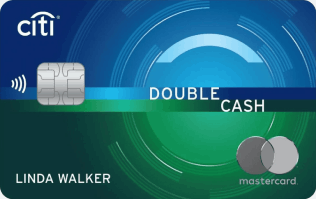
The Citi Double Cash® Credit Card ranks sixth for consumers who want uncomplicated rewards while also gaining access to one of the stronger balance-transfer promotions among rewards cards. Cardholders can effectively earn unlimited 2% cash back on purchases—1% when a qualifying purchase is made and another 1% as that purchase is paid—while eligible hotel, car-rental, and attraction purchases booked through Citi Travel can earn 5% total cash back. New cardholders can currently earn $200 cash back after spending $1,500 within six months of account opening. The card charges no annual fee and includes a 0% introductory APR for 18 months on qualifying balance transfers, although the introductory rate does not apply to ordinary purchases. After the promotional period, the regular variable APR is currently 18.24%–28.49%, depending on creditworthiness.
Citi Double Cash® Card Facts Table
| Feature | Details |
| Credit Card Issuer | Citibank, N.A. |
| Payment Network | Mastercard® |
| Rewards Type | Cash Back Rewards Credit Card |
| Recommended Credit | Good Credit to Excellent Credit Score (690-850) |
| Annual Fee | $0 |
| Standard Rewards | Unlimited total 2% cash back |
| Rewards Structure | 1% when an eligible purchase is made plus 1% as the purchase is paid |
| Citi Travel Rewards | Total 5% cash back on eligible hotels, car rentals and attractions booked through Citi Travel |
| Welcome Bonus | $200 cash back after $1,500 in qualifying purchases during the first 6 months |
| Intro Purchase APR | None under the standard public offer |
| Intro Balance Transfer APR | 0% for 18 months |
| Regular APR | 18.24%–28.49% variable |
| Rewards Cap | None on standard rewards |
| Foreign Transaction Fee | 3% |
| Best For | Flat-rate domestic cash back and balance transfers |
| Notable Benefits | No annual fee, unlimited rewards, ThankYou Points integration and Citi Travel bonus rewards |
Why Choose the Citi Double Cash® Card
Citi Double Cash is particularly appealing as a default card for purchases that do not fall into another card’s bonus categories. The effective 2% reward structure requires virtually no category management, and Citi ThankYou points earned through the card can offer additional flexibility for customers who participate in Citi’s broader rewards ecosystem. The 18-month balance-transfer introductory APR also gives the card another use beyond rewards. However, consumers should remember that the 0% introductory APR applies to eligible balance transfers rather than normal purchases, and a balance-transfer fee applies. The card also charges a foreign transaction fee, reducing its attractiveness for purchases outside the United States.
7. Blue Cash Preferred® Credit Card from American Express – Best for U.S. Supermarket Rewards
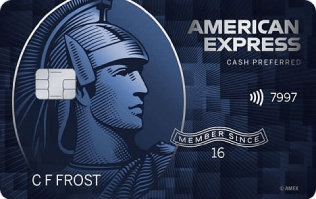
The Blue Cash Preferred® Credit Card from American Express ranks seventh because its 6% cash-back rate at U.S. supermarkets on up to $6,000 per year in eligible purchases can produce significant value for households with substantial grocery expenses. Cardholders also earn 6% cash back on select U.S. streaming subscriptions, 3% on eligible transit purchases, 3% at U.S. gas stations, and 1% on other eligible purchases. New applicants may receive a welcome offer as high as $300 cash back after spending $3,000 within the first six months, depending on the offer presented. The card currently has a $0 introductory annual fee for the first year followed by a $95 annual fee, and it provides a 0% introductory APR on purchases and balance transfers for 12 months, after which a 19.49%–28.49% variable APR applies.
Blue Cash Preferred® Card Facts Table
| Feature | Details |
| Credit Card Issuer | American Express National Bank |
| Payment Network | American Express |
| Reward Type | Cash Back Rewards Credit Card |
| Recommended Credit | Good Credit to Excellent Credit Score (690-850) |
| Annual Fee | $0 introductory annual fee for the first year, then $95 |
| Security Deposit | None |
| Standard Rewards | 1% cash back on other eligible purchases |
| Bonus Rewards | 6% at U.S. supermarkets on up to $6,000 per calendar year, then 1%; 6% on select U.S. streaming subscriptions; 3% at eligible U.S. gas stations and on transit |
| Welcome Bonus | Personalized offer as high as $300 cash back after $3,000 in purchases within six months; offers vary and some applicants may receive a lower offer or none |
| Intro APR | 0% introductory APR on purchases and eligible balance transfers for 12 months from account opening; transfers must generally be requested within the first 60 days |
| Regular APR | 19.49%–28.49% variable APR after the introductory period, based on creditworthiness and subject to change |
| Balance Transfer Fee | Either $5 or 3% of each transferred amount, whichever is greater |
| Cash Advance Fee | Either $10 or 5% of each cash advance, whichever is greater |
| Foreign Transaction Fees | 2.7% of each transaction after conversion to U.S. dollars |
| Credit Bureau Reporting | Account activity is generally reported to Equifax, Experian and TransUnion |
| Credit Line Increases | May be requested or offered after review; approval and the amount are not guaranteed |
| Best For | Households with substantial U.S. supermarket, streaming, gas and transit spending that can offset the annual fee |
| Employee Cards | Not applicable to this consumer card; Additional Card Members may be added subject to account terms |
Why Choose the Blue Cash Preferred® Card
Blue Cash Preferred is one of the strongest options for households that spend enough at qualifying U.S. supermarkets to overcome the annual fee after the introductory first year. At the $6,000 annual supermarket cap, the 6% rate can generate substantial rewards before purchases revert to the base rate. Streaming, transit, and gas provide additional opportunities to earn above-average cash back, making the card suitable for many household budgets. Its disadvantages include the supermarket spending cap, merchant-category restrictions, the $95 annual fee beginning after the first year, and a foreign transaction fee. Consumers with minimal grocery spending may be better served by a no-annual-fee card, but higher-spending families can potentially obtain considerable value.
8. Capital One Savor Cash Rewards Credit Card -Best for Dining and Entertainment Cash Back
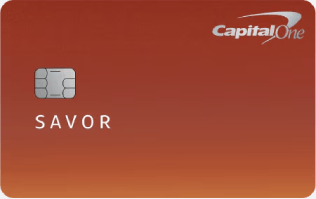
The Capital One Savor Cash Rewards Credit Card ranks eighth because it delivers high cash-back rates across several popular lifestyle categories without charging an annual fee. New eligible cardholders can currently earn a $200 cash bonus after spending $500 within the first three months. The card earns unlimited 3% cash back at qualifying grocery stores, on dining, entertainment, and popular streaming services, plus 5% on eligible hotels, vacation rentals, and rental cars booked through Capital One Travel and 1% on other purchases. A 0% introductory APR currently applies to purchases and balance transfers for 12 months, followed by an 18.49%–28.49% variable APR. The card also has no foreign transaction fees, making it more travel-friendly than many cash-back competitors.
Capital One Savor Card Facts Table
| Feature | Details |
| Credit Card Issuer | Capital One |
| Payment Network | Mastercard |
| Reward Type | Cash Back Credit Card |
| Recommended Credit Score | Good to Excellent Credit Score (690-850) |
| Annual Fee | $0 for the current public offer |
| Security Deposit | None |
| Standard Rewards | Unlimited 1% cash back on eligible purchases outside bonus categories |
| Bonus Rewards | 3% at eligible grocery stores and on dining, entertainment and popular streaming; 5% on eligible Capital One Travel bookings; 8% on qualifying Capital One Entertainment purchases |
| Welcome Bonus | $200 after $500 in purchases within 3 months of account opening for eligible applicants |
| Intro APR | 0% introductory APR on purchases and balance transfers for 12 months |
| Regular APR | 18.49%–28.49% variable APR after the introductory period, based on creditworthiness |
| Balance Transfer Fee | 3% on transferred amounts during the first 12 months; later promotional transfers may carry a 4% fee |
| Cash Advance Fee | 5% of the advance, with a $5 minimum |
| Foreign Transaction Fees | None |
| Credit Bureau Reporting | Account activity is generally reported to Equifax, Experian and TransUnion |
| Credit Line Increases | May be available after account review; not guaranteed |
| Best For | Food-focused households, frequent diners, entertainment buyers and streaming subscribers seeking no-annual-fee cash back |
| Employee Cards | Not applicable to this consumer card; authorized users may be added |
Why Choose the Capital One Savor Credit Card
Savor can cover an unusually broad range of everyday lifestyle spending without requiring an annual fee. Restaurants, entertainment, groceries, and streaming subscriptions are common expenses for many households, and earning 3% across all four categories reduces the need to manage multiple specialized cards. Its no-foreign-transaction-fee policy also makes it useful for international purchases, particularly compared with some domestic cash-back cards. The most important limitation is that grocery purchases at certain superstores such as Walmart and Target do not qualify for the elevated grocery rate. Consumers who spend heavily outside the card’s 3% categories may also earn more with a 2% flat-rate card.
9. Discover it® Cash Back Credit Card – Best for Rotating 5% Cash-Back Categories

The Discover it® Cash Back Credit Card ranks ninth because it offers significant reward potential without an annual fee, especially for consumers willing to activate and track quarterly 5% bonus categories. Cardholders earn 5% cash back on qualifying purchases in rotating categories each quarter up to the quarterly spending maximum after activation, plus unlimited 1% cash back on other purchases. Discover automatically matches all cash back earned during a new cardholder’s first year, with no stated maximum match, creating a particularly valuable introductory structure for consumers who maximize the rotating categories. The card currently offers 0% introductory APR for 15 months on purchases and balance transfers, followed by a 17.49%–26.49% variable APR. Discover also reports broad acceptance at U.S. merchants that take credit cards, although international acceptance can vary more substantially by destination.
Discover it® Cash Back Card Facts Table
| Feature | Details |
| Credit Card Issuer | Discover Bank |
| Payment Network | Discover |
| Reward Type | 0% APR Credit Card – Cash Back Credit Card |
| Recommended Credit | Good Credit to Excellent Credit Score (690-850) |
| Annual Fee | $0 |
| Rewards | 5% cash back on up to $1,500 in combined activated quarterly category purchases; 1% on other eligible purchases |
| Welcome Offer | Unlimited dollar-for-dollar Cashback Match on qualifying cash back earned during the first year for new cardholders |
| Intro Purchase APR | 0% for 15 months |
| Intro Balance Transfer APR | 0% for 15 months |
| Regular APR | 17.49%–26.49% variable |
| Intro Balance Transfer Fee | 3% of qualifying transferred balances |
| Cash Advance APR | 28.49% variable |
| Cash Advance Fee | Greater of $10 or 5% of the cash advance |
| Foreign Transaction Fee | $0 |
| Security Deposit | None |
| Best For | Consumers who can maximize rotating 5% categories and pay attention to quarterly activations |
| Notable Benefits | Cashback Match, rotating 5% categories, introductory APR, flexible redemptions and no annual fee |
Why Choose the Discover it® Cash Back Card
Discover it Cash Back can generate excellent returns for users willing to pay attention to the quarterly category calendar and activate the bonus categories when required. The first-year Cashback Match makes the card particularly appealing for new cardholders because every dollar of cash back earned during the match period effectively produces an additional matching amount. The 15-month 0% introductory APR adds further value for consumers making a significant purchase or completing an eligible balance transfer. The biggest disadvantage is the effort required to maximize rotating categories, and purchases beyond the quarterly maximum generally fall back to the lower standard reward rate. Consumers who prefer complete simplicity may therefore favor a flat-rate cash-back card instead.
10. Bilt Blue Card – Best for Rent and Mortgage Rewards

The Bilt Blue Mastercard® Credit Card completes our top-ten ranking because Bilt’s redesigned 2026 card lineup provides a distinctive opportunity to earn rewards connected with eligible housing payments without a traditional transaction fee. The Bilt Blue Card carries no annual fee and can earn up to 4X points at participating Bilt dining partners, 3X on hotels booked through Bilt Travel, 3X on Lyft, 2X on flights booked through Bilt Travel, and 1X on other qualifying purchases. Depending on the selected earning structure and applicable program requirements, cardholders may earn up to 1.25X points on qualifying rent or mortgage payments. New Blue cardholders currently receive $100 in Bilt Cash under the card’s published offer terms. The card also offers a 10% introductory APR on eligible new purchases for the first 12 billing cycles, followed by a comparatively high 26.74%–34.74% variable APR.
Bilt Blue Mastercard® Card Facts Table
| Feature | Details |
| Credit Card Issuer | Column N.A. |
| Payment Network | Mastercard® |
| Reward Type | Rewards Credit Card |
| Recommended Credit | Good Credit to Excellent Credit Score (690-850) |
| Annual Fee | $0 |
| Authorized User Fee | $0 annual fee for Blue authorized users |
| Welcome Offer | $100 Bilt Cash for eligible new cardholders under the standard offer |
| Everyday Rewards | 1X Bilt Points on eligible purchases |
| Housing Rewards | Up to 1.25X Bilt Points with Housing-only option |
| Bilt Cash Option | 4% Bilt Cash on eligible everyday spending with Flexible Bilt Cash |
| Bilt Travel Hotels | 3X total Bilt Points |
| Bilt Travel Flights | 2X total Bilt Points |
| Lyft | 3X total Bilt Points on eligible rides |
| Bilt Neighborhood Dining | Up to approximately 4X total depending on participating restaurant |
| Foreign Transaction Fee | $0 |
| Intro Purchase APR | 10% for first 12 billing cycles on eligible new purchases |
| Regular Purchase APR | 26.74%–34.74% variable |
| Recommended Credit | Good to excellent generally recommended; no guaranteed minimum score |
| Best For | Renters, homeowners, travelers, Bilt members, and consumers seeking housing rewards |
Why Choose the Bilt Blue Card
Bilt Blue earns a place in the ranking because housing is often the largest monthly expense in a household budget yet traditionally produces no credit-card rewards without costly processing fees. Bilt’s approach can therefore unlock rewards from spending that consumers already have to make. The card also provides travel and dining earning opportunities, no annual fee, and no foreign transaction fee. However, the regular variable APR is substantially higher than the lowest rates available on several competing cards, making it particularly important to avoid carrying a balance. Housing reward calculations and program options are also more complex than the straightforward earning rules of a conventional flat-rate cash-back card. The card is consequently best suited to consumers who actively participate in the Bilt Rewards ecosystem and pay balances responsibly.
2026 Best Credit Cards Comparison Table
| Credit Card | Intro Offer | Rewards | Annual Fee | Intro APR | Regular APR |
| Chase Sapphire Preferred® Card | 75,000 points | 1X–5X | $95 | None | 19.24%–27.49% variable |
| Capital One Venture X Card | 75,000 miles | 2X–10X | $395 | None | 19.49%–28.49% variable |
| American Express® Gold Card | Up to 100,000 points | 1X–5X | $325 | None | 19.49%–28.49% variable Pay Over Time APR |
| Wells Fargo Active Cash® Card | $100 | 2% | $0 | 0% for 12 months | 18.49%, 24.49% or 28.49% variable |
| Chase Freedom Unlimited® Card | $200 | 1.5%–5% | $0 | 0% for 15 months | 18.24%–27.74% variable |
| Citi Double Cash® Card | $200 | 2%–5% | $0 | 0% BT for 18 months | 18.24%–28.49% variable |
| Blue Cash Preferred® Card | Up to $300 | 1%–6% | $0 first year, then $95 | 0% for 12 months | 19.49%–28.49% variable |
| Capital One Savor Card | $200 | 1%–5% | $0 | 0% for 12 months | 18.49%–28.49% variable |
| Discover it® Cash Back Card | First-year Cashback Match | 1%–5% | $0 | 0% for 15 months | 17.49%–26.49% variable |
| Bilt Blue Mastercard® Card | $100 Bilt Cash | 1X–4X+ depending on activity | $0 | 10% for 12 billing cycles | 26.74%–34.74% variable |
How to Choose the Best Credit Card in 2026
Choosing the best credit card should begin with an honest analysis of spending rather than selecting whichever card advertises the largest welcome bonus. Consumers should review several months of expenses and identify how much they spend on groceries, restaurants, gas, travel, streaming, entertainment, online purchases, and other categories. A household spending thousands of dollars each year at U.S. supermarkets may benefit more from Blue Cash Preferred than a premium travel card, while a frequent traveler might generate substantially greater value from Chase Sapphire Preferred or Venture X. Annual fees should be subtracted from realistic rewards and benefits rather than ignored, and statement credits should only be valued at their full amount when the cardholder would naturally use them. Consumers who regularly carry balances should prioritize a lower APR or introductory 0% APR rather than rewards because interest expenses can overwhelm even an excellent rewards program.
What Credit Score Is Needed for the Best Credit Cards?
Many of the strongest rewards credit cards are generally targeted toward applicants with good to excellent credit, although issuers do not guarantee approval based on a credit score alone. Lenders can consider income, housing expenses, existing debts, recent credit applications, account history, credit utilization, payment history, and internal banking relationships in addition to the applicant’s credit score. A consumer with an excellent score can still be declined when other factors do not meet an issuer’s underwriting requirements, while an applicant with a slightly lower score may be approved because of strong income and overall credit history. Consumers seeking premium rewards cards should generally focus on maintaining low revolving balances, paying bills on time, limiting unnecessary applications, and reviewing their credit reports for inaccuracies before applying.
Cash Back vs. Travel Rewards Credit Cards
Cash-back credit cards are generally better for consumers who value simplicity and want rewards that can easily offset everyday expenses, while travel rewards cards can provide greater potential value for consumers willing to learn how airline, hotel, and transferable-point programs work. A 2% cash-back card provides predictable value because a $1,000 eligible purchase produces approximately $20 in cash rewards. Travel points can be more complicated because redemption values may vary dramatically according to the travel program, route, hotel, transfer partner, and booking method. Transferable points can produce excellent value when redeemed strategically, but consumers who rarely travel may receive more practical benefit from cash back. The correct choice therefore depends on redemption habits as much as spending habits.
Are Annual Fee Credit Cards Worth It?
An annual-fee credit card is worthwhile only when the realistic value of rewards and benefits exceeds the fee by enough to justify paying it every year. A $95 annual fee can be relatively easy to recover through elevated rewards or one useful travel credit, while a card costing several hundred dollars annually generally requires more deliberate use of lounge access, statement credits, hotel benefits, travel credits, or other premium services. Cardholders should reevaluate premium cards every year because benefits and personal spending patterns can change. A card that was valuable during a year with substantial travel may no longer be worthwhile when travel decreases. Consumers should also avoid counting credits at full face value when they would not otherwise purchase the qualifying product or service.
How Do 0% Intro APR Credit Cards Work?
A 0% introductory APR allows qualified cardholders to carry eligible balances during a promotional period without being charged the normal purchase or balance-transfer interest rate, although balance-transfer fees can still apply. Cards in this ranking offer introductory periods ranging from approximately 12 to 18 months for certain transaction types, while some premium rewards cards do not offer introductory financing at all. Consumers should divide the amount they intend to finance by the number of promotional months and establish a payment schedule designed to eliminate the balance before the introductory period ends. Once the promotion expires, remaining balances generally begin accruing interest at the card’s standard variable APR, which can make unfinished balances expensive.
Should You Carry a Balance to Earn Credit Card Rewards?
Consumers do not need to carry a balance or pay interest to earn normal purchase rewards, and carrying debt solely because a card earns points or cash back is generally counterproductive. A card returning 2% cash back provides $20 of rewards on $1,000 in purchases, while carrying that same $1,000 balance at an APR above 20% could create far more than $20 in annual interest expense depending on the repayment schedule. Paying the statement balance in full by the due date is therefore one of the most effective ways to maximize the net value of a rewards card. Cardholders using a 0% introductory APR may intentionally carry an eligible promotional balance, but they should still make every required payment on time and establish a plan to repay the debt before the promotional rate expires.
How Many Credit Cards Should You Have?
There is no perfect number of credit cards for every consumer. Some people can manage one versatile card effectively, while rewards enthusiasts may use several cards to maximize different spending categories. Multiple cards can increase total available credit and provide access to different rewards programs, but they also create additional payment due dates, annual fees, fraud-monitoring responsibilities, and opportunities to overspend. Consumers should add another credit card only when it serves a clear purpose, such as earning higher grocery rewards, providing travel benefits, financing a planned purchase at 0%, or improving rewards on nonbonus spending. Maintaining older no-annual-fee accounts can sometimes help preserve account age and available credit, but every account should still be monitored regularly.
What Makes a Credit Card Good for Everyday Spending?
A strong everyday credit card should reward a large percentage of normal household purchases without requiring excessive category tracking. Flat-rate cards such as Wells Fargo Active Cash and Citi Double Cash can work particularly well because almost every eligible purchase receives the same basic return. Chase Freedom Unlimited and Capital One Savor provide alternatives for consumers whose everyday expenses align with their enhanced categories. Consumers should also consider annual fees, redemption flexibility, foreign transaction fees, introductory APRs, purchase protections, issuer service, and whether the card’s rewards fit naturally with their existing banking or travel programs. The best everyday card is ultimately the one that consistently rewards spending the consumer already intended to make.
Final Verdict
The 10 Best Rated Credit Cards in 2026 demonstrate that there is no single rewards strategy that works for every consumer, but Chase Sapphire Preferred® earns our number-one ranking because its 2026 enhancements create an unusually balanced package of travel rewards, everyday bonus categories, transfer partners, travel protections, and annual credits while preserving the $95 annual fee. Capital One Venture X Rewards is our preferred premium travel option because of its lounge access, annual travel credit, anniversary miles, and simple 2X base earning rate. American Express Gold remains one of the strongest food-focused cards for consumers who can maximize its dining, supermarket, and statement-credit benefits. Wells Fargo Active Cash, Chase Freedom Unlimited, and Citi Double Cash provide excellent $0-annual-fee alternatives for consumers prioritizing everyday cash rewards, while Blue Cash Preferred is particularly strong for U.S. supermarket spending. Capital One Savor excels across dining, groceries, entertainment, and streaming, Discover it Cash Back can deliver substantial rotating-category value, and Bilt Blue creates a distinctive way for eligible renters and homeowners to earn rewards tied to housing payments. Regardless of which card ranks highest for a particular spending profile, consumers should compare the total annual value of rewards and benefits against annual fees, avoid unnecessary spending to earn bonuses, understand how introductory APR periods work, and pay balances in full whenever possible because responsible credit management remains more valuable than any credit card reward.