10 Best Rated Balance Transfer Credit Cards in 2026
I verified the current 2026 promotional periods and pricing used in the ranking, including Citi’s extended balance-transfer offers, U.S. Bank Shield’s 21 billing cycles, BankAmericard’s 21 billing cycles, Wells Fargo Reflect’s 21-month structure, Chase Slate’s 21 months, Citi Double Cash’s 18-month transfer offer, and the current 15-month rewards-card alternatives. (Citi) The publication-ready article below follows your saved Article Review Template and reference-page structure with H5 headings, Facts Tables, “Why [Card] Ranks…” sections, one-paragraph narrative sections, and no company/source links inside the article.
TOP 10 Best Rated Balance Transfer Credit Cards in 2026
The best balance transfer credit cards in 2026 can provide qualified consumers with an opportunity to consolidate high-interest revolving debt, reduce interest expenses, simplify multiple monthly payments, and establish a structured payoff strategy before expensive standard credit card APRs begin applying again. The strongest balance transfer offers currently provide introductory 0% APR periods extending as long as approximately 21 months or 21 billing cycles, giving consumers substantially more time to eliminate debt than would normally be available on a traditional high-interest rewards card. A balance transfer can be particularly valuable for consumers carrying credit card balances with APRs of 20%, 25%, 30%, or higher because moving qualifying debt to a promotional 0% APR account can allow a larger percentage of each monthly payment to reduce principal rather than finance charges. This Top 10 Best Rated Balance Transfer Credit Cards in 2026 ranking compares leading products from Citi, U.S. Bank, Bank of America, Wells Fargo, Chase, and Discover according to introductory balance transfer duration, transfer fees, transfer deadlines, purchase APR promotions, regular APRs, annual fees, rewards, welcome bonuses, consumer protections, repayment flexibility, and long-term card value after the transferred balance has been repaid.
Important Note About Balance Transfer Credit Card Offers
Balance transfer credit card promotions can change throughout 2026, and the exact introductory APR, promotional duration, transfer fee, transfer deadline, regular variable APR, credit limit, welcome bonus, and other terms presented to an applicant may vary according to application channel, creditworthiness, targeted promotions, issuer underwriting, and when the application is submitted. A 0% balance transfer APR does not mean transferring debt is completely free because most leading cards charge an upfront transfer fee of approximately 3% to 5% of the amount moved, meaning a $10,000 transfer can create an additional $300 to $500 in debt before repayment begins. Consumers should also understand that transferred debt typically cannot be moved between two cards issued by the same financial institution and that any remaining promotional balance can become subject to the regular variable APR after the introductory period expires. The strongest strategy is therefore to compare the complete cost of the transfer, determine the number of promotional months available, and calculate a fixed monthly payment designed to completely eliminate the transferred balance before the standard APR begins.
What Are the Best Balance Transfer Credit Cards in 2026?
The Citi® Diamond Preferred® Credit Card ranks as the best overall balance transfer credit card in 2026 because current offers can provide approximately 21 months of 0% introductory APR on qualifying balance transfers while also offering an introductory transfer fee considerably lower than the 5% charged by several competing 21-month cards. U.S. Bank Shield® Visa® ranks second because its 21-billing-cycle promotional period applies to both purchases and qualifying balance transfers while the card also provides limited travel cash back, cell phone protection, and an annual statement-credit opportunity. BankAmericard® ranks third with 21 billing cycles of promotional financing and a comparatively low potential regular APR, Wells Fargo Reflect® ranks fourth with 21 months of purchase and transfer financing, and Chase Slate® ranks fifth with another 21-month promotional offer. Citi Simplicity® provides an extended introductory period with no late fees or penalty APR, Citi Double Cash® combines an 18-month balance-transfer promotion with ongoing cash back, and Chase Freedom Unlimited®, Discover it® Cash Back, and Bank of America® Customized Cash Rewards complete the Top 10 by pairing 15-month introductory financing with rewards that can remain valuable after debt repayment is completed.
How We Rated the Best Balance Transfer Credit Cards
Each balance transfer credit card was rated primarily according to the financial value it can provide to a consumer attempting to eliminate existing high-interest debt, with the greatest weight assigned to the introductory balance-transfer APR duration, upfront transfer fee, qualifying transfer deadline, regular APR after the promotion, and annual fee. A 21-month introductory promotion generally received a higher score than a 15-month offer because additional interest-free repayment time can reduce the monthly amount required to reach a zero balance, but transfer fees were also weighted heavily because a 3% fee can save hundreds of dollars compared with a 5% fee on a large transfer. Cards received additional credit when the introductory APR also applies to new purchases, while rewards products were evaluated according to whether cash back, welcome bonuses, travel rewards, or other benefits make the account worth retaining after the transferred debt has been eliminated. Consumer protections, credit requirements, payment flexibility, foreign transaction fees, transfer restrictions, and account-management tools were also considered, but avoiding interest and successfully completing debt repayment remained the primary objective of this ranking.
Favorable Aspects of the Best Balance Transfer Credit Cards
- Promotional 0% balance transfer APR periods can extend approximately 15 to 21 months or billing cycles.
- Several leading cards provide introductory 0% APR on both balance transfers and new purchases.
- Every credit card included in this Top 10 ranking currently carries a $0 annual fee.
- Introductory transfer fees can start around 3% on selected cards.
- Transferring high-interest balances can significantly reduce the amount spent on interest during repayment.
- Multiple credit card balances can potentially be consolidated into one monthly account payment.
- Selected balance transfer cards continue earning valuable cash-back rewards after debt repayment.
- Several rewards-focused cards provide introductory cash bonuses or first-year rewards.
- Longer promotional periods can reduce the monthly payment required to reach a zero balance before interest begins.
- Responsible balance-transfer use can create a defined deadline for eliminating revolving debt.
Unfavorable Aspects of Balance Transfer Credit Cards
- Most balance transfers charge an upfront fee of approximately 3% to 5% of the transferred amount.
- Promotional 0% APR periods eventually expire and can be replaced by variable APRs exceeding 20%.
- Qualifying balance transfers frequently must be completed within the first 60 days or four months after account opening.
- Consumers generally cannot transfer balances between two cards issued by the same bank.
- The approved credit limit may be lower than the total debt a consumer wants to transfer.
- A transfer fee counts against available credit and can reduce the amount of debt successfully moved.
- Making only minimum payments may leave a substantial balance when the introductory period expires.
- Applying for a new balance transfer card can result in a hard credit inquiry.
- Opening multiple cards repeatedly to move debt can create additional inquiries and account-management complexity.
- Continuing to charge new balances on old cards after transferring debt can leave the consumer with more debt than before.
1. Citi Diamond Preferred® Credit Card – Best Overall Balance Transfer Credit Card
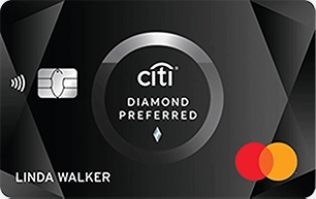
The Citi Diamond Preferred Credit Card earns the number-one position among the best balance transfer credit cards in 2026 because it combines one of the longest available introductory balance-transfer periods with an introductory transfer fee that can be considerably less expensive than competing 21-month cards. Current generally marketed offers can provide 0% introductory APR for approximately 21 months on qualifying balance transfers, while purchases receive a shorter introductory financing period of approximately 12 months, making Diamond Preferred especially well suited to debt consolidation rather than financing a major new purchase. Qualifying transfers generally need to be completed within the first four months after account opening and can receive an introductory transfer fee of approximately 3% with a $5 minimum, followed by a standard fee of approximately 5% with a $5 minimum on later transfers. The card charges no annual fee and includes useful account-management benefits such as free access to a FICO® Score, Citi Quick Lock, flexible payment-date selection, Mastercard identity-theft resources, and $0 liability on qualifying unauthorized transactions. Diamond Preferred does not provide traditional cash-back or travel rewards, but for a consumer transferring $10,000 or $20,000 of high-interest debt, the combination of approximately 21 months at 0% and a lower introductory transfer fee can create significantly more financial value than a conventional rewards program.
Citi Diamond Preferred® Card Facts Table
| Feature | Details |
| Card Name | Citi |
| Payment Network | Mastercard |
| Rewards Type | 0% Intro APR – Cash Back Rewards |
| Recommended Credit | Good Credit to Excellent Credit Score (690-850) |
| Annual Fee or Price | $0 annual fee |
| Rewards | No rewards program |
| Welcome Bonus | Introductory financing rather than a rewards bonus |
| Intro APR | 0% for 12 months on purchases and 21 months on transfers; transfers within 4 months |
| Regular APR | 16.49%–27.24% variable |
| Balance Transfer Fee | Intro 3% with $5 minimum within 4 months; then 5% with $5 minimum |
| Foreign Transaction Fee | 3% |
| Best For | Paying down eligible transferred debt over a long promotional period |
| Notable Benefits | Long transfer promotion, $0 annual fee, FICO Score access and Citi account tools |
Why Citi Diamond Preferred Ranks First
Citi Diamond Preferred ranks first because the combination of promotional duration and transfer cost is especially strong for consumers moving large balances. A $10,000 transfer subject to a 3% introductory fee costs approximately $300, while transferring the same amount to a competing card charging 5% costs approximately $500, creating an immediate $200 difference before repayment begins. The approximately 21-month promotional period also means a $10,300 balance including the transfer fee would require payments of roughly $490 per month to reach zero within 21 months, compared with approximately $687 per month if repayment needed to occur within 15 months. The card does not provide ongoing rewards, but avoided interest is often substantially more valuable than earning 1% or 2% cash back when a consumer is transferring thousands of dollars from a credit card charging a high APR, making Diamond Preferred the strongest pure debt-consolidation option in this ranking.
2. U.S. Bank Shield® Visa® Credit Card – Best for 21 Billing Cycles With Additional Benefits

The U.S. Bank Shield® Visa® Credit Card ranks second because it combines 21 billing cycles of introductory 0% APR on qualifying balance transfers with 21 billing cycles of 0% introductory APR on purchases, giving consumers unusually broad financing flexibility. Qualifying balance transfers must generally be completed within the first 60 days after account opening and carry a fee equal to 5% of each transferred amount with a $5 minimum. Although that fee is higher than the introductory fee available on Citi Diamond Preferred and several shorter-duration products, Shield provides additional cardholder value that many financing-only cards lack. Cardholders can earn 4% cash back on eligible prepaid airfare, hotel, and rental car reservations booked through the U.S. Bank Travel Center, receive a $20 annual statement credit after meeting the applicable consecutive-month purchase requirement, and qualify for up to $600 in eligible cell phone protection when the monthly wireless bill is paid with the card. The card also charges no annual fee and provides access to U.S. Bank’s digital banking and credit-score tools. For consumers who want nearly two years to repay transferred debt while retaining a card with practical long-term benefits afterward, Shield is one of the most complete options available.
U.S. Bank Shield Visa Card Facts Table
| Feature | Details |
| Credit Card Issuer | U.S. Bank National Association |
| Payment Network | Visa Signature |
| Card Type | 0% Intro APR – Balance Transfer – Low Interest Card |
| Recommended Credit | Good Credit to Excellent Credit Score (690-850) |
| Annual Fee | $0 |
| Welcome Bonus | No Traditional Cash or Points Bonus |
| Intro Purchase APR | 0% for 21 Billing Cycles |
| Intro Balance Transfer APR | 0% for 21 Billing Cycles on Qualifying Transfers |
| Regular APR | 16.99%–27.99% Variable APR |
| Balance Transfer Fee | 5% of Each Transfer, $5 Minimum |
| Travel Rewards | 4% Cash Back on Eligible Prepaid Travel Center Reservations |
| Annual Statement Credit | $20 After 11 Consecutive Months of Purchases |
| Cell Phone Protection | Up to $600 on Eligible Damage or Theft |
| ExtendPay Benefit | Eligible 3-Month $0-Fee Plan Opportunity Annually After Intro APR |
| Foreign Transaction Fee | 3% |
| Best For | Long-Term 0% APR Financing and Balance Transfers |
Why U.S. Bank Shield Ranks Second
U.S. Bank Shield ranks second because few balance transfer cards combine 21 billing cycles of 0% financing with meaningful ongoing cardholder benefits, and its simultaneous purchase promotion can be valuable for consumers who need to consolidate existing debt while also managing a planned expense. The primary reason it does not rank first is the 5% transfer fee, which adds $500 to a $10,000 transfer and $1,000 to a $20,000 transfer, making it more expensive upfront than Citi’s lower-fee introductory transfer offers. Consumers should therefore calculate whether the additional promotional time and Shield benefits justify the fee before moving a large balance. For borrowers who need the full 21-cycle repayment window and value cell phone protection, limited travel cash back, or U.S. Bank’s additional financing features, Shield remains an exceptionally strong balance transfer card.
3. BankAmericard® Credit Card – Best for a Lower Potential Regular APR

The BankAmericard® Credit Card ranks third because its straightforward financing structure provides 21 billing cycles of 0% introductory APR on purchases and qualifying balance transfers while also offering one of the lowest potential regular APR ranges among the cards included in this ranking. Balance transfers must generally be made within the first 60 days to receive the 21-billing-cycle introductory APR, and a 5% transfer fee applies to each transaction. Once the promotional period expires, the regular variable APR currently ranges from approximately 14.99% to 25.99% depending on creditworthiness, which gives BankAmericard a notably lower starting rate than many rewards and financing cards whose standard APRs begin several percentage points higher. The account charges no annual fee, does not provide conventional cash-back rewards, and does not automatically apply a penalty APR simply because a payment is late, although late-payment fees and other consequences can still apply. BankAmericard is therefore best suited to consumers who value simplicity, want nearly two years to eliminate debt, and prefer a financing-focused card rather than one that encourages additional purchases through bonus categories.
BankAmericard® Credit Card Facts Table
| Feature | Details |
| Credit Card Issuer | Bank of America, N.A. |
| Payment Network | Mastercard |
| Card Type | 0% Intro APR – Balance Transfer Credit Card |
| Recommended Credit | Good Credit to Excellent Credit Score (690-850) |
| Annual Fee | $0 |
| Welcome Bonus | None currently advertised |
| Rewards | No ongoing cash-back, points, or miles program |
| Intro Purchase APR | 0% for 21 billing cycles |
| Intro Balance Transfer APR | 0% for 21 billing cycles on qualifying transfers made within the first 60 days |
| Regular Purchase APR | 14.99%–25.99% Variable APR |
| Regular Balance Transfer APR | 14.99%–25.99% Variable APR after introductory period |
| Balance Transfer Fee | 5% of each transfer |
| Balance Transfer Deadline | Transfers must generally be made within the first 60 days to receive introductory APR |
| Penalty APR | None |
| Foreign Transaction Fee | 3% |
| Security Deposit | None |
| Best For | Long-term introductory financing and paying down transferred balances |
| Notable Benefits | $0 Liability Guarantee, fraud monitoring, account alerts, digital wallets, Balance Connect and online/mobile account management |
Why BankAmericard Ranks Third
BankAmericard ranks third because its 21-billing-cycle promotional period is essentially as long as any balance-transfer offer in the market while its low potential standard APR provides an additional layer of protection if a small balance unexpectedly remains after the promotion. It falls behind Citi Diamond Preferred because its 5% transfer fee can be substantially more expensive and behind U.S. Bank Shield because BankAmericard provides very few supplemental benefits beyond financing. That simplicity can nevertheless work in a borrower’s favor because the card offers little incentive to add new discretionary spending while debt is being repaid. Consumers primarily interested in interest savings, a long payoff runway, and straightforward Bank of America account management may reasonably prefer BankAmericard to a more complicated rewards product.
4. Wells Fargo Reflect® Credit Card – Best for 21-Month Balance Transfers With Cell Phone Protection

The Wells Fargo Reflect® Credit Card ranks fourth because its 21-month introductory 0% APR period applies to both purchases and qualifying balance transfers, providing nearly two years to repay eligible balances before the account’s standard variable rate begins. Qualifying balance transfers generally must be requested within the first 120 days of account opening, giving consumers more time to initiate the transfer than cards requiring action within 60 days, and the transfer fee is currently 5% with a $5 minimum. Reflect charges no annual fee and does not provide traditional cash-back or travel rewards, making it a dedicated financing product rather than an everyday rewards card. Its most notable long-term benefit is up to $600 of eligible cell phone protection against qualifying damage or theft when the monthly wireless bill is paid using the card, subject to coverage requirements and a deductible. Wells Fargo’s digital account tools, merchant offers, Zero Liability protection, and established banking platform further improve usability. Reflect is especially appealing to consumers who need maximum repayment time and prefer a Wells Fargo account with useful protection benefits after the transferred debt is gone.
Wells Fargo Reflect® Card Facts Table
| Feature | Details |
| Credit Card Issuer | Wells Fargo Bank, N.A. |
| Payment Network | Visa Signature |
| Card Type | 0% Intro APR Card – Balance Transfer Credit Card |
| Recommended Credit | Good Credit to Excellent Credit Score (690-850) |
| Annual Fee | $0 |
| Rewards | No traditional ongoing rewards program |
| Welcome Bonus | No standard cash or points welcome bonus |
| Intro Purchase APR | 0% for 21 months from account opening |
| Intro Balance Transfer APR | 0% for 21 months from account opening on qualifying transfers |
| Regular APR | 17.49%, 23.99%, or 28.24% Variable APR |
| Balance Transfer Fee | 5% of each transfer, minimum $5 |
| Qualifying Transfer Period | Transfers generally must be made within 120 days |
| Foreign Transaction Fee | 3% |
| Security Deposit | None |
| Best For | Long-term purchase financing and balance transfers |
| Notable Benefits | Cell phone protection, My Wells Fargo Deals, rental car coverage and Roadside Dispatch |
Why Wells Fargo Reflect Ranks Fourth
Wells Fargo Reflect ranks fourth because its 21-month introductory financing period is among the longest available and the 120-day qualifying-transfer window can give borrowers additional time to organize account balances before initiating the transfer. Its 5% transfer fee prevents it from outranking lower-cost Citi options, while Shield provides additional rewards and BankAmericard offers a lower potential standard APR. Reflect can nevertheless be an outstanding practical choice for someone who wants a simple repayment card and already uses Wells Fargo for other banking services. The cell phone protection also gives the account a useful long-term purpose after the transferred balance has been eliminated, reducing the likelihood that the card becomes completely unnecessary once the promotional period ends.
5. Chase Slate® Credit Card – Best Chase Balance Transfer Card
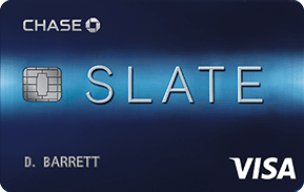
The Chase Slate® Credit Card ranks fifth because its current 21-month 0% introductory APR on purchases and balance transfers represents one of the longest promotional financing offers available from a major national issuer. After the 21-month introductory period, a variable APR currently ranging from approximately 18.24% to 28.24% applies, and the card charges no annual fee. Current balance-transfer pricing generally requires the greater of approximately $5 or 5% of each transferred amount, placing its upfront cost in line with Shield, BankAmericard, and Reflect rather than lower-fee Citi alternatives. Slate does not provide conventional Chase Ultimate Rewards points, cash back, or a traditional welcome bonus, so consumers should view it primarily as a debt-payoff and financing product rather than a rewards card. Zero Liability Protection helps protect against qualifying unauthorized transactions, and Chase’s mobile app, AutoPay, account alerts, and broad digital banking platform make repayment easy to manage. Existing Chase customers who want to consolidate debt without moving their broader banking relationship to another institution may find Slate especially attractive.
Chase Slate® Card Facts Table
| Feature | Details |
| Credit Card Issuer | JPMorgan Chase Bank, N.A. |
| Payment Network | Visa |
| Rewards Type | 0% Intro APR – Balance Transfer – Low Interest |
| Recommended Credit | Good Credit to Excellent Credit Score (690-850) |
| Annual Fee | $0 |
| Rewards | No traditional cash-back or points rewards program |
| Welcome Bonus | Extended introductory financing offer rather than a traditional cash bonus |
| Intro Purchase APR | 0% introductory APR for 21 months from account opening |
| Intro Balance Transfer APR | 0% introductory APR for 21 months from account opening |
| Regular APR | 18.24%–28.24% Variable APR |
| Balance Transfer Fee | Balance-transfer fee applies according to current account pricing |
| Foreign Transaction Fee | 3% |
| Best For | Chase customers seeking extended purchase and balance-transfer financing |
| Notable Benefits | Zero Liability Protection, 21-month introductory period, Chase mobile banking tools, account alerts, $0 annual fee |
Why Chase Slate Ranks Fifth
Chase Slate ranks fifth because its 21-month promotional period is every bit as competitive as the longest balance-transfer offers in the category, but the 5% transfer cost and lack of traditional rewards or supplemental protections reduce its overall ranking. A borrower transferring $8,000 would add approximately $400 in transfer fees under a 5% structure, meaning the total promotional balance would begin around $8,400 before any repayment. The card becomes more compelling for consumers already comfortable with Chase because one application can provide nearly two years of promotional financing without introducing a new unfamiliar banking platform. Anyone expecting to pay off the balance far sooner than 21 months should still compare Slate with cards charging a lower 3% introductory transfer fee because the additional promotional months may not justify the higher upfront cost.
6. Citi Simplicity® Credit Card – Best for Balance Transfers With No Late Fees

The Citi Simplicity® Credit Card ranks sixth because it combines a lengthy introductory balance-transfer offer with one of the most forgiving fee structures among mainstream consumer credit cards. Current broadly marketed promotions can provide approximately 18 months of 0% introductory APR on purchases and qualifying balance transfers, although specific Citi application channels may occasionally display different promotional durations, so applicants should verify the precise offer before applying. Qualifying transfers generally must be completed within the first four months and can receive an introductory transfer fee of approximately 3% with a $5 minimum before the standard transfer fee increases to approximately 5%. Simplicity charges no annual fee, no late fees, and no penalty APR, although cardholders should still make payments on time because delinquency can affect credit and account standing even when a late fee is not charged. The card provides no conventional rewards program, but its combination of a lower introductory transfer fee, extended financing, flexible payment-date options, Citi Quick Lock, and $0 liability makes it particularly attractive to consumers focused exclusively on eliminating debt.
Citi Simplicity® Card Facts Table
| Feature | Details |
| Card Issuer | Citi |
| Payment Network | Mastercard |
| Rewards Type | Balance Transfer and Intro APR Credit Card |
| Recommended Credit Score | Good to Excellent (690-850) |
| Annual Fee | $0 |
| Intro APR | 0% promotional APR on eligible purchases and balance transfers |
| Balance Transfers | Promotional APR available for eligible transfers |
| Late Fee | None |
| Penalty APR | None |
| Foreign Transaction Fee | 3% of each purchase transaction in U.S. dollars |
| Balance Transfer Fee | Applicable fee based on current account terms |
| Cash Advance Fee | Applicable fee based on current account terms |
Why Citi Simplicity Ranks Sixth
Citi Simplicity ranks sixth because a lower introductory transfer fee can make it financially competitive with longer-duration cards despite providing fewer promotional months under the standard broadly marketed offer. On a $15,000 transfer, a 3% fee costs approximately $450 while a 5% transfer costs approximately $750, creating a $300 difference that can immediately be directed toward principal repayment. A consumer able to eliminate the balance comfortably within 18 months may therefore save more using Simplicity than paying a larger fee simply to obtain another three months of financing. The no-late-fee structure is another distinguishing feature, although responsible cardholders should still use AutoPay and treat every due date seriously because maintaining positive payment history is important regardless of whether Citi charges a late fee.
7. Citi Double Cash® Credit Card – Best Balance Transfer Card With Flat-Rate Cash Back
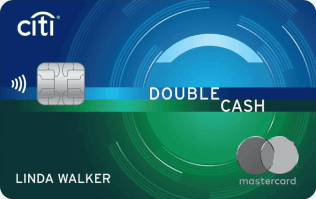
The Citi Double Cash® Credit Card ranks seventh because it combines an extended 18-month introductory balance-transfer promotion with one of the most established flat-rate cash-back structures available after the debt has been eliminated. New cardholders can currently receive 0% introductory APR for approximately 18 months on qualifying balance transfers completed within the first four months after account opening, followed by a variable APR currently around 17.49% to 27.49% depending on creditworthiness. An introductory transfer fee of approximately 3% with a $5 minimum applies during the qualifying period, followed by approximately 5% with a $5 minimum on later transfers. Double Cash does not generally provide a 0% introductory purchase APR, which is important because consumers carrying a transferred promotional balance can incur interest on new purchases unless the entire account balance is paid according to applicable terms. Once the debt is repaid, the card becomes a strong everyday rewards product by earning a total of up to 2% cash back on ordinary eligible purchases through 1% when buying and another 1% as those purchases are paid, while selected Citi Travel reservations can earn an elevated total rate.
Citi Double Cash® Card Facts Table
| Feature | Details |
| Credit Card Issuer | Citi |
| Payment Network | Mastercard |
| Rewards Type | Cash Back Rewards Credit Card |
| Recommended Credit | Good Credit to Excellent Credit Score (690-850) |
| Annual Fee | $0 |
| Standard Rewards | Up to 2% cash back |
| Rewards Structure | 1% when you buy + 1% as you pay |
| Rewards Cap | None |
| Citi Travel Rewards | Up to 5% total on eligible bookings |
| Welcome Offer | Current offer may be available |
| Foreign Transaction Fee | 3% |
| Balance Transfers | Introductory offer may be available |
| Main Redemption Options | Statement credit, direct deposit, check and other eligible options |
Why Citi Double Cash Ranks Seventh
Citi Double Cash ranks seventh because its 18-month 0% transfer offer and 3% introductory fee provide an excellent balance between debt-repayment value and long-term rewards. The biggest disadvantage is the lack of a standard 0% purchase promotion because adding new purchases while a transferred promotional balance remains can create interest complications and undermine the debt-payoff strategy. A disciplined borrower can simply avoid using Double Cash for new purchases until the transfer is eliminated and then convert the account into a highly useful everyday cash-back card afterward. That creates a natural two-stage strategy: use the card strictly for debt consolidation during the first 18 months and then use its up-to-2% reward structure for ordinary spending once the account returns to a zero balance.
8. Chase Freedom Unlimited® Credit Card – Best for Balance Transfers and Everyday Rewards

The Chase Freedom Unlimited® Credit Card ranks eighth because its 15-month introductory 0% APR on purchases and balance transfers is shorter than the financing periods offered by the cards above it, but the account provides substantially better everyday rewards and first-year value after the transferred balance is eliminated. New cardholders currently receive 0% introductory APR for 15 months from account opening on qualifying purchases and balance transfers, followed by a variable APR of approximately 18.24% to 27.74%. Qualifying introductory transfers generally carry a fee of the greater of approximately $5 or 3% during the promotional transfer window, with a higher standard fee potentially applying afterward. Freedom Unlimited earns unlimited 1.5% cash back on ordinary purchases, 3% on dining and drugstores, and 5% on qualifying travel through Chase Travel, while eligible new accounts can earn a $200 welcome bonus after $500 in purchases during the first three months. Consumers should avoid spending merely to earn the welcome bonus when their primary objective is debt consolidation, but cardholders capable of paying off a transfer within 15 months can receive considerably greater ongoing value from Freedom Unlimited than from a financing-only card.
Chase Freedom Unlimited® Card Facts Table
| Feature | Details |
| Card Issuer | JPMorgan Chase Bank, N.A. |
| Payment Network | Visa |
| Rewards Type | Cash Back Rewards Credit Credit |
| Recommended Credit | Good to Excellent Credit Score (690-850) |
| Annual Fee | $0 |
| Rewards | Unlimited Cash Back |
| Intro Offer | $200 |
| Rewards Rate | 1.5%-5% Cashback |
| Intro APR | 0% APR for 15M on P&T |
| Regular APR | 18.24%-27.74% Variable APR |
Why Chase Freedom Unlimited Ranks Eighth
Chase Freedom Unlimited ranks eighth because a 15-month promotional window requires faster debt repayment than the 18- and 21-month cards above it, but borrowers who can meet that accelerated schedule receive a significantly stronger card after the transfer is gone. A $9,000 balance plus an approximate 3% transfer fee would require roughly $618 per month to eliminate within 15 months, so consumers should calculate affordability before selecting Freedom Unlimited simply for its rewards. If that monthly payment is realistic, the card’s ongoing 1.5% base cash back, permanent dining and drugstore bonuses, Chase Travel rewards, and $0 annual fee create substantial long-term value. Consumers needing smaller monthly payments should prioritize a 21-month product instead of allowing rewards to influence them into an unrealistic repayment plan.
9. Discover it® Cash Back Credit Card – Best for First-Year Cashback Match

The Discover it® Cash Back Credit Card ranks ninth because it combines 15 months of 0% introductory APR on purchases and balance transfers with rotating 5% reward categories and Discover’s distinctive first-year Cashback Match. Current transfer pricing includes an introductory 3% fee on qualifying balances, followed by a higher fee of up to 5% on certain future promotional transfers, while the regular variable APR after the introductory period currently ranges from approximately 17.49% to 26.49%. Cardholders earn 5% cash back on up to the applicable quarterly maximum in activated rotating categories and unlimited 1% on other purchases, while Discover automatically matches qualifying cash back earned during the first year for eligible new cardmembers. The card carries no annual fee and no foreign transaction fee, and account-security features include account freezing and Social Security number monitoring. Consumers using Discover primarily for debt consolidation should remain cautious about new purchases because the most important objective remains eliminating the transferred balance within 15 months, but consumers with manageable transfer amounts can receive unusually strong first-year reward potential.
Discover it® Cash Back Credit Card Facts Table
| Feature | Details |
| Credit Card Issuer | Discover Bank |
| Payment Network | Discover |
| Reward Type | 0% APR Credit Card – Cash Back Credit Card |
| Recommended Credit | Good Credit to Excellent Credit Score (690-850) |
| Annual Fee | $0 |
| Rewards | 5% cash back on up to $1,500 in combined activated quarterly category purchases; 1% on other eligible purchases |
| Welcome Offer | Unlimited dollar-for-dollar Cashback Match on qualifying cash back earned during the first year for new cardholders |
| Intro Purchase APR | 0% for 15 months |
| Intro Balance Transfer APR | 0% for 15 months |
| Regular APR | 17.49%–26.49% variable |
| Intro Balance Transfer Fee | 3% of qualifying transferred balances |
| Cash Advance APR | 28.49% variable |
| Cash Advance Fee | Greater of $10 or 5% of the cash advance |
| Annual Fee | $0 |
| Foreign Transaction Fee | $0 |
| Security Deposit | None |
| Best For | Consumers who can maximize rotating 5% categories and pay attention to quarterly activations |
| Notable Benefits | Cashback Match, rotating 5% categories, introductory APR, flexible redemptions and no annual fee |
Why Discover it Cash Back Ranks Ninth
Discover it Cash Back ranks ninth because its 15-month repayment window is shorter than the longest financing cards, but its 3% introductory transfer fee and first-year Cashback Match can make it a compelling option for consumers transferring moderate balances they know can be eliminated quickly. A $6,000 transfer with a 3% fee adds approximately $180, creating a total balance of about $6,180 and requiring approximately $412 per month across 15 months. Someone comfortable with that repayment target can receive valuable rewards after the debt is under control, while consumers transferring $15,000 or $20,000 may find a 21-month product more manageable. Discover’s lack of foreign transaction fees also improves long-term value, though international acceptance can be less consistent than Visa or Mastercard depending on destination.
10. Bank of America® Customized Cash Rewards Credit Card – Best for Customizable Cash Back After a Balance Transfer
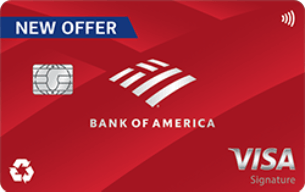
The Bank of America® Customized Cash Rewards Credit Card completes the Top 10 because it provides 15 billing cycles of 0% introductory APR on purchases and qualifying balance transfers while combining that financing period with one of the most customizable cash-back programs available without an annual fee. Qualifying transfers must generally be completed within the first 60 days to receive the promotional APR and a 3% introductory transfer fee, after which future balance transfers generally carry a 5% fee. The standard variable APR after the promotional period currently ranges from approximately 17.49% to 27.49%. Eligible cardholders can select a preferred rewards category such as gas and EV charging, online shopping, dining, travel, drugstores, or home improvement, and current first-year terms can provide an enhanced rate before the card returns to its standard reward structure. Grocery stores and wholesale clubs also receive an elevated rate subject to the applicable combined quarterly spending limit. The balance-transfer period is shorter than the leading financing cards, but consumers capable of completing repayment within 15 billing cycles receive a flexible rewards account that can remain valuable for years.
Bank of America® Customized Cash Rewards Card Facts Table
| Feature | Details |
| Credit Card Issuer | Bank of America, N.A. |
| Payment Network | Visa Signature |
| Reward Type | Cash-Back Rewards Credit Card |
| Recommended Credit | Good Credit to Excellent Credit Score (690-850) |
| Annual Fee | $0 |
| First-Year Choice Category | 6% Cash Back |
| Standard Choice Category After First Year | 3% Cash Back |
| Grocery Stores | 2% Cash Back |
| Wholesale Clubs | 2% Cash Back |
| Other Purchases | Unlimited 1% Cash Back |
| Quarterly Spending Limit | $2,500 combined in choice category, grocery stores and wholesale clubs |
| Welcome Bonus | $200 after $1,000 in purchases within 90 days |
| Intro Purchase APR | 0% for 15 billing cycles |
| Intro Balance Transfer APR | 0% for 15 billing cycles on qualifying transfers made within 60 days |
| Regular APR | 17.49%–27.49% Variable |
| Intro Balance Transfer Fee | 3% during first 60 days |
| Standard Balance Transfer Fee | 5% after introductory period |
| Category Changes | Once per calendar month |
| Best For | Consumers who want customizable cash-back categories |
| Notable Benefit | BofA Rewards bonuses can increase eligible cash-back earnings |
Why Bank of America Customized Cash Rewards Ranks Tenth
Bank of America Customized Cash Rewards ranks tenth because its 15-billing-cycle financing period is considerably shorter than the 21-cycle BankAmericard offer, making BankAmericard the stronger Bank of America product when debt consolidation is the only objective. Customized Cash Rewards becomes more attractive when the transferred amount is modest enough to repay within 15 billing cycles and the cardholder wants a useful long-term cash-back account afterward. Its 3% introductory transfer fee also creates a lower upfront transfer cost than BankAmericard’s 5% fee, which can make the shorter promotion financially sensible for borrowers who do not need the additional repayment time. Consumers should choose between the two Bank of America cards according to payoff speed rather than simply selecting the product offering rewards.
2026 Best Balance Transfer Credit Cards Comparison Table
| Credit Card | Intro Offer | Reward Rate | Annual Fee | Intro APR | Regular APR |
| Citi Diamond Preferred® Card | Approximately 21 months on balance transfers | No traditional rewards | $0 | 0% BT APR approximately 21 months; purchases approximately 12 months | Approximately 16.49%–27.24% Variable |
| U.S. Bank Shield Visa Card | 21 billing cycles | Up to 4% eligible Travel Center cash back | $0 | 0% for 21 billing cycles on purchases and qualifying transfers | Approximately 16.99%–27.99% Variable |
| BankAmericard® Card | 21 billing cycles | No traditional rewards | $0 | 0% for 21 billing cycles on purchases and qualifying transfers | 14.99%–25.99% Variable |
| Wells Fargo Reflect® Card | 21 months | No traditional rewards | $0 | 0% for 21 months on purchases and qualifying transfers | Variable APR based on creditworthiness |
| Chase Slate® Card | 21 months | No traditional rewards | $0 | 0% for 21 months on purchases and balance transfers | 18.24%–28.24% Variable |
| Citi Simplicity® Card | Approximately 18 months | No traditional rewards | $0 | Approximately 0% for 18 months on purchases and qualifying transfers | Approximately 17.49%–28.24% Variable |
| Citi Double Cash® Card | Approximately 18 months on balance transfers | Up to 2% cash back | $0 | 0% for approximately 18 months on qualifying transfers | Approximately 17.49%–27.49% Variable |
| Chase Freedom Unlimited® Card | $200 cash bonus | 1.5%–5% cash back | $0 | 0% for 15 months on purchases and transfers | 18.24%–27.74% Variable |
| Discover it® Cash Back Credit Card | First-Year Cashback Match | 1%–5% cash back | $0 | 0% for 15 months on purchases and transfers | 17.49%–26.49% Variable |
| BofA® Customized Cash Rewards Card | $200 cash rewards bonus | 1%–6% under current first-year structure | $0 | 0% for 15 billing cycles on purchases and qualifying transfers | 17.49%–27.49% Variable |
Best Balance Transfer Credit Card for the Longest 0% APR in 2026
Citi Diamond Preferred, U.S. Bank Shield, BankAmericard, Wells Fargo Reflect, and Chase Slate are the strongest choices for consumers whose primary objective is obtaining approximately 21 months or billing cycles to eliminate transferred debt. The correct choice depends heavily on transfer fees because Citi’s introductory fee can be approximately 3% while Shield, BankAmericard, Reflect, and Slate commonly charge around 5%, creating a significant cost difference on larger transfers. A borrower transferring $20,000 would pay approximately $600 at 3% compared with $1,000 at 5%, so the lower-fee card can begin the repayment process with $400 less debt. Consumers should therefore compare duration and fee simultaneously instead of assuming every 21-month promotion creates identical value.
Best Balance Transfer Credit Card for a Lower Transfer Fee in 2026
Citi Diamond Preferred, Citi Simplicity, Citi Double Cash, Discover it Cash Back, and Bank of America Customized Cash Rewards are especially attractive when minimizing the upfront transfer fee is important because qualifying introductory transfers can currently begin around 3% rather than the 5% charged by several of the longest-duration cards. A lower transfer fee is particularly important when the transferred amount is large and the borrower does not actually need 21 months for repayment. Someone capable of eliminating $8,000 within 15 months may receive greater value from a 3% fee card than paying 5% simply to obtain another six months that will never be used. Consumers should calculate the required monthly payment for each promotional period before deciding whether additional time justifies a higher transfer cost.
Best Balance Transfer Credit Card With Rewards in 2026
Citi Double Cash is the strongest balance transfer choice for consumers who want a dependable flat-rate rewards card after completing debt repayment because the account can earn up to 2% cash back on ordinary purchases once the promotional balance has been eliminated. Chase Freedom Unlimited provides stronger category rewards and a welcome bonus but offers a shorter 15-month transfer period, while Discover it Cash Back can provide excellent first-year rewards through Cashback Match and rotating 5% categories. Bank of America Customized Cash Rewards gives consumers the greatest control over their preferred bonus category. Borrowers should generally avoid prioritizing rewards until the transferred debt is under control because the financial value of eliminating high-interest debt usually exceeds the value of incremental cash back.
Best Balance Transfer Credit Card With 0% Purchase APR
U.S. Bank Shield, BankAmericard, Wells Fargo Reflect, and Chase Slate are particularly versatile because their extended introductory APR periods apply to both qualifying balance transfers and new purchases. This can be useful for consumers consolidating existing debt while also facing a known necessary purchase, but combining old transferred debt with new spending can make the repayment strategy significantly more complicated. A consumer who transfers $10,000 and immediately adds $3,000 of purchases now needs to eliminate $13,000 plus the transfer fee within the promotional period. The safest approach is generally to avoid new spending on a debt-consolidation account unless the additional purchase is necessary and has already been incorporated into the fixed monthly payoff calculation.
Best Balance Transfer Credit Card for a New Cardholder
Citi Diamond Preferred and Citi Simplicity can be especially approachable choices for a consumer completing a first balance transfer because their primary purpose is debt repayment rather than maximizing rewards. The absence of complicated reward categories helps the cardholder focus on the transferred balance, and Citi’s introductory 3% transfer-fee structure can keep upfront consolidation costs lower. Chase Slate and BankAmericard provide similarly straightforward experiences with longer 21-month promotional periods but generally charge larger transfer fees. New balance-transfer users should establish AutoPay immediately, record the promotional expiration date, confirm the completed transfer amount with the old creditor, and continue paying the original account until the transfer has officially posted to prevent accidental late payments.
Best Balance Transfer Credit Card for Families
Families consolidating household credit card debt may benefit most from an extended promotional period because larger balances can require substantial monthly payments even when the APR temporarily falls to 0%. A household transferring $15,000 plus a 5% transfer fee would begin with approximately $15,750 and would need to pay roughly $750 per month over 21 months to eliminate the debt before interest begins, while the same balance repaid over 15 months would require approximately $1,050 per month. Cards such as U.S. Bank Shield, BankAmericard, Wells Fargo Reflect, Chase Slate, and Citi Diamond Preferred can therefore provide valuable cash-flow flexibility, but families should simultaneously reduce discretionary spending and avoid adding new debt to the cards that were paid off through the transfer.
Can a Student Apply for a Balance Transfer Credit Card?
Students can apply for balance transfer credit cards when they satisfy the issuer’s age, income, identity, credit-history, and underwriting requirements, but the strongest products in this ranking generally target consumers with established good-to-excellent credit rather than applicants who are new to credit. A student carrying a relatively small balance may be better served by aggressively paying down the existing card instead of opening another account and paying a transfer fee, especially when the balance can be eliminated within a few months. Students with larger high-interest balances and sufficient credit history should compare promotional costs carefully and remember that applicants under age 21 can face additional income requirements under federal credit card rules. Accurate application information and a realistic repayment strategy are essential.
Do Balance Transfers Affect Personal Credit?
A balance transfer can affect personal credit in several ways because the consumer normally applies for a new credit card, opens another revolving account, moves debt between credit lines, and changes utilization across individual cards. The application may produce a hard inquiry, the new account can reduce average account age, and transferring a large balance onto a relatively small new credit limit can create high utilization on that specific card. At the same time, the additional available credit may reduce overall revolving utilization when old cards remain open with low balances, potentially producing a more favorable utilization profile over time. The most important long-term factor is whether the transfer helps the consumer reduce total debt consistently rather than simply moving balances between accounts.
What Credit Score Is Needed for the Best Balance Transfer Credit Cards?
Most of the leading balance transfer cards in this ranking are generally associated with applicants who have good-to-excellent credit profiles, often broadly corresponding to FICO scores beginning somewhere around the upper 600s and extending through the 700s and 800s. No numerical score guarantees approval because issuers can also consider income, revolving utilization, payment history, total debt, recent applications, credit-file age, existing relationships, and internal underwriting policies. Credit limits are particularly important for balance transfers because an applicant can receive approval for a card but receive a line too small to transfer the entire intended balance. Consumers should therefore avoid assuming approval automatically means the full consolidation strategy can be completed.
Should Cardholders Close Old Cards After a Balance Transfer?
Consumers do not automatically need to close old credit cards after transferring their balances because keeping a no-annual-fee account open can preserve available credit and account age, potentially supporting a healthier overall utilization ratio. However, leaving an old account open only makes sense when the cardholder can resist the temptation to rebuild debt on the newly available credit line. Someone who transfers $8,000 from an old card and then charges another $5,000 to that same account has turned a debt-consolidation strategy into additional borrowing. Consumers who are concerned they will reuse the old credit should consider removing the card from mobile wallets, storing it securely, reducing unnecessary access, or closing the account when the behavioral benefit outweighs potential credit-scoring considerations.
Balance Transfer Credit Cards vs. Personal Loans
Balance transfer credit cards and personal loans can both consolidate debt, but they work differently and serve different borrowers. A balance transfer card can provide 0% introductory APR for 15 to 21 months, potentially producing lower interest costs than a personal loan when the balance can be completely eliminated during the promotional period, but transfer fees and variable APR risk remain important. A personal loan typically provides a fixed interest rate, fixed monthly payment, and defined repayment period that can extend several years, making it easier to budget when a balance is too large to repay within 21 months. Consumers who need three, four, or five years to eliminate debt may find a fixed-rate personal loan more realistic than repeatedly transferring balances between promotional cards.
How to Choose the Best Balance Transfer Credit Card
Start by adding together the exact balances intended for transfer and determine how much can realistically be paid each month without creating additional financial pressure. Divide the expected balance plus the transfer fee by 15, 18, and 21 months to determine which promotional period fits the budget, then compare the transfer fees among cards providing enough repayment time. Next verify that the new issuer is different from the institution currently holding the debt, review the transfer deadline, regular APR, annual fee, available rewards, purchase promotion, and credit requirements, and determine whether the account will remain useful after repayment. The best balance transfer card is not automatically the one with the longest promotion; it is the card providing enough time to reach a zero balance at the lowest realistic total cost.
Can You Have Multiple Balance Transfer Credit Cards?
Consumers can maintain multiple balance transfer credit cards when approved, and there are circumstances where two promotional accounts can be useful when one credit limit is insufficient to consolidate all high-interest debt. However, multiple applications create additional hard inquiries, new accounts, payment dates, promotional expiration dates, and administrative complexity while increasing the total amount of available revolving credit. Repeatedly opening new cards simply to move debt again when the previous 0% period expires can eventually become an unsustainable cycle because approval is never guaranteed and each transfer creates another fee. Multiple balance transfer cards should therefore be used only as part of a defined repayment plan that produces meaningful reductions in principal every month.
Are Authorized User Balance Transfer Credit Cards Worth It?
Adding an authorized user to a balance transfer credit card is generally unnecessary when the account’s primary purpose is debt consolidation because additional purchases can interfere with the repayment strategy and increase utilization. The primary cardholder remains financially responsible for authorized-user spending, meaning a family member who adds $1,000 in new purchases to an account carrying a transferred balance has effectively increased the amount that must be eliminated before the promotional APR ends. Authorized users can make sense when a household intentionally centralizes necessary spending on the same account and the repayment calculation already includes those expenses, but most consumers will find a dedicated balance-transfer card easier to manage when new spending is minimized or completely avoided.
Final Verdict: Best Balance Transfer Credit Cards in 2026
The Citi® Diamond Preferred® Credit Card is our top-rated overall balance transfer credit card for 2026 because its combination of an approximately 21-month introductory balance-transfer APR, introductory transfer fee around 3%, $0 annual fee, and straightforward debt-consolidation design provides an exceptional balance between repayment time and upfront cost. U.S. Bank Shield® Visa® ranks second because 21 billing cycles of promotional financing are combined with selected travel rewards, cell phone protection, and additional cardholder benefits, while BankAmericard® ranks third with 21 billing cycles and a comparatively low potential standard APR. Wells Fargo Reflect® and Chase Slate® provide two additional 21-month options, Citi Simplicity® combines extended financing with no late fees and no penalty APR, and Citi Double Cash® stands out for consumers who want strong flat-rate rewards after completing their transfer. Chase Freedom Unlimited®, Discover it® Cash Back, and Bank of America® Customized Cash Rewards provide shorter 15-month financing windows but stronger ongoing rewards for consumers capable of repaying debt more quickly. Ultimately, the best balance transfer card is the one that allows the complete transferred balance and transfer fee to be eliminated before the promotional rate expires, and consumers should prioritize repayment time, transfer cost, and realistic monthly affordability over rewards because successfully eliminating high-interest debt can create substantially greater financial value than earning cash back while continuing to carry revolving balances.