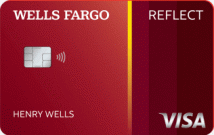

The Wells Fargo Reflect® Credit Card is a consumer-focused credit card designed for individuals who want an extended introductory period for purchases and balance transfers along with a simple, low-maintenance credit solution. The card is especially appealing to consumers looking to manage existing credit card debt, finance larger purchases, or reduce interest costs through a promotional introductory APR offer on eligible transactions. Unlike rewards-focused credit cards, the Wells Fargo Reflect® Card emphasizes payment flexibility and financial management rather than earning points or cash back, making it a practical option for cardholders who prioritize saving on interest expenses. The card also provides access to convenient account management features through Wells Fargo’s online banking platform and mobile app, allowing users to monitor transactions, make payments, set alerts, and manage their account from anywhere. Additional benefits may include access to select Wells Fargo cardholder services, security features, and tools designed to help customers maintain control of their spending. While the card does not offer a traditional rewards program, its long introductory APR period and straightforward structure make it a valuable option for consumers who need time to pay down balances or make planned purchases without immediately accruing interest charges. Overall, the Wells Fargo Reflect® Card is best suited for financially responsible individuals seeking a reliable credit card with a focus on payment flexibility, debt management, and long-term financial convenience.
- Long 21 Months 0% APR Intro
- No Annual Fee
- Cell Phone Protection
- Strong Fraud Protection
- Helpful for Building Credit
- No Rewards Program
- No Welcome Bonus
- Balance Transfer Fee
- Foreign Transaction Fee
- High Variable APR After Introductory Period
Favorable Details:
- Long 0% Introductory APR: New cardholders receive a 0% introductory APR for 21 months from account opening on purchases and qualifying balance transfers, providing a substantial period to finance large planned expenses or reduce qualifying high-interest debt.
- No Annual Fee: The Wells Fargo Reflect Card charges a $0 annual fee, so cardholders do not have to calculate whether annual rewards or benefits are sufficient to recover a yearly ownership cost.
- Purchase Financing: The introductory APR applies to purchases, making the card useful for consumers planning a major expense that can realistically be repaid before the promotional period ends.
- Balance Transfer Opportunity: Eligible balances transferred within the required introductory window can qualify for the 0% APR period, potentially reducing interest expense on existing higher-rate credit card debt.
- Cell Phone Protection: Paying an eligible monthly wireless bill with the Reflect Card can provide cell phone protection of up to $600 per covered claim after a $25 deductible, subject to benefit terms and limits.
- My Wells Fargo Deals: Although the Reflect Card does not earn conventional rewards, eligible cardholders can activate personalized merchant offers through My Wells Fargo Deals and potentially receive statement credits on qualifying purchases.
- Rental Car Protection: Eligible rental-car transactions can receive Auto Rental Collision Damage Waiver coverage when the applicable requirements are satisfied.
- Roadside Dispatch: Visa Roadside Dispatch provides access to pay-per-use roadside assistance services without requiring a separate annual membership.
Unfavorable Details:
- No Traditional Rewards Program: Ordinary purchases do not earn a standard percentage of cash back, Wells Fargo Rewards points, airline miles or hotel points, making the card less appealing for consumers focused primarily on long-term spending rewards.
- No Conventional Welcome Bonus: Unlike many competing rewards cards, the Reflect Card generally does not offer a cash or points bonus tied to meeting a minimum spending requirement.
- 5% Balance Transfer Fee: Qualifying transfers generally cost 5% of the amount transferred with a $5 minimum, which can represent a significant upfront expense when moving a large balance.
- 3% Foreign Transaction Fee: International purchases generally incur a foreign transaction fee, making the Reflect Card less suitable as a primary credit card for frequent overseas travelers.
- Potentially Expensive Regular APR: After the introductory period ends, remaining balances become subject to the card’s regular variable APR, which can make carrying debt considerably more expensive.
- Limited Long-Term Rewards Value: Once the introductory financing period is over, consumers who consistently pay their balances in full may obtain more everyday value from a cash-back or travel-rewards credit card.
- Qualification Standards: The Reflect Card is generally targeted toward consumers with established good to excellent credit rather than applicants with limited or damaged credit histories.
- Intro Period Requires Planning: A 21-month promotional period is valuable only when the cardholder has a realistic repayment strategy and avoids accumulating more debt than can be eliminated before regular interest begins.
Wells Fargo Reflect® Credit Card Facts Table
| Feature | Details |
| Credit Card Issuer | Wells Fargo Bank, N.A. |
| Payment Network | Visa Signature |
| Card Type | 0% Intro APR Card – Balance Transfer Credit Card |
| Recommended Credit | Good Credit to Excellent Credit Score (690-850) |
| Annual Fee | $0 |
| Rewards | No traditional ongoing rewards program |
| Welcome Bonus | No standard cash or points welcome bonus |
| Intro Purchase APR | 0% for 21 months from account opening |
| Intro Balance Transfer APR | 0% for 21 months from account opening on qualifying transfers |
| Regular APR | 17.49%, 23.99%, or 28.24% Variable APR |
| Balance Transfer Fee | 5% of each transfer, minimum $5 |
| Qualifying Transfer Period | Transfers generally must be made within 120 days |
| Foreign Transaction Fee | 3% |
| Security Deposit | None |
| Best For | Long-term purchase financing and balance transfers |
| Notable Benefits | Cell phone protection, My Wells Fargo Deals, rental car coverage and Roadside Dispatch |
0% Intro APR for 21 Months
The signature feature of the Wells Fargo Reflect Credit Card is its 0% introductory APR for 21 months from account opening on purchases and qualifying balance transfers. Twenty-one months represents a substantial interest-free financing window and can provide nearly two years to reduce a qualifying transferred balance or pay for a major planned expense. Someone financing a $6,000 purchase, for example, could theoretically eliminate that balance within the promotional period by paying roughly $286 per month, assuming no additional charges or fees are added. The offer does not eliminate the debt itself, so applicants should calculate the monthly payment required to reach a zero balance before the regular variable APR becomes effective.
How the Wells Fargo Reflect Card Works
The Wells Fargo Reflect Card operates as a conventional revolving Visa credit card with a credit limit determined during underwriting. Approved cardholders can make purchases, transfer eligible balances, make monthly payments and carry balances subject to the account’s applicable interest rates. During the introductory period, qualifying purchase and balance-transfer balances receive the promotional 0% APR, but minimum monthly payments are still required. After the promotional period expires, remaining balances are subject to the card’s regular variable APR, so the most effective use of Reflect is usually to establish a repayment schedule immediately after opening the account rather than treating the 21-month promotion as permission to indefinitely increase debt.
$0 Annual Fee
The Wells Fargo Reflect Card has a $0 annual fee, which is especially useful for a financing-oriented credit card because an annual charge would reduce the savings generated by the introductory APR. Cardholders can potentially keep the account open after the promotional period without paying a yearly ownership fee, which may be helpful for maintaining account age and available credit when responsibly managed. The absence of an annual fee does not mean the account is cost-free, however, because balance transfers, foreign transactions, cash advances, late payments and interest after the introductory period can still generate charges depending on how the card is used.
No Security Deposit
The Wells Fargo Reflect Credit Card is an unsecured credit card and does not require applicants to provide a refundable security deposit. Instead, Wells Fargo evaluates factors such as the applicant’s credit profile, income, existing debts and overall ability to repay before determining whether to approve the account and what credit limit to provide. This structure distinguishes Reflect from secured cards intended primarily for credit rebuilding, where a consumer may need to provide several hundred dollars as collateral. Applicants with weak or newly established credit should not assume that the absence of a deposit means approval standards are relaxed.
No Traditional Rewards Program
The Reflect Card does not offer a traditional everyday rewards structure in which every eligible purchase earns cash back, points or miles. That omission is intentional because the card concentrates its value in the lengthy introductory APR rather than ongoing spending rewards. Consumers carrying a large qualifying balance can potentially save much more through avoided interest than they would earn from 1% or 2% cash back, but a cardholder who never carries debt and does not need introductory financing may find the lack of rewards increasingly noticeable after the promotional period. Reflect therefore works best when evaluated as a financial-management tool rather than a conventional rewards card.
My Wells Fargo Deals
My Wells Fargo Deals adds a limited rewards-style component to the Reflect Card by providing eligible cardholders with merchant-specific offers that can generate account credits after activation and qualifying purchases. Offers can vary by account and over time, so My Wells Fargo Deals should not be treated as a guaranteed percentage of cash back on every transaction. Nevertheless, cardholders who regularly review available offers may find opportunities for discounts or statement credits on shopping, dining and other purchases. This feature helps add some ongoing value to a card that otherwise lacks a standard rewards program, although it does not replace a dedicated cash-back card for consumers who prioritize predictable earnings.
Cell Phone Protection
The Wells Fargo Reflect Card includes valuable cellular telephone protection when the cardholder pays the qualifying monthly wireless bill with the card and satisfies the coverage requirements. Eligible damage, theft or qualifying involuntary and accidental parting can be covered for up to $600 per claim after a $25 deductible, with coverage generally limited to two paid claims and $1,200 during a 12-month period. Because eligibility depends on payment of the wireless bill and numerous exclusions apply, cardholders should not assume that every broken, misplaced or malfunctioning device will qualify. Even with those restrictions, cell phone protection is an unusually practical benefit on a no-annual-fee financing card and can provide meaningful value for households with expensive smartphones.
Auto Rental Collision Damage Waiver
The Wells Fargo Reflect Visa includes Auto Rental Collision Damage Waiver protection for eligible rental vehicles when the entire qualifying rental transaction is charged to the card and the renter declines the rental company’s applicable collision or loss-damage coverage. Coverage can reimburse qualifying damage or theft costs up to the benefit limit, subject to vehicle restrictions, rental-duration requirements, geographic limitations and other exclusions. In the United States, the coverage generally functions as secondary coverage, meaning applicable personal insurance normally pays first, while eligible international coverage can operate differently. Because the benefit does not cover every type of liability or loss, travelers should understand their existing insurance before declining rental-company protection solely because they hold the Reflect Card.
Roadside Dispatch®
Wells Fargo Reflect cardholders receive access to Visa Roadside Dispatch, a pay-per-use roadside assistance program available for qualifying vehicles. Services can include standard towing, jump starts, tire changes, lockout assistance, fuel delivery and standard winching within defined program limits. There is no annual membership charge or pre-enrollment requirement, but Roadside Dispatch is not complimentary roadside service because the cardholder pays a predetermined service-call charge and may owe additional amounts when service exceeds standard limits. It can nevertheless provide convenient emergency access to assistance for consumers who do not already receive roadside coverage through an automobile insurer, vehicle manufacturer or automobile club.
Emergency Cash and Card Replacement
Visa’s emergency assistance services can help eligible Wells Fargo Reflect cardholders obtain replacement cards or emergency cash when a card is lost, stolen or damaged while traveling. Emergency card replacement may be particularly useful when a consumer is away from home and cannot wait for standard mail delivery. Emergency cash is not free money and can be treated as a cash advance subject to applicable fees and interest, so it should generally be reserved for genuine situations in which other payment methods are unavailable. The greatest value of the service is access to assistance and expedited card replacement rather than inexpensive borrowing.
No Rotating Reward Categories
Reflect cardholders do not need to activate rotating quarterly categories or track changing bonus spending limits because the card does not use a traditional category-based rewards system. This makes account management extremely straightforward: the central objective is using the 0% introductory APR efficiently and making every required payment on time. Consumers who find rotating categories frustrating may appreciate this simplicity, although the tradeoff is that purchases at restaurants, supermarkets, gas stations, streaming services and travel merchants do not automatically receive elevated rewards simply because they fall within a particular category.
No Rewards Limits to Track
Because the Wells Fargo Reflect Card does not offer standard cash-back points or miles on everyday purchases, there are no ordinary annual rewards caps or bonus-category thresholds to monitor. Instead, the most important limits involve the introductory APR period, the qualification window for balance transfers, the available credit line and individual card benefits such as cellular telephone protection. This shifts the cardholder’s attention from maximizing rewards toward minimizing financing costs. Consumers should still monitor spending closely, because using too much of the available credit can create repayment challenges and potentially affect credit utilization even while the promotional APR remains at 0%.
No Traditional Rewards Redemption
There is no conventional Reflect rewards balance that must be redeemed for cash back, statement credits, airline tickets or gift cards because purchases do not generate a standard rewards currency. My Wells Fargo Deals may provide account credits when qualifying personalized offers are activated and used, but those merchant offers operate differently from a general rewards program. For a consumer seeking simplicity while reducing debt, this can be a benefit because there is no point valuation or redemption strategy to learn. For someone who routinely pays in full and wants to earn value from every dollar spent, however, the absence of traditional rewards is one of the card’s largest long-term limitations.
No Standard Welcome Bonus
The Wells Fargo Reflect Card generally emphasizes its 21-month introductory APR rather than offering a traditional new-cardholder cash or points bonus after meeting a spending requirement. This can initially make Reflect appear less attractive than rewards cards advertising $200 cash bonuses or tens of thousands of travel points, but the potential financing savings can be considerably larger for the right applicant. A consumer avoiding hundreds or thousands of dollars of interest on a large balance may receive more practical value from the introductory APR than from an ordinary welcome bonus. Applicants who do not need financing, however, may prefer a card offering both a welcome bonus and long-term rewards.
Introductory Purchase APR
New Wells Fargo Reflect cardholders receive a 0% introductory APR on purchases for 21 months from account opening. This can be useful for financing appliances, home improvements, medical expenses, moving costs or another planned expense when the cardholder has enough monthly cash flow to repay the balance within the promotional period. A 0% APR should not be confused with a payment holiday: minimum payments are still due, and spending more than can realistically be repaid creates a risk of entering the regular APR period with a substantial outstanding balance. The strongest strategy is to divide the amount financed by the number of available months and establish an automatic payment that eliminates the balance slightly before the promotion expires.
Introductory Balance Transfer APR
Qualifying balance transfers also receive a 0% introductory APR for 21 months from account opening, giving Reflect considerable appeal as a debt-consolidation tool. Moving eligible balances from high-interest cards can reduce the amount of money lost to interest and allow more of each payment to reduce principal. However, the transferred debt does not disappear, and a balance transfer can become counterproductive if the consumer begins accumulating new balances on the cards that were paid down. Successful use generally requires transferring only an amount that can realistically be repaid within the promotional period and avoiding unnecessary new revolving debt.
120-Day Balance Transfer Window
To receive the introductory balance-transfer terms, qualifying transfers generally must be made within the first 120 days after opening the account. This requirement means new cardholders should identify the balances they intend to transfer and begin the process relatively early rather than waiting until the end of the 21-month promotional period. Transfers can also take time to process, so consumers should continue making required payments to their existing creditors until they confirm that transferred balances have actually posted. Failing to pay the old account while waiting for a transfer can result in late charges, damaged credit and unnecessary complications.
5% Balance Transfer Fee
The Wells Fargo Reflect Card generally charges a balance transfer fee equal to 5% of each transferred amount with a $5 minimum. A $10,000 balance transfer would therefore generate approximately $500 in transfer fees, meaning the cardholder should compare that cost with the interest that would otherwise be paid on the existing debt. For a balance carrying a very high APR, paying the fee may still result in substantial net savings over 21 months. Consumers with lower-rate balances or balances they could repay quickly should calculate the break-even point instead of assuming every transfer automatically saves money.
Regular Variable APR
After the introductory financing period expires, the Wells Fargo Reflect Card currently applies a regular variable APR of 17.49%, 23.99%, or 28.24%, depending on the account terms and creditworthiness. The rate is variable, meaning it can change when the underlying benchmark rate changes. At the higher end of the range, carrying several thousand dollars from month to month can generate substantial interest charges and quickly eliminate the savings produced during the introductory period. Cardholders should therefore know the exact expiration date of their promotional APR and aim to repay the financed balance in full before the regular interest rate becomes applicable.
Paying the Balance in Full
Once the introductory period has ended, paying new purchase balances in full by the applicable due date is generally the most cost-effective way to continue using the Wells Fargo Reflect Card. The card offers relatively limited ongoing rewards, so there is little financial justification for carrying an interest-bearing balance simply to keep using it. During the promotional period, cardholders can strategically make scheduled payments toward the financed amount, but after the promotion, avoiding interest becomes especially important. Automatic payments can help protect against missed due dates, although consumers should continue reviewing statements for incorrect charges, unexpected fees and changes to account terms.
Building Credit With the Wells Fargo Reflect Card
Responsible use of the Wells Fargo Reflect Card can contribute to a stronger credit profile over time because a revolving credit account can add payment history, available credit and account age to a consumer’s credit record. Consistently paying at least the required amount by the due date and maintaining manageable balances can support healthy credit behavior, while late payments and excessive debt can have the opposite effect. The long introductory APR can help consumers reduce expensive balances, but a 0% rate does not prevent a high reported balance from affecting credit utilization. Consumers focused on their credit scores should therefore work toward reducing the balance steadily rather than waiting until the final promotional month to make a large payoff.
Reports to the Major Credit Bureaus
Wells Fargo generally reports consumer credit card account information to the major U.S. credit bureaus, allowing the Reflect Card’s payment history, balance and account status to become part of the cardholder’s credit files. Responsible management can contribute positive information, while serious delinquencies or defaults can damage a credit profile and potentially remain visible for years. Credit reporting does not guarantee that opening Reflect will increase a particular credit score because scoring models consider numerous factors. Cardholders should focus on consistent payments, manageable utilization and overall debt management rather than opening the card solely in pursuit of a short-term score increase.
Managing Credit Utilization
Because the Wells Fargo Reflect Card has a traditional assigned credit limit, the reported balance can influence revolving credit utilization. A consumer receiving a $10,000 credit limit and carrying an $8,000 transferred balance may show high utilization on the new account even though the balance currently receives a 0% APR. Paying the balance down steadily can improve the ratio over time, and leaving the cards from which debt was transferred open may preserve additional available credit when doing so does not create an overspending risk or unnecessary fees. Credit utilization is only one component of a credit score, but large balances should not be ignored simply because they are temporarily interest-free.
Credit Limit Increases
Wells Fargo may consider eligible cardholders for credit-limit increases based on factors such as account history, income, payment behavior, overall creditworthiness and existing debt. A higher credit limit can provide additional purchasing flexibility and may reduce utilization when spending remains unchanged, but consumers should never interpret a larger credit line as additional income. Depending on the situation, requesting an increase may involve additional credit review, so cardholders should understand the process before submitting a request. For a balance-transfer user, the primary goal should remain repayment rather than increasing available borrowing simply to transfer or accumulate additional debt.
Good-to-Excellent-Credit Applicants
The Wells Fargo Reflect Card is generally best suited to applicants with good to excellent credit and a demonstrated history of managing revolving accounts responsibly. A credit score around 670 or higher may place an applicant within commonly recognized good-credit territory, but no particular score guarantees approval because Wells Fargo can evaluate income, debt obligations, recent applications, payment history, existing accounts and other underwriting information. Consumers with stronger credit profiles may also be more likely to qualify for favorable terms, although the exact credit line and APR are determined individually.
Applying for the Wells Fargo Reflect Card
Applying for the Wells Fargo Reflect Card generally requires personal identifying information, contact details, Social Security information, employment or income information and housing-related details. Wells Fargo uses the application and available credit data to determine eligibility, credit limit and account terms. Applicants should carefully review the introductory APR, balance-transfer deadline, transfer fee, regular APR and other disclosures displayed before submitting an application because the final terms govern the account. Consumers planning a balance transfer should also estimate how much available credit they need because approval for the card does not guarantee a credit limit large enough to transfer every existing balance.
Checking Eligibility Before Applying
Consumers interested in Wells Fargo Reflect should review their credit profile and any available prequalification options before submitting a formal application when possible. Prequalification can help estimate whether an offer may be available, but it does not guarantee final approval because Wells Fargo can conduct additional underwriting when a full application is submitted. Applicants should examine recent inquiries, revolving utilization, payment history and existing debt before deciding whether another account is appropriate. A person who already carries substantial debt should apply only when Reflect supports a specific repayment plan rather than simply providing another available credit line.
Consumers Building Credit
Consumers with relatively new credit histories may find Reflect attractive because it has no annual fee, but qualification may be more difficult than with products specifically designed for beginners. If approved, responsible use can help establish additional revolving credit history, particularly when payments are consistently made on time and balances decline over time. However, consumers primarily trying to establish their first credit account may find student cards, starter cards or secured cards more accessible. Reflect is most valuable when its long introductory APR solves an actual financing need rather than when it is selected only as a general credit-building product.
Consumers Rebuilding Credit
The Wells Fargo Reflect Card is generally not designed as a credit-rebuilding card for applicants with severely damaged credit. Consumers recovering from recent late payments, collections, charge-offs or very high utilization may face lower approval odds and should avoid unnecessary applications if their credit profile does not yet align with the product. Secured credit cards and other rebuilding-oriented products may provide a more realistic path toward establishing positive payment history. Once a consumer’s credit and debt situation improves, Reflect may become useful for financing or debt consolidation, but the card itself cannot erase accurate negative information from a credit report.
First-Time Credit Card Users
Reflect can be relatively simple to understand because it does not require learning complex points transfers, rotating bonus categories or redemption charts, but it is not necessarily ideal as a first credit card. Its principal value comes from a lengthy introductory APR, which can encourage inexperienced users to carry a large balance without immediately experiencing interest charges. New cardholders should understand that every dollar borrowed must eventually be repaid and that regular interest can become expensive after the promotion. A first-time user who qualifies and has a disciplined financing plan may benefit, while someone simply seeking an everyday starter card may prefer a product with ongoing cash back.
Students and Young Adults
Students and younger adults with established good credit and sufficient income could potentially qualify for the Wells Fargo Reflect Card, especially when they need to finance a necessary planned expense over time. The $0 annual fee helps keep ownership costs low, and cell phone protection may be useful for consumers paying their own wireless bills. However, the absence of traditional rewards means students who pay in full every month may receive more ongoing value from a student cash-back card. Younger applicants should also be cautious about using a long 0% period to finance discretionary purchases that would otherwise be unaffordable.
International Purchases
The Wells Fargo Reflect Card is not especially attractive for international spending because it generally charges a 3% foreign transaction fee. Spending $2,000 abroad could therefore result in approximately $60 in foreign transaction charges before considering other travel expenses. Although the Visa payment network provides broad international acceptance, frequent travelers can usually obtain better value from a card that charges no foreign transaction fees and earns travel or dining rewards. Reflect can still serve as an emergency backup card while traveling, but it is generally better positioned as a domestic financing product than a dedicated international travel card.
Digital Account Management
Wells Fargo provides digital account-management tools that allow Reflect cardholders to monitor transactions, review statements, make payments, manage alerts and access available account features through online and mobile banking. Digital tools are especially useful for a financing card because cardholders need to track the outstanding promotional balance and know when the introductory APR is scheduled to expire. Setting automatic payments above the required minimum can help create a structured payoff schedule, while transaction alerts can make unusual activity easier to identify. Consumers should periodically review their actual statement rather than relying entirely on account notifications.
Security and Fraud Monitoring
The Wells Fargo Reflect Card includes standard security features designed to help cardholders identify and respond to unauthorized account activity. Fraud monitoring, account alerts, replacement-card services and protections against qualifying unauthorized transactions can reduce the financial impact of certain types of card fraud when issues are reported promptly. Digital wallet compatibility can also reduce the need to provide a physical card number during some transactions. These protections do not eliminate the need for basic security practices, so cardholders should use strong account credentials, avoid suspicious payment requests and regularly review posted transactions.
Wells Fargo Reflect Card vs. Wells Fargo Active Cash® Card
The Wells Fargo Reflect Card and Wells Fargo Active Cash Card target different priorities even though both can appeal to consumers seeking no-annual-fee products. Reflect places its greatest emphasis on an extended introductory APR for purchase financing and qualifying balance transfers, while Active Cash is primarily designed for consumers who want straightforward cash-back rewards on everyday spending. Someone transferring a large high-interest balance or financing a planned purchase may obtain greater immediate value from Reflect, while someone who pays every statement in full and wants ongoing rewards can generally receive more long-term value from Active Cash. The appropriate choice therefore depends on whether reducing interest or maximizing cash rewards is the primary objective.
Wells Fargo Reflect Card vs. Citi Simplicity® Card
Wells Fargo Reflect and Citi Simplicity are both designed for consumers interested in introductory APR financing and balance transfers rather than premium rewards. Reflect stands out by combining its extended promotional financing structure with practical benefits such as cell phone protection and selected Visa services, while Citi Simplicity has traditionally emphasized straightforward debt-management features. The more important comparison for a prospective applicant is the current introductory APR duration, balance-transfer fee, transfer deadline and ongoing APR displayed at the time of application. A consumer transferring a large balance should calculate total transfer costs rather than choosing solely on the advertised number of introductory months.
Wells Fargo Reflect Card vs. Citi® Diamond Preferred® Card
The Wells Fargo Reflect Card and Citi Diamond Preferred Card occupy a similar segment of the credit card market, focusing on introductory financing instead of ongoing rewards. Both can potentially help qualified consumers manage existing high-interest debt or finance planned purchases, but offer lengths, transfer fees and eligibility requirements can vary over time. Reflect’s additional cell phone and Visa benefits can provide an advantage for consumers who value practical card protections. The best choice should be based on which card produces the lowest total cost for the specific balance being financed and whether the cardholder expects meaningful value from the account after the introductory period.
Wells Fargo Reflect Card vs. Traditional Cash-Back Cards
Traditional cash-back credit cards are generally better suited to consumers who pay their balances in full and want ongoing returns from everyday purchases, while the Wells Fargo Reflect Card is designed primarily to reduce financing costs. Earning 2% cash back on $10,000 of spending would generate $200 in rewards, but avoiding a high credit card APR on a large balance for 21 months could potentially save considerably more. Once Reflect’s promotional period has ended, however, its lack of conventional rewards becomes increasingly important. Consumers who no longer require financing may want to use a rewards card for new purchases while keeping Reflect open when doing so fits their broader credit strategy.
Is the Wells Fargo Reflect Card Good for Good or Excellent Credit?
The Wells Fargo Reflect Card can be an excellent option for good- or excellent-credit consumers who need an extended period to repay a major purchase or qualifying transferred balance. The 0% introductory APR for 21 months, $0 annual fee and practical card benefits create a strong package for disciplined borrowers. It becomes much less compelling for consumers who never carry balances and prioritize cash back, points, travel perks or a large welcome bonus. Approval is never guaranteed, so applicants should evaluate both their credit profile and the financial purpose of opening the account before applying.
Is the Wells Fargo Reflect Card Good for Beginners?
The Reflect Card can work for a financially disciplined beginner who already qualifies for the product, but its long interest-free period requires careful budgeting. A new credit user may incorrectly interpret a 0% APR as meaning there is little urgency to repay purchases, which can result in a large balance remaining when the regular APR takes effect. Beginners who create a fixed monthly repayment schedule and avoid unnecessary purchases can use the introductory offer effectively. Consumers simply seeking their first everyday credit card may receive more lasting value from a no-annual-fee card offering straightforward cash-back rewards.
Is the Wells Fargo Reflect Card Good for Rebuilding Credit?
The Wells Fargo Reflect Card generally is not the strongest choice for rebuilding seriously damaged credit because it is typically positioned toward applicants with good or better credit. Consumers with poor credit may have better approval prospects with secured cards or products specifically designed for rebuilding. If someone rebuilding credit eventually qualifies for Reflect, consistent on-time payments and declining balances can contribute positive account history, but the card cannot guarantee a score improvement or remove legitimate negative marks. Debt reduction and timely payments across all accounts remain more important than obtaining any single credit card.
Is the Wells Fargo Reflect Card Worth It?
The Wells Fargo Reflect Card can be highly worthwhile for a consumer who has a clear use for its 21-month 0% introductory APR and can repay the financed balance before the promotional period ends. With no annual fee, the primary upfront cost for debt consolidation is generally the balance-transfer fee, and the potential interest savings can substantially exceed that expense when replacing high-rate credit card debt. The card is less valuable for consumers who carry no debt, require no financing and want to earn substantial ongoing rewards. Its worth therefore depends less on spending volume and more on the amount of interest the introductory period can realistically save.
Credit Requirements
Good to excellent credit is generally recommended for the Wells Fargo Reflect Card, although Wells Fargo does not publish a specific credit score that guarantees approval. Applicants can be evaluated using payment history, utilization, income, debt obligations, length of credit history, recent applications and the overall information in their credit reports. Consumers preparing to apply may improve their financial profile by paying down high revolving balances, correcting genuine credit-report inaccuracies and avoiding unnecessary new applications. Even an applicant with an excellent score can be declined when other underwriting factors do not meet Wells Fargo’s requirements.
Credit-Building Strategy
A responsible strategy with the Wells Fargo Reflect Card begins with determining exactly why the account is being opened and calculating the monthly payment needed to reach a zero promotional balance before the 21-month period ends. Cardholders should make every payment on time, avoid maxing out the credit line, refrain from adding unnecessary debt and monitor utilization as the balance falls. Setting automatic payments above the minimum can help maintain progress, while keeping a separate emergency fund reduces the likelihood that unexpected expenses will be added to the card. This disciplined approach can maximize the introductory offer while supporting healthier long-term credit behavior.
Avoiding Excessive Debt
A 0% introductory APR can create the illusion that borrowing is free, but every purchase and transferred balance remains a genuine financial obligation. A consumer who transfers $8,000 and then adds another $5,000 of purchases has created $13,000 of debt that must eventually be repaid regardless of the temporary interest rate. To avoid this problem, cardholders should establish a specific financing purpose, calculate affordable monthly payments and resist using newly available credit on other accounts to accumulate fresh balances. The Reflect Card works best as a tool for eliminating or carefully managing debt, not expanding total household borrowing.
Maximizing the 21-Month Introductory Period
The most effective Reflect strategy is to create a payoff schedule immediately after the account is opened rather than waiting until the promotional deadline approaches. A $10,000 promotional balance divided over 20 months would require approximately $500 per month before considering any balance-transfer fee or additional spending, leaving an extra month as a cushion before the promotion ends. Paying more during months with stronger cash flow can create additional protection against unexpected expenses later. Cardholders should confirm the exact introductory expiration date on their account statements because relying on a general estimate can result in an unexpected remaining balance becoming subject to the regular variable APR.
Using Reflect for a Large Purchase
Reflect can be particularly useful for a planned large purchase when the consumer already knows how the balance will be repaid. Expenses such as appliances, furniture, moving costs, home repairs or other necessary purchases can potentially be spread across the 21-month introductory period without purchase interest. For example, a $4,200 qualifying purchase could theoretically be eliminated with payments of approximately $200 per month over 21 months. Consumers should avoid using the promotional offer for unnecessary spending merely because financing appears inexpensive, as the benefit is strongest when it replaces an otherwise costly financing option.
Using Reflect for Debt Consolidation
Debt consolidation can be one of the strongest reasons to choose the Wells Fargo Reflect Card when a qualified applicant has multiple high-interest credit card balances. Moving eligible debt onto one promotional balance can simplify payments and temporarily stop qualifying transferred balances from generating interest, allowing a greater proportion of each payment to reduce principal. The 5% transfer fee must be included in the calculation, and the approved credit limit may prevent the consumer from transferring every desired balance. Successful consolidation also requires avoiding new charges on the old cards, since rebuilding balances would leave the consumer with both the transferred debt and new high-interest obligations.
Long-Term Value
The Wells Fargo Reflect Card’s long-term value is more limited than its first 21 months because the product does not provide a conventional everyday rewards program. After the promotional financing has been fully repaid, the $0 annual fee can make the account relatively inexpensive to keep open, while cell phone protection, My Wells Fargo Deals and Visa benefits may continue to provide practical value. Consumers who pay in full each month may nevertheless prefer to direct most new purchases to a stronger cash-back or travel-rewards card. Reflect can therefore transition from a primary financing tool into a secondary no-annual-fee account after its original purpose has been completed.
Who Should Get the Wells Fargo Reflect Card?
The Wells Fargo Reflect Card is best suited to consumers with good to excellent credit who have a specific large purchase to finance, qualifying high-interest debt to transfer or both. Ideal applicants have predictable income, can calculate a realistic monthly repayment target and are committed to eliminating the promotional balance before regular interest begins. The card can also appeal to someone who values cell phone protection and does not want to pay an annual fee. Consumers focused primarily on airline miles, premium travel benefits, large welcome bonuses or maximum everyday cash back should generally consider other credit cards.
Who Should Avoid the Wells Fargo Reflect Card?
Consumers who do not need introductory financing may receive relatively little value from the Wells Fargo Reflect Card because ordinary spending does not earn conventional cash back, points or miles. Frequent international travelers should also be cautious because the foreign transaction fee can increase the cost of overseas purchases. Applicants who are unlikely to repay their balance within 21 months should compare other debt-management options rather than assuming the promotional rate solves a long-term affordability problem. Reflect is also less appropriate for consumers with damaged credit who are primarily searching for an accessible rebuilding product.
Overall Value of the Wells Fargo Reflect Card
The overall value of the Wells Fargo Reflect Card comes from interest savings rather than rewards earnings. For the right consumer, avoiding a double-digit APR on thousands of dollars for 21 months can create considerably more financial value than a conventional welcome bonus or small percentage of cash back. The $0 annual fee helps preserve those savings, while cell phone protection and selected Visa benefits provide useful additional features. Its biggest weakness is that value declines after the introductory period, particularly for consumers who consistently pay in full and could otherwise earn significant ongoing rewards.
Final Verdict
The Wells Fargo Reflect® Credit Card is one of the strongest specialized introductory-APR credit cards for consumers with good to excellent credit who want substantial time to finance purchases or pay down qualifying transferred balances. Its 0% introductory APR for 21 months on purchases and qualifying balance transfers, $0 annual fee, cell phone protection, My Wells Fargo Deals, Auto Rental Collision Damage Waiver, Roadside Dispatch and Visa emergency services create a practical package centered on financial flexibility rather than rewards. The biggest disadvantages are its 5% balance-transfer fee, 3% foreign transaction fee, lack of conventional cash back or points, absence of a standard welcome bonus and potentially expensive variable APR after the introductory period expires. Overall, the Reflect Card is an excellent choice when used with a disciplined 21-month payoff plan, but consumers who do not need financing will generally obtain stronger long-term value from a rewards-focused credit card.