10 Best Rated 0% Intro APR Credit Cards in 2026
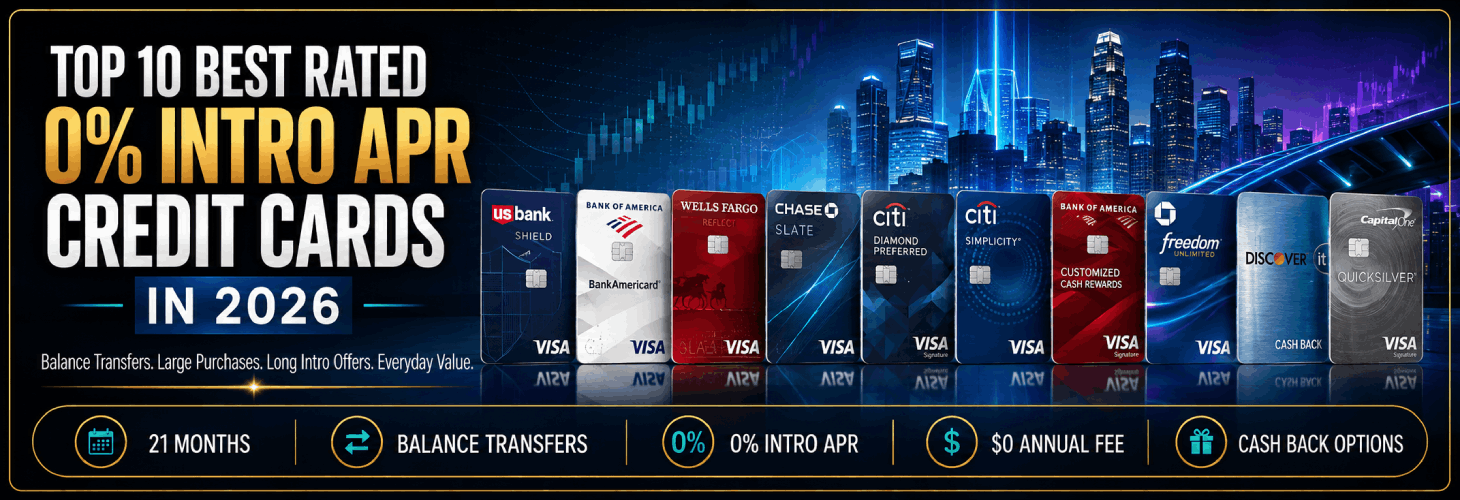
The best 0% intro APR credit cards in 2026 can provide considerably more financial value than simply delaying interest because the strongest introductory offers give qualified consumers as long as approximately 21 months or 21 billing cycles to finance major purchases, transfer high-interest balances, consolidate revolving debt, manage unexpected expenses, or spread planned costs across a predictable repayment period without immediately paying purchase or balance-transfer interest. A strong introductory APR credit card can be particularly useful for home improvements, appliances, medical expenses, vehicle repairs, furniture, electronics, moving expenses, wedding costs, travel, education-related purchases, and other substantial expenses when the cardholder has a realistic plan to eliminate the balance before the promotional period expires. This 2026 ranking compares 10 of the strongest broadly available 0% intro APR credit cards from U.S. Bank, Bank of America, Wells Fargo, Chase, Citi, Discover, and Capital One, with each card evaluated according to introductory purchase APR length, introductory balance-transfer APR length, balance-transfer costs, regular APRs, annual fees, rewards, welcome bonuses, foreign transaction fees, consumer protections, ease of use, and long-term value after the promotional financing period ends.
Important Note About 0% Intro APR Credit Card Offers
Introductory credit card APR periods, standard variable APRs, balance-transfer fees, qualifying transfer deadlines, welcome offers, reward rates, annual fees, underwriting standards, and additional cardholder benefits can change throughout 2026, and some applicants may receive personalized, targeted, branch-specific, preapproved, or online-only terms that differ from generally advertised offers. A 0% introductory APR also does not make every transaction completely free because balance-transfer fees commonly add approximately 3% to 5% of the transferred amount, cash advances normally receive a separate higher APR, foreign transaction fees may apply to purchases outside the United States, and late-payment or returned-payment charges can still create costs depending on the account agreement. Consumers should always review the final pricing disclosures before applying and should calculate how much must be paid each month to eliminate the promotional balance before the introductory rate expires because unpaid debt can become subject to a regular variable APR that may substantially exceed the value of any rewards earned.
What Are the Best 0% Intro APR Credit Cards in 2026?
The U.S. Bank Shield® Visa® Card ranks as the best overall 0% intro APR credit card in this 2026 comparison because its 21-billing-cycle introductory financing period applies to both purchases and qualifying balance transfers while the card also provides a $0 annual fee, selected travel cash back, cell phone protection, and an annual statement-credit opportunity. BankAmericard® ranks second because it also provides 21 billing cycles of introductory financing while offering one of the lowest potential regular APR ranges among the cards reviewed, Wells Fargo Reflect® ranks third with 21 months of introductory financing and cell phone protection, and Chase Slate® ranks fourth with another highly competitive 21-month purchase and balance-transfer promotion. Citi® Diamond Preferred® is especially attractive for extended balance transfers, Citi Simplicity® combines lengthy introductory financing with no late fees or penalty APR, and Bank of America® Customized Cash Rewards, Chase Freedom Unlimited®, Discover it® Cash Back, and Capital One Quicksilver Cash Rewards provide shorter promotional periods but stronger long-term rewards.
How We Rated the Best 0% Intro APR Credit Cards
Each credit card was rated according to how effectively it performs as an introductory financing and debt-management product rather than simply ranking whichever card advertises the highest cash-back percentage or largest welcome bonus, with the greatest weight placed on the length of the promotional purchase APR, length of the balance-transfer APR, balance-transfer fee, qualifying transfer deadline, annual fee, and regular APR that applies after the promotional period ends. Cards providing approximately 21 months of financing on both purchases and balance transfers generally received the strongest scores because the additional repayment time can create significantly more financial flexibility than a standard 12- or 15-month promotion, while rewards cards received additional consideration when their cash back, welcome bonuses, consumer protections, or travel features make them useful after the promotional financing ends. We also considered whether the cards are practical for ordinary consumers, how complicated the promotional terms are to manage, whether foreign transaction fees limit international usefulness, and whether the account can provide meaningful long-term value without requiring an annual membership fee.
Favorable Aspects of the Best 0% Intro APR Credit Cards
- Promotional introductory financing can last approximately 15 to 21 months or billing cycles on leading cards.
- Several of the strongest cards provide 0% introductory APR on both purchases and qualifying balance transfers.
- Every credit card included in this Top 10 ranking currently has a $0 annual fee.
- Long introductory periods can make major planned purchases easier to repay through predictable monthly payments.
- Balance-transfer promotions can substantially reduce interest costs when replacing high-APR revolving debt.
- Several cards combine introductory financing with ongoing cash-back rewards.
- Selected cards provide welcome bonuses worth approximately $200 after qualifying spending.
- Some cards include useful protections such as cell phone coverage, fraud protection, account-lock controls, and purchase protections.
- Consumers can choose between financing-focused cards and rewards cards designed for long-term everyday use.
- A disciplined repayment strategy can direct more monthly cash toward principal rather than interest during the introductory period.
Unfavorable Aspects of 0% Intro APR Credit Cards
- Promotional 0% introductory APR periods eventually expire and can be replaced by substantially higher variable APRs.
- Balance-transfer fees can add approximately 3% to 5% to the amount being transferred.
- Qualifying transfers may need to be completed within 60 days, 120 days, or four months of opening the account.
- Minimum monthly payments are often insufficient to eliminate a large balance before the promotional period ends.
- Many cards with the longest introductory periods offer limited or no traditional cash-back rewards.
- Rewards-focused cards generally provide shorter introductory periods than dedicated financing cards.
- Several cards charge approximately 3% in foreign transaction fees.
- The strongest promotional offers generally target applicants with good to excellent credit profiles.
- Balance transfers generally cannot be completed between two cards issued by the same financial institution.
- Opening a new card to transfer debt without changing spending habits can increase total debt instead of reducing it.
1. U.S. Bank Shield® Visa® Credit Card – Best Overall 0% Intro APR Credit Card

The U.S. Bank Shield® Visa® Credit Card earns the number-one position among the best 0% intro APR credit cards in 2026 because it combines one of the longest promotional financing periods available with several benefits rarely found on a card designed primarily for low-interest financing. New cardholders can receive 0% introductory APR for the first 21 billing cycles on purchases and for 21 billing cycles on qualifying balance transfers completed within the first 60 days of account opening, giving consumers nearly two years to eliminate eligible balances before the standard variable APR applies. A balance-transfer fee of 5% of each transferred amount with a $5 minimum applies, so consumers should compare that upfront cost with the amount of interest expected to be avoided. Shield carries no annual fee and also earns 4% cash back on qualifying prepaid airfare, hotel, and rental car reservations made through the U.S. Bank Travel Center. Additional benefits can include eligible cell phone protection and a $20 annual statement-credit opportunity after meeting the applicable consecutive purchase requirements, giving Shield more continuing utility than many traditional financing-only cards.
U.S. Bank Shield Visa Card Facts Table
| Feature | Details |
| Credit Card Issuer | U.S. Bank National Association |
| Payment Network | Visa Signature |
| Card Type | 0% Intro APR – Balance Transfer – Low Interest Card |
| Recommended Credit | Good Credit to Excellent Credit Score (690-850) |
| Annual Fee | $0 |
| Welcome Bonus | No Traditional Cash or Points Bonus |
| Intro Purchase APR | 0% for 21 Billing Cycles |
| Intro Balance Transfer APR | 0% for 21 Billing Cycles on Qualifying Transfers |
| Regular APR | 16.99%–27.99% Variable APR |
| Balance Transfer Fee | 5% of Each Transfer, $5 Minimum |
| Travel Rewards | 4% Cash Back on Eligible Prepaid Travel Center Reservations |
| Annual Statement Credit | $20 After 11 Consecutive Months of Purchases |
| Cell Phone Protection | Up to $600 on Eligible Damage or Theft |
| ExtendPay Benefit | Eligible 3-Month $0-Fee Plan Opportunity Annually After Intro APR |
| Foreign Transaction Fee | 3% |
| Best For | Long-Term 0% APR Financing and Balance Transfers |
Why U.S. Bank Shield Ranks First
U.S. Bank Shield ranks first because the most important consideration in a 0% introductory APR ranking is the amount of time a consumer receives to repay an eligible balance before regular interest begins, and 21 billing cycles provides significantly greater repayment flexibility than the 12- or 15-month promotions attached to many popular rewards cards. A consumer financing $10,000 over 21 billing cycles could target payments of approximately $476 per billing cycle before considering fees, while eliminating the same balance within 15 months would require roughly $667 per month, demonstrating how the longer introductory period can reduce required monthly cash flow. BankAmericard, Wells Fargo Reflect, and Chase Slate provide similarly lengthy financing, but Shield earns the top position because its limited travel rewards, cell phone protection, statement-credit opportunity, and $0 annual fee provide additional reasons to retain and use the account after the introductory period ends.
2. BankAmericard® Credit Card – Best for Long Financing and a Lower Potential Regular APR

The BankAmericard® Credit Card ranks second because it combines an exceptional 21-billing-cycle introductory period with one of the lowest potential ongoing APR ranges among the major national-bank cards included in this comparison. New cardholders receive 0% introductory APR for 21 billing cycles on purchases and on qualifying balance transfers made during the first 60 days after account opening, followed by a current variable APR ranging from approximately 14.99% to 25.99% based on creditworthiness. A 5% balance-transfer fee applies, making it important to compare the transfer cost with the amount of interest being avoided before consolidating a balance. BankAmericard does not offer traditional cash-back rewards or a conventional spending-based welcome bonus, but its simplicity can be an advantage for consumers who want to use the account exclusively as a financing or debt-repayment tool. The card has no annual fee and no automatic penalty APR merely because a payment is late, although late fees and other account consequences can still apply.
BankAmericard® Credit Card Facts Table
| Feature | Details |
| Credit Card Issuer | Bank of America, N.A. |
| Payment Network | Mastercard |
| Card Type | 0% Intro APR – Balance Transfer Credit Card |
| Recommended Credit | Good Credit to Excellent Credit Score (690-850) |
| Annual Fee | $0 |
| Welcome Bonus | None currently advertised |
| Rewards | No ongoing cash-back, points, or miles program |
| Intro Purchase APR | 0% for 21 billing cycles |
| Intro Balance Transfer APR | 0% for 21 billing cycles on qualifying transfers made within the first 60 days |
| Regular Purchase APR | 14.99%–25.99% Variable APR |
| Regular Balance Transfer APR | 14.99%–25.99% Variable APR after introductory period |
| Balance Transfer Fee | 5% of each transfer |
| Balance Transfer Deadline | Transfers must generally be made within the first 60 days to receive introductory APR |
| Penalty APR | None |
| Foreign Transaction Fee | 3% |
| Security Deposit | None |
| Best For | Long-term introductory financing and paying down transferred balances |
| Notable Benefits | $0 Liability Guarantee, fraud monitoring, account alerts, digital wallets, Balance Connect and online/mobile account management |
Why BankAmericard Ranks Second
BankAmericard ranks second because its 21-billing-cycle introductory purchase and balance-transfer APR matches the longest financing periods in the market while its potential standard APR begins at a lower level than many competing cards. U.S. Bank Shield edges ahead because Shield includes additional benefits and a limited rewards opportunity, whereas BankAmericard intentionally focuses almost entirely on financing. That simplicity can nevertheless be valuable for debt repayment because it reduces the incentive to add unnecessary new spending while a promotional balance is being eliminated. A consumer whose primary goal is paying down a large existing balance or financing a known major expense rather than maximizing rewards could reasonably prefer BankAmericard to several more feature-rich cards, particularly if the applicant qualifies toward the lower end of its regular APR range.
3. Wells Fargo Reflect® Credit Card – Best for 21-Month Financing With Cell Phone Protection

The Wells Fargo Reflect® Credit Card ranks third because its 21-month introductory financing period provides nearly two years to repay purchases and qualifying transferred balances while its consumer protections give the account some value beyond the promotional period. New cardholders can receive 0% introductory APR for 21 months from account opening on purchases and qualifying balance transfers, followed by a regular variable APR that may be 17.49%, 23.99%, or 28.24% depending on creditworthiness. Qualifying transfers generally must be completed during the introductory transfer window and carry a balance-transfer fee of the greater of $5 or 5% of the transferred amount. Reflect does not provide conventional cash-back rewards or a large welcome bonus, but it has no annual fee and can provide up to $600 in eligible cell phone protection against qualifying damage or theft when the monthly wireless bill is paid with the card. Wells Fargo merchant offers, account alerts, digital banking tools, and Zero Liability protection provide additional convenience for consumers who already use Wells Fargo.
Wells Fargo Reflect® Card Facts Table
| Feature | Details |
| Credit Card Issuer | Wells Fargo Bank, N.A. |
| Payment Network | Visa Signature |
| Card Type | 0% Intro APR Card – Balance Transfer Credit Card |
| Recommended Credit | Good Credit to Excellent Credit Score (690-850) |
| Annual Fee | $0 |
| Rewards | No traditional ongoing rewards program |
| Welcome Bonus | No standard cash or points welcome bonus |
| Intro Purchase APR | 0% for 21 months from account opening |
| Intro Balance Transfer APR | 0% for 21 months from account opening on qualifying transfers |
| Regular APR | 17.49%, 23.99%, or 28.24% Variable APR |
| Balance Transfer Fee | 5% of each transfer, minimum $5 |
| Qualifying Transfer Period | Transfers generally must be made within 120 days |
| Foreign Transaction Fee | 3% |
| Security Deposit | None |
| Best For | Long-term purchase financing and balance transfers |
| Notable Benefits | Cell phone protection, My Wells Fargo Deals, rental car coverage and Roadside Dispatch |
Why Wells Fargo Reflect Ranks Third
Wells Fargo Reflect ranks third because its 21-month introductory financing period puts it directly among the longest available offers while its cell phone protection provides a practical reason to keep the card active after the 0% APR period expires. It ranks below Shield because Reflect does not earn traditional rewards and below BankAmericard because its potential ongoing APR generally begins higher, but consumers planning to eliminate the entire balance before the promotional rate ends may consider those differences relatively unimportant. Reflect can also provide a longer window for completing qualifying transfers than some cards requiring action within the first 60 days. For consumers who prefer Wells Fargo and want a straightforward card designed around nearly two years of interest-free financing rather than reward optimization, Reflect remains one of the strongest options available.
4. Chase Slate® Credit Card – Best Chase Card for 21-Month 0% Intro APR Financing
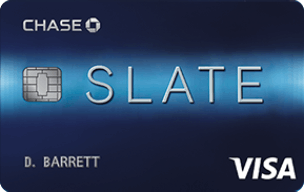
The Chase Slate® Credit Card ranks fourth because it provides one of the strongest introductory financing offers currently available from a major national card issuer, with 0% introductory APR for 21 months from account opening on purchases and balance transfers. After the promotional period ends, a variable APR currently ranging from 18.24% to 28.24% applies depending on creditworthiness, and balance-transfer fees apply according to the pricing terms presented when the account is opened. Slate carries no annual fee and does not earn conventional Chase Ultimate Rewards points or cash back, reinforcing its role as a dedicated financing card rather than an everyday rewards product. Cardholders receive Chase’s Zero Liability Protection for qualifying unauthorized transactions and access to Chase’s online banking, mobile app, account alerts, AutoPay, and established customer-service platform. Existing Chase customers seeking to keep financial accounts under one banking relationship may find Slate especially convenient for a major purchase or structured debt-consolidation plan.
Chase Slate® Card Facts Table
| Feature | Details |
| Credit Card Issuer | JPMorgan Chase Bank, N.A. |
| Payment Network | Visa |
| Rewards Type | 0% Intro APR – Balance Transfer – Low Interest |
| Recommended Credit | Good Credit to Excellent Credit Score (690-850) |
| Annual Fee | $0 |
| Rewards | No traditional cash-back or points rewards program |
| Welcome Bonus | Extended introductory financing offer rather than a traditional cash bonus |
| Intro Purchase APR | 0% introductory APR for 21 months from account opening |
| Intro Balance Transfer APR | 0% introductory APR for 21 months from account opening |
| Regular APR | 18.24%–28.24% Variable APR |
| Balance Transfer Fee | Balance-transfer fee applies according to current account pricing |
| Foreign Transaction Fee | 3% |
| Best For | Chase customers seeking extended purchase and balance-transfer financing |
| Notable Benefits | Zero Liability Protection, 21-month introductory period, Chase mobile banking tools, account alerts, $0 annual fee |
Why Chase Slate Ranks Fourth
Chase Slate ranks fourth because its 21-month introductory period on both purchases and balance transfers equals the promotional duration offered by the highest-ranked financing cards, making it an excellent choice for consumers who need maximum repayment time. It does not rank higher because U.S. Bank Shield offers additional benefits, BankAmericard provides a lower potential ongoing APR, and Wells Fargo Reflect includes cell phone protection, whereas Slate is intentionally streamlined around financing. That simplicity may actually appeal to borrowers who do not want rewards to encourage additional spending while paying down debt. Existing Chase customers may also appreciate having the account incorporated into an ecosystem they already use for checking, savings, credit cards, or other financial services.
5. Citi Diamond Preferred® Credit Card – Best for Extended Balance Transfers
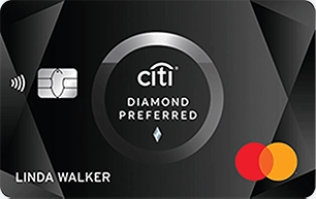
The Citi Diamond Preferred® Credit Card ranks fifth because its primary strength is one of the longest introductory balance-transfer periods available, making it particularly attractive for consumers consolidating existing high-interest credit card debt. Current promotional structures can provide 0% introductory APR for approximately 21 months on qualifying balance transfers while purchases receive a shorter promotional period of approximately 12 months, creating a clear distinction between Diamond Preferred and cards such as Shield, BankAmericard, Reflect, or Slate that emphasize equally long purchase financing. Qualifying balance transfers generally must be completed within the first four months of account opening and an introductory transfer fee applies. Diamond Preferred carries no annual fee and does not earn traditional cash-back rewards, but cardholders can receive useful features such as free access to a FICO® Score, Citi Quick Lock, Mastercard identity-theft resources, flexible due-date options, and Citi account-management tools.
Citi Diamond Preferred® Card Facts Table
| Feature | Details |
| Card Name | Citi |
| Payment Network | Mastercard |
| Rewards Type | 0% Intro APR – Cash Back Rewards |
| Recommended Credit | Good Credit to Excellent Credit Score (690-850) |
| Annual Fee or Price | $0 annual fee |
| Rewards | No rewards program |
| Welcome Bonus | Introductory financing rather than a rewards bonus |
| Intro APR | 0% for 12 months on purchases and 21 months on transfers; transfers within 4 months |
| Regular APR | 16.49%–27.24% variable |
| Balance Transfer Fee | Intro 3% with $5 minimum within 4 months; then 5% with $5 minimum |
| Foreign Transaction Fee | 3% |
| Best For | Paying down eligible transferred debt over a long promotional period |
| Notable Benefits | Long transfer promotion, $0 annual fee, FICO Score access and Citi account tools |
Why Citi Diamond Preferred Ranks Fifth
Citi Diamond Preferred ranks fifth because its approximately 21-month balance-transfer period can provide the same extended debt-repayment timeline as the longest cards in this ranking, but the shorter introductory purchase period reduces its usefulness for consumers financing a new expense. Someone transferring $15,000 of existing high-interest debt may not care about purchase financing and could reasonably place Diamond Preferred first in a personal ranking, while someone buying new furniture or funding a home-improvement project would likely prefer a card offering 21 months on purchases as well. Its lack of rewards also limits long-term earning potential, but consumers focused specifically on replacing expensive revolving debt may save considerably more through avoided interest than they could realistically earn from cash-back rewards.
6. Citi Simplicity® Credit Card – Best for Introductory Financing With No Late Fees

The Citi Simplicity® Credit Card ranks sixth because it combines a lengthy introductory financing period with an unusually simple fee structure centered on no late fees and no penalty APR. Current broadly marketed promotional structures can provide approximately 18 months of 0% introductory APR on purchases and qualifying balance transfers, giving cardholders substantially more repayment time than the common 12- or 15-month promotion while still carrying no annual fee. Qualifying transfers generally need to be completed within Citi’s applicable introductory transfer window and an introductory balance-transfer fee applies, with a higher standard fee potentially applying afterward. Simplicity does not provide conventional cash back, travel points, or a large welcome bonus, making the card best suited to consumers focused specifically on financing and debt repayment rather than rewards. The absence of late fees should never be treated as permission to miss payments because payment history can still affect credit, but the reduced penalty structure can provide additional flexibility.
Citi Simplicity® Card Facts Table
| Feature | Details |
| Card Issuer | Citi |
| Payment Network | Mastercard |
| Rewards Type | Balance Transfer and Intro APR Credit Card |
| Recommended Credit Score | Good to Excellent (690-850) |
| Annual Fee | $0 |
| Intro APR | 0% promotional APR on eligible purchases and balance transfers |
| Balance Transfers | Promotional APR available for eligible transfers |
| Late Fee | None |
| Penalty APR | None |
| Foreign Transaction Fee | 3% of each purchase transaction in U.S. dollars |
| Balance Transfer Fee | Applicable fee based on current account terms |
| Cash Advance Fee | Applicable fee based on current account terms |
Why Citi Simplicity Ranks Sixth
Citi Simplicity ranks sixth because approximately 18 months of promotional financing provides more time than most reward-focused cards while the absence of late fees and a penalty APR creates a relatively forgiving account structure. It trails the first five cards because the top financing products provide approximately 21 months of promotional value, and Diamond Preferred can provide a longer balance-transfer period. Simplicity can nevertheless be especially attractive to consumers who want to focus entirely on debt repayment and do not need cash back or travel points. Cardholders should still use AutoPay or payment reminders because consistently paying by the due date remains important for maintaining a healthy credit profile even when the issuer does not charge a late fee.
7. Bank of America® Customized Cash Rewards Credit Card – Best for 0% APR With Customizable Cash Back
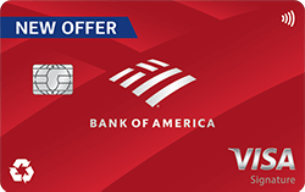
The Bank of America® Customized Cash Rewards Credit Card ranks seventh because it combines a substantial 15-billing-cycle introductory financing period with one of the most flexible cash-back programs available without an annual fee. New cardholders currently receive 0% introductory APR for the first 15 billing cycles on purchases and on qualifying balance transfers completed within the first 60 days, followed by a variable APR ranging from approximately 17.49% to 27.49%. A 3% introductory balance-transfer fee applies during the first 60 days, after which future balance transfers generally carry a 5% fee. The rewards program allows cardholders to select a preferred category, with current first-year promotional terms capable of providing up to 6% cash back in a selected category before returning to the standard 3% structure after the first year. Grocery stores and wholesale clubs can earn 2% subject to the combined quarterly spending cap, most other purchases earn 1%, and eligible new cardholders can receive a $200 online cash rewards bonus after meeting the qualifying spending requirement.
Bank of America® Customized Cash Rewards Card Facts Table
| Feature | Details |
| Credit Card Issuer | Bank of America, N.A. |
| Payment Network | Visa Signature |
| Reward Type | Cash-Back Rewards Credit Card |
| Recommended Credit | Good Credit to Excellent Credit Score (690-850) |
| Annual Fee | $0 |
| First-Year Choice Category | 6% Cash Back |
| Standard Choice Category After First Year | 3% Cash Back |
| Grocery Stores | 2% Cash Back |
| Wholesale Clubs | 2% Cash Back |
| Other Purchases | Unlimited 1% Cash Back |
| Quarterly Spending Limit | $2,500 combined in choice category, grocery stores and wholesale clubs |
| Welcome Bonus | $200 after $1,000 in purchases within 90 days |
| Intro Purchase APR | 0% for 15 billing cycles |
| Intro Balance Transfer APR | 0% for 15 billing cycles on qualifying transfers made within 60 days |
| Regular APR | 17.49%–27.49% Variable |
| Intro Balance Transfer Fee | 3% during first 60 days |
| Standard Balance Transfer Fee | 5% after introductory period |
| Category Changes | Once per calendar month |
| Best For | Consumers who want customizable cash-back categories |
| Notable Benefit | BofA Rewards bonuses can increase eligible cash-back earnings |
Why Bank of America Customized Cash Rewards Ranks Seventh
Bank of America Customized Cash Rewards ranks seventh because its 15-billing-cycle introductory period is shorter than the 18- to 21-month financing offers above it, but the card provides significantly stronger long-term rewards after the promotional APR expires. A consumer who knows a major purchase can be completely repaid within 15 billing cycles may prefer to earn cash back and potentially receive a $200 welcome bonus rather than obtain several additional months from a financing-only card. Its customizable category is particularly useful when a major planned expense fits categories such as home improvement, online shopping, travel, dining, gas and EV charging, or drugstores, allowing the cardholder to align rewards with upcoming spending. The quarterly bonus-category cap and foreign transaction fee prevent it from ranking higher, but consumers prioritizing both financing and rewards can receive excellent first-year value.
8. Chase Freedom Unlimited® Credit Card – Best for Everyday Cash Back With 0% Intro APR

The Chase Freedom Unlimited® Credit Card ranks eighth because it combines a 15-month 0% introductory APR with an everyday rewards structure that remains useful for years after the financing promotion ends. Eligible new cardholders receive 0% introductory APR for 15 months from account opening on purchases and balance transfers, followed by a variable APR ranging from 18.24% to 27.74%. The card earns unlimited 1.5% cash back on general purchases, 3% on dining including eligible takeout and delivery, 3% at drugstores, and 5% on qualifying travel purchased through Chase Travel. A $200 welcome bonus is currently available after $500 in purchases within the first three months, adding substantial first-year value without an annual fee. Freedom Unlimited also provides flexible Chase Ultimate Rewards redemption options, account protections, and additional value for consumers who combine rewards with selected Chase travel cards, although a 3% foreign transaction fee reduces international usefulness.
Chase Freedom Unlimited® Card Facts Table
| Feature | Details |
| Card Issuer | JPMorgan Chase Bank, N.A. |
| Payment Network | Visa |
| Rewards Type | Cash Back Rewards Credit Credit |
| Recommended Credit | Good to Excellent Credit Score (690-850) |
| Annual Fee | $0 |
| Rewards | Unlimited Cash Back |
| Intro Offer | $200 |
| Rewards Rate | 1.5%-5% Cashback |
| Intro APR | 0% APR for 15M on P&T |
| Regular APR | 18.24%-27.74% Variable APR |
Why Chase Freedom Unlimited Ranks Eighth
Chase Freedom Unlimited ranks eighth because its 15-month introductory APR cannot match the extended financing periods of the cards near the top of this ranking, but its long-term rewards make it considerably more valuable as an everyday account once the promotional period ends. A consumer financing $6,000 over 15 months would need to target payments of approximately $400 per month to eliminate the balance before interest begins, and someone who can comfortably maintain that repayment schedule may prefer earning ongoing rewards rather than receiving another three to six months of financing. Freedom Unlimited becomes especially useful for existing Chase customers who can combine rewards with other eligible Chase products, while consumers expecting to need close to two years for repayment should generally select a longer introductory offer.
9. Discover it® Cash Back Credit Card – Best for First-Year Cashback Match and 5% Categories

The Discover it® Cash Back Credit Card ranks ninth because it combines 15 months of introductory financing with rotating 5% cash-back categories and Discover’s first-year Cashback Match, creating substantial first-year value for consumers willing to manage quarterly promotions. New cardholders currently receive 0% introductory APR for 15 months on purchases and balance transfers, followed by a variable APR ranging from 17.49% to 26.49%. Cardholders earn 5% cash back on up to the applicable quarterly spending maximum in activated rotating categories and unlimited 1% cash back on other eligible purchases. Discover automatically matches the qualifying cash back earned by new cardholders during the first year under the applicable promotion, allowing the introductory reward value to grow with actual spending rather than being limited to a fixed $200 bonus. The card has no annual fee and no foreign transaction fee, while security benefits can include account-freeze controls and Social Security number alerts, although international Discover acceptance can vary more by destination than Visa or Mastercard.
Discover it® Cash Back Credit Card Facts Table
| Feature | Details |
| Credit Card Issuer | Discover Bank |
| Payment Network | Discover |
| Reward Type | 0% APR Credit Card – Cash Back Credit Card |
| Recommended Credit | Good Credit to Excellent Credit Score (690-850) |
| Annual Fee | $0 |
| Rewards | 5% cash back on up to $1,500 in combined activated quarterly category purchases; 1% on other eligible purchases |
| Welcome Offer | Unlimited dollar-for-dollar Cashback Match on qualifying cash back earned during the first year for new cardholders |
| Intro Purchase APR | 0% for 15 months |
| Intro Balance Transfer APR | 0% for 15 months |
| Regular APR | 17.49%–26.49% variable |
| Intro Balance Transfer Fee | 3% of qualifying transferred balances |
| Cash Advance APR | 28.49% variable |
| Cash Advance Fee | Greater of $10 or 5% of the cash advance |
| Annual Fee | $0 |
| Foreign Transaction Fee | $0 |
| Security Deposit | None |
| Best For | Consumers who can maximize rotating 5% categories and pay attention to quarterly activations |
| Notable Benefits | Cashback Match, rotating 5% categories, introductory APR, flexible redemptions and no annual fee |
Why Discover it Cash Back Ranks Ninth
Discover it Cash Back ranks ninth because its 15-month promotional APR is competitive among rewards cards but considerably shorter than the dedicated financing offers ranking above it. The card becomes especially attractive when a consumer wants to combine temporary interest-free financing with aggressive first-year cash-back potential because the Cashback Match can exceed the value of a conventional fixed welcome bonus when substantial rewards are earned. The rotating-category structure requires quarterly activation and spending awareness, which makes the card less convenient than a flat-rate product, but consumers who successfully maximize the 5% categories can generate excellent rewards. The absence of annual and foreign transaction fees improves long-term value, although travelers should confirm Discover acceptance for their destination.
10. Capital One Quicksilver Cash Rewards Credit Card – Best for Simple Cash Back and International Use

The Capital One Quicksilver Cash Rewards Credit Card completes the Top 10 because it combines simple unlimited cash back with 15 months of introductory financing, a $200 welcome bonus, no annual fee, and no foreign transaction fees. Eligible new cardholders can receive 0% introductory APR for 15 months on purchases and balance transfers, followed by a variable APR currently ranging from approximately 18.49% to 28.49%. Quicksilver earns unlimited 1.5% cash back on everyday purchases without requiring quarterly activation, category selection, or annual spending caps and can earn an elevated rate on qualifying hotels, vacation rentals, and rental cars booked through Capital One Travel. New applicants can currently earn a $200 cash bonus after spending $500 within the first three months. The card’s primary disadvantage is that the 1.5% base return is lower than the 2% available from selected competitors, but its simplicity and lack of foreign transaction fees make it particularly convenient for consumers who want one straightforward card for domestic and international purchases.
Capital One Quicksilver Cash Rewards Card Facts Table
| Quick Fact | Details |
| Credit Card Issuer | Capital One |
| Payment Network | Mastercard |
| Rewards Type | 0% Intro APR – Cash Back Rewards |
| Recommended Credit | Good Credit to Excellent Credit Score (690-850) |
| Annual Fee or Price | $0 annual fee |
| Rewards | Unlimited 1.5% cash back; 5% on eligible hotels, vacation rentals and rental cars through Capital One Travel |
| Welcome Bonus | $200 after $500 in purchases in 3 months |
| Intro APR | 0% on purchases and balance transfers for 15 months |
| Regular APR | 18.49%–28.49% variable |
| Balance Transfer Fee | Fee applies to promotional-rate transfers; verify current pricing disclosure |
| Foreign Transaction Fee | None |
| Best For | Low-maintenance cash back, introductory financing and foreign purchases |
| Notable Benefits | No annual or foreign transaction fee, flexible redemption and Capital One Travel rate |
Why Capital One Quicksilver Ranks Tenth
Capital One Quicksilver ranks tenth because its 15-month introductory period cannot compete directly with the 18- to 21-month financing offers at the top of the ranking, but it remains an excellent long-term rewards card for consumers who can comfortably eliminate their promotional balance within the shorter period. The unlimited 1.5% base reward requires virtually no management, the $200 welcome bonus can improve first-year value, and Capital One’s lack of foreign transaction fees makes the card considerably more convenient internationally than many domestic cash-back competitors. Consumers who expect to need the full 18 to 21 months for repayment should generally select a financing-focused card, while someone who expects to eliminate the balance early may find Quicksilver’s long-term rewards more useful.
2026 Best 0% Intro APR Credit Cards Comparison Table
| Credit Card | Intro Offer | Reward Rate | Annual Fee | Intro APR | Regular APR |
| U.S. Bank Shield Visa Card | 21 billing cycles of promotional financing | Up to 4% eligible Travel Center cash back | $0 | 0% for 21 billing cycles on purchases and qualifying balance transfers | Approximately 16.99%–27.99% Variable |
| BankAmericard® Card | 21 billing cycles of promotional financing | No traditional rewards | $0 | 0% for 21 billing cycles on purchases and qualifying balance transfers | 14.99%–25.99% Variable |
| Wells Fargo Reflect® Card | 21 months of promotional financing | No traditional rewards | $0 | 0% for 21 months on purchases and qualifying balance transfers | 17.49%, 23.99%, or 28.24% Variable |
| Chase Slate® Card | 21 months of promotional financing | No traditional rewards | $0 | 0% for 21 months on purchases and balance transfers | 18.24%–28.24% Variable |
| Citi Diamond Preferred® Card | Approximately 21 months on qualifying balance transfers | No traditional rewards | $0 | Approximately 12 months on purchases and 21 months on balance transfers | Variable APR |
| Citi Simplicity® Card | Approximately 18 months of promotional financing | No traditional rewards | $0 | Approximately 0% for 18 months on purchases and qualifying transfers | Variable APR |
| BofA® Customized Cash Rewards Card | $200 cash rewards bonus | Approximately 1%–6% under current first-year structure | $0 | 0% for 15 billing cycles on purchases and qualifying transfers | 17.49%–27.49% Variable |
| Chase Freedom Unlimited® Card | $200 cash bonus | 1.5%–5% cash back | $0 | 0% for 15 months on purchases and balance transfers | 18.24%–27.74% Variable |
| Discover it® Cash Back Card | First-Year Cashback Match | 1%–5% cash back | $0 | 0% for 15 months on purchases and balance transfers | 17.49%–26.49% Variable |
| Capital One Quicksilver Cash Rewards Card | $200 cash bonus | 1.5%+ cash back | $0 | 0% for 15 months on purchases and balance transfers | Approximately 18.49%–28.49% Variable |
Best 0% Intro APR Credit Card for Balance Transfers in 2026
The U.S. Bank Shield Visa, BankAmericard, Wells Fargo Reflect, Chase Slate, Citi Diamond Preferred, and Citi Simplicity are the strongest balance-transfer choices in this ranking because each provides considerably more repayment time than a standard rewards card, although the ideal choice depends on the transfer fee, qualifying transfer window, amount being transferred, existing issuer, and number of months required for repayment. Citi Diamond Preferred can be especially attractive when the sole objective is transferring existing debt because its longest promotion is specifically concentrated on balance transfers, while Shield, BankAmericard, Reflect, and Slate provide extended introductory periods on both purchases and transferred balances. Consumers should calculate the complete transfer cost before applying because a 5% fee on a $15,000 transfer costs $750 upfront, and the card only creates meaningful financial savings when the interest avoided exceeds the fee and the balance can be eliminated before the standard APR begins.
Best 0% Intro APR Credit Card for Large Purchases in 2026
The U.S. Bank Shield Visa, BankAmericard, Wells Fargo Reflect, and Chase Slate are the strongest options in this ranking for major planned purchases because each provides approximately 21 months or billing cycles of introductory purchase financing. A consumer purchasing $8,400 in appliances, furniture, home-improvement materials, medical services, or other qualifying expenses could theoretically target approximately $400 per month over 21 months to eliminate the balance before the promotion ends, assuming no additional purchases or fees. The best large-purchase card should provide enough promotional time to keep the required monthly payment comfortable without encouraging overspending, and consumers who need only 12 to 15 months may prefer a rewards card such as Customized Cash Rewards, Freedom Unlimited, Discover it Cash Back, or Quicksilver because those products can continue generating value after the financed purchase has been repaid.
Best 0% Intro APR Credit Card With Cash Back in 2026
Bank of America Customized Cash Rewards is one of the strongest choices for consumers who want introductory financing and elevated cash back because the card currently provides 15 billing cycles of 0% introductory APR while allowing eligible new cardholders to earn an enhanced first-year rate in a selected category and qualify for a $200 introductory bonus. Chase Freedom Unlimited provides a simpler long-term rewards structure with unlimited 1.5% base cash back, 3% on dining and drugstores, and 5% through Chase Travel, while Discover it Cash Back can generate excellent first-year value through rotating 5% categories and Cashback Match. Capital One Quicksilver provides the simplest reward structure because every ordinary qualifying purchase earns the same 1.5% rate without category activation, making the decision depend largely on whether the consumer values maximum promotional duration or stronger long-term rewards.
Best 0% Intro APR Credit Card With No Annual Fee
Every card included in this Top 10 ranking currently charges a $0 annual fee, making the 0% introductory APR category particularly competitive because consumers do not need to pay a yearly membership cost simply to access extended financing. U.S. Bank Shield earns the strongest overall position because it combines 21 billing cycles of promotional financing with selected rewards and supplemental protections, BankAmericard provides another excellent 21-cycle promotion with a comparatively low potential regular APR, Wells Fargo Reflect adds eligible cell phone protection, and Chase Slate offers a straightforward 21-month Chase financing option. Consumers looking for rewards should consider Customized Cash Rewards, Freedom Unlimited, Discover it Cash Back, or Quicksilver because those cards can remain useful long after the promotional balance has been eliminated.
Best 0% Intro APR Credit Card for a New Cardholder
A new cardholder with an established good-to-excellent credit profile should begin by deciding whether the primary goal is borrowing flexibility or earning rewards because a dedicated financing card such as Shield, BankAmericard, Reflect, or Slate provides more time to repay a substantial balance, while Freedom Unlimited or Quicksilver can be easier long-term everyday cards for someone who expects to repay purchases within 15 months. New cardholders should be particularly careful with introductory financing because a large available credit line and temporary 0% rate can make purchases appear more affordable than they actually are. Establishing AutoPay, setting a monthly payoff target, keeping utilization manageable, avoiding unnecessary additional debt, and understanding the exact promotional expiration date can help a first-time promotional APR cardholder receive the benefits of temporary interest-free financing without creating an expensive balance later.
Best 0% Intro APR Credit Card for Families
Families financing major household expenses may receive the greatest value from cards with long purchase promotions because repairs, appliances, furniture, moving costs, medical expenses, school-related costs, and other large purchases can create temporary pressure on monthly cash flow. U.S. Bank Shield, BankAmericard, Wells Fargo Reflect, and Chase Slate provide approximately 21 months or billing cycles for qualifying purchase financing, while Bank of America Customized Cash Rewards may appeal to families who can repay more quickly and want elevated rewards in categories such as online shopping, home improvement, gas and EV charging, dining, or drugstores. Families should avoid using the promotional period as an excuse to finance ordinary recurring expenses indefinitely because groceries, utilities, subscriptions, and other regular costs need to fit into the household budget even when temporary interest charges are eliminated.
Can a Student Apply for a 0% Intro APR Credit Card?
Students can apply for 0% intro APR credit cards when they satisfy the issuer’s age, income, identity, credit-history, and underwriting requirements, although many of the strongest products in this Top 10 are generally targeted toward applicants with established good-to-excellent credit. Student-specific rewards cards may provide introductory financing with more accessible credit requirements, and a student with limited history should not assume that a 690 or higher score alone guarantees approval because lenders can also consider income, existing debt, utilization, account age, recent applications, and other factors. Applicants under age 21 can face additional income requirements under federal credit card rules, and students should never inflate income or other application information merely to improve approval chances. Building credit gradually through modest purchases and consistently on-time payments can eventually improve eligibility for longer promotional financing offers.
Do 0% Intro APR Credit Cards Affect Personal Credit?
A 0% intro APR credit card affects personal credit in essentially the same manner as another unsecured consumer revolving account because the promotional interest rate does not change how the account can influence payment history, utilization, available revolving credit, average account age, and recent inquiries. Applying can result in a hard inquiry, opening the account can lower average account age, and moving a large transferred balance onto one card can create high utilization on that individual account even if total revolving utilization improves. Responsible use can contribute positive payment history and increase total available credit over time, while late payments, maxed-out limits, charge-offs, or default can damage a credit profile regardless of the temporary 0% APR. Consumers should therefore consider both the interest savings and the broader credit impact before opening multiple promotional accounts.
What Credit Score Is Needed for the Best 0% Intro APR Credit Cards?
Most of the strongest 0% introductory APR cards in this ranking are generally associated with consumers who have good-to-excellent credit profiles, commonly corresponding broadly to scores starting somewhere around the upper 600s and extending through the 700s or 800s, although no specific numerical score guarantees approval. Issuers can evaluate income, existing obligations, payment history, revolving utilization, recent applications, length of credit history, previous relationships with the bank, and other underwriting information in addition to any credit score being used. Applicants with excellent credit may also have a better chance of receiving a lower regular APR within an advertised range and a credit limit large enough to accommodate a meaningful balance transfer, while consumers with fair or rebuilding credit may need to consider alternative financing options or credit-building cards before qualifying for the most competitive promotions.
Should Cardholders Carry a Balance After the 0% Intro APR Expires?
Cardholders should generally avoid carrying a promotional balance after the 0% introductory APR expires because the account’s regular variable APR can exceed 20%, transforming an inexpensive financing strategy into costly revolving debt. A consumer who still owes $5,000 when a 25% variable APR begins can incur substantial interest if the balance is repaid slowly, potentially eliminating much of the savings produced during the promotional period. The strongest strategy is to determine the exact promotional expiration date as soon as the account opens, divide the complete financed amount by the number of available billing cycles, and establish automatic payments designed to reach a zero balance before the standard APR begins. Consumers who cannot realistically repay within the promotional period should reconsider the size of the purchase or transfer before using the card.
0% Intro APR Credit Cards vs. Balance Transfer Credit Cards
The terms 0% intro APR credit card and balance-transfer credit card frequently overlap, but they do not always describe exactly the same product because some cards provide extended promotional financing on both new purchases and transferred debt while others concentrate their longest promotion specifically on balance transfers. A consumer planning to purchase furniture, appliances, or home-improvement materials should prioritize the introductory purchase APR, while someone already carrying expensive debt should focus on the transfer APR, transfer fee, transfer deadline, and whether the receiving issuer allows the transaction. Cards such as Shield, BankAmericard, Reflect, and Slate are versatile because their long promotions can apply to both purchases and qualifying transfers, whereas Citi Diamond Preferred can be particularly attractive when the objective is specifically transferring existing debt.
How to Choose the Best 0% Intro APR Credit Card
Start by determining the complete amount that needs to be financed and the number of months realistically required for repayment because the longest promotional period has little additional value when a consumer already knows the balance can be eliminated within 12 months, while a 21-month promotion can be extremely valuable when repaying $10,000, $15,000, or more. Consumers transferring debt should calculate the balance-transfer fee, verify that the transfer can be completed within the promotional deadline, and confirm that the debt is not already held by the same financial institution because issuers generally prohibit internal transfers. Next compare the regular APR, annual fee, rewards, welcome bonus, foreign transaction fee, consumer protections, credit requirements, and long-term usefulness, remembering that the best 0% APR credit card is the account providing enough repayment time at the lowest realistic cost without encouraging unnecessary new debt.
Can You Have Multiple 0% Intro APR Credit Cards?
Consumers can have multiple 0% intro APR credit cards when they qualify, and there are legitimate situations where more than one promotional account may be useful, such as financing separate large purchases, distributing a balance transfer that exceeds the credit limit of one new account, or keeping a rewards-focused promotional card separate from a debt-consolidation card. The disadvantage is that opening several accounts can create multiple hard inquiries, lower average account age, add more due dates and promotional expiration dates to manage, and increase total available revolving credit in a way that may encourage overspending. Multiple cards should therefore be opened only when each account serves a clearly defined financial purpose and the cardholder has sufficient income and organization to manage every balance responsibly rather than repeatedly transferring debt without reducing the total amount owed.
Are Authorized User 0% Intro APR Credit Cards Worth It?
Adding an authorized user to a 0% introductory APR credit card can be useful for a household that wants to centralize spending on one promotional account or provide a trusted family member with access to the available credit line, but the primary cardholder remains legally responsible for authorized-user purchases and should establish spending expectations before another card is issued. Purchases made by an authorized user can increase the promotional balance and therefore increase the monthly amount required to eliminate the debt before the 0% APR ends, making unrestricted additional spending especially risky on an account being used for a major purchase or debt-consolidation strategy. Authorized-user account reporting can also affect the added person’s credit profile depending on issuer and bureau practices, so the arrangement is most useful when the primary account holder monitors activity closely and both parties understand that introductory financing does not make purchases free.
Final Verdict: Best 0% Intro APR Credit Cards in 2026
The U.S. Bank Shield® Visa® Card is our top-rated overall 0% intro APR credit card for 2026 because its 21-billing-cycle introductory financing period on purchases and qualifying balance transfers, $0 annual fee, selected travel rewards, cell phone protection, and annual statement-credit opportunity create one of the strongest combinations of financing flexibility and supplemental benefits in the category. BankAmericard® ranks second and is especially attractive for consumers who value 21 billing cycles of promotional financing and a comparatively low potential standard APR, Wells Fargo Reflect® ranks third with another 21-month offer and eligible cell phone protection, and Chase Slate® ranks fourth as an excellent straightforward Chase financing option. Citi Diamond Preferred stands out for consumers concentrating specifically on extended balance transfers, while Citi Simplicity provides lengthy introductory financing with no late fees or penalty APR. Bank of America Customized Cash Rewards, Chase Freedom Unlimited, Discover it Cash Back, and Capital One Quicksilver rank lower because their promotional periods are shorter, but their stronger ongoing rewards can make them better choices for consumers who know they can eliminate financed balances within 15 months. Ultimately, the best 0% intro APR credit card is not automatically the card advertising the longest promotional period because consumers should compare the amount being financed, required monthly payment, balance-transfer fee, standard APR, rewards, credit requirements, and long-term card value before applying; when used responsibly with a fixed payoff schedule, these leading 2026 cards can provide months of valuable interest-free financing while helping consumers reduce the cost of large purchases or replace expensive revolving debt.