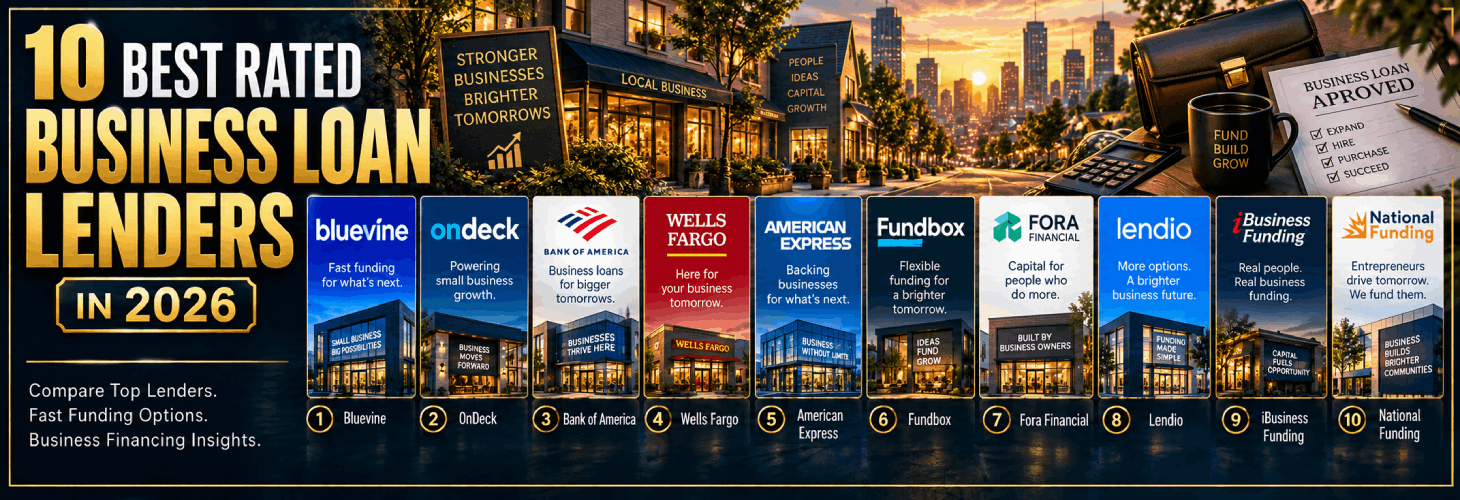
10 Best Rated Business Loan Lenders in 2026
Finding the best business loan lender in 2026 means looking beyond a single advertised interest rate and evaluating the entire financing package, including borrowing limits, repayment terms, qualification standards, funding speed, fees, loan flexibility, customer accessibility, and whether the financing structure matches the way your company generates revenue. Small businesses can now choose among traditional bank term loans, revolving business lines of credit, short-term working-capital loans, SBA financing, equipment financing, and technology-driven online lending platforms capable of making decisions much faster than conventional lending channels. Our list of the 10 Best Rated Business Loan Lenders in 2026 highlights Bluevine, OnDeck, Bank of America, Wells Fargo, American Express, Fundbox, Fora Financial, Lendio, iBusiness Funding, and National Funding because each offers a particularly useful combination of funding access and business financing features for certain types of borrowers. Some lenders are strongest for established companies with excellent credit, while others concentrate on speed, flexible underwriting, revolving capital, or borrowers who may not qualify for conventional bank financing. Because no business lender is universally best for every company, owners should compare the total repayment cost, payment frequency, collateral requirements, personal guarantees, prepayment provisions, borrowing limits, and expected return on the borrowed capital before accepting financing.
Important Note About Business Loans in 2026
Business financing terms can change frequently, and the interest rate, fee structure, credit limit, repayment period, collateral requirement, and loan amount available to one applicant can be substantially different from the offer presented to another business. Advertised starting rates generally represent financing available to stronger applicants and should never be interpreted as guaranteed pricing. Some business financing products calculate costs using traditional annual percentage rates, while others use monthly fees, fixed borrowing fees, factor rates, or other commercial financing structures, making direct comparisons more complicated than simply comparing two advertised percentages. Business owners should review the complete financing agreement and determine the total dollar amount that must be repaid before accepting an offer. Personal guarantees and liens against business assets are also common in commercial financing. The lender rankings in this article are intended to help business owners compare major financing options and are not guarantees of approval, rates, loan amounts, or specific terms.
What Are the Best Business Loan Lenders in 2026?
The best business loan lenders in 2026 provide a combination of accessible financing, useful borrowing limits, understandable repayment structures, reliable funding processes, and loan products capable of supporting real business needs such as inventory purchases, payroll, equipment, renovations, expansion, marketing, acquisitions, emergency expenses, and temporary cash-flow shortages. Bluevine ranks first on our list because its revolving business line of credit provides qualified businesses access to as much as $250,000 while emphasizing fast digital underwriting and the ability to borrow only what is needed. OnDeck follows closely because businesses can potentially access both term loans and revolving credit through one established online lending platform. Bank of America and Wells Fargo earn strong positions for businesses seeking more traditional bank financing, while American Express provides a revolving commercial credit line with multiple installment repayment options. Fundbox and Fora Financial stand out for businesses that value streamlined applications and broader eligibility, while Lendio and iBusiness Funding are particularly useful for companies comparing multiple financing structures or pursuing longer-term SBA financing. National Funding completes our ranking with fast working-capital options intended for established businesses that value speed and personalized funding assistance.
How We Rated the Best Business Loan Lenders for 2026
We evaluated business loan providers using factors that matter to small and midsize business owners rather than ranking lenders solely according to the lowest advertised rate. Our methodology considers the maximum and minimum financing amounts available, variety of lending products, required time in business, minimum revenue expectations, personal credit requirements when publicly disclosed, speed of underwriting and funding, repayment flexibility, potential fees, availability of revolving credit, accessibility of online applications, suitability for short-term versus long-term borrowing, and the lender’s ability to support different business purposes. Extra consideration was given to lenders that clearly disclose major qualification standards and financing structures before the borrower commits. Traditional banks generally earn higher marks for potentially competitive borrowing costs but can impose more demanding qualification requirements, while online lenders typically earn higher scores for application speed and accessibility but can carry substantially higher financing costs. The resulting ranking attempts to balance affordability, access, convenience, flexibility, and overall usefulness.
Favorable Aspects of Business Loans
Business loans can give companies access to capital for growth, working capital, equipment, inventory, hiring, expansion, renovations, marketing, acquisitions, refinancing, and other legitimate operating needs without requiring owners to give up equity in the business.
- Qualified businesses may be able to borrow anywhere from a few thousand dollars to several million dollars depending on the lender, loan program, revenue, credit profile, and intended use of the funds.
- Traditional banks and SBA lenders can offer competitive interest rates and longer repayment terms to businesses with strong credit, established revenue, and solid financial statements.
- Online business lenders can provide faster underwriting and funding, with some approved borrowers receiving capital as soon as the same or next business day.
- Business lines of credit allow companies to borrow only what they need, repay the balance, and potentially reuse the available credit for future working-capital needs.
- Term loans can provide predictable repayment schedules that make it easier for business owners to budget for equipment purchases, renovations, expansion, or other planned investments.
- SBA-backed financing can provide long repayment periods and larger loan amounts for qualified businesses, making it useful for acquisitions, real estate, refinancing, equipment, and major expansion projects.
- Some lenders use broader underwriting standards that consider business revenue, cash flow, bank activity, and operating history in addition to the owner’s personal credit score.
- Certain lenders offer early-payment discounts or do not charge traditional prepayment penalties, potentially allowing businesses to reduce their total financing cost by paying the debt off sooner.
- Establishing and successfully repaying business financing may help strengthen the company’s credit profile when the lender reports payment activity to commercial credit bureaus.
- Borrowed capital can help a business take advantage of profitable opportunities that might otherwise be missed, provided the expected return from the investment is greater than the total cost of financing.
Unfavorable Aspects of Business Loans
The lowest advertised business loan rates are generally reserved for applicants with the strongest personal credit, business credit, revenue, profitability, cash flow, operating history, and overall financial profiles.
- Origination fees, closing costs, draw fees, annual fees, documentation charges, fixed borrowing fees, and other financing expenses can reduce the amount of usable capital received or increase the total amount the business must repay.
- Business loan APRs and effective borrowing costs can become very high for companies with weaker credit, inconsistent revenue, limited operating history, or elevated financial risk.
- Short-term business financing may require daily or weekly payments, which can place significant pressure on cash flow compared with traditional monthly repayment schedules.
- A longer repayment term may reduce the required monthly payment while substantially increasing the total amount of interest paid over the life of the business loan.
- Completing a full business loan application can result in a hard credit inquiry against the owner’s personal credit or the business credit profile depending on the lender and financing product.
- Many small-business loans require a personal guarantee, meaning the business owner may become personally responsible for repayment if the company defaults.
- Secured business loans and some lines of credit may require liens against equipment, inventory, accounts receivable, real estate, or other business assets that could be at risk if the loan is not repaid.
- Missing payments can damage personal or business credit and may result in late fees, default charges, collections, legal action, or the seizure of pledged collateral.
- Refinancing or consolidating existing business debt does not eliminate the underlying obligation and can make the company’s financial situation worse if the business begins accumulating additional debt after consolidation.
- Some lenders impose minimum loan amounts that may be larger than the business actually needs, potentially encouraging unnecessary borrowing and higher financing costs.
- Loan availability, rates, borrowing limits, repayment schedules, fees, and eligibility requirements can vary according to the lender, business industry, state, revenue, credit profile, and financing program.
- Certain industries may be excluded or face stricter qualification standards because lenders consider them higher risk.
- New businesses and startups may have fewer financing options because many lenders require six months, one year, two years, or longer in business before approving traditional commercial financing.
- Fast online business financing can be considerably more expensive than traditional bank or SBA loans, making convenience and speed potentially costly.
- Approval is never guaranteed even when a business meets a lender’s published minimum credit score, revenue, time-in-business, and other basic eligibility requirements.
1. Bluevine – Best Overall Business Loan Lender for Flexible Working Capital
Bluevine Business Lending earns our number-one position among the best business loan lenders in 2026 for owners who value revolving access to working capital, a streamlined digital application, transparent basic eligibility standards, and the ability to borrow repeatedly instead of applying for an entirely new term loan whenever cash is needed. Its business line of credit can reach $250,000 for qualifying businesses, and Bluevine currently advertises starting interest rates as low as 7.8% for its strongest qualifying customers. Because the financing operates as revolving credit, businesses can draw funds for inventory, payroll, seasonal expenses, marketing, vendor bills, unexpected repairs, or other legitimate operating requirements and replenish available credit as outstanding draws are repaid. Bluevine states that applicants generally need at least 12 months in business, at least $10,000 in monthly revenue, and a personal FICO score of at least 625, along with other eligibility requirements. Funding can generally be accessed quickly after approval, making Bluevine particularly useful for established small businesses that want a financing reserve available before an urgent cash requirement develops rather than waiting to begin a new loan application after the need arises.
Bluevine Business Loan Facts Table
| Feature | Details |
| Direct Line Issuer | Celtic Bank |
| Credit Line Range | $1,000–$250,000 |
| Financing Structure | Revolving Business Credit |
| Advertised Rate | As low as 7.8% for top-qualified customers |
| General Minimum Personal FICO | 625+ |
| General Minimum Monthly Revenue | More than $10,000 |
| General Minimum Annual Revenue | At least $120,000 |
| General Minimum Time in Business | 12+ Months |
| Eligible Business Structure | Corporation or LLC for direct Bluevine LOC |
| General Bankruptcy Requirement | No bankruptcies on file |
| Repayment Options | Weekly or Monthly, depending on eligibility |
| Weekly Maximum Repayment Period | Up to 52 weeks |
| Monthly Repayment Period | 12 months |
| Setup Fee | None |
| Subscription Fee | None |
| Maintenance Fee | None |
| Unused-Funds Fee | None |
| Initial Application | No personal credit-score impact |
| Accepting Offer | Hard credit inquiry may occur |
| Business Credit Reporting | Experian |
| Funding Speed | Potentially within 24 hours |
| Bluevine Checking Funding | Eligible approved draws can be available instantly |
| Collateral | Review individual financing agreement |
| Personal Guarantee | Personal credit exposure can apply |
| Best For | Established small businesses needing flexible working capital |
Why Bluevine Ranks First
Bluevine ranks first because a revolving line of credit can serve more ongoing business situations than a one-time loan while allowing an owner to control how much capital is actually borrowed. Instead of accepting $100,000 when the business currently needs only $25,000, an approved borrower can potentially draw the smaller amount and retain additional availability for future expenses, subject to continuing eligibility and draw approval. This structure can make Bluevine useful for businesses with recurring inventory purchases, seasonal revenue patterns, unpredictable receivables, or periodic expansion opportunities. Bluevine also reports repayment history to Experian’s business credit reporting system, potentially adding value for companies attempting to establish stronger commercial credit histories. The principal disadvantage is that qualification remains meaningful: newer companies, sole proprietors under certain program requirements, businesses below the revenue threshold, or owners with weaker personal credit may not qualify.
2. OnDeck – Best for Fast Business Term Loans and Lines of Credit
OnDeck Business Lending ranks second because it combines two of the most widely used forms of small-business financing under one online lending platform: a lump-sum business term loan and a revolving business line of credit. Qualified applicants can currently seek term loans ranging from $5,000 to $400,000 with repayment terms extending up to 24 months, while the OnDeck business line of credit offers limits from approximately $6,000 to $200,000 with repayment options of 12, 18, or 24 months. OnDeck generally lists at least one year in business, $100,000 in annual business revenue, a business checking account, and a 625 personal FICO score among its baseline requirements. Speed is one of the platform’s largest advantages because approved financing can potentially reach a borrower’s bank account as soon as the same day or shortly afterward. The tradeoff is cost: OnDeck discloses that average APRs on its originated term loans and lines of credit can be substantially higher than traditional bank financing, so the platform is generally strongest for businesses that value rapid capital access and can generate a return sufficient to justify the financing expense.
OnDeck Business Loan Facts Table
| Features | Details |
| Primary Products | Business Term Loan and Business Line of Credit |
| Term Loan Amount | $5,000 to $400,000 |
| Term Loan Maximum Term | Up to 24 months |
| Term Loan Payments | Generally daily or weekly |
| Business Line of Credit | $6,000 to $200,000 |
| Line of Credit Terms | 12, 18 or 24 months |
| Line of Credit Payments | Weekly or monthly |
| Minimum Personal FICO | 625 |
| Minimum Time in Business | 1 year |
| Minimum Annual Revenue | $100,000 |
| Business Checking Account | Required |
| Eligibility Credit Check | Soft personal credit inquiry |
| Term Loan Origination Fee | Generally 0% to 4%, depending on eligibility and renewal history |
| Average Term Loan APR | Approximately 53.2% for loans originated in the half-year ending June 30, 2026 |
| Average Line of Credit APR | Approximately 59.8% for lines originated in the half-year ending June 30, 2026 |
| Same-Day Funding | Available to qualifying borrowers subject to cutoff requirements |
| Instant Line Draws | Up to $10,000 on qualifying established accounts |
| LOC Minimum Initial Draw | $1,000 |
| Business Credit Reporting | Yes |
| Term Loan Collateral Structure | General lien on business assets |
| Personal Guarantee | Required for applicable term loans |
| North Dakota Availability | Not available |
| Primary Uses | Working capital, inventory, equipment, payroll, marketing, expansion and other business expenses |
Why OnDeck Ranks Second
OnDeck earns a high ranking because a single applicant can potentially be evaluated for multiple financing structures rather than having to decide independently whether to approach one company for a term loan and another for revolving credit. A term loan can make sense when the company knows exactly how much a project will cost, while revolving credit may be more appropriate for recurring operational expenses or unpredictable working-capital requirements. OnDeck also uses a soft credit inquiry during the initial application process according to its published information, helping applicants explore potential eligibility without an immediate hard inquiry. However, owners should pay particularly close attention to the total repayment amount because fast online financing can be expensive compared with bank or SBA loans. OnDeck’s own published 2026 figures demonstrate that average APRs for recent originations can be high, which makes careful cash-flow forecasting particularly important before borrowing.
3. Bank of America – Best Traditional Bank Business Loan for Established Companies
Bank of America Business Lending ranks third for businesses that can satisfy stronger bank underwriting requirements and want access to conventional term loans and revolving business credit from a major national financial institution. Its unsecured Business Advantage Term Loan begins at $10,000 and provides repayment periods ranging from 12 to 60 months, allowing established companies to finance planned expenditures through predictable fixed payments. Bank of America lists at least two years under existing ownership and at least $100,000 in prior-year annual business revenue among the standard requirements, and a personal FICO score above 700 is typically expected. The bank also offers an unsecured Business Advantage Credit Line ranging from $10,000 to $250,000 for qualifying applicants. This combination can be attractive for mature companies with strong credit because owners can choose a fixed term loan for a major project or a revolving credit line for ongoing working capital. Qualification standards are considerably more demanding than those imposed by many alternative online lenders, but qualified borrowers may find traditional bank pricing more attractive.
Bank of America Business Loan Facts Table
| Features | Details |
| Primary Unsecured Term Loan | Business Advantage Term Loan |
| Unsecured Term Loan Amount | $10,000–$100,000 |
| Unsecured Term Loan Length | 1–5 years |
| Term Loan Origination Fee | $150 if approved |
| Term Loan Collateral | None |
| Typical Personal Credit | Above 700 FICO for primary unsecured products |
| Minimum Time in Business | 2 years for primary unsecured products |
| Minimum Revenue | $100,000 prior-year annual revenue for primary unsecured products |
| Primary Unsecured Line | Business Advantage Credit Line |
| Unsecured Credit Line Amount | $10,000–$250,000 |
| Credit Line Structure | Revolving |
| Credit Line Renewal | Generally annual |
| Unsecured Line Annual Fee | $150 after first year |
| Cash Advance Fee | None on standard qualifying access methods |
| Secured Credit-Building Line | Business Advantage Credit Line Cash Secured |
| Cash-Secured Line Amount | $1,000–$50,000 |
| Secured Line Minimum Time in Business | 6 months |
| Secured Line Revenue Requirement | $50,000 annualized revenue |
| Bank Account Requirement for Secured Line | Bank of America checking or savings account |
| SBA Financing | SBA 7(a), SBA 504, SBA Express |
| SBA Loan Amounts | Start at $25,000; program limits vary |
| SBA Preferred Lender | Yes |
| Commercial Real Estate | Available |
| Equipment Financing | Available |
| Business Auto Loans | Available |
| Larger Secured Lending | Available |
| Preferred Rewards Discounts | Available on qualifying financing |
| Online Application | Available for selected small-business products |
| Best Suited For | Established businesses with strong credit and revenue |
Why Bank of America Ranks Third
Bank of America’s primary advantage is the combination of traditional banking infrastructure and several distinct business borrowing products. Owners who already maintain substantial banking relationships may particularly appreciate having business deposits, cash management, credit, and financing within the same institution. Its unsecured term loan does not require borrowers to pledge a specific asset as collateral, and the one-to-five-year repayment period can provide significantly more breathing room than very short alternative business loans. The bank’s revolving credit line can additionally help businesses manage recurring working-capital requirements. The disadvantage is accessibility: a business with less than two years under the same ownership, annual revenue below the threshold, or personal credit substantially below the typical requirement may need to consider other lenders in this ranking.
4. Wells Fargo – Best Business Line of Credit From a Major Bank

Wells Fargo BusinessLine® of Credit ranks fourth because its BusinessLine line of credit combines traditional bank lending with a relatively broad borrowing range for small businesses that need revolving capital. The current BusinessLine product offers limits between $10,000 and $150,000, with published rates ranging from Prime plus 1.75% to Prime plus 9.75% depending on business and personal credit evaluation. Wells Fargo states that businesses can generally apply once they have been operating for at least six months, which is notably shorter than the two-year operating-history requirement commonly associated with some traditional bank products. The credit line is unsecured and revolving, allowing businesses to borrow, repay, and potentially reuse available credit for inventory, repairs, payroll, seasonal expenses, and unexpected operating costs. Annual fees are currently waived during the first year and then vary according to the size of the credit line. Businesses seeking significantly larger revolving facilities may also find Wells Fargo’s Prime Line of Credit attractive, although that product is targeted toward companies with substantially higher annual revenue and typically requires business assets as security.
Wells Fargo Business Loan Facts Table
| Features | Details |
| Primary Small-Business Line | BusinessLine® Line of Credit |
| BusinessLine Amount | $10,000–$150,000 |
| BusinessLine Rate | Prime + 1.75% to Prime + 9.75% |
| BusinessLine Collateral | None |
| BusinessLine Minimum Time in Business | 6 months |
| Typical BusinessLine Guarantor FICO | 680 or higher |
| BusinessLine Annual Fee | First year waived; then $95 or $175 depending on line size |
| Express Application | Available for requests up to $50,000 |
| Prime Line Amount | $100,000–$3 million |
| Prime Line Starting Rate | As low as Prime + 0.50%, subject to a 5% floor |
| Prime Line Target Revenue | Approximately $2 million–$25 million annually |
| Prime Line Collateral | Business assets |
| Prime Line Annual Fee | 0.25% of approved line |
| SBA 7(a) Amount | Up to $5 million |
| SBA 504 Amount | Up to $15 million under Wells Fargo’s published structure |
| SBA Real Estate Term | Up to 25 years |
| SBA Other-Purpose Term | Up to 10 years depending on program/use |
| SBA Preferred Lender | Yes |
| Practice Financing | Available |
| Conventional BusinessLoan Term Loan | Discontinued for new applicants |
| Equipment Express Loan | Discontinued for new applicants |
| Best Uses | Working capital, inventory, payroll, acquisitions, equipment, real estate and expansion |
| Primary Drawback | Variable rates, guarantees, fees and stronger underwriting standards |
Why Wells Fargo Ranks Fourth
Wells Fargo stands out because business owners who qualify can receive revolving financing through a traditional bank without necessarily operating for several years first. The BusinessLine product is particularly well suited to businesses that experience temporary mismatches between outgoing expenses and incoming receivables, because an owner can keep a credit line available and borrow only when necessary. Wells Fargo also publishes a clearly defined rate range tied to the bank’s Prime Rate, making it easier to understand how the borrowing cost is constructed. Applicants should remember that the actual rate depends on underwriting and that personal guarantees are required. Businesses needing larger facilities may potentially move into Wells Fargo’s secured Prime Line, which reaches much higher limits but is designed for companies with considerably greater annual revenue.
5. American Express Business Line of Credit – Best for Flexible Monthly Installment Options
The American Express® Business Line of Credit ranks fifth because it combines revolving commercial credit with multiple installment repayment choices that can make budgeting easier for businesses wanting predictable monthly obligations. American Express currently states that available credit lines generally range from $2,000 to $250,000, although certain qualified customers may receive larger amounts. Each eligible draw can create a separate installment loan with repayment periods that may include 6, 12, 18, or 24 months. Instead of presenting a conventional annual interest rate, American Express charges loan fees based on the amount borrowed and the applicable financing terms, so applicants should evaluate the total repayment cost carefully. The product requires a personal guarantee and is secured by assets of the business. One particularly useful feature is that borrowers who repay qualifying installment loans early can avoid future loan fees that have not yet posted, potentially lowering the overall financing expense.
American Express Business Line of Credit Facts Table
| Features | Details |
| Financing Type | Commercial business line of credit |
| Standard Line Amount | $2,000–$250,000 |
| Larger Lines | May be available to select customers |
| Standard Installment Terms | 6, 12, 18 or 24 months |
| Monthly Installment Loan Fee | 0.55%–1.55% of original principal |
| Traditional Interest Rate | No; installment draws use monthly loan fees |
| Comparable APR Disclosure | Provided in SMART Box disclosure |
| Single-Repayment Vendor Loans | Potentially 1, 2 or 3 months |
| Minimum FICO Score | 660 at application, potentially higher depending on profile |
| Minimum Time in Business | 12 months |
| Minimum Recent Average Monthly Revenue | $3,000 |
| Application Fee | None |
| Origination Fee | None |
| Annual Fee | None |
| Monthly Maintenance Fee | None |
| Prepayment Penalty | None on installment loans |
| Collateral | Business assets secure loans |
| Personal Guarantee | Required |
| Multiple Draws | Yes, subject to eligibility |
| Reusable Credit | Yes, subject to ongoing review |
| Bank Deposit Funding | Available |
| Direct Vendor Payments | Available to eligible payees |
| Funding Speed | Commonly 1–3 business days after draw approval and signing |
| Repayment Frequency | Monthly for standard installment loans |
| AutoPay | Required for qualifying draws |
| Best For | Cash flow, inventory, payroll, vendors and short-term working capital |
| Main Drawbacks | Monthly loan fees, business collateral, personal guarantee and ongoing reviews |
Why American Express Ranks Fifth
American Express earns a strong position because the credit line blends revolving borrowing with installment-style repayment rather than requiring one large term loan. That can be useful for companies that want to draw $10,000 for inventory today, repay it according to a predictable schedule, and retain the potential to access additional credit later. The ability to send financing directly to a qualifying U.S. vendor can also be useful for certain business purchases. Existing American Express customers may find the broader ecosystem especially convenient, and eligible users depositing a draw into American Express Business Checking may receive very fast access to funds. The principal consideration is pricing: loan fees should be converted into an effective borrowing cost before comparing the product with conventional APR-based loans.
6. Fundbox – Best Business Financing for Newer Established Businesses
Fundbox ranks sixth because its qualification standards can make business financing accessible to companies that have not yet accumulated the several years of operating history typically demanded by major banks. Published eligibility guidelines state that businesses generally need at least six months in operation, approximately $30,000 or more in annual revenue, a U.S.-based business checking account, and a personal FICO score of at least 600. Fundbox currently advertises financing of up to $250,000 and emphasizes a streamlined application that can produce a credit decision in minutes, with approved funding potentially available as soon as the following business day. These characteristics can make Fundbox especially appealing to younger companies that already produce consistent revenue but do not yet meet the longer operating-history requirements of traditional lenders. The financing is particularly useful for short-term cash-flow needs such as inventory purchases, vendor invoices, payroll gaps, marketing expenditures, and operating expenses.
Fundbox Business Loan Facts Table
| Features | Details |
| Primary Customers | Small Businesses |
| Primary Financing | Business Line of Credit |
| Financing Structure | Revolving Business Credit |
| Financing Originators | First Electronic Bank or Lead Bank |
| General Minimum FICO Guidance | 600+ |
| General Minimum Annual Revenue | $30,000+ |
| Operating History | Fundbox materials currently indicate approximately 3–6+ months depending on guidance/product |
| Business Checking Account | Required |
| Bank Transaction History | Required |
| Initial Application Credit Check | Soft Inquiry |
| First Draw Credit Check | Hard Inquiry |
| Application Speed | Potential decision within minutes |
| Additional Review | Can take 24 hours or longer |
| Funding Availability | Available to draw after approval |
| Typical Bank Transfer | Generally within 2 business days |
| Business Credit Reporting | Yes |
| Reporting Network | Small Business Financial Exchange |
| Business Bureaus Receiving SBFE Data | Experian, Equifax, Dun & Bradstreet |
| Application Method | Online |
| Collateral | Depends on specific financing agreement |
| Personal Guarantee | Review specific financing agreement |
| Best For | Short-Term and Recurring Working-Capital Needs |
Why Fundbox Ranks Sixth
Fundbox’s strongest advantage is that it provides a bridge between startup-stage financing and traditional commercial bank lending. A six-month-old business with meaningful revenue may be too new for many conventional bank products even if its sales are growing rapidly, while Fundbox evaluates companies using a more digitally oriented underwriting process. Its financing can therefore be useful when an otherwise healthy business needs capital to fulfill customer orders, hire additional staff, purchase inventory, or manage delayed customer payments. Applicants should still compare the total financing cost carefully with alternatives because easier qualification and faster funding frequently come at a premium compared with conventional bank debt. Fundbox financing is subject to credit approval and availability restrictions, and offered limits may be substantially below the advertised maximum depending on the company’s profile.
7. Fora Financial – Best for Fast Funding With More Flexible Credit Requirements
Fora Financial ranks seventh because it can serve established businesses that generate substantial revenue but may not have the strong personal credit required by major banks. Its published small-business loan information currently lists financing of up to $1.5 million, terms up to 18 months, a minimum of approximately six months in business, annual revenue of approximately $240,000, and a minimum FICO score around 570 under its basic published criteria. Decisions may potentially be made within hours once required documentation has been supplied, with approved funding available as quickly as one business day. Fora Financial also participates in a broader range of financing solutions that can include lines of credit, term financing, SBA loans, equipment financing, and other commercial capital structures depending on borrower eligibility. This makes the company particularly relevant for businesses with healthy sales but imperfect owner credit that need capital more quickly than a traditional bank underwriting process is likely to provide.
Fora Financial Business Loan Facts Table
| Features | Details |
| Financing Type | Online small-business financing |
| Flagship Small Business Loan Amount | Approximately $5,000 to $1.5 million |
| Standard Small Business Loan Term | Up to approximately 18 months |
| Standard Repayment | Daily or weekly |
| Published Factor Rate Range | Approximately 1.13 to 1.50 |
| Potential Early Payoff Rate | As low as approximately 1.05 on qualifying offers |
| Business Line of Credit | Up to approximately $100,000 |
| Line of Credit Term | Up to approximately 12 months |
| LOC Repayment | Fixed monthly payments on applicable offers |
| Revenue Advance | Up to approximately $1.5 million |
| Revenue Advance Repayment | Percentage of daily or weekly revenue |
| Term Loan Option | Up to approximately $500,000 |
| Long-Term Loan Term | Potentially up to 12 years on qualifying term-loan programs |
| Minimum FICO | Approximately 570 |
| Minimum Time in Business | 6 months |
| Minimum Annual Revenue | Generally $240,000 |
| Business Checking Account | Required |
| Initial Credit Inquiry | Soft inquiry |
| Pledged Collateral | Not required for qualifying unsecured financing |
| Origination Fee | Can be as low as approximately 2.5% |
| Wire Fee | May apply |
| Prepayment Penalty | No traditional prepayment penalty |
| Prepayment Discount | May be available |
| Approval Speed | Potentially as little as 4 hours |
| Funding Speed | Potentially as soon as 24 hours after acceptance |
| Business Location | U.S.-based businesses |
| Open Bankruptcy | Generally not permitted |
| Conflicting Financing | Can affect eligibility |
Why Fora Financial Ranks Seventh
Fora Financial fills an important gap between highly selective bank financing and very small short-term credit products. A company producing substantial sales may have valuable expansion opportunities even when its owner’s credit score prevents it from receiving a competitive conventional bank offer, and Fora’s published minimum credit threshold is considerably lower than those of many lenders in this ranking. Financing amounts can also be relatively large, making the platform useful for inventory purchases, renovations, expansion, staffing, marketing, and other significant working-capital requirements. The major consideration is repayment pressure: shorter financing arrangements may require daily or weekly payments and can be considerably more expensive than long-term bank or SBA debt. Owners should therefore compare expected project returns against the complete financing cost before accepting an offer.
8. Lendio – Best Business Loan Marketplace for Comparing Multiple Options

Lendio ranks eighth because it functions as a business financing marketplace rather than a single traditional lender, allowing applicants to explore potential financing from multiple lending partners through one process. This model can be valuable for entrepreneurs who know they need financing but are uncertain whether a term loan, SBA loan, business line of credit, equipment financing arrangement, or short-term loan provides the best match. Lendio’s current marketplace materials show access to term loans ranging from relatively small amounts into the millions depending on the lending partner, SBA financing potentially reaching $5 million, business lines of credit, equipment financing, and additional commercial funding structures. Published general guidelines suggest that businesses with credit scores around 600 or higher, at least six months in operation, and meaningful monthly revenue have a wider range of potential financing choices, although individual lending partners establish their own standards. Because Lendio is a marketplace, the actual lender, interest rate, terms, fees, collateral requirements, and funding speed depend on the offer ultimately selected.
Lendio Business Loan Facts Table
| Features | Details |
| Marketplace Size | More than 100 lenders and funders |
| Operating Since | 2011 |
| Reported Financing Facilitated | More than $17 billion |
| Reported Transactions Facilitated | More than 520,000 |
| Business Term Loans | Approximately $5,000–$2 million |
| Business Line of Credit | Approximately $1,000–$500,000 |
| SBA Loans | Up to $5 million |
| Short-Term Loans | Approximately $2,500–$500,000 |
| Revenue-Based Financing | Approximately $5,000–$1 million |
| Equipment Financing | Approximately $5,000–$5 million |
| Commercial Mortgage | Approximately $5,000–$5 million+ |
| Startup Financing | Up to approximately $150,000 |
| Acquisition Financing | Approximately $5,000–$5 million |
| Accounts Receivable Financing | Based primarily on qualifying receivables |
| Initial Application Fee | None |
| Initial Credit Impact | Lendio application itself does not affect personal score |
| Later Hard Credit Pull | Possible depending on lender/product |
| Fastest Advertised Funding | As soon as approximately 24 hours on selected products |
| Term Loan General Credit Benchmark | About 600+ |
| Term Loan Revenue Benchmark | About $8,000+ monthly |
| Term Loan Time in Business | About 1+ year |
| General Small-Business Loan Benchmark | Around 600+ credit, $8,000+ monthly revenue, 6+ months operating |
| SBA General Marketplace Benchmark | Around 640+ credit, $8,000+ monthly revenue, 2+ years operating |
| Revenue-Based Financing Benchmark | About 500+ credit, $4,000+ monthly sales, 3+ months operating |
| Startup Financing Benchmark | About 520+ credit, $8,000+ monthly revenue, 6+ months operating |
| Best For | Businesses wanting to compare several financing sources through one application |
Why Lendio Ranks Eighth
Lendio’s advantage is choice. Applying directly to one bank can result in either one offer or a decline, while a marketplace can potentially identify several financing structures that fit the same borrower profile. This is particularly useful when owners want to compare fast short-term financing against potentially less expensive SBA or conventional options. Lendio is also attractive for SBA borrowers because SBA 7(a) financing can reach $5 million and offer substantially longer repayment schedules than typical online working-capital loans. However, owners must remember that Lendio is not itself the final lender in many transactions. Rates, fees, repayment schedules, underwriting practices, and customer service after funding may be controlled by the actual lending partner, so every final agreement should be reviewed individually.
9. iBusiness Funding – Best for SBA and Longer-Term Business Financing

iBusiness Funding ranks ninth for business owners seeking larger or longer-duration financing, particularly through SBA-backed programs. Current published financing materials describe SBA 7(a) loan options ranging from approximately $15,000 to $5 million with potential repayment periods from 10 to 25 years depending on the permitted use of proceeds, along with conventional business term loans ranging from approximately $25,000 to $500,000 and repayment periods of six months to five years. General published requirements include at least two years in business and at least $50,000 in annual revenue for certain financing channels, although final eligibility varies according to product and underwriting. The ability to pursue both government-backed and conventional financing through the same broader platform makes iBusiness Funding particularly useful for established businesses evaluating acquisitions, expansion, major equipment purchases, refinancing, or other projects where extending repayment over several years can protect monthly cash flow.
iBusiness Funding Business Loan Facts Table
| Features | Details |
| SBA Originators | Approved SBA network lenders |
| USDA Originators | Approved USDA network lenders |
| Business Term Loan Amount | $25,000–$500,000 |
| Business Term Loan Term | 6 months–5 years |
| Business Term Loan Minimum FICO | 660 |
| Business Term Loan Time in Business | Generally 2+ years |
| Term Loan Payments | Fixed monthly payments |
| Term Loan Prepayment Penalty | None advertised |
| Term Loan Approval | Potentially as little as 24 hours after full documents |
| Term Loan Funding | Potentially as soon as 2 business days |
| SBA 7(a) Amount | $15,000–$5 million |
| SBA Published Minimum FICO | 640 on current SBA product page |
| SBA Published Rate | As low as Prime + 2.75%; different pricing can apply to smaller loans |
| SBA Terms | 10–25 years |
| USDA Amount | Up to $25 million |
| USDA Term | 7–30 years |
| USDA Rate | Negotiated with originating lender |
| Initial Credit Check | Soft inquiry |
| Hard Credit Inquiry | May occur before final funding |
| Application Fee | None |
| Network Minimum Credit | Some products may consider scores as low as 500 |
| Best For | Established businesses comparing term, SBA and USDA financing |
| Main Drawback | Final terms depend on product and network lender |
Why iBusiness Funding Ranks Ninth
The primary reason iBusiness Funding earns a place in our top ten is the difference that loan duration can make to business cash flow. Borrowing $300,000 over a short 12-month period creates a dramatically different monthly obligation than financing a qualifying long-term business investment over several years. SBA loans can therefore be particularly valuable for acquisitions, real estate, substantial expansion, refinancing eligible debt, or other investments that are expected to generate returns gradually. Longer terms may also reduce monthly payments, although they can increase the total amount of interest paid over the life of the financing. SBA financing typically requires more documentation and a longer underwriting process than fast alternative loans, so iBusiness Funding is better suited to owners planning ahead than businesses facing an immediate same-day cash emergency.
10. National Funding – Best for Fast Working-Capital Financing

National Funding completes our ranking as a strong option for established small businesses that need working capital quickly and prefer assistance from a funding specialist rather than relying entirely on automated online underwriting. Current published information indicates available financing ranging from approximately $6,000 to $500,000, with approved funds potentially deposited as soon as 24 hours after required documentation, approval, and acceptance of terms. National Funding emphasizes financing for working capital, emergency expenses, business growth, equipment requirements, inventory, hiring, payroll, marketing, and debt-consolidation needs. The platform’s application process considers several factors including business type, time in operation, annual sales, average business bank balances, and personal credit. National Funding also advertises potential early-payment discounts on qualifying contracts, which can be valuable for companies expecting to repay financing ahead of schedule. Because terms are customized through underwriting, borrowers should compare the complete repayment obligation with bank loans, lines of credit, and other alternatives before making a final choice.
National Funding Business Loan Facts Table
| Features | Details |
| Working Capital Amount | Approximately $6,000–$500,000 |
| Working Capital Terms | Approximately 4–24 months |
| Working Capital Payments | Daily or weekly ACH |
| Working Capital Pricing | Customized; factor-rate structures may apply |
| Equipment Financing | Up to $150,000 |
| Equipment Terms | Approximately 2–5 years |
| Equipment Payments | Monthly |
| XPRS Financing | Approximately $6,000–$50,000 |
| XPRS Terms | 3, 6, 9 or 12 months |
| Initial Eligibility Credit Impact | No impact to credit score |
| Standard Published Time in Business | Generally 6+ months |
| Standard Published Annual Sales | Approximately $250,000 on many standard financing pages |
| XPRS Revenue Requirement | Approximately $120,000 annually |
| Equipment Credit Profile | Most customers reportedly have FICO scores of 600+ |
| Equipment Time in Business | Generally at least 6 months |
| Business Bank Account | Required for applicable financing |
| Potential Funding Speed | As soon as next business day |
| Early Payoff Discount | May be available |
| Application | Online |
| Dedicated Funding Specialist | Yes |
| Common Uses | Payroll, inventory, equipment, repairs, marketing, expansion and cash flow |
| Main Advantage | Fast funding and flexible underwriting |
| Main Drawback | Potentially expensive short-term financing with frequent payments |
Why National Funding Ranks Tenth
National Funding is especially useful when time matters and a business owner wants access to a financing specialist who can discuss the company’s particular circumstances. A restaurant replacing critical equipment, a retailer preparing inventory for peak season, or a contractor covering payroll while waiting for customer invoices may not be able to spend weeks completing a conventional bank application. National Funding’s faster process can address those situations, although speed should never replace cost analysis. Shorter-term commercial financing can carry materially higher effective costs than bank or SBA loans, so businesses should determine exactly how much revenue the borrowed capital is expected to generate and whether that return comfortably exceeds the cost of financing.
2026 Best Business Loan Lenders Comparison Table
| Business Lender | Best For | Financing Amount | Available Term Structure | Credit Benchmark |
| Bluevine | Flexible revolving capital | Up to $250,000 | Revolving line with structured draws | 625+ FICO |
| OnDeck | Fast term loans and credit lines | Up to $400,000 term loan; $200,000 line | Up to 24 months | 625+ FICO |
| Bank of America | Established strong-credit businesses | Term loans from $10,000; lines up to $250,000 | Term loans 1–5 years | Above 700 FICO typically |
| Wells Fargo | Traditional bank line of credit | $10,000–$150,000 BusinessLine | Revolving | Based on underwriting |
| American Express | Monthly installment flexibility | Generally $2,000–$250,000 | 6, 12, 18 or 24 months | Based on underwriting |
| Fundbox | Newer established businesses | Up to $250,000 | Varies by offer | 600+ FICO guideline |
| Fora Financial | Lower-credit, higher-revenue businesses | Up to $1.5 million | Up to 18 months on published small-business loan | Around 570 minimum guideline |
| Lendio | Comparing multiple lenders | Varies widely; SBA up to $5 million | Varies by lender/product | Around 600+ expands options |
| iBusiness Funding | SBA and long-term financing | SBA up to $5 million | Up to 25 years depending on purpose | Product-specific |
| National Funding | Fast working capital | Approximately $6,000–$500,000 | Customized | Underwriting-based |
How to Choose the Best Business Loan Lender
Choosing a business loan lender should begin with the reason your company needs financing rather than the largest amount a lender is willing to approve. A revolving line of credit can be appropriate for recurring inventory purchases, temporary payroll gaps, seasonal expenses, and unpredictable working-capital requirements because the company can borrow only what is necessary. A term loan may work better for a defined project such as opening another location, purchasing equipment, completing renovations, or making a major marketing investment because the exact amount is known and can be repaid according to a fixed schedule. SBA financing may be more appropriate for acquisitions, real estate, refinancing eligible business debt, or significant long-term expansion because repayment periods can be substantially longer. Owners should compare the effective annual borrowing cost, total dollars repaid, frequency of payments, collateral requirements, personal guarantee, origination fees, annual fees, draw fees, prepayment rules, and whether the expected return from the investment comfortably exceeds the cost of borrowing.
Business Line of Credit vs. Business Term Loan
A business line of credit and a business term loan serve different purposes even though both provide access to borrowed capital. A term loan provides a predetermined lump sum at closing and normally requires regular payments until the balance has been completely repaid, making it well suited for a known expense such as equipment, remodeling, expansion, or a one-time inventory purchase. A line of credit establishes a maximum borrowing limit but allows the business to draw smaller amounts when needed, repay those amounts, and potentially access the replenished credit again without submitting a completely new financing application each time. Companies with unpredictable cash-flow requirements may therefore prefer revolving credit, while businesses financing one large project may find a term loan simpler and potentially easier to budget.
Traditional Bank Business Loans vs. Online Business Loans
Traditional bank loans generally provide the greatest potential advantage to experienced companies with strong financial statements, established profitability, excellent owner credit, and sufficient time to complete a more involved underwriting process. Banks may offer lower borrowing costs and longer repayment periods because they can afford to be highly selective regarding which companies receive financing. Online business lenders typically compete on speed, convenience, and broader underwriting standards, often allowing businesses to apply digitally and receive decisions far faster than through conventional commercial lending. The downside is that increased accessibility can translate into higher rates or fees and shorter repayment periods. A company that can qualify for competitive traditional financing should generally compare that option before accepting expensive short-term capital, while a business facing a time-sensitive opportunity may reasonably place greater value on speed.
What Credit Score Is Needed for a Business Loan in 2026?
There is no universal minimum credit score required for a business loan because each lender and financing product evaluates risk differently. Some lenders in our ranking publish minimum or typical personal-credit requirements around 570 to 600 for certain products, while online lines of credit may generally begin around the low-to-mid 600s and traditional banks can prefer scores above 700. Credit score is only one component of business underwriting. Lenders may also evaluate annual revenue, monthly cash flow, existing debt, average bank balances, time in business, industry, profitability, collateral, payment history, and the owner’s overall financial profile. A borrower with a moderate personal credit score but strong revenue and stable business cash flow can sometimes qualify for financing, although the resulting rate or fee may be higher than the terms available to an applicant with excellent credit.
Can You Get a Business Loan With Bad Credit?
It is possible to obtain business financing with imperfect credit, although borrowers should expect fewer options and potentially higher costs. Alternative business lenders may place more weight on revenue, operating history, bank-account activity, and overall cash flow than a traditional bank does, which can help established companies whose owners have lower credit scores. Fora Financial, for example, publicly lists a comparatively low minimum FICO guideline for its standard small-business financing, while lenders such as Fundbox and OnDeck publish minimum scores that are lower than the typical standards of some major banks. However, approval with lower credit should not automatically be considered beneficial. Owners should calculate the total cost carefully because financing that solves a short-term cash shortage but creates unaffordable daily or weekly payments can make the company’s financial position worse.
Can a Startup Get a Business Loan?
Obtaining a conventional business loan as a true startup with no operating history, revenue, or established business bank activity can be difficult because lenders have limited evidence showing the company’s ability to repay debt. Many mainstream business lenders require at least six months to two years of operating history before approving financing. Entrepreneurs at an earlier stage may need to consider startup-oriented SBA programs, microloans, secured financing, equipment financing, personal funding resources, business credit cards, investors, or other specialized startup capital. Once a business establishes recurring revenue, stable banking activity, and several months of operating history, online financing options can begin opening up, while one to two years in business can substantially increase the selection of traditional commercial lending products.
How Much Can You Borrow With a Business Loan?
Business borrowing limits vary enormously, ranging from a few thousand dollars for small lines of credit to millions of dollars for bank, SBA, commercial real estate, and acquisition financing. The lender’s published maximum should not be viewed as the amount a particular business is likely to receive. Underwriters usually determine the available amount by evaluating revenue, debt-service capacity, profitability, bank balances, existing liabilities, business and personal credit, industry risk, collateral, and the intended use of proceeds. A business generating $150,000 in annual revenue should generally not expect the same credit limit as a company producing several million dollars in yearly sales. The better strategy is to borrow only enough to accomplish a specific profitable objective rather than maximizing debt simply because additional financing is available.
How Fast Can a Business Loan Be Funded?
Funding speed can range from the same business day to several months depending on the financing type. Online lenders such as OnDeck, Fundbox, Fora Financial, and National Funding emphasize rapid applications and may fund qualifying businesses within roughly one business day after final approval and completion of all required documentation. Traditional bank financing often requires additional underwriting and verification, while SBA financing can take substantially longer because lenders must gather financial records and ensure that the transaction satisfies program requirements. Business owners facing an urgent expense should therefore separate products designed for rapid working capital from products intended for major long-term investments. Paying significantly more for speed may make sense when financing immediately protects profitable operations, but it is less attractive when the purchase can safely wait for lower-cost financing.
Are SBA Loans Better Than Online Business Loans?
SBA loans can be considerably more attractive when the borrower qualifies and has enough time to complete the application process because SBA-backed financing can provide larger borrowing limits, longer terms, and potentially lower borrowing costs than many fast online products. SBA 7(a) financing can reach $5 million and can support working capital, equipment, acquisitions, real estate, refinancing of eligible debt, and business expansion. The tradeoff is qualification difficulty and processing time. An online working-capital lender can sometimes approve and fund a borrower in a fraction of the time, making alternative financing more useful for emergency expenses or opportunities that cannot wait. The correct choice therefore depends on the company’s credit profile, project timeline, financing amount, and expected cash flow rather than assuming that one loan category is always superior.
What Documents Are Usually Required for a Business Loan?
Business lenders may request identification information for owners, the company’s employer identification number, organizational documents, business licenses, bank statements, tax returns, profit-and-loss statements, balance sheets, accounts-receivable information, existing debt schedules, and information describing how the borrowed funds will be used. Fast online lenders may require fewer documents initially because they can analyze linked business bank accounts and other digital financial information, while traditional banks and SBA lenders may request several years of detailed records. Preparing accurate bookkeeping before applying can make underwriting easier and allows the business owner to recognize whether projected cash flow is truly sufficient to handle the proposed loan payment.
Does a Business Loan Require a Personal Guarantee?
Many small-business loans and lines of credit require a personal guarantee from one or more significant owners, particularly when the company is closely held and does not have sufficient stand-alone financial strength to support the obligation without owner backing. A personal guarantee means the lender may pursue the guarantor personally if the business defaults, making this one of the most important provisions to understand before signing a financing agreement. Other products may also involve liens against business assets even if the lender does not demand a particular piece of collateral at application. Owners should distinguish carefully between unsecured financing, financing secured by a general lien against business assets, and financing backed by specific collateral such as equipment or real estate.
Is It Better to Get a Business Loan Before You Need One?
For revolving credit, applying while a company is financially healthy can be advantageous because lenders generally evaluate borrowers more favorably when revenue, bank balances, and credit are strong. Waiting until the company is already experiencing a severe cash shortage may reduce approval odds and limit the amount or quality of financing available. A business line of credit can therefore function as a financial safety net for seasonal companies or businesses with uneven receivables because owners can establish access to capital and leave the credit unused until necessary. Term loans are different because interest or fees usually begin once the loan is funded, so businesses generally should not borrow a lump sum significantly before the money will be put to productive use.
Final Verdict: Best Rated Business Loan Lenders in 2026
The best business loan lender in 2026 ultimately depends on the financial strength of the company, the amount of capital required, the urgency of the funding need, and how quickly the borrowed money is expected to produce additional revenue. Bluevine ranks first overall for businesses that want flexible revolving working capital and can meet its credit, revenue, and operating-history requirements. OnDeck is one of the strongest alternatives for owners who value rapid access to either a term loan or business line of credit, while Bank of America and Wells Fargo are particularly attractive for companies capable of qualifying for traditional bank financing. American Express provides flexible revolving credit with monthly installment choices, Fundbox can serve younger revenue-producing businesses, and Fora Financial can be useful for applicants with lower credit scores but meaningful business revenue. Lendio offers substantial value for comparing multiple lending partners, iBusiness Funding is compelling for companies pursuing SBA or longer-term financing, and National Funding provides another fast working-capital option for established businesses. Before accepting any business loan, owners should compare total repayment cost rather than the advertised rate alone, make sure projected cash flow comfortably covers the required payments, understand every guarantee and collateral provision, and choose financing that creates more long-term business value than it costs.