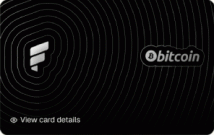

The Fold Bitcoin Credit Card™ is a cryptocurrency-focused rewards credit card designed specifically for consumers who want to accumulate Bitcoin automatically through ordinary everyday purchases. Instead of offering conventional cash back, airline miles, hotel points, or a proprietary bank rewards currency, Fold centers its rewards program entirely around Bitcoin. The card is issued by Celtic Bank, serviced by Fold through Stripe, and operates on the Visa® network, giving cardholders conventional revolving-credit functionality while connecting purchases directly to a Bitcoin rewards ecosystem. Under Fold’s current rewards program, qualifying purchases earn an unlimited 1.5% base reward in Bitcoin, and customers who maintain qualifying balances through Fold Reserve can increase their total earning rate to as much as 5% Bitcoin back on the first $5,000 of qualifying purchases each calendar month. The card also carries no annual fee and no foreign transaction fee, making it particularly attractive to Bitcoin enthusiasts who want a long-term accumulation tool without paying an annual credit-card membership charge.
- Unlimited 1.5% Bitcoin Back
- Up to 5% Total Bitcoin Rewards
- $15,000 Reserve Tier
- $25,000 Reserve Tier
- $50,000 Reserve Tier
- $100,000 Required for Maximum 5% Rate
- $75,000 Required for 4% Rate
- $50,000 Required for 3% Rate
- $5,000 Monthly Reserve Boost Cap
- Shared Boost Considerations
Favorable Details
- Unlimited 1.5% Bitcoin Back: Fold provides an unlimited 1.5% base reward on qualifying purchases, giving every eligible cardholder a consistent Bitcoin earning rate without requiring a Fold Reserve balance.
- Up to 5% Total Bitcoin Rewards: Qualifying Fold Reserve balances can increase the overall credit-card reward rate to 1.75%, 2%, 3%, 4%, or 5% on spending eligible for the Reserve Boost.
- $15,000 Reserve Tier: Maintaining at least $15,000 in qualifying Fold Reserve assets increases eligible card spending from 1.5% to 1.75% total Bitcoin rewards.
- $25,000 Reserve Tier: Maintaining at least $25,000 increases the total eligible rate to 2% Bitcoin back.
- $50,000 Reserve Tier: Maintaining at least $50,000 increases the total eligible rate to 3% Bitcoin back.
- $75,000 Reserve Tier: Maintaining at least $75,000 increases the total eligible rate to 4% Bitcoin back.
- $100,000 Reserve Tier: Maintaining at least $100,000 increases the eligible total to a maximum 5% Bitcoin-back rate.
- Base Rewards Remain Unlimited: Even after a cardholder reaches the monthly Reserve Boost spending limit, additional qualifying purchases continue earning the 1.5% base rate.
- No Annual Fee: There is no annual credit-card maintenance fee, improving long-term value for consumers who do not want another premium-card expense.
- No Foreign Transaction Fee: International purchases avoid an additional foreign transaction surcharge from Fold.
- Visa Network: Visa acceptance makes the Fold Bitcoin Credit Card™ usable at a broad range of merchants in the United States and internationally.
- Direct Bitcoin Rewards: Rewards are denominated in Bitcoin, allowing ordinary household purchases to become part of a long-term Bitcoin accumulation strategy.
- Bitcoin Reward Calculation at Purchase: Current Fold terms determine Bitcoin rewards using the applicable reward methodology and Bitcoin value associated with the transaction authorization.
- No Penalty APR: Current card terms do not impose a separate penalty APR.
- 25-Day Minimum Grace Period: Payment is due at least 25 days after each monthly billing cycle closes.
- Integrated Fold Ecosystem: The credit card integrates with Fold’s broader Bitcoin services and Fold Reserve program.
- Conventional Revolving Credit: Unlike many crypto debit cards, Fold is a genuine credit card with a revolving bank-issued credit line.
- Potential Credit-Building Value: Responsible account management can provide the normal credit-building characteristics associated with revolving credit when account information is reported.
- Automatic Bitcoin Accumulation: Consumers can earn Bitcoin through normal purchases without manually placing a separate Bitcoin order each time.
- Straightforward Base Rate: Consumers who do not want to maintain a large Fold Reserve balance can simply use the card at its unlimited 1.5% base earning rate.
Unfavorable Details
- $100,000 Required for Maximum 5% Rate: The strongest advertised reward level is primarily relevant to consumers who already maintain significant qualifying assets within Fold.
- $75,000 Required for 4% Rate: Even the second-highest reward level involves a substantial Fold Reserve commitment.
- $50,000 Required for 3% Rate: Consumers wanting a 3% broad Bitcoin reward must maintain considerably more assets than would be necessary to obtain some competing flat-rate credit cards.
- $5,000 Monthly Reserve Boost Cap: Reserve Boost rewards apply only to the first $5,000 in qualifying card purchases each calendar month.
- Shared Boost Considerations: Fold’s current program applies monthly boost rules across qualifying Fold card products, potentially affecting consumers using multiple Fold payment products.
- 1.5% Base Rate Trails Some Flat-Rate Cards: Consumers without a qualifying Reserve Balance can obtain higher fixed rewards from several conventional 2% or greater cash-back cards.
- Bitcoin Price Volatility: A Bitcoin reward worth $30 when earned may later be worth significantly more or significantly less.
- No Alternative Reward Currencies: Fold focuses exclusively on Bitcoin rather than allowing cardholders to choose Ethereum, stablecoins, cash back, airline miles, or other digital assets.
- Variable Purchase APR: Current purchase APRs of 20.49% to 29.49% can quickly outweigh the value of Bitcoin rewards when balances are carried.
- No Introductory 0% APR Focus: Fold is not designed primarily as an interest-free financing card.
- No Balance Transfer Program: Consumers seeking to refinance existing high-interest card balances should look elsewhere.
- Late Payment Fees: Late payments may result in fees of up to $30.
- Returned Payment Fees: Returned payments can also result in fees of up to $30.
- Replacement Card Costs: Additional physical card replacements beyond applicable allowances can generate fees.
- No Authorized Users Currently: Fold does not currently provide the same authorized-user functionality found on many mainstream credit cards.
- No Business Card Version: Consumers cannot currently obtain the Fold Bitcoin Credit Card™ as a conventional business credit-card account.
- Crypto Recordkeeping: Selling or otherwise disposing of Bitcoin rewards after appreciation can create additional recordkeeping and potential tax considerations.
- Rewards Terms Can Change: Fold can modify rates, Reserve requirements, eligible transactions, limits, or other program features under applicable terms.
- Not Every Transaction Qualifies: Cash equivalents, cryptocurrency purchases, gaming transactions, fees, interest, refunds, and other excluded transactions do not earn standard rewards.
- Refunded Purchases Can Reverse Rewards: Bitcoin rewards associated with returned or reversed purchases can be reduced or removed.
Fold Bitcoin Credit Card™ Quick Facts
| Features | Details |
| Credit Card Platform | Fold |
| Credit Card Issuer | Celtic Bank |
| Payment Network | Visa® |
| Rewards Type | Bitcoin (BTC) Rewards |
| Recommended Credit | Good Credit to Excellent Credit Score (690-850) |
| Annual Fee | $0 |
| Standard Base Rewards | Unlimited 1.5% Bitcoin rewards |
| Maximum Total Reward Rate | Up to 5% with qualifying Fold Reserve balance |
| $15,000+ Reserve Balance | 1.75% total rewards |
| $25,000+ Reserve Balance | 2% total rewards |
| $50,000+ Reserve Balance | 3% total rewards |
| $75,000+ Reserve Balance | 4% total rewards |
| $100,000+ Reserve Balance | 5% total rewards |
| Reserve Boost Spending Cap | First $5,000 in qualifying monthly purchases |
| Rewards Above Monthly Boost Cap | 1.5% base Bitcoin reward |
| Foreign Transaction Fee | None |
| Purchase APR | 20.49%–29.49% variable |
| Penalty APR | None |
| Minimum Interest Charge | $1 when interest applies |
| Late Payment Fee | Up to $30 |
| Returned Payment Fee | Up to $30 |
| Balance Transfers | Not offered |
| Minimum Grace Period | At least 25 days after billing-cycle close |
| Authorized Users | Not currently available |
| Business Version | Not currently available |
| Fold Account | Required |
| Best For | Bitcoin-focused consumers seeking automatic BTC rewards |
Fold Bitcoin Credit Card™ Welcome Offer
The Fold Bitcoin Credit Card™ does not currently rely on a permanent large traditional welcome offer comparable with premium travel cards that advertise tens of thousands of points after meeting an initial spending requirement. Fold can introduce referral programs, targeted promotions, or temporary incentives, but those offers can change independently of the standard credit-card rewards program. Applicants should therefore evaluate Fold primarily on the strength of its ongoing Bitcoin rewards, $0 annual fee, Reserve Boost potential, and integration with the Fold ecosystem rather than applying solely because of a temporary acquisition incentive.
Fold Bitcoin Credit Card™ Rewards Rate
The Fold Bitcoin Credit Card™ begins with a straightforward 1.5% base Bitcoin reward on qualifying purchases, and unlike the boosted portion of the program, that base rate has no stated spending cap. Fold Reserve then allows qualifying cardholders to increase the total earning rate based on their Reserve Balance. A $15,000 qualifying balance raises the rate to 1.75%, $25,000 raises it to 2%, $50,000 produces 3%, $75,000 produces 4%, and $100,000 or more produces a total rate of 5%. The Reserve Boost portion applies to the first $5,000 of qualifying purchases each calendar month, after which additional qualifying card spending continues earning the unlimited 1.5% base reward.
How the Fold Bitcoin Credit Card™ Works
The Fold Bitcoin Credit Card™ operates as a conventional revolving consumer credit card rather than a cryptocurrency debit card. Celtic Bank provides the credit account, Fold services the account through Stripe, and purchases are processed over the Visa network in U.S. dollars. Cardholders receive a credit limit, make purchases against that line, receive monthly statements, and repay the balance according to standard credit-card terms. At the same time, qualifying purchases generate Bitcoin-denominated rewards through Fold’s rewards program. This structure allows cardholders to accumulate Bitcoin without having to sell existing digital assets or directly spend cryptocurrency at the merchant.
1.5% Unlimited Bitcoin Base Rewards
Every qualifying Fold Bitcoin Credit Card™ purchase earns a 1.5% base reward in Bitcoin, regardless of whether the cardholder maintains a Fold Reserve Balance. This is one of the card’s most important features because it ensures that customers who do not want to deposit tens of thousands of dollars into Fold Reserve can still use the card as a simple Bitcoin accumulation tool. There is no stated cap on these base rewards, so a cardholder who exceeds the monthly boosted spending allowance continues earning 1.5% on additional qualifying purchases.
1.75% Bitcoin Reward Tier
Cardholders maintaining a qualifying Fold Reserve Balance of at least $15,000 receive a 0.25% Reserve Boost on top of the 1.5% base rate, resulting in a 1.75% total Bitcoin reward rate on purchases eligible for the monthly boost. This level provides a modest enhancement but may primarily appeal to consumers who already planned to maintain this amount through Fold rather than someone moving $15,000 solely to gain an additional quarter of a percentage point in credit-card rewards.
2% Bitcoin Reward Tier
Maintaining at least $25,000 in qualifying Fold Reserve assets increases eligible rewards to 2% total Bitcoin back. This level is important because it places Fold’s return in the same broad range as many established 2% flat-rate cash-back cards while retaining the potential upside and downside associated with Bitcoin. Consumers already maintaining a $25,000 Fold Reserve Balance can therefore earn a competitive everyday rewards rate without tracking bonus categories.
3% Bitcoin Reward Tier
Consumers maintaining at least $50,000 in Fold Reserve receive a Reserve Boost that brings qualifying purchases to 3% total Bitcoin rewards within the monthly boost limit. A 3% broad reward rate is unusually strong compared with many mainstream credit cards, although the $50,000 Reserve requirement creates a significant opportunity-cost consideration. Existing Fold customers who naturally maintain this balance can obtain considerably greater card value than consumers who would need to rearrange their financial assets solely for rewards.
4% Bitcoin Reward Tier
A qualifying $75,000 Fold Reserve Balance increases the total reward rate to 4% Bitcoin back on eligible boosted purchases. A broad 4% reward rate can produce substantial Bitcoin accumulation for consumers who regularly spend through the card, but the economics should still be considered in context. The rate applies only within Fold’s monthly boosted-spending limitation, and maintaining $75,000 in qualifying assets solely to gain additional credit-card rewards may not make financial sense for every consumer.
5% Bitcoin Reward Tier
Fold’s highest current tier provides 5% total Bitcoin rewards to cardholders maintaining at least $100,000 in qualifying Fold Reserve assets. The rate consists of Fold’s unlimited 1.5% base reward plus a 3.5% Reserve Boost on purchases eligible for the monthly boost. A potential 5% return across broad qualifying spending is exceptional for a credit card, but consumers should recognize that the significant asset requirement places this tier primarily within reach of committed Fold customers who already have substantial Bitcoin-oriented savings.
$5,000 Monthly Reserve Boost Cap
The Reserve Boost applies to the first $5,000 of qualifying purchase transactions each calendar month. Once the applicable monthly threshold has been reached, additional qualifying Fold Bitcoin Credit Card™ spending continues earning the uncapped 1.5% base reward but no longer receives the incremental Reserve Boost until the next calendar month. For a consumer at the highest 5% tier, this structure means the enhanced reward rate can apply to as much as $60,000 of annual qualifying spending if the cardholder uses the full $5,000 allowance every month.
Fold Reserve Determines Your Rewards Rate
Rather than using merchant categories such as groceries, restaurants, gas stations, streaming services, or travel to determine rewards, Fold bases its enhanced earning levels on the size of the cardholder’s qualifying Fold Reserve Balance. This makes the rewards structure predictable from purchase to purchase because an eligible transaction generally earns the same applicable rate regardless of where the consumer shops, but it also means higher rewards require consumers to maintain substantial qualifying assets with Fold.
Fold Reserve Rewards Table
| Fold Reserve Balance | Base Reward | Reserve Boost | Total Eligible Reward |
|---|---|---|---|
| Under $15,000 | 1.50% | 0.00% | 1.50% |
| $15,000+ | 1.50% | 0.25% | 1.75% |
| $25,000+ | 1.50% | 0.50% | 2.00% |
| $50,000+ | 1.50% | 1.50% | 3.00% |
| $75,000+ | 1.50% | 2.50% | 4.00% |
| $100,000+ | 1.50% | 3.50% | 5.00% |
Bitcoin Rewards and Market Value
Bitcoin rewards introduce investment exposure that conventional cash-back cardholders do not experience. If Fold awards Bitcoin worth $50 at the time the qualifying transaction is processed, the long-term value of that reward depends on the future market price of Bitcoin. The BTC may eventually become worth substantially more than $50, but it can also decline to a much lower value. Consumers should therefore view Fold rewards as a variable-value digital asset rather than guaranteed cash savings.
Bitcoin Rewards and Taxes
Credit-card rewards are generally treated differently from ordinary investment income when earned as purchase rebates, but selling, exchanging, or otherwise disposing of Bitcoin after it changes in value can create tax and recordkeeping considerations. Fold users should maintain accurate transaction records showing when Bitcoin rewards were acquired and their applicable value because future disposition of those assets could create capital gains or losses. Consumers with significant cryptocurrency activity should consider obtaining professional tax guidance appropriate to their individual circumstances.
No Annual Fee
The Fold Bitcoin Credit Card™ carries no annual fee, allowing customers to hold the account without needing to justify a recurring credit-card membership charge through spending or benefits. This feature is especially valuable for Bitcoin accumulators who want to keep the account open over many years and gradually build rewards. The lack of an annual fee also gives Fold an advantage over crypto-related cards whose underlying ecosystem requires a separate premium subscription to remain eligible.
No Foreign Transaction Fee
Fold does not charge a foreign transaction fee, making the card potentially useful for international travel and foreign online purchases. Many mainstream rewards cards impose approximately 3% on foreign transactions, which can eliminate the value of rewards earned on those purchases. Fold avoids that additional surcharge, while Visa handles the currency conversion process according to applicable network procedures.
Fold Bitcoin Credit Card™ APR
The Fold Bitcoin Credit Card™ currently charges a 20.49% to 29.49% variable purchase APR, depending on the applicant’s creditworthiness. The APR changes with the Prime Rate and Fold’s current agreement states that the rate will not exceed 36% under the applicable terms. Even at the card’s maximum 5% reward level, carrying a revolving balance at an APR above 20% can rapidly erase the economic value of rewards, so the strongest Fold users are consumers who consistently pay their balances in full.
No Introductory 0% APR
The Fold Bitcoin Credit Card™ does not currently compete as a traditional introductory 0% APR purchase card. Consumers planning a major purchase that they need to finance for 12, 15, 18, or 21 months may obtain substantially greater economic benefit from a dedicated introductory-APR card rather than earning Bitcoin while paying Fold’s normal variable interest rate.
No Balance Transfers
Fold’s current cardholder agreement states that balance transfers are not offered. This means cardholders cannot move an existing high-interest balance from another issuer to Fold for repayment. Consumers whose primary financial goal is reducing existing credit-card interest should generally consider a specialized 0% balance-transfer card instead of Fold.
Fold Bitcoin Credit Card™ Late and Returned Payment Fees
Late payments can currently result in fees of up to $30, while returned payments may also generate charges of up to $30. A single fee can eliminate the value of Bitcoin rewards earned on thousands of dollars of purchases, so automatic payments and consistent account monitoring can be important for maximizing the card’s economic value.
No Penalty APR
The Fold Bitcoin Credit Card™ currently has no penalty APR, meaning the cardholder agreement does not impose a separate punitive interest rate following qualifying late-payment events. Late payments can still trigger fees, credit-reporting consequences, account restrictions, and other negative outcomes, so the absence of a penalty APR should not be interpreted as a reason to pay late.
Minimum Interest Charge
When interest applies to the Fold Bitcoin Credit Card™, the current agreement provides for a minimum interest charge of $1. Although small compared with the potential cost of carrying a significant balance, this again emphasizes that Fold is most economically rewarding when consumers pay eligible statement balances in full and avoid interest charges.
Credit Card Grace Period
The Fold Bitcoin Credit Card™ provides a payment due date at least 25 days after the close of each monthly billing cycle. Fold does not charge purchase interest when the cardholder pays the applicable entire balance by the Payment Due Date each month in accordance with current terms. Maintaining that grace period can be far more financially valuable than attempting to maximize a rewards percentage while simultaneously carrying expensive revolving debt.
Visa Network
The Fold Bitcoin Credit Card™ operates through the Visa® network, providing broad domestic and international merchant acceptance. This distinguishes Fold from cryptocurrency products that function only as exchange-linked prepaid or debit cards and provides consumers with the familiarity of using a mainstream payment network while receiving Bitcoin rewards behind the scenes.
Fold Account and Ecosystem Integration
A Fold account is required to use the Fold Bitcoin Credit Card™, and the card is designed to integrate tightly with Fold’s broader Bitcoin financial ecosystem. Users can view rewards, manage their account, interact with Fold Reserve, and access qualifying Bitcoin services through the Fold platform. Existing Fold customers may therefore find the card considerably more convenient than consumers who would need to adopt an entirely new ecosystem solely to earn Bitcoin rewards.
Fold Bitcoin Credit Card™ Security
The Fold Bitcoin Credit Card™ combines a traditional bank-issued credit account with Fold’s Bitcoin rewards infrastructure. Consumers should protect their Fold credentials carefully, use available multifactor or device-security features, review transactions frequently, and immediately report suspected unauthorized activity. Because Fold accounts can involve Bitcoin and other financial functions beyond a normal credit-card reward balance, protecting account access is especially important.
Fold Bitcoin Credit Card™ Approval Process
Approval for the Fold Bitcoin Credit Card™ is subject to Celtic Bank’s underwriting requirements. A consumer’s credit history, credit score, income, outstanding obligations, payment history, existing debt, credit utilization, and other factors can affect approval, assigned credit limit, and APR. Maintaining Bitcoin or a Fold Reserve Balance does not by itself guarantee approval for the revolving credit account.
Fold Bitcoin Credit Card™ Eligibility Requirements
Prospective applicants must meet Fold’s account requirements and Celtic Bank’s applicable credit-card underwriting criteria. Applicants generally need an eligible Fold account and must provide required identity, financial, and application information. Product availability, individual credit limits, interest rates, and approval remain subject to the issuer’s policies and the applicant’s creditworthiness.
Fold Bitcoin Credit Card™ and Credit Building
Because Fold is a genuine revolving credit card rather than a prepaid Bitcoin rewards product, responsible account use can support a consumer’s broader credit profile when account information is reported to applicable credit bureaus. Consumers attempting to build or maintain strong credit should prioritize on-time payments, low revolving utilization, responsible borrowing, and long-term account management rather than spending more simply to earn additional Bitcoin.
Authorized Users
Fold currently does not provide the conventional authorized-user functionality available with many major credit cards. This can make the product less convenient for married couples, partners, families, or households that want multiple people to place purchases on the same account and consolidate rewards into one balance.
Business Accounts
The Fold Bitcoin Credit Card™ is currently designed as a consumer credit product rather than a dedicated business card. Entrepreneurs who want employee cards, accounting integrations, expense controls, business-specific underwriting, or enhanced rewards for common business categories should compare dedicated business credit cards rather than relying on Fold as their primary commercial payment account.
Fold Bitcoin Credit Card™ vs. Traditional 2% Cash-Back Credit Cards
Compared with a conventional 2% cash-back credit card, Fold’s unlimited 1.5% base rate is lower for consumers without a qualifying Reserve Balance. The equation changes at a $25,000 Fold Reserve Balance because qualifying boosted spending reaches 2%, while balances of $50,000, $75,000, and $100,000 can increase eligible rewards to 3%, 4%, and 5%, respectively. Traditional cash back retains predictable dollar value and requires no exposure to Bitcoin, while Fold creates the opportunity for Bitcoin rewards to appreciate substantially after they are earned. A conventional 2% card is simpler for most consumers, but committed Bitcoin investors may prefer Fold’s automatic BTC accumulation and higher potential Reserve rates.
Fold Bitcoin Credit Card™ vs. Premium Travel Credit Cards
Premium travel credit cards generally focus on transferable airline miles, hotel points, airport lounge access, annual travel credits, elite-status benefits, statement credits, and travel protections. Fold instead focuses almost entirely on Bitcoin accumulation through everyday spending. Travelers wanting premium-cabin award flights, luxury hotels, airport lounges, and extensive trip protections will generally obtain greater value from a dedicated travel card, while consumers who would rather convert their ordinary spending into Bitcoin may find Fold significantly easier to use.
Fold Bitcoin Credit Card™ vs. Gemini Credit Credit Card®
The Fold Bitcoin Credit Card™ vs. Gemini Credit Card® comparison is one of the most relevant matchups for consumers wanting a genuine U.S. credit card that produces cryptocurrency rewards. Gemini uses merchant categories and allows consumers to receive rewards in Bitcoin or numerous other supported cryptocurrencies, with particularly attractive rates available on categories such as gas, EV charging, transit, dining, and groceries. Fold instead begins with a broad 1.5% Bitcoin base rate and can increase eligible spending to 1.75%, 2%, 3%, 4%, or 5% depending on the customer’s Fold Reserve Balance. Gemini has the advantage for consumers who want multiple cryptocurrency choices and strong rewards without maintaining a massive asset balance, while Fold is potentially superior for devoted Bitcoin accumulators who already maintain enough Fold Reserve assets to unlock 3%, 4%, or 5% rewards.
Fold Bitcoin Credit Card™ vs. Coinbase One Credit Card
The Fold Bitcoin Credit Card™ vs. Coinbase One Card comparison centers on two products designed specifically for Bitcoin accumulation through credit-card purchases. Coinbase One begins with a stronger standard Bitcoin reward rate for qualifying users and increases its broad rewards based on the amount of qualifying assets held through Coinbase, while Fold starts at 1.5% and uses Fold Reserve balances to raise the rate as high as 5% within its monthly boost allowance. Coinbase One can be particularly attractive to consumers already maintaining large balances at Coinbase, while Fold may be preferable to consumers who want a card without a separate premium membership requirement and who already use Fold’s Bitcoin ecosystem. Fold’s maximum current 5% broad boosted rate exceeds Coinbase One’s standard asset-based maximum, although Fold’s boosted spending allowance is smaller and both cards require significant asset balances to unlock their strongest ongoing rewards.
Fold Bitcoin Credit Card™ vs. Crypto.com Visa Signature® Credit Card
The Fold Bitcoin Credit Card™ vs. Crypto.com Visa Signature® Credit Card comparison involves two crypto-platform cards that reward customers more aggressively as they deepen their relationship with the sponsoring ecosystem. Crypto.com’s structure can provide unusually high cryptocurrency reward rates to users meeting applicable plan, subscription, staking, or platform requirements and can provide more flexibility in reward assets. Fold is simpler for consumers focused exclusively on Bitcoin because qualifying purchases always center on BTC and the reward progression is determined primarily through Fold Reserve. Crypto.com can provide the stronger headline reward opportunity for highly engaged platform customers, while Fold offers a clearer Bitcoin-only proposition and an uncapped 1.5% base rate after its monthly Reserve Boost spending limit has been reached.
Fold Bitcoin Credit Card™ vs. Venmo Credit Card
The Fold Bitcoin Credit Card™ vs. Venmo Credit Card comparison highlights the difference between direct Bitcoin rewards and conventional cash back that can later become cryptocurrency. Venmo primarily functions as a mainstream cash-back credit card and allows qualifying users to use its Cash Back to Crypto functionality to automatically purchase supported cryptocurrency with eligible rewards. Fold instead makes Bitcoin the direct focus of the rewards program from the start. Venmo can be the better choice for consumers who value flexible cash back and want cryptocurrency as an optional secondary feature, while Fold is more purpose-built for consumers who specifically want every qualifying purchase to contribute to Bitcoin accumulation.
Fold Bitcoin Credit Card™ vs. Robinhood Gold Credit Card
The Fold Bitcoin Credit Card™ vs. Robinhood Gold Card comparison pits direct Bitcoin rewards against broad investment-oriented rewards. Robinhood Gold Card is attractive because qualifying spending can earn a strong flat cash-back rate in points, allowing customers to decide later whether they want to use rewards for investments, cryptocurrency, or other available redemption options. Fold begins at a lower 1.5% base rate but directly converts the rewards strategy into Bitcoin and can climb to substantially higher levels through Fold Reserve. Robinhood is likely more flexible for investors who want to decide what to purchase after earning rewards, while Fold is more compelling for committed Bitcoin investors who specifically want automatic BTC accumulation and already meet a higher Reserve tier.
Fold Bitcoin Credit Card™ vs. PayPal Cashback Mastercard® Credit Card
The Fold Bitcoin Credit Card™ vs. PayPal Cashback Mastercard® comparison involves two fundamentally different reward philosophies. PayPal’s card emphasizes predictable cash back, particularly when consumers use PayPal checkout, and does not require Bitcoin exposure to obtain its core value. Fold instead pays qualifying rewards entirely through a Bitcoin-oriented program. PayPal is likely stronger for heavy online shoppers who regularly pay through PayPal and want guaranteed cash value, while Fold is better suited to consumers who would otherwise use those rewards to purchase Bitcoin anyway. Fold also has significantly greater reward upside for qualifying Reserve customers, although achieving those rates requires meaningful assets within the Fold ecosystem.
Fold Bitcoin Credit Card™ vs. Nexo Credit Card
The Fold Bitcoin Credit Card™ vs. Nexo Card comparison involves products with very different financial structures. Fold is a traditional bank-issued revolving credit card that provides a credit limit, monthly statement, and Bitcoin rewards, whereas Nexo can operate with cryptocurrency-backed Credit Mode or Debit Mode functionality. Nexo can be useful for experienced digital-asset holders who want liquidity against cryptocurrency holdings without immediately selling them, but this introduces collateral, loan-to-value, borrowing-cost, liquidation, and jurisdiction considerations. Fold is considerably easier for a typical U.S. credit-card consumer to understand because purchases behave like ordinary credit-card transactions and Bitcoin is received as the reward rather than being used as collateral for the transaction.
Fold Bitcoin Credit Card™ vs. Bybit Credit Card
The Fold Bitcoin Credit Card™ vs. Bybit Card comparison again requires consumers to distinguish a conventional U.S. revolving credit account from a crypto-linked payment product. Bybit Card availability, rewards, account requirements, and payment structure vary substantially by jurisdiction and are primarily designed for consumers already active within the Bybit exchange ecosystem. Fold provides a clearer proposition for qualifying U.S. consumers: use a normal Visa credit line for purchases and receive Bitcoin rewards. Bybit can be attractive to eligible international cryptocurrency traders who want a spending product connected closely to their exchange balances, while Fold is generally the more conventional choice for Americans specifically seeking a genuine Bitcoin rewards credit card.
Fold Bitcoin Credit Card™ vs. Coinbase Debit Card
The Fold Bitcoin Credit Card™ vs. Coinbase Card comparison is important because the traditional Coinbase Card is fundamentally different from the Coinbase One Card and from Fold. Coinbase Card is primarily a debit product connected to funds within a Coinbase account, whereas Fold provides a revolving credit line issued by Celtic Bank. Using Fold allows consumers to make purchases without immediately drawing down their existing cryptocurrency or cash holdings, and responsible account use provides the conventional characteristics associated with credit-card borrowing. Coinbase Card can be better for consumers who do not want another credit account and prefer spending funds they already own, while Fold is the stronger choice for consumers who specifically want a genuine credit card that automatically earns Bitcoin.
Which Crypto Credit Card Is Better Than Fold?
There is no single cryptocurrency credit card that is automatically superior to Fold because the best option depends heavily on platform relationships, investment balances, spending habits, reward preferences, and appetite for cryptocurrency volatility. Gemini can be better for consumers who want multiple cryptocurrency choices and strong merchant-category rewards without a large asset requirement. Coinbase One can provide a stronger baseline Bitcoin rate for customers already paying for Coinbase One, while Crypto.com can offer greater headline reward opportunities for deeply committed platform users. Robinhood Gold can be compelling for investors wanting a broad flexible reward rather than automatic Bitcoin, and PayPal or Venmo may be more familiar for consumers who primarily want cash back with optional cryptocurrency exposure. Fold becomes particularly difficult to beat for dedicated Bitcoin users who already maintain $50,000 or more in Fold Reserve because qualifying card spending can reach 3%, 4%, or 5% Bitcoin rewards without tracking merchant categories.
Fold Bitcoin Credit Card™ vs. Cryptocurrency Debit Cards
The Fold Bitcoin Credit Card™ differs fundamentally from cryptocurrency debit cards because purchases use a revolving credit line instead of immediately removing money or digital assets from a customer’s account. This provides a normal billing cycle, the ability to preserve existing assets until the statement is due, and the potential credit-history advantages associated with responsible credit-card management. Cryptocurrency debit cards can be easier for consumers who want to avoid borrowing entirely, but Fold provides the more conventional credit experience while still delivering Bitcoin rewards.
Who Should Consider the Fold Bitcoin Credit Card™?
The Fold Bitcoin Credit Card™ is best suited to consumers who strongly believe in Bitcoin as a long-term asset, want to accumulate BTC automatically through everyday spending, regularly pay credit-card balances in full, appreciate having no annual fee, and are comfortable using the Fold ecosystem. The card becomes substantially more compelling for consumers already maintaining qualifying Fold Reserve balances because their existing assets can increase rewards without requiring them to track rotating merchant categories or activate quarterly promotions.
Who Should Avoid the Fold Bitcoin Credit Card™?
Consumers may want to avoid Fold if they prefer guaranteed cash rewards, want airline miles or hotel points, need a 0% introductory financing offer, want balance transfers, need authorized-user cards, or do not want exposure to Bitcoin price volatility. Fold may also provide relatively weak value for consumers unwilling to maintain a qualifying Reserve Balance because the basic 1.5% earning rate trails several established flat-rate cash-back cards. Most importantly, anyone expecting to carry a revolving balance should prioritize low interest costs rather than cryptocurrency rewards because Fold’s variable APR can quickly overwhelm the value generated by even its highest reward tiers.
Is the Fold Bitcoin Credit Card™ Worth It?
The Fold Bitcoin Credit Card™ can absolutely be worthwhile for the right Bitcoin-focused consumer, but the answer depends heavily on the cardholder’s Reserve Balance and repayment habits. At the standard 1.5% rate, Fold provides an easy way to accumulate Bitcoin but does not necessarily outperform the best conventional flat-rate rewards cards. At the $25,000 Reserve level, the eligible 2% reward becomes more competitive; at $50,000, the 3% rate is excellent; and the 4% and 5% levels available with qualifying $75,000 and $100,000 Reserve Balances can be exceptional. Consumers should not move substantial assets solely to earn a higher credit-card percentage, but existing Fold Reserve customers can derive considerably more value from the card than someone entering the ecosystem exclusively for rewards.
Fold Bitcoin Credit Card™ FAQs
Does the Fold Bitcoin Credit Card™ have an annual fee? No. The Fold Bitcoin Credit Card™ currently carries a $0 annual fee, allowing consumers to earn Bitcoin rewards without paying a recurring card-membership charge.
How much Bitcoin does the Fold Bitcoin Credit Card™ earn? Qualifying purchases earn an unlimited 1.5% base Bitcoin reward, while qualifying Fold Reserve customers can increase their total reward rate to between 1.75% and 5% on purchases eligible for the monthly Reserve Boost.
How do I earn 5% Bitcoin back with Fold? Cardholders currently need a qualifying Fold Reserve Balance of at least $100,000 to receive the 3.5% Reserve Boost that combines with the 1.5% base rate for 5% total rewards on eligible boosted spending.
Is Fold’s 5% Bitcoin reward unlimited? No. The Reserve Boost applies to the first $5,000 of qualifying purchases during each calendar month. Spending beyond the applicable monthly cap continues earning the uncapped 1.5% base rate.
What happens if I do not have Fold Reserve? You can still earn the standard unlimited 1.5% Bitcoin base reward on qualifying purchases without maintaining a Fold Reserve Balance.
How much Fold Reserve is required for 2% rewards? A qualifying Fold Reserve Balance of at least $25,000 currently increases the total eligible credit-card reward rate to 2%.
How much Fold Reserve is required for 3% rewards? At least $50,000 in qualifying Fold Reserve assets is currently required to reach the 3% total reward tier.
How much Fold Reserve is required for 4% rewards? At least $75,000 in qualifying Fold Reserve assets is currently required for the 4% total eligible reward rate.
Does Fold charge foreign transaction fees? No. Fold’s current cardholder agreement does not impose a foreign transaction fee.
What is the Fold Bitcoin Credit Card™ APR? The current purchase APR ranges from 20.49% to 29.49% variable depending on creditworthiness.
Does Fold offer a 0% introductory APR? Fold does not currently advertise a standard long-term 0% introductory purchase APR as a core card feature.
Does Fold offer balance transfers? No. Current Fold terms state that balance transfers are not offered.
Does Fold charge a penalty APR? No. The current cardholder agreement lists no penalty APR.
How long is the Fold grace period? The payment due date is at least 25 days after the close of each monthly billing cycle.
Who issues the Fold Bitcoin Credit Card™? Celtic Bank issues the Fold Bitcoin Credit Card™, while Fold services the account through Stripe.
What network does Fold use? The Fold Bitcoin Credit Card™ operates on the Visa® network.
Can I add an authorized user? Fold does not currently offer standard authorized-user functionality for this card.
Is there a Fold business credit card? Fold currently offers this product primarily as a consumer credit card rather than a conventional business-card account.
Do Bitcoin rewards always increase in value? No. Bitcoin is highly volatile, and rewards can appreciate or decline substantially after they are earned.
Is Fold better than Coinbase One Card? Fold can be better for consumers who want no separate premium membership requirement and already maintain enough Fold Reserve assets to earn 3% to 5%, while Coinbase One may provide a stronger starting Bitcoin reward rate for existing Coinbase customers.
Is Fold better than Gemini Credit Card®? Fold can provide higher broad rewards for high-balance Reserve customers, while Gemini can be more attractive for consumers who want multiple cryptocurrency reward options and category bonuses without maintaining a large asset balance.
Final Verdict
The Fold Bitcoin Credit Card™ stands out as one of the most purpose-built Bitcoin rewards credit cards available because its entire structure is designed around turning everyday spending into BTC. The card combines an unlimited 1.5% base Bitcoin reward rate, $0 annual fee, no foreign transaction fee, Visa acceptance, and Fold Reserve boosts capable of raising qualifying rewards to as much as 5%. The standard 1.5% rate alone is convenient but not necessarily market-leading compared with conventional 2% cash-back cards or competing cryptocurrency cards with stronger basic earnings. Fold’s real advantage appears when a consumer already maintains significant qualifying assets within Fold Reserve. At $25,000 the eligible reward reaches 2%, at $50,000 it reaches 3%, at $75,000 it reaches 4%, and at $100,000 qualifying boosted spending can earn an exceptional 5% in Bitcoin. The major tradeoffs are the substantial Reserve balances needed for the highest tiers, the $5,000 monthly limit on boosted purchases, Bitcoin’s price volatility, no balance-transfer capability, the absence of authorized users, and purchase APRs that can make carrying debt extremely expensive. Compared with Gemini, Coinbase One, Crypto.com, Venmo, Robinhood Gold, PayPal, Nexo, Bybit, and Coinbase Card, Fold’s defining advantage is its singular focus on Bitcoin rather than general cash back or multiple digital assets. Consumers who pay balances in full, understand cryptocurrency risk, already use Fold, and want their everyday purchases to become an automatic long-term Bitcoin accumulation strategy may find the Fold Bitcoin Credit Card™ one of the strongest specialized Bitcoin credit cards in 2026.