Explore 7 types of bank loans: personal, mortgage, auto, student, business, payday, and home equity. Discover which loan best fits your needs and borrow smarter.

Different Types of Loans Explained

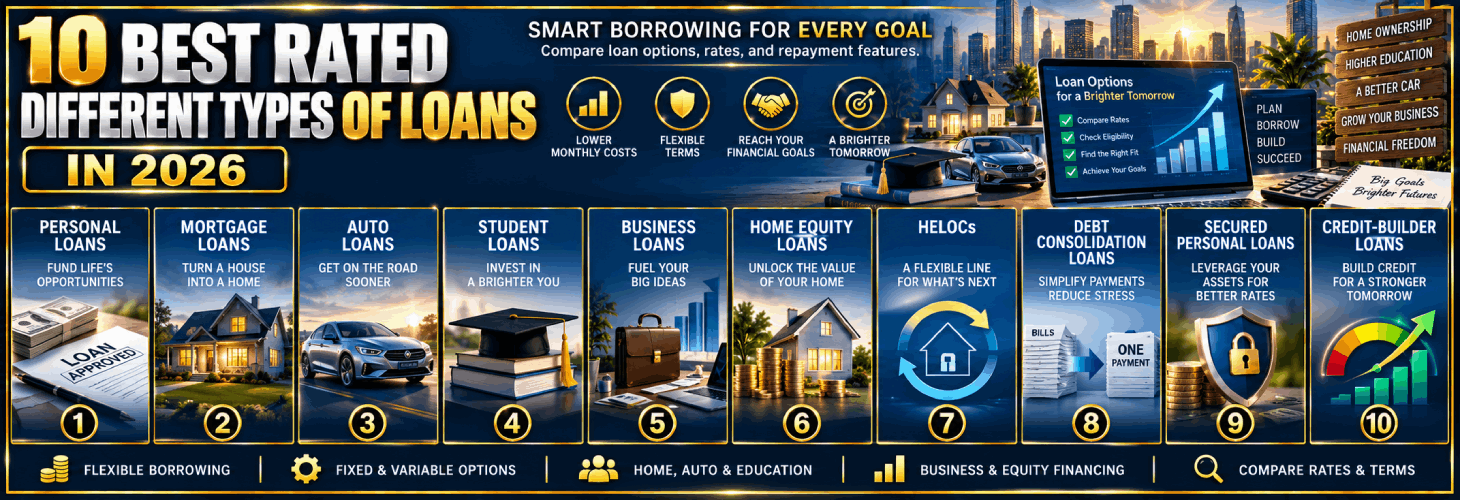
10 Best Rated Different Types of Loans in 2026
The best types of loans in 2026 serve very different financial purposes, ranging from buying a home or vehicle to consolidating debt, financing college, growing a business, completing home improvements, covering major personal expenses, or building a stronger credit profile. Choosing the right loan requires more than searching for the lowest advertised interest rate because borrowers also need to evaluate annual percentage rates, origination fees, collateral requirements, repayment terms, monthly payments, qualification standards, prepayment rules, insurance requirements, variable-rate risks, and the total amount of interest that will be paid over the life of the debt. This 2026 ranking compares 10 major loan categories available to consumers and business owners, including personal loans, mortgage loans, auto loans, student loans, business loans, home equity loans, HELOCs, debt consolidation loans, secured personal loans, and credit-builder loans. Each category has legitimate uses and significant tradeoffs, and the number-one loan type is not automatically the right financing choice for every borrower because the purpose of the borrowing, credit profile, income, available collateral, repayment ability, and alternatives should ultimately determine which form of financing makes the most financial sense.
Important Note About Loan Rates and Terms in 2026
Loan interest rates, APRs, lender fees, repayment terms, minimum credit requirements, borrowing limits, collateral rules, government program requirements, and promotional offers can change throughout 2026, and the final terms available to an individual borrower may differ significantly from representative examples or advertised starting rates. Strong-credit borrowers with stable income, low debt-to-income ratios, substantial down payments, valuable collateral, or established banking relationships may qualify for more favorable pricing, while borrowers with lower credit scores, inconsistent income, higher existing debt, limited credit history, or elevated lending risk may receive higher APRs or may not qualify at all. Applicants should compare actual loan disclosures from multiple lenders whenever practical and evaluate the total repayment amount rather than selecting financing based solely on a low monthly payment because extending a loan over additional years can reduce the required payment while substantially increasing total interest expense.
What Are the Best Different Types of Loans in 2026?
Personal loans rank first among the best general-purpose loan types in 2026 because they provide broad flexibility for debt consolidation, home improvements, major purchases, emergency expenses, medical costs, moving expenses, and other legitimate personal needs without necessarily requiring collateral, while mortgage loans rank second because they provide access to long-term financing for one of the largest purchases most households will ever make. Auto loans rank third because they provide structured financing specifically for vehicle purchases, federal and private student loans rank fourth because education financing can make college or career training possible when grants, scholarships, savings, and current income are insufficient, and business loans rank fifth because they can fund expansion, equipment, real estate, working capital, inventory, and other commercial needs. Home equity loans, HELOCs, debt consolidation loans, secured personal loans, and credit-builder loans complete the ranking because each can be valuable when matched with an appropriate borrower and purpose but introduces additional considerations involving collateral, variable interest rates, debt-management discipline, or limited borrowing flexibility.
How We Rated the Best Different Types of Loans
Each loan category was evaluated based on the financial purpose it serves, availability to qualified borrowers, potential affordability, repayment flexibility, interest-rate structure, typical loan terms, collateral requirements, consumer protections, ability to support major financial objectives, potential effect on credit, and financial risk if the debt becomes unaffordable. Higher rankings were generally given to loans that can solve common financial needs while offering predictable repayment structures and broad availability, while specialized loan products were ranked according to how effectively they address their intended purpose rather than being penalized simply because fewer borrowers need them. A mortgage loan, for example, is one of the most financially important forms of borrowing available but is not appropriate for someone who needs $10,000 for debt consolidation, while a personal loan can provide considerable flexibility but would generally be inappropriate for financing an entire home purchase. High-cost payday loans, vehicle title loans, and similar short-term products are not included among the best-rated loan categories because extremely high borrowing costs and short repayment schedules can create substantially greater financial risk than mainstream installment financing.
Favorable Details of the Best Types of Loans
- Multiple Financing Purposes: Different loan categories allow borrowers to finance homes, vehicles, education, businesses, renovations, debt consolidation, major purchases, emergencies, and credit-building goals.
- Fixed-Payment Options: Many personal loans, auto loans, mortgages, home equity loans, student loans, and business loans can provide predictable installment payments that make budgeting easier.
- Potentially Competitive Rates: Borrowers with strong credit, stable income, valuable collateral, substantial down payments, or government-backed eligibility may qualify for attractive borrowing costs.
- Long Repayment Terms: Mortgages, student loans, home equity loans, and certain business loans can spread large expenses across many years, reducing the amount required each month.
- Unsecured Financing Is Available: Personal loans and certain business or debt consolidation loans may not require borrowers to pledge a home, vehicle, or other asset as collateral.
- Government-Backed Programs: FHA, VA, federal student loans, and SBA-backed business financing can provide important options for borrowers who qualify for specialized programs.
- Debt Consolidation Potential: Personal and debt consolidation loans can replace multiple high-interest obligations with one scheduled monthly payment when borrowers qualify for favorable terms.
- Home Equity Access: Home equity loans and HELOCs can allow homeowners to borrow against accumulated property equity for renovations, major expenses, or other appropriate purposes.
- Credit-Building Opportunities: Responsible installment-loan repayment can help establish positive payment history when the lender reports activity to the major credit bureaus.
- Broad Lender Competition: Banks, credit unions, online lenders, mortgage companies, dealerships, government-approved lenders, and specialized finance companies provide borrowers with multiple opportunities to compare offers.
Unfavorable Details of the Best Types of Loans
- Lowest Rates Require Strong Qualifications: The most attractive advertised APRs are usually reserved for applicants with excellent or strong credit, stable income, manageable existing debt, and favorable overall financial profiles.
- Origination and Closing Costs: Personal loans, mortgages, home equity loans, business loans, and other financing can include origination fees, closing costs, appraisal expenses, documentation charges, or other borrowing costs.
- Long Terms Increase Interest: Extending repayment over additional years can lower the monthly payment while substantially increasing the total amount of interest paid.
- Collateral Can Be Lost: Mortgages, auto loans, home equity financing, and secured personal loans allow lenders to pursue pledged collateral when borrowers fail to repay according to the agreement.
- Variable Rates Can Increase: HELOCs, adjustable-rate mortgages, and some private or business financing can become more expensive if benchmark interest rates rise.
- Hard Credit Inquiries May Occur: Completing a formal loan application can result in a hard credit inquiry and opening a new account can temporarily affect credit scores.
- Approval Is Never Guaranteed: Prequalification or receiving an estimated rate does not guarantee final approval because lenders may verify income, employment, debts, assets, collateral, and other information.
- Borrowing Can Encourage Overspending: Access to financing can create financial problems when consumers borrow more than they can comfortably repay or finance unnecessary expenses.
- Late Payments Damage Credit: Missed or delinquent payments can generate fees, damage credit history, trigger collection activity, and in secured loans potentially lead to repossession or foreclosure.
- Loan Terms Vary Widely: Two borrowers requesting the same amount from different lenders may receive substantially different APRs, fees, repayment periods, and monthly payments.
1. Personal Loans – Best Overall Flexible Loan Type
Personal loans rank first among the best loan types in 2026 because they provide one of the most flexible ways to borrow a defined amount of money and repay it through scheduled installments over a predetermined period. Many personal loans are unsecured, meaning applicants do not have to pledge a house, automobile, savings account, or other property as collateral, although approval and pricing can depend heavily on credit score, income, debt-to-income ratio, employment stability, existing obligations, and other underwriting factors. Borrowers commonly use personal loans for debt consolidation, home improvements, moving expenses, medical expenses, major household purchases, unexpected costs, weddings, repairs, and other personal needs, although lenders can restrict certain uses. Fixed-rate personal loans can be particularly easy to budget because the interest rate and scheduled payment generally remain unchanged throughout the repayment period, but borrowers should compare the APR instead of the interest rate alone because origination fees can materially increase the true cost of financing.
Personal Loan Facts Table
| Feature | Details |
| Loan Type | Installment loan |
| Best For | Flexible personal expenses and debt consolidation |
| Secured or Unsecured | Usually unsecured; secured options also exist |
| Interest Structure | Commonly fixed rate |
| Typical Repayment | Fixed monthly installments |
| Loan Amount | Varies by lender and borrower |
| Credit Requirements | Vary significantly |
| Collateral | Usually not required for unsecured loans |
| Major Cost | Interest and possible origination fee |
| Main Risk | High APR for weaker-credit borrowers |
| Best Feature | Flexible use of funds |
Why Personal Loans Rank First
Personal loans earn the number-one position because they can address a wider variety of legitimate financial needs than most specialized financing products while providing a defined repayment schedule that is easier to understand than revolving credit. Unlike a HELOC, an unsecured personal loan does not place a borrower’s home directly at risk, and unlike a credit card, a traditional installment loan has an established payoff schedule rather than allowing debt to remain revolving indefinitely. The strongest borrowers can potentially obtain competitive rates, but consumers with weaker credit may encounter expensive APRs that can reach levels where borrowing becomes difficult to justify. Personal loans work best when the borrower knows the amount required, can comfortably afford the monthly installment, receives a meaningful financial benefit from the borrowing, and avoids extending the repayment term solely to make an otherwise unaffordable loan appear manageable.
2. Mortgage Loans – Best for Buying a Home
Mortgage loans rank second because they provide the long-term financing necessary for millions of consumers to purchase residential real estate without paying the entire purchase price in cash. Mortgage financing includes conventional loans as well as government-backed and specialized programs such as FHA and VA mortgages, while borrowers may also choose between fixed-rate and adjustable-rate structures depending on eligibility and financial objectives. Fixed-rate mortgages provide predictable principal-and-interest payments because the rate remains unchanged for the term of the loan, while adjustable-rate mortgages may begin with a lower introductory rate but can change after the initial fixed period. Mortgage borrowers should compare down-payment requirements, APRs, discount points, lender charges, mortgage insurance, property taxes, homeowners insurance, closing costs, loan terms, and total cash required at closing rather than focusing exclusively on the advertised mortgage rate.
Mortgage Loan Facts Table
| Feature | Details |
| Loan Type | Real-estate secured installment loan |
| Best For | Purchasing or refinancing residential property |
| Secured or Unsecured | Secured |
| Collateral | Home or financed real estate |
| Rate Structure | Fixed or adjustable |
| Common Terms | Often 15 to 30 years |
| Down Payment | Varies by mortgage program |
| Government Options | FHA and VA programs may be available |
| Major Cost | Interest, closing costs, possible mortgage insurance |
| Main Risk | Foreclosure if repayment fails |
| Best Feature | Long-term financing for major real-estate purchases |
Why Mortgage Loans Rank Second
Mortgage loans rank immediately behind personal loans because homeownership would be financially unreachable for many households without the ability to spread the cost of a property over decades, but the size and complexity of a mortgage make careful comparison essential. A difference of only a fraction of a percentage point in the interest rate can produce substantial savings or additional expense over a long repayment period, particularly on large loan balances, and discount points or closing costs can sometimes make a seemingly lower rate more expensive during the first several years of ownership. Borrowers should obtain comparable offers from multiple mortgage lenders, evaluate whether fixed or adjustable financing is appropriate, maintain sufficient emergency reserves after making the down payment, and avoid choosing a maximum loan amount simply because underwriting indicates they technically qualify for it.
3. Auto Loans – Best for Financing a Vehicle
Auto loans rank third because they provide straightforward secured installment financing for new and used vehicle purchases and are widely available through banks, credit unions, online lenders, automobile manufacturers, and dealership financing departments. The vehicle normally serves as collateral for the debt, which can help lenders offer lower rates than completely unsecured borrowing for similarly qualified applicants, but failure to make required payments can ultimately result in repossession. Auto loans generally provide fixed monthly payments over a specified number of months, and consumers can reduce the amount financed by making a larger down payment or applying trade-in value toward the transaction. Borrowers should negotiate the vehicle purchase price separately from financing whenever possible and compare the APR, total amount financed, loan term, required payment, dealer add-ons, and total finance charge because a long repayment period can make an expensive vehicle appear affordable while significantly increasing overall borrowing costs.
Auto Loan Facts Table
| Feature | Details |
| Loan Type | Vehicle-secured installment loan |
| Best For | New or used vehicle purchases |
| Secured or Unsecured | Usually secured |
| Collateral | Financed vehicle |
| Rate Structure | Commonly fixed |
| Repayment | Monthly installments |
| Down Payment | Optional or required depending on transaction |
| Loan Term | Usually stated in months |
| Major Cost | Interest and financed vehicle-related charges |
| Main Risk | Repossession and negative equity |
| Best Feature | Purpose-built vehicle financing |
Why Auto Loans Rank Third
Auto loans rank third because a dependable vehicle can be essential for commuting, employment, childcare, healthcare, education, and everyday household transportation, but consumers should be especially careful about extending vehicle debt over increasingly long repayment periods. A longer term reduces the required monthly payment but increases total interest and makes it more likely that the borrower will owe more than the vehicle is worth during part of the loan, a condition known as negative equity. Making a meaningful down payment, selecting a reasonably priced vehicle, obtaining preapproval before visiting the dealership, and comparing financing separately from the purchase negotiation can help reduce these risks. Promotional manufacturer financing can be attractive for qualified buyers, but consumers should compare the value of discounted financing with any cash rebate or other incentive that might be forfeited by accepting the promotional loan.
4. Student Loans – Best for Education Financing
Student loans rank fourth because education financing can help students and families cover tuition, fees, books, supplies, housing, and other eligible educational expenses when scholarships, grants, work-study earnings, savings, and current income are not enough. Federal student loans generally deserve consideration before private education loans because federal programs can include standardized borrower protections and repayment features that private lenders are not required to duplicate, while Direct Subsidized Loans provide eligible undergraduate borrowers with an especially valuable interest benefit during qualifying periods. Direct Unsubsidized Loans are available more broadly but begin accumulating interest according to applicable program rules, and other federal or private financing may be used when additional funds are necessary. Student borrowers should avoid treating the maximum available loan as the amount they should automatically borrow because education debt can remain a significant financial obligation for many years after graduation.
Student Loan Facts Table
| Feature | Details |
| Loan Type | Education installment financing |
| Best For | College, university, and eligible career education |
| Federal Loans | Subsidized and unsubsidized options may be available |
| Private Loans | Available through private lenders |
| Collateral | Generally not required |
| Rate Structure | Depends on loan program |
| Repayment | Varies by federal or private loan |
| Qualification | Federal and private standards differ |
| Major Cost | Interest and possible origination charges |
| Main Risk | Borrowing more than future income can support |
| Best Feature | Can make education accessible when other aid is insufficient |
Why Student Loans Rank Fourth
Student loans earn fourth place because education can create substantial long-term economic value, but the benefit of borrowing depends heavily on the cost of the education, the amount financed, completion of the program, expected career earnings, and the repayment protections attached to the loan. Federal loan programs should generally be understood before turning to private alternatives because refinancing or replacing federal education debt with private or home-secured debt can cause borrowers to lose federal benefits and repayment options. Students should complete available financial-aid applications, pursue grants and scholarships, consider lower-cost schools where appropriate, and borrow only the amount genuinely needed. Because federal student loan rules and repayment programs are undergoing changes in 2026, borrowers should confirm the current requirements applicable to loans issued or repaid during the relevant academic year.
5. Business Loans – Best for Business Growth and Working Capital
Business loans rank fifth because access to financing can allow established companies and qualified entrepreneurs to purchase equipment, acquire commercial property, finance inventory, manage working capital, refinance eligible debt, expand operations, hire employees, or complete acquisitions without relying exclusively on the owner’s personal savings. Business financing ranges from traditional bank term loans and lines of credit to equipment financing, commercial real-estate loans, SBA-backed programs, invoice financing, and other specialized products. SBA 7(a) financing remains a major government-supported option for eligible small businesses and can support uses including working capital, equipment, real estate, and certain refinancing or ownership changes, while SBA 504 loans focus on qualifying long-term fixed assets and SBA microloans provide smaller amounts through participating intermediaries. Business borrowers should evaluate the APR or equivalent borrowing cost, repayment frequency, origination charges, personal-guarantee requirements, collateral, prepayment terms, and the effect scheduled payments will have on operating cash flow.
Business Loan Facts Table
| Feature | Details |
| Loan Type | Commercial financing |
| Best For | Working capital, expansion, equipment, and business assets |
| Secured or Unsecured | Both available |
| SBA Programs | 7(a), 504, and microloan programs may be available |
| SBA 7(a) Maximum | Up to $5 million under current program rules |
| SBA Microloan Maximum | Up to $50,000 under current program rules |
| Repayment | Monthly, weekly, or other schedule depending on financing |
| Personal Guarantee | Common on many small-business loans |
| Major Cost | Interest, origination and other financing fees |
| Main Risk | Cash-flow pressure and potential personal liability |
| Best Feature | Financing can generate productive business growth |
Why Business Loans Rank Fifth
Business loans rank fifth because borrowing can create economic value when financed assets, inventory, marketing, employees, acquisitions, or expansion generate returns greater than the cost of the financing, but business debt can become particularly dangerous when repayment schedules are mismatched with company cash flow. Traditional banks and SBA-supported financing may provide attractive terms for businesses that can satisfy underwriting standards, while faster online products can offer convenience at substantially higher effective costs. Owners should compare financing based on the total dollars repaid rather than only the stated rate, determine whether payments are monthly or more frequent, identify every fee, understand whether a personal guarantee places individual assets at risk, and calculate whether expected business cash flow provides a sufficient margin above required payments.
6. Home Equity Loans – Best for a Large Fixed Home-Equity Expense
Home equity loans rank sixth because qualified homeowners can borrow a lump sum against accumulated equity and repay the balance over a defined period, often with a fixed interest rate that provides predictable monthly payments. A homeowner’s available equity is generally the difference between the property’s market value and outstanding debt secured by the home, although lenders apply loan-to-value and underwriting requirements that limit the amount actually available to borrow. Home equity loans can be used for major renovations, consolidating expensive debt, large planned expenses, education, or other permitted purposes, but converting unsecured expenses into home-secured debt raises the financial stakes considerably. Consumers should compare home equity financing with personal loans, cash-out refinancing, savings, and other alternatives before proceeding because failure to repay a home equity loan can ultimately place the property at risk.
Home Equity Loan Facts Table
| Feature | Details |
| Loan Type | Home-secured installment loan |
| Best For | Large one-time borrowing need |
| Secured or Unsecured | Secured |
| Collateral | Home equity |
| Funding | Usually lump sum |
| Rate Structure | Often fixed, but structures vary |
| Repayment | Scheduled installments |
| Existing Mortgage | Usually remains in place if applicable |
| Major Cost | Interest and possible closing expenses |
| Main Risk | Home is collateral |
| Best Feature | Predictable financing against existing home equity |
Why Home Equity Loans Rank Sixth
Home equity loans rank sixth because homeowners with significant equity may qualify for lower borrowing costs than they would receive through unsecured credit, especially when financing a large project, but the potential savings come from pledging one of the household’s most valuable assets as collateral. A fixed-rate home equity loan may be preferable to a HELOC when the borrower knows exactly how much money is needed and values predictable monthly payments, while the lump-sum structure can be less suitable for projects where costs occur unpredictably over several years. Borrowers should also remember that a home equity loan can become a second mortgage when an existing first mortgage remains outstanding, creating another required housing-related payment in addition to taxes, insurance, maintenance, and the primary mortgage.
7. Home Equity Line of Credit – Best for Flexible Home-Equity Borrowing
A home equity line of credit, commonly called a HELOC, ranks seventh because it combines access to home equity with the flexibility of revolving credit, allowing qualified homeowners to borrow, repay, and potentially borrow again during an established draw period up to an approved credit limit. Unlike a home equity loan that generally provides a fixed lump sum, a HELOC can be particularly useful for renovation projects, education costs, or other expenses that arise in stages because interest is generally based on the amount actually borrowed rather than the entire available line. Most HELOCs use variable interest rates, which means required payments and borrowing costs can increase when market rates rise, and repayment terms can change after the draw period ends. Because the home secures the line, borrowers should use HELOC funds conservatively and maintain sufficient income and emergency reserves to handle potentially higher future payments.
HELOC Facts Table
| Feature | Details |
| Loan Type | Revolving home-secured line of credit |
| Best For | Ongoing or staged expenses |
| Secured or Unsecured | Secured |
| Collateral | Home equity |
| Funding | Borrow as needed up to credit limit |
| Rate Structure | Usually variable |
| Draw Period | Allows repeated borrowing during eligible period |
| Repayment | Changes according to balance and loan phase |
| Major Cost | Variable interest and possible fees |
| Main Risk | Rising payments and risk to the home |
| Best Feature | Flexible reusable access to equity |
Why HELOCs Rank Seventh
HELOCs rank seventh because they offer considerably more borrowing flexibility than a traditional home equity loan but introduce additional interest-rate and payment uncertainty. A homeowner renovating several rooms over two years, for example, may prefer drawing funds only when contractor invoices become due instead of borrowing the entire estimated project cost at the beginning and paying interest on unused money. The disadvantage is that a variable rate can make future payments difficult to predict, and borrowers who repeatedly draw funds without a disciplined repayment strategy can remain heavily leveraged against their home for many years. A HELOC is therefore strongest when the borrower has substantial equity, dependable income, a well-defined purpose for the funds, and enough financial capacity to handle rate increases without compromising other household obligations.
8. Debt Consolidation Loans – Best for Combining High-Interest Debt
Debt consolidation loans rank eighth because they can simplify repayment by replacing multiple credit-card balances or other eligible obligations with one installment loan and one scheduled monthly payment. A successful consolidation can potentially reduce interest expense when the new loan has a materially lower APR than the debts being replaced, create a defined payoff date, and make financial management easier because borrowers no longer need to track several minimum payments and due dates. However, consolidation does not eliminate debt and can actually make a borrower’s financial position worse if the loan carries expensive fees, has a long repayment term, or is followed by new credit-card spending after previously consolidated balances are paid off. Consumers should compare the total repayment cost of the consolidation loan with the amount they would otherwise pay under their existing debt repayment strategy and should address the spending or income imbalance that created the balances in the first place.
Debt Consolidation Loan Facts Table
| Feature | Details |
| Loan Type | Usually personal installment loan |
| Best For | Combining multiple debts |
| Secured or Unsecured | Often unsecured |
| Funding | Lump sum used to repay existing obligations |
| Rate Structure | Commonly fixed |
| Repayment | One scheduled installment payment |
| Main Goal | Lower cost and simplify repayment |
| Qualification | Stronger credit generally improves pricing |
| Major Cost | Interest and possible origination fee |
| Main Risk | Accumulating new debt after consolidation |
| Best Feature | One payment and defined payoff schedule |
Why Debt Consolidation Loans Rank Eighth
Debt consolidation loans rank eighth because they can be exceptionally useful when they meaningfully reduce interest costs, but their success depends more on borrower behavior than many other loan categories. Moving $20,000 of credit-card debt into a fixed installment loan may provide a lower rate and clear repayment schedule, yet the household gains little if the paid-off credit cards are immediately charged back to their former balances. Consumers should calculate the weighted cost of their current debts, compare it against the consolidation loan’s APR and fees, avoid extending repayment far beyond what is necessary, and establish a budget that prevents new revolving balances from replacing the old ones. Borrowers already struggling to meet basic expenses may also want to explore nonprofit credit counseling and creditor hardship options before taking out additional debt.
9. Secured Personal Loans – Best for Borrowers Willing to Pledge Collateral
Secured personal loans rank ninth because pledging collateral can sometimes help consumers qualify for financing or receive a more favorable rate than they might obtain through a completely unsecured personal loan. Depending on the lender, eligible collateral can include a savings account, certificate of deposit, vehicle, or another acceptable asset, and the lender receives a legal security interest that reduces its risk if the borrower fails to repay. This reduced lender risk can be beneficial for borrowers with limited credit history or less-than-perfect credit, but the potential financial consequences of default are substantially greater because the lender may have the right to seize or apply the collateral toward the unpaid balance. A secured personal loan should therefore be used only when the borrowing serves a meaningful purpose, the monthly payment fits comfortably within the budget, and the borrower understands exactly what property is being pledged.
Secured Personal Loan Facts Table
| Feature | Details |
| Loan Type | Collateral-backed installment loan |
| Best For | Borrowers seeking secured financing |
| Secured or Unsecured | Secured |
| Collateral | Depends on lender and product |
| Interest Structure | Often fixed |
| Repayment | Scheduled installments |
| Qualification | Collateral may improve approval potential |
| Loan Amount | Often tied partly to collateral value |
| Major Cost | Interest and potential fees |
| Main Risk | Loss of pledged asset |
| Best Feature | Potentially easier qualification or lower rate |
Why Secured Personal Loans Rank Ninth
Secured personal loans rank ninth because they can provide a practical financing option when an unsecured lender offers an excessively high APR or declines the application entirely, but sacrificing collateral protection for a lower rate should never be treated casually. A savings-secured loan, for example, can provide access to credit while preserving the deposit as security, yet the funds may remain restricted while the debt is outstanding. Vehicle-secured borrowing creates greater risk because losing the vehicle can interfere with employment and everyday transportation. Borrowers should compare secured and unsecured alternatives, determine how much rate savings the collateral actually produces, verify how and when the security interest will be released, and avoid pledging an essential asset to finance discretionary consumption.
10. Credit-Builder Loans – Best for Establishing Payment History
Credit-builder loans rank tenth because they are designed primarily to help consumers establish installment-loan payment history rather than provide immediate access to a large amount of spendable cash. With many credit-builder structures, the lender places the loan proceeds into a restricted savings account or similar arrangement while the borrower makes scheduled payments, and the funds become available after the loan is repaid according to the program’s terms. When payments are reported to the major credit bureaus, responsible repayment can contribute positive installment-loan history, although no legitimate lender can guarantee a specific credit-score increase because scores depend on multiple factors across an individual’s credit report. Credit-builder loans are generally most appropriate for consumers with limited or damaged credit who can comfortably make the payments and value the combination of forced savings and credit reporting more than immediate access to borrowed money.
Credit-Builder Loan Facts Table
| Feature | Details |
| Loan Type | Credit-building installment loan |
| Best For | Establishing or rebuilding credit history |
| Immediate Cash Access | Usually limited or unavailable |
| Security Structure | Proceeds commonly held while loan is repaid |
| Repayment | Fixed scheduled payments |
| Credit Reporting | Important feature to verify before applying |
| Loan Size | Generally smaller than standard personal loans |
| Major Cost | Interest and possible administrative fees |
| Main Risk | Late payments can hurt rather than help credit |
| Best Feature | Combines payment history with structured savings |
| Best Applicant | Consumer focused primarily on credit development |
Why Credit-Builder Loans Rank Tenth
Credit-builder loans complete the ranking because they serve a narrow but important purpose for consumers who may have difficulty obtaining mainstream credit due to a thin or damaged credit file. Unlike a traditional personal loan where borrowers receive money upfront, the restricted-proceeds structure reduces lender risk and encourages borrowers to build savings while making payments. The primary value comes from consistent on-time reporting, so applicants should verify that the lender reports to all three major credit bureaus whenever possible and should compare every fee before opening the account. Missing payments can defeat the purpose of the product by creating new negative information, which means borrowers should select a payment amount that remains comfortably affordable even during months when unexpected expenses occur.
2026 Best Types of Loans Comparison Table
| Type of Loan | Best For | Collateral | Common Rate Structure | Main Advantage | Main Risk |
| Personal Loan | Flexible personal borrowing | Usually none | Fixed | Broad use and predictable payoff | High APR for weaker credit |
| Mortgage Loan | Home purchase or refinance | Home | Fixed or adjustable | Long-term real-estate financing | Foreclosure risk |
| Auto Loan | Vehicle financing | Vehicle | Usually fixed | Structured vehicle purchase financing | Repossession and negative equity |
| Student Loan | Higher education | Usually none | Program dependent | Access to education financing | Long-term education debt |
| Business Loan | Business growth and capital | Varies | Fixed or variable | Funds productive business purposes | Cash-flow pressure |
| Home Equity Loan | Large one-time expense | Home | Often fixed | Lump-sum equity financing | Home at risk |
| HELOC | Ongoing expenses | Home | Usually variable | Flexible revolving access to equity | Rate and payment increases |
| Debt Consolidation Loan | Combining multiple debts | Usually none | Often fixed | One payment and possible lower APR | New debt accumulation |
| Secured Personal Loan | Collateral-backed borrowing | Required | Often fixed | Potentially easier qualification | Loss of collateral |
| Credit-Builder Loan | Building credit history | Special savings structure | Fixed | Payment-history development | Late payments can damage credit |
Secured Loans vs. Unsecured Loans
One of the most important distinctions among different types of loans is whether the financing is secured by collateral or unsecured. Mortgages, auto loans, home equity loans, HELOCs, and secured personal loans are secured because the borrower pledges property that provides the lender with additional protection when repayment fails, while unsecured personal loans, many debt consolidation loans, and most student loans generally do not require collateral. Secured financing can provide lower interest rates or higher borrowing limits because the lender assumes less risk, but borrowers accept the possibility of losing the pledged property. Unsecured financing eliminates that direct collateral risk, although lenders may compensate by charging higher rates or requiring stronger credit and income qualifications.
Fixed-Rate Loans vs. Variable-Rate Loans
Fixed-rate loans provide greater payment predictability because the interest rate generally remains unchanged throughout the applicable repayment period, while variable or adjustable-rate loans can change when the underlying benchmark or index changes according to the loan agreement. Fixed rates are common with personal loans, auto loans, home equity loans, and many mortgages, while HELOCs frequently use variable pricing and certain mortgages, private student loans, and business financing can also have adjustable structures. A variable rate may begin below an available fixed rate, but borrowers assume the risk that future increases will make the debt more expensive. Consumers comparing fixed and variable offers should consider not only today’s payment but also how an increased rate would affect their budget several years later.
Short-Term Loans vs. Long-Term Loans
The repayment term can dramatically change the true cost of a loan even when the borrowed amount and interest rate remain unchanged. Shorter terms generally create larger monthly payments but reduce the amount of time interest accrues, while longer terms lower the required payment by spreading repayment across additional months or years but can substantially increase total interest. This tradeoff applies to personal loans, mortgages, auto financing, student debt, home equity borrowing, and business loans alike. Borrowers should generally choose the shortest term that provides a comfortable and sustainable payment rather than automatically selecting the maximum term offered by the lender because an artificially low payment can conceal an expensive long-term financing commitment.
How Credit Scores Affect Loan Rates
Credit scores can influence loan approval, available borrowing amounts, required collateral, and interest rates because lenders use credit reports and scoring models as part of assessing the likelihood that debt will be repaid according to the agreement. Applicants with strong credit histories generally have access to more competitive financing, while consumers with late payments, collections, high revolving balances, recent defaults, limited history, or other risk factors can receive substantially higher APRs. Credit scores are only one component of underwriting because lenders can also evaluate income, employment, cash flow, debt-to-income ratio, loan-to-value ratio, assets, business performance, or other factors depending on the loan type. Borrowers planning a major mortgage, vehicle, or personal loan application can benefit from reviewing their credit reports in advance and avoiding unnecessary new debt immediately before applying.
How to Compare Loans in 2026
Borrowers comparing loans in 2026 should focus on the APR, total finance charge, monthly payment, repayment term, origination fees, closing expenses, collateral requirements, prepayment terms, late-payment rules, variable-rate provisions, insurance requirements, and total amount expected to be repaid rather than selecting an offer based on one attractive number. Prequalification can be useful when lenders offer rate checks that do not affect credit, although consumers should understand whether a formal application will require a hard inquiry. Comparing several offers becomes particularly important for mortgages, personal loans, auto loans, and business financing because pricing can vary considerably among competing lenders for the same applicant. Borrowers should also verify that the lender is legitimate and read the complete agreement before providing bank information, pledging collateral, or accepting loan proceeds.
How Much Should You Borrow?
The appropriate amount to borrow is normally the smallest amount necessary to accomplish the financial objective while leaving enough monthly cash flow to maintain savings, pay essential living expenses, manage existing debt, and absorb unexpected costs. Qualifying for a $50,000 personal loan, $600,000 mortgage, or expensive vehicle does not mean borrowing the maximum amount is financially appropriate. Consumers should calculate the payment under realistic household conditions and consider how job loss, reduced overtime, medical costs, insurance increases, property repairs, vehicle repairs, childcare, or other future expenses would affect repayment ability. A loan is most useful when it solves a meaningful financial problem or acquires a productive asset without creating a payment that compromises broader financial stability.
Loans to Approach With Extra Caution
Certain financing products deserve significantly greater caution because short repayment periods and unusually high borrowing costs can create cycles in which consumers repeatedly refinance or borrow again simply to cover earlier obligations. Payday loans, high-cost vehicle title loans, and certain expensive short-term installment products can produce costs that are dramatically higher than mainstream personal, credit-union, secured, or bank financing. Vehicle title loans can also place essential transportation at risk because the automobile secures the debt. Consumers facing an emergency should compare lower-cost alternatives such as credit-union loans, payment arrangements with service providers, employer assistance, community programs, creditor hardship programs, or carefully structured mainstream installment financing before committing to exceptionally expensive short-term credit.
Frequently Asked Questions About Different Types of Loans
Borrowers frequently have questions about which loans are easiest to qualify for, which financing is safest, how collateral affects interest rates, whether fixed or variable rates are better, and how borrowing affects credit because no single loan structure provides the best answer for every consumer. The most appropriate choice depends on the reason for borrowing, amount required, repayment timeline, credit history, income, existing debt, available collateral, and whether alternatives such as savings, grants, scholarships, assistance programs, or delayed spending could eliminate the need to borrow.
What Is the Best Type of Loan in 2026?
Personal loans earn the highest overall ranking for flexible general-purpose borrowing, but there is no universal best type of loan because specialized financing usually performs better for specialized needs. A mortgage is generally more appropriate for purchasing a home, an auto loan is designed for vehicle financing, federal student loans may provide stronger features for eligible education borrowers, and business loans are structured around commercial needs. Consumers should therefore match the financing structure with its intended purpose rather than simply applying for whichever loan appears easiest to obtain.
What Is the Easiest Type of Loan to Get?
Qualification varies considerably among lenders and borrowers, and easier approval frequently comes with higher rates, smaller loan amounts, collateral requirements, or other restrictions. Secured personal loans and credit-builder loans can sometimes be more accessible because lender risk is reduced by collateral or restricted proceeds, while borrowers with strong credit and stable income may qualify easily for competitive unsecured loans. Consumers should be cautious about any lender claiming guaranteed approval regardless of credit or ability to repay, particularly when significant upfront payments or unusually high fees are required.
What Type of Loan Usually Has the Lowest Interest Rate?
Loans backed by valuable collateral can often provide lower rates than comparable unsecured borrowing because the lender has an asset that can help reduce potential losses, which is one reason mortgage rates can be considerably lower than unsecured personal loan or credit-card rates for a similarly qualified borrower. However, the lowest available rate depends on the borrower, loan program, market conditions, term, fees, collateral, and other variables. A lower interest rate also does not automatically mean a less expensive loan when substantial points, origination fees, closing costs, or insurance charges apply.
Are Personal Loans Better Than Credit Cards?
Personal loans can be preferable when a borrower needs a known amount and wants a fixed repayment schedule because installment financing establishes a defined payoff date and can sometimes provide a lower APR than carrying a large credit-card balance. Credit cards provide greater flexibility for smaller recurring transactions and allow consumers to avoid interest completely when eligible statement balances are paid in full by the due date. The stronger option therefore depends on the purchase, repayment strategy, available APR, fees, and whether the borrower needs revolving access or one-time installment financing.
Is a Secured Loan Better Than an Unsecured Loan?
A secured loan can provide a lower rate, larger amount, or improved approval chances because the borrower pledges collateral, but those benefits must be weighed against the possibility of losing the pledged asset after serious default. An unsecured loan avoids direct collateral exposure but can have higher rates or stricter credit requirements. Borrowers with strong credit may receive sufficiently competitive unsecured terms that pledging collateral provides little benefit, while borrowers with limited credit may find secured financing substantially more affordable.
Are Home Equity Loans and HELOCs the Same?
No. A home equity loan generally provides a specific lump sum that is repaid according to an installment schedule, while a HELOC functions more like a revolving line of credit and allows borrowers to draw funds repeatedly during an eligible draw period up to the approved limit. Home equity loans often provide fixed-rate predictability, while HELOCs commonly have variable rates. Both use home equity as collateral, meaning failure to repay can place the property at risk.
Is a Debt Consolidation Loan Worth It?
A debt consolidation loan can be worthwhile when the new APR and fees produce meaningful savings, the monthly payment is affordable, and the borrower stops accumulating additional high-interest debt after consolidation. It can be a poor choice when the new rate is not substantially lower, large origination fees reduce savings, or a very long term causes the borrower to pay more total interest despite receiving a smaller monthly payment. Consolidation should therefore be evaluated as part of a broader debt-repayment plan rather than as a way to create temporary room for additional spending.
Are Federal Student Loans Better Than Private Student Loans?
Federal student loans can provide important borrower protections and standardized program features that should generally be understood before a student turns to private education loans, although the best financing mix depends on eligibility and the amount required. Private loans can help fill legitimate funding gaps but use lender-specific underwriting and repayment terms. Students should first consider grants, scholarships, work-study opportunities, savings, and available federal aid before relying heavily on private education debt, especially when future earnings are uncertain.
What Happens If You Stop Paying a Secured Loan?
Failure to repay a secured loan can lead to serious consequences because the lender may have rights against the collateral in addition to reporting delinquent payments and pursuing collection. An auto lender may ultimately repossess a financed vehicle, while mortgage and home equity defaults can lead to foreclosure according to applicable law and contractual requirements. Losing the collateral may not always eliminate the entire obligation because borrowers can sometimes remain responsible for an unpaid deficiency after an asset is sold, depending on the loan and applicable law.
Do Loans Help Build Credit?
Loans can help establish a positive credit history when the lender reports payments to the credit bureaus and the borrower consistently pays as agreed, but simply opening a loan does not guarantee a higher credit score. Payment history, total debt, account age, credit mix, new inquiries, revolving utilization, and other factors can affect scoring. Late or missed loan payments can cause substantial credit damage, meaning borrowers should never take out unnecessary debt solely because they believe borrowing money will automatically improve their score.
Final Verdict
The 10 best-rated different types of loans in 2026 demonstrate why choosing financing should begin with the purpose of the debt rather than the lender’s advertisement or the lowest visible monthly payment. Personal loans rank first for overall flexibility, mortgages remain the essential financing tool for most homebuyers, auto loans provide structured vehicle financing, student loans can support education when other financial aid is insufficient, and business loans can fund productive commercial activity, while home equity loans, HELOCs, debt consolidation loans, secured personal loans, and credit-builder loans serve increasingly specialized financial needs. The strongest loan is ultimately the one that accomplishes a legitimate financial objective at a competitive total cost while maintaining an affordable payment and avoiding unnecessary risk. Consumers and business owners should compare multiple offers, understand every fee and collateral requirement, select the shortest affordable repayment period, and avoid borrowing more simply because a lender is willing to approve it.