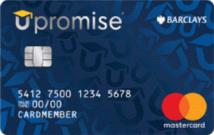

The Upromise® World Mastercard® Credit Card is a no-annual-fee education-focused cash-back credit card designed for parents, grandparents, students and other consumers who want everyday spending to contribute automatically toward college savings. Issued by Barclays Bank Delaware on the Mastercard network, the card earns 1.529% cash back rewards on eligible purchases when the associated Upromise Program account is linked to an eligible college savings plan and 1.25% cash back when it is not linked to a qualifying plan. New cardmembers can earn $100 in bonus cash back rewards after spending $500 on purchases during the first 90 days under the reviewed offer, and qualifying balance transfers completed within 45 days of account opening receive a 0% introductory APR for the first 15 billing cycles. The card also includes optional Upromise Round Up, added rewards opportunities through Upromise dining and MyGiftCardsPlus, no foreign transaction fee and complimentary online FICO Credit Score access. Its purpose-built savings automation is useful, but the earning rate trails several 2% cash-back competitors and the regular variable APR can be expensive. Approval is not guaranteed, and consumers will generally have stronger prospects with good to excellent credit, stable income, low revolving debt and a clean recent payment history. Rates, fees, rewards and promotional offers can change, so applicants should review the exact disclosures presented before applying.
- Excellent Dining Rewards
- Strong Grocery Rewards
- Dining Credits
- Large Welcome Bonus Potential
- No Foreign Transaction Fees
- High $325 Annual Fee
- Credits Require Effort
- Requires Good to Excellent Credit
- Spending Caps on Bonus Categories
- Value Depends on Using Credits
Favorable Details:
- Education-Savings Focus: Cash back can flow through the Upromise Program into an eligible linked college savings plan, helping families turn ordinary card spending into recurring education contributions.
- Enhanced 1.529% Reward Rate: Eligible purchases earn 1.529% cash back when the Upromise account is linked to an eligible college savings plan, with no rotating categories to activate.
- $0 Annual Fee: Cardholders can keep the account without paying a yearly card fee, preserving more of the rewards for savings goals.
- Attainable Welcome Bonus: The reviewed offer provides $100 in bonus cash back after $500 in purchases within the first 90 days, a relatively modest spending requirement for many households.
- Balance-Transfer Promotion: Qualifying balance transfers made within 45 days receive 0% introductory APR for the first 15 billing cycles, although a 5% transfer fee applies.
- Optional Upromise Round Up: Cardholders can set a monthly limit from $1 to $500 and have qualifying purchase amounts rounded to the next whole dollar, with the accumulated amount posted and converted into cash back rewards.
- No Foreign Transaction Fee: The card does not impose a foreign transaction fee, increasing its usefulness for international purchases and travel.
- Additional Upromise Opportunities: Registered dining purchases and eligible MyGiftCardsPlus transactions can generate added cash rewards beyond the card’s standard earning rate, subject to current program terms.
Unfavorable Details:
- Below-Market Flat Reward Rate: Even the enhanced 1.529% return is lower than the unlimited 2% offered by several no-annual-fee cash-back cards.
- Top Rate Requires Account Linking: Cardholders who do not link an eligible college savings plan earn only 1.25% cash back on eligible purchases.
- No Introductory Purchase APR: The promotional 0% rate applies to qualifying balance transfers, not new purchases, so the card is not an interest-free financing tool for tuition, books or other expenses.
- High Balance-Transfer Fee: Each transfer costs 5% with a $5 minimum, reducing the savings produced by the introductory APR.
- Slow and Structured Reward Access: Card rewards can remain pending before becoming earned, and automatic transfers require linked accounts and minimum balances that can delay access.
- High Ongoing Interest Costs: The reviewed regular variable APR reaches 29.49%, while cash advances carry a separate high APR and fee, making revolving debt costly.
Upromise World Mastercard Card Facts Table
| Feature | Details |
| Credit Card Issuer | Barclays |
| Payment Network | World Mastercard |
| Rewards Type | Cash Back Rewards Credit Card |
| Recommended Credit | Good to Excellent Credit Score (690-850) |
| Annual Fee or Price | $0 annual fee |
| Rewards | 1.529% with an eligible linked college savings plan; 1.25% without; Round Up and qualifying portal offers may add rewards |
| Welcome Bonus | $100 cash-back rewards after $500 in purchases within 90 days |
| Intro APR | 0% for 15 months on balance transfers posting within 45 days; no purchase intro APR |
| Regular APR | 18.49%–29.49% variable when reviewed |
| Balance Transfer Fee | 5%, minimum $5 |
| Foreign Transaction Fee | $0 |
| Best For | Families wanting automatic rewards directed toward eligible education savings |
| Notable Benefits | Upromise Round Up, free FICO score access and up to $250 yearly through eligible MyGiftCardsPlus activity |
Up to 1.529% Cash Back Toward College Savings
The defining feature of the Upromise World Mastercard is the ability to earn 1.529% cash back rewards on eligible net purchases when the cardmember’s Upromise Program account is linked to an eligible college savings plan. This unusual rate reflects the card’s education mission and provides a simple way to convert household spending into recurring savings without tracking quarterly categories or merchant codes. A family charging $2,000 per month in budgeted purchases could earn approximately $366.96 during a year at 1.529%, compared with $300 at a 1.25% rate and $480 on a 2% flat-rate card. The Upromise card therefore does not lead the market on raw reward value, but it can be attractive to consumers who place a premium on automatic savings behavior and might otherwise forget to make education contributions. Returns, refunds, balance transfers, cash advances, fees, interest and other nonpurchase transactions generally do not earn rewards, and the actual reward amount depends on the account’s linked status and program rules when the transaction is processed. The strongest user links an eligible plan, routes ordinary spending through the card, pays every statement in full and treats the rewards as a supplement to deliberate monthly college savings rather than as a complete funding strategy.
How the Upromise World Mastercard Works
The Upromise World Mastercard is an unsecured revolving credit account connected to a separate Upromise rewards account. Barclays establishes the credit limit and handles card billing, payments, interest, account servicing and credit decisions, while Upromise tracks program rewards and transfers earned amounts to verified linked accounts after applicable requirements are met. Purchases reduce available credit, and the monthly statement identifies the balance, minimum payment, due date, fees, interest and recent activity. Paying at least the minimum by the due date avoids immediate delinquency, but paying the full statement balance is normally the best approach because the card’s cash-back rate is much lower than its regular variable APR. Card rewards commonly appear as pending after Barclays reports them to Upromise and later become earned rewards before an automatic transfer can occur. A verified college savings, student loan, checking or savings account may be linked under current Upromise rules, although the 1.529% card rate specifically depends on satisfying the eligible college-savings-plan requirement in the card offer. The Mastercard can be used wherever the network is accepted, and no purchase must be education-related to earn the standard card reward, but the account remains ordinary debt that must be repaid regardless of its savings purpose.
$0 Annual Fee
The Upromise World Mastercard charges a $0 annual fee, which is important because the card’s highest standard reward rate is modest compared with leading flat-rate cards. With no yearly charge, a cardholder does not need to reach a spending break-even point before rewards produce positive gross value. A household earning $250 through ordinary purchases can direct the full $250 toward its linked savings destination before considering interest, transfer fees or optional program activity. The absence of an annual fee also makes the account easier to keep open over time, potentially supporting credit-history length when it remains active and responsibly managed. It does not make every transaction free: late-payment consequences, balance-transfer fees, cash-advance fees, interest and other charges can still apply, and a minimum monthly interest charge of $1 may be imposed when interest is assessed under the reviewed terms. Consumers should therefore judge the card on both explicit costs and opportunity cost. Using a 1.529% card instead of an available 2% card gives up about $47.10 per year for every $10,000 spent, so the automation and Upromise features should provide enough personal value to justify the lower return.
No Security Deposit
No security deposit is required because the Upromise World Mastercard is an unsecured consumer credit card. Barclays determines the approved credit line through underwriting rather than holding the cardholder’s money as collateral, so an applicant does not need to lock up $200, $500 or another deposit amount before making purchases. This structure differs from a secured credit card, where a refundable deposit commonly supports the line, and from a debit card, which withdraws money directly from a bank account. It also differs from a college savings plan itself: the credit card does not hold investment assets, determine tuition eligibility or replace the linked account, but instead generates cash rewards that can be transferred through the Upromise Program. The lack of collateral improves liquidity for approved consumers, yet it does not make approval easy for someone with limited or damaged credit. An unsecured rewards card may require a stronger profile than a secured credit-building product, and every authorized charge remains a legal repayment obligation. Consumers focused primarily on rebuilding should compare secured cards with lower qualification barriers before applying, while consumers who qualify should keep enough cash available to pay each statement in full.
Upromise Cash Back Rewards Program
The Upromise rewards structure combines credit-card cash back with a broader savings platform. Card purchases earn 1.529% when the program account is linked to an eligible college savings plan or 1.25% when it is not, and additional Upromise activities can produce separate rewards through participating online merchants, restaurants, travel partners or gift-card promotions. Card rewards typically appear in the Upromise account after the billing cycle, remain pending while the applicable parties validate and fund them, and later become earned rewards eligible for transfer. Upromise states that Mastercard rewards commonly appear within 15 days after the billing cycle and that pending rewards can take additional time to become earned, potentially up to 75 days depending on transaction timing. Once a verified linked account and minimum transfer requirement are in place, eligible earned rewards transfer automatically, generally during the first week of the month. This process supports disciplined saving but is less immediate than a conventional statement-credit program. Cardholders should monitor both the Barclays account and the Upromise rewards ledger, retain receipts for large purchases, investigate missing rewards promptly and avoid assuming that a pending amount is available for education expenses until the transfer has completed.
Linking an Eligible College Savings Plan
Linking an eligible college savings plan to the Upromise account is required to receive the card’s enhanced 1.529% cash-back rate, making account setup central to the product’s value. The cardholder must identify a supported plan, submit the requested account information, complete any verification steps and maintain an active link under Upromise rules. A 529 college savings plan offers tax-advantaged education saving when used according to federal and state requirements, but the Upromise World Mastercard does not provide tax advice, guarantee investment growth or determine whether a withdrawal will be qualified. Card rewards transferred into a plan become part of the account and may be invested according to the plan owner’s selected options, so market risk, fees and tax consequences can matter after the transfer. The plan owner should confirm that beneficiary information and linked-account details are correct before the first automatic deposit. If the link is removed, becomes inactive or no longer qualifies, new card purchases may earn the lower 1.25% rate. The card works best when the family already has an appropriate education-savings strategy and uses Upromise rewards as an incremental contribution rather than opening an investment account solely to recover an additional 0.279 percentage point in cash back.
Upromise Round Up
Upromise Round Up is an optional feature that allows cardholders to set a monthly limit from $1 to $500 and have the cents from eligible purchases accumulated toward that limit. Rather than altering each merchant charge, Upromise calculates the amount needed to round qualifying purchases to the next whole dollar and posts the total Round Up Amount as a separate purchase near the end of the billing cycle, then converts that amount into cash back rewards subject to the program rules. If a cardholder makes a $10.60 purchase, the round-up component is $0.40; similar amounts accumulate until the chosen monthly limit is reached. The feature can automate extra savings, but the posted Round Up Amount increases the credit-card balance and is funded by the cardholder, so it should not be mistaken for free issuer-provided cash back. A $50 monthly round-up creates $600 in annual contributions before any investment result, while the normal card reward earned on that posted amount adds only a small supplement. Users should choose a limit that fits cash flow, monitor the end-of-cycle charge and leave the default at $0 if they prefer to make direct college savings contributions without routing extra money through a credit card.
Upromise Dining and MyGiftCardsPlus Rewards
The broader Upromise platform can add value beyond the card’s standard flat-rate earnings. Registered participants may earn 2.5% cash back through the Upromise dining program at participating restaurants, with the rate increased to 5% when the bill is paid using the Upromise World Mastercard under current program information. MyGiftCardsPlus can provide additional monthly cash rewards when cardholders purchase eligible gift cards and pay with the Upromise card, with published promotional amounts that can total up to $250 per calendar year when all conditions are satisfied. These opportunities are administered through Upromise and require the correct merchant, registration, payment method, transaction amount and program status. Gift cards should be purchased only for merchants the household already uses because unused balances, retailer closures and lost cards can erase the benefit, and buying a gift card merely to trigger a bonus shifts spending forward rather than creating savings. Restaurant lists and promotional thresholds can change, so users should confirm eligibility before paying. When carefully managed, these programs can help the card outperform its 1.529% headline rate, but they require more tracking than a simple 2% flat-rate card and should be treated as optional supplements rather than guaranteed annual value.
No Rotating Reward Categories
The Upromise World Mastercard does not use quarterly rotating categories, activation deadlines or a standard seasonal spending cap. Eligible purchases earn the applicable 1.529% or 1.25% card rate regardless of whether the merchant is a grocery store, gas station, utility, retailer or travel provider, which makes the basic earning structure predictable. This simplicity is useful for families that want an automated education-savings contribution and do not want to reorganize spending every three months. The broader Upromise platform can still involve merchant-specific programs, registration steps and promotional limits, especially for dining and gift-card bonuses, but those features sit on top of the card’s standard earning rate rather than replacing it. A consumer can ignore optional offers and continue earning on ordinary purchases, although doing so may widen the performance gap between this card and higher-rate competitors. The central management task is not category activation but maintaining an eligible linked college savings plan so the top rate applies. Cardholders should review their reward statements periodically because a simple flat-rate program can still change, and an inactive or unverified link can reduce the return without changing how the physical card is used.
Rewards Limits
The standard Upromise World Mastercard cash-back rate is generally presented without a spending cap, allowing eligible purchases to continue earning throughout the year. However, unlimited earning does not mean every transaction qualifies or every related program benefit is uncapped. Returns, refunds, balance transfers, cash advances, interest, fees, unauthorized charges, cash equivalents and similar nonpurchase transactions generally do not earn card rewards, and separate programs such as MyGiftCardsPlus can impose monthly thresholds and annual bonus limits. Upromise also limits the amount transferred to linked accounts during a monthly transfer cycle, with current program information listing a $5,000 maximum; any eligible remainder can carry forward. A family charging $30,000 in qualifying purchases at 1.529% could earn approximately $458.70 before other Upromise rewards, but that result assumes the college savings link remains eligible and every purchase stays posted. Excessive spending undertaken only to generate rewards is financially counterproductive, and artificial or abusive activity can lead to account restrictions or reward forfeiture. The cardholder should compare expected reward amounts with the ledger after each cycle and contact the proper servicer when a transaction appears missing or the linked rate is not applied.
Redeeming Upromise Rewards
Upromise rewards are designed for automatic transfer rather than unrestricted on-demand statement-credit redemption. Cardholders first connect and verify an eligible destination, such as a supported 529 college savings plan or, under current program rules, another qualifying linked account. Earned rewards generally transfer during the first week of each month once the account meets its minimum requirement. The current minimum is typically $50 for a 529 college savings plan, student loan account or other specified education account and $10 when only a checking or savings account is linked; multiple linked accounts can change the requirement, and distributions are generally divided evenly among active verified accounts. A cardmember earning 1.529% would need about $3,270 in eligible purchases to generate $50 from card rewards alone, so a family with modest spending may wait several months for a 529 transfer unless it also earns shopping or dining rewards. Most completed transfers are expected within several business days, but certain plans can take longer. Users should verify account numbers, watch transfer status and remember that moving rewards to checking instead of a qualifying college savings plan may affect the card’s future enhanced earning eligibility.
Rewards Expiration
Upromise rewards do not expire while the Upromise account remains active and in good standing under the Member Agreement, but inactive, closed, terminated, fraudulent or abusive accounts can forfeit untransferred rewards. Closure requires special care because pending rewards and earned amounts below the applicable transfer minimum may be lost. A cardholder planning to cancel should first stop new purchases, contact Barclays to close the credit-card account, allow approximately four to six weeks for final card rewards to reach Upromise, confirm that pending rewards have become earned and ensure a verified linked account is ready to receive the transfer. Upromise currently indicates that an earned balance of at least $50 with one linked 529 plan or at least $10 with one linked checking or savings account can transfer after a closure request, while smaller or pending amounts may be forfeited. The safest practice is to keep the account active, monitor the rewards ledger and allow automatic transfers to occur rather than storing a large balance. Cardholders should also distinguish closing the Mastercard from closing the Upromise membership because the two systems are related but separately serviced, and terminating one does not automatically complete every step for the other.
Welcome Bonus
The reviewed offer provides $100 in bonus cash back rewards after a new cardmember spends $500 on purchases within the first 90 days of account opening. The requirement averages about $167 per month for three months, making it easier to reach with normal groceries, utilities or other planned expenses than bonuses requiring several thousand dollars. If the $500 also earns 1.529%, regular rewards would add approximately $7.65, producing about $107.65 in gross first-period value before any optional Upromise bonuses. The bonus is not earned merely by receiving approval, and excluded transactions such as balance transfers, cash advances, fees, returned purchases and cash equivalents generally do not count toward qualifying spend. Applicants may be ineligible based on previous participation, account history or offer-specific restrictions, and different application channels can display different promotions. Cardholders should save the offer shown during application, note the opening date, track net posted purchases and avoid waiting until the final days, when a transaction might not post in time. Most importantly, a consumer should never spend an unnecessary $500 or carry interest-bearing debt for a $100 reward, because the net financial result would be negative.
Introductory APR
The Upromise World Mastercard offers 0% introductory APR on balance transfers for the first 15 billing cycles when each qualifying transfer is made within 45 days of account opening. The promotion can reduce interest while a cardholder repays eligible debt, but every transfer carries a 5% fee with a $5 minimum. Moving a $5,000 balance would therefore cost $250 immediately, so the consumer should compare that fee with the interest expected to be avoided and divide the full transferred amount plus fee by the remaining promotional months. A $5,250 total balance repaid over 15 equal cycles requires roughly $350 per cycle before new purchases or other charges. The promotion does not cover purchases, and mixing purchases with a transferred balance can complicate grace-period treatment and interest calculations. Transfers that post after the 45-day window receive the regular variable APR instead of the introductory rate. Any balance remaining after the promotional cycles also becomes subject to the applicable ongoing APR. Cardholders should continue paying the old issuer until the transfer confirms, avoid adding new debt and schedule payments large enough to finish before the 0% period ends.
Variable Purchase APR
The reviewed ongoing variable APR for purchases and post-promotional balance transfers ranges from 18.49% to 29.49%, depending on Barclays’ review of the applicant’s creditworthiness and other factors. Because the APR moves with the Prime Rate, it can change after account opening even when the cardholder pays as agreed. At a hypothetical 25% APR, maintaining a $3,000 average balance for a year could create roughly $750 in simple annualized interest before daily balance changes and compounding, far more than the approximately $45.87 earned at the 1.529% reward rate. Cash advances are more expensive, with a reviewed 29.74% variable APR plus a 5% fee and a $10 minimum, and interest usually begins without the normal purchase grace period. The minimum monthly interest charge is $1 when interest is imposed under the reviewed terms. Applicants should treat the assigned APR as a warning about the cost of debt rather than as a feature to optimize. The card creates value only when balances are paid in full or a qualifying transfer is repaid within its promotion; using it to finance education expenses at the regular APR undermines the savings purpose.
Paying the Balance in Full
Paying the full statement balance by the due date is the most reliable way to protect the Upromise World Mastercard’s cash-back value and generally avoid interest on eligible purchases when the account retains a grace period. The statement balance covers transactions in the completed billing cycle, while the current balance can include newer purchases that are not yet due. Automatic full-statement payment can reduce missed-payment risk, but the linked bank account must contain enough money on the withdrawal date, and the cardholder should review the statement for errors before payment. Carrying a balance is especially damaging on this card because the reward rate is at most 1.529% on ordinary purchases while the regular APR can approach 30%. A $2,000 purchase earns approximately $30.58 at the enhanced rate, yet even one month of substantial interest can consume much of that reward. Paying only the minimum extends repayment and keeps utilization elevated. Families should set card spending based on available cash, not the college-savings goal or credit limit, and should pause the card and Round Up feature if the next statement cannot be paid in full.
Building Credit With the Upromise World Mastercard
Responsible Upromise World Mastercard use may support credit building because Barclays generally reports revolving-account activity to the major credit bureaus. On-time payment history, low reported balances and a long-standing account can contribute positively to a consumer’s overall profile, while late payments, high utilization, default or charge-off activity can cause harm. No specific score increase is guaranteed, and opening the account may initially add a hard inquiry and lower average account age. A cardholder does not need to carry a balance or pay interest to build credit; one or two affordable recurring purchases, a statement balance well below the limit and automatic full payment are sufficient to establish activity. The college-savings theme should not distract from core account management, because education rewards cannot offset a serious delinquency. Consumers should review all three credit reports for accurate Barclays reporting, correct errors promptly and keep their Upromise and issuer login information current. The card can be a useful long-term account for someone who already qualifies, but applicants with damaged credit should not treat it as a guaranteed rebuilding product or apply repeatedly after denial.
Reports to the Major Credit Bureaus
Barclays generally reports consumer credit-card activity to Equifax, Experian and TransUnion, allowing the Upromise World Mastercard to affect credit decisions beyond the Upromise platform. Reported information can include the opening date, credit limit, statement balance, payment status and any delinquency, although the timing of bureau updates can differ. Positive reporting may strengthen a file when the account is paid on time and balances remain controlled, while a payment that becomes seriously late can remain on reports for years. New cardholders should check their reports after the first several cycles to confirm that the account appears correctly and should dispute factual errors through appropriate issuer and bureau procedures. The linked college savings plan and Upromise reward transfers are separate from the revolving trade line and are not themselves a substitute for card payment. A transfer into a 529 does not reduce the Mastercard balance unless the cardholder separately pays Barclays. Authorized-user reporting, if available, can follow additional rules and should be verified before another person relies on it. Credit-building results depend on the entire file, so accurate reporting is helpful but does not guarantee approval for future credit.
Keeping Credit Utilization Low
Credit utilization compares reported revolving balances with credit limits and can be measured for the Upromise World Mastercard individually and across all cards. If the card has a $4,000 limit and reports a $1,200 statement balance, individual utilization is 30%; paying the balance down to $400 before the statement closes would reduce the ratio to 10%. Lower utilization is generally viewed as less risky than repeatedly approaching the limit, but no single percentage guarantees a score outcome. Families using the card for large tuition-related or household expenses should remember that the purchase need not be education-related to earn rewards, yet a large balance can still temporarily affect the credit profile. Useful strategies include making an early payment before the closing date, setting a balance alert and spreading only necessary spending across existing cards without adding debt. Paying by the due date protects payment history and can avoid interest, while paying before the statement closes influences the amount likely to be reported; the two dates serve different purposes. The optional Round Up charge also increases the balance, so its monthly limit should remain modest when utilization is a concern.
Credit Line Increases
Barclays may approve a higher Upromise World Mastercard credit line after reviewing account age, payment performance, current balances, stated income, overall debt, credit-report changes and internal exposure limits, but no automatic schedule or outcome is guaranteed. A cardholder should manage the original line as if it may remain unchanged and should avoid using most of it merely to increase college-savings rewards. Before requesting an increase, confirm whether the request will involve a hard or soft credit inquiry, update income information accurately and pay down existing balances. A larger limit can lower utilization when spending remains constant; for example, a $500 reported balance equals 25% on a $2,000 limit but 10% on a $5,000 limit. That advantage disappears if the cardholder raises spending to match the new limit. Repeated requests, recent inquiries, late payments or high utilization may reduce approval chances. Families anticipating a major charge should not assume a line increase will arrive before the purchase or open several accounts to create spending capacity. The best reason to seek a higher line is improved flexibility and utilization management within an unchanged budget, not access to additional debt.
Good to Excellent Credit Applicants
The Upromise World Mastercard is most naturally suited to applicants with good to excellent credit, although Barclays does not publish a guaranteed minimum score. A FICO score around 670 or higher is a reasonable editorial starting point, but successful underwriting can depend on payment history, utilization, recent applications, account age, income, housing obligations, total debt, derogatory information and the applicant’s existing relationship with Barclays. A score above 740 can strengthen a profile but does not ensure approval, while a lower score accompanied by stable income and clean recent behavior may still receive consideration. The no-annual-fee structure, balance-transfer offer and rewards program can attract established borrowers, so consumers with recent late payments, maxed-out cards or multiple new accounts should improve those conditions before applying. Checking all three reports, correcting errors and reducing revolving balances can help present a more stable file. The ideal applicant has both the credit strength to qualify and a genuine plan for the rewards, preferably an active eligible college savings account. Applying only because the card says “college savings” does not overcome weak credit, insufficient income or unaffordable existing debt.
Applying for the Upromise World Mastercard
Consumers can apply through the Upromise World Mastercard offer page, which routes the application to Barclays for underwriting. The form typically requests legal name, address, date of birth, Social Security number or other taxpayer identification details, employment status, income, housing information and contact data. Applicants should sign in to or establish the appropriate Upromise relationship, confirm that an eligible savings account can be linked and review the exact card offer before submitting. A completed application generally authorizes a hard credit inquiry, which can temporarily affect the credit profile, and Barclays may approve, deny or request additional verification. If approved, the issuer determines the credit limit and APR within the disclosed range; those terms can differ from another applicant’s result. The card and Upromise account require separate attention, so approval alone does not guarantee that the 1.529% rate will apply until the eligible plan link is active. Applicants should save the welcome-offer disclosures, note the 45-day balance-transfer deadline and use only accurate income information. Frozen credit reports may need to be temporarily lifted before the issuer can complete its review.
Checking Eligibility Before Applying
Prospective applicants should first check whether Barclays currently presents a pre-qualification option that includes the Upromise World Mastercard, because available products and marketing channels can vary. A genuine pre-qualification process generally uses a soft credit inquiry and can show possible eligibility without affecting standard scores, but a generic Barclays tool may not display every co-branded card and an Upromise offer may still require a full application. Pre-qualification never guarantees final approval, credit limit, APR or welcome bonus because identity verification, updated credit data, income and issuer policies can change the result. If no dedicated eligibility check is available, the consumer should estimate readiness by reviewing credit reports, recent inquiries, utilization, payment history and ability to repay. Applying for multiple alternatives in quick succession after a denial can add inquiries and weaken future approval prospects. When an adverse-action notice is issued, it can identify key factors that influenced the decision and provide instructions for obtaining the relevant report. The best application timing is after balances are low, income information is current and the consumer has confirmed that the education-savings feature is worth accepting a new account.
Consumers Building Credit
Consumers with a limited credit history may appreciate the Upromise World Mastercard’s $0 annual fee and straightforward spending rewards, but approval may be challenging because the card is not specifically marketed as an entry-level product. A thin-file applicant with verifiable income and clean payment history may qualify, yet no student or first-credit guarantee applies. If approved, the consumer can use the card for one predictable bill, keep the statement balance low, enable alerts and pay the full amount automatically from a funded checking account. The Upromise savings connection may encourage a useful long-term habit, but building credit requires consistent repayment rather than a large number of transactions or a high balance. Consumers who cannot pre-qualify or who receive a denial should compare secured cards, student cards or basic products designed for limited credit instead of submitting repeated applications. A secured card can require a deposit but may provide clearer approval criteria and the same opportunity to establish positive payment history. The Upromise card is most appropriate as a first rewards account when the applicant already has enough financial stability to pay in full and manage both card and savings-platform requirements.
Consumers Rebuilding Credit
The Upromise World Mastercard is generally not the best primary option for consumers rebuilding after recent delinquencies, collections, charge-offs, bankruptcy or very high utilization. Its unsecured rewards structure appears aimed at stronger profiles, and the regular variable APR creates considerable risk if a rebuilding consumer carries a balance. Approval, when available, could add positive payment and utilization data, but the account cannot remove accurate negative history and does not guarantee a score increase. A secured card with a refundable deposit, a low-fee card designed for fair credit or a credit-builder loan may offer a more predictable path while the consumer stabilizes. Before applying, the individual should bring current obligations under control, correct report errors, establish emergency savings and avoid using credit for college expenses that cannot be repaid. The 0% balance-transfer offer may appear attractive, but qualification, transfer limits and the 5% fee reduce its usefulness for someone already under financial strain. The Upromise card becomes more reasonable after the credit file has recovered, existing balances are low and education rewards can be earned without increasing debt.
First-Time Cash Back Credit Card Users
The Upromise World Mastercard can be manageable for a first-time cash-back user because it has no annual fee, a consistent reward rate and no rotating categories, but the linked-account system is more involved than a conventional statement-credit card. A beginner must understand the difference between pending and earned rewards, verify a destination account, meet the applicable transfer minimum and maintain an eligible college savings link to receive 1.529% instead of 1.25%. The card’s $100 bonus has an attainable $500 requirement, yet the user should meet it only with normal spending and pay the statement in full. Automatic payment, balance alerts and a monthly budget should be established before enabling Round Up, since the feature posts additional card spending rather than free money. The card is a good teaching tool for a family focused on education savings, but a 2% flat-rate card with immediate statement credits may be simpler and more rewarding for someone who values flexibility. Beginners should review the first three statements carefully, confirm the linked reward rate and remember that neither the 529 contribution nor the Upromise transfer substitutes for paying the Barclays balance.
Students and Young Adults
Students and young adults may like the Upromise World Mastercard’s education theme, $0 annual fee and no foreign transaction fee, but the card is not a dedicated student product and may require a stronger credit file than many first-time applicants possess. Federal ability-to-pay rules can make independent income especially important for applicants under age 21. A student who qualifies can use the card for a small recurring expense, direct rewards toward an eligible savings or student-loan destination under current Upromise rules and establish positive payment history through responsible use. However, 1.529% cash back is not a substitute for scholarships, grants, a tuition budget or disciplined borrowing, and the 0% balance-transfer promotion should not be confused with interest-free purchases. Student cards may offer broader approval standards, higher rewards in dining or entertainment and bonuses with smaller requirements, while secured cards can provide a fallback for a thin or damaged file. Young users should avoid Round Up until they understand monthly cash flow, pay every statement in full and keep utilization low. The Upromise card is best for a financially organized student or young adult who already has a qualifying savings relationship and values automation.
International Purchases
The Upromise World Mastercard charges no foreign transaction fee, so Barclays does not add the common 3% surcharge to purchases processed outside the United States. Mastercard acceptance makes the physical card useful at many international merchants, and contactless or mobile-wallet support may provide additional convenience where available. The card’s 1.529% enhanced rate can therefore remain positive abroad, whereas a 3% foreign transaction fee would more than erase the rewards. Travelers should still decline dynamic currency conversion when a merchant offers to charge in U.S. dollars, because the merchant’s exchange rate can be worse than Mastercard’s even when the card itself charges no foreign fee. A backup card and some local currency remain sensible for merchants that do not accept Mastercard or when network access fails. Cash advances abroad are expensive due to the 5% fee, $10 minimum, high variable APR and possible ATM operator charges, so a debit card designed for low-cost withdrawals is usually better. Cardholders should keep contact details current, set travel or fraud alerts when available and review transactions promptly. The card’s travel value is fee savings, not premium insurance or lounge benefits.
Digital Account Management
Upromise World Mastercard users manage two connected experiences: the Barclays credit-card account and the Upromise rewards platform. Barclays tools provide statements, payments, transaction history, alerts, card controls and access to a complimentary FICO Credit Score, while Upromise shows pending rewards, earned rewards, linked accounts and transfer activity. Card rewards may not appear immediately in Upromise, so the cardholder should reconcile a Barclays statement with the Upromise ledger after the expected processing period rather than assuming a missing reward is permanent. Automatic statement-balance payment can prevent interest, and balance or due-date alerts can reduce overspending and missed payments. The Upromise Profile should be checked after any change to a 529, bank or student-loan account so future transfers do not fail. Users with multiple linked destinations should understand that rewards are generally divided evenly and that the transfer schedule cannot be customized. Strong digital management means reviewing both systems at least monthly, downloading important records and updating security settings. A consumer who prefers one simple app may find this split more cumbersome than a standard cash-back card, but savers who value automation may consider it worthwhile.
Security and Fraud Monitoring
The Upromise World Mastercard includes standard security layers associated with Barclays and the Mastercard network, including chip technology, account alerts, transaction monitoring and $0 fraud liability for qualifying unauthorized charges, subject to cardmember terms and timely reporting. Cardholders should use a unique password for both Barclays and Upromise, enable multifactor authentication when offered and avoid sharing one-time security codes with anyone who initiates contact. A lost or stolen card should be locked or reported immediately through official servicing channels, and suspicious transactions should be documented and disputed promptly. The Upromise link adds another set of sensitive financial details because college savings and bank account information may be stored for transfers, so users should verify messages through the official site rather than clicking unexpected links. A fraudster claiming that a reward transfer failed may attempt to obtain account credentials, and genuine support should not require the cardholder to disclose a password or full authentication code. Consumers should review credit reports and both account ledgers regularly. Security protections can reduce liability, but they do not replace careful monitoring, strong device security or the responsibility to safeguard authorized-user cards and linked accounts.
Upromise World Mastercard vs. Fidelity Rewards Visa Signature Card
The Fidelity Rewards Visa Signature Card is the closest broad-market competitor because it also converts everyday credit-card rewards into contributions to eligible financial accounts, including Fidelity-managed 529 college savings plans. Fidelity provides unlimited 2% cash back when points are deposited into an eligible Fidelity account, compared with 1.529% on the Upromise World Mastercard when linked to an eligible college savings plan and 1.25% otherwise. Both cards have no annual fee and no foreign transaction fee, but Fidelity generally wins on raw earnings: $20,000 in eligible annual purchases produces about $400 at 2% versus $305.80 at 1.529%, a difference of $94.20. Upromise can narrow the gap through its $100 welcome offer, Round Up, participating dining and MyGiftCardsPlus bonuses, while Fidelity supports a wider range of eligible investment and savings destinations and offers simpler high-rate earning. Upromise also includes a 0% introductory balance-transfer period under the reviewed offer, whereas a consumer should check Fidelity’s current financing terms separately. The better card depends on whether the household values Upromise’s specialized education platform and partner programs or prefers a higher automatic return inside a Fidelity relationship.
Upromise World Mastercard vs. Wells Fargo Active Cash Card
The Wells Fargo Active Cash Card earns unlimited 2% cash rewards on eligible purchases with no annual fee and currently advertises a $200 bonus after $500 in purchases within three months, making it materially stronger than the Upromise card on both ongoing flat-rate earnings and the reviewed welcome offer. Active Cash also offers 0% introductory APR for 12 months on purchases and qualifying balance transfers, while Upromise limits its 0% promotion to balance transfers for 15 billing cycles and requires them within 45 days. Upromise has two important advantages: no foreign transaction fee and a direct education-savings framework that can move rewards into a linked 529 plan. Wells Fargo generally charges a foreign transaction fee and uses flexible cash rewards rather than a purpose-built college platform. On $15,000 in annual spending, Active Cash earns about $300, while Upromise earns approximately $229.35 at 1.529%, leaving a $70.65 gap before partner bonuses. A disciplined saver could transfer Active Cash rewards manually into a 529 and come out ahead, but automation has behavioral value for households that might not complete the transfer. Upromise suits goal-based savers; Active Cash suits consumers prioritizing maximum simplicity and general-purpose value.
Upromise World Mastercard vs. Citi Double Cash Card
The Citi Double Cash Card earns unlimited 2% cash back on eligible purchases—1% when the purchase is made and another 1% as it is paid—while the Upromise World Mastercard earns up to 1.529% based on an eligible college savings link. Both have no annual fee and can support a balance-transfer strategy under current offers, although promotional lengths, deadlines, fees and purchase-interest treatment should be reviewed carefully. Citi offers more flexible reward redemption through statement credits, direct deposit, checks or ThankYou Points, while Upromise emphasizes automatic transfers to linked savings, student-loan or bank destinations after minimum requirements are reached. Citi’s higher earning rate creates about $47.10 more value for every $10,000 of eligible spending than Upromise’s top rate. Upromise counters with no foreign transaction fee, a $100 low-spend welcome bonus under the reviewed offer, Round Up and additional education-focused partner rewards. Consumers who reliably transfer cash into a 529 themselves will often prefer Citi’s higher base return, while someone who needs a dedicated savings mechanism may value Upromise’s structure. Neither card is suitable for carrying long-term purchase debt when the regular APR applies, and both should be evaluated using net value after any transfer fees or interest.
Upromise World Mastercard vs. Traditional Cash-Back Credit Cards
Traditional cash-back cards commonly provide unlimited 1.5% to 2% on all eligible purchases or 3% to 5% in selected categories such as groceries, dining, gas or travel. The Upromise World Mastercard’s maximum 1.529% rate is competitive with a basic 1.5% card but falls below a 2% product and well below category rates when a household can use them consistently. Its distinguishing value is not category leadership but the connection between card rewards and education savings, plus optional Round Up and partner bonuses. A traditional card usually offers more flexible statement-credit or deposit redemptions, while Upromise can delay access until rewards become earned and reach the applicable transfer minimum. On the financing side, Upromise’s 15-billing-cycle balance-transfer promotion is useful, but the 5% fee is relatively high and there is no introductory purchase APR. Its no annual fee and no foreign transaction fee are competitive strengths. Consumers comfortable with moving rewards manually can pair a higher-rate card with a 529 plan and potentially save more. Consumers who benefit from automatic behavior and already use the Upromise platform may accept the lower rate because the system converts spending into visible education progress without repeated manual decisions.
Is the Upromise World Mastercard Good for College Savers?
Yes, the Upromise World Mastercard can be good for college savers who already maintain an eligible plan, value automated transfers and use Upromise dining, shopping or gift-card programs enough to supplement the modest base rate. The 1.529% return is straightforward, the $0 annual fee preserves long-term value and Round Up can turn small amounts into recurring contributions. The card is less compelling for a highly disciplined household that can earn 2% or more elsewhere and manually deposit those rewards into a 529, because the opportunity-cost difference can become meaningful at higher spending levels. A family spending $25,000 annually gives up approximately $117.75 compared with a 2% card before considering partner rewards. College savers should also remember that credit-card rewards are small relative to tuition costs and should complement direct monthly contributions, tax planning, financial aid strategy and appropriate investments. Carrying a balance would undermine the savings objective because interest can exceed rewards many times over. The ideal user wants a purpose-built system, pays in full, keeps the linked plan active and views Upromise as a behavioral tool rather than the highest possible cash-back card.
Is the Upromise World Mastercard Good for Beginners?
The Upromise World Mastercard can be good for a beginner with sufficient credit, stable cash flow and a genuine college-savings goal, but it is not the simplest first card. Its $0 annual fee, consistent reward rate, modest welcome-bonus requirement and no rotating categories are beginner-friendly. The complications are the separate Upromise account, eligible plan link, pending-reward period, transfer minimum and optional Round Up charge. A first-time user should begin with one small recurring expense, verify that purchases earn at the correct rate, leave Round Up disabled until the first statements are understood and enable automatic full payment. A basic student card, secured card or 2% cash-back card may be more accessible or flexible for someone with limited history. The Upromise card is a better fit when a parent or young adult already knows which 529 or related account will receive rewards and can manage the two-account system. Beginners must also understand that a 0% balance-transfer offer is not a purchase promotion and that carrying ordinary purchases at the regular APR can erase years of savings. Careful management, not the education branding, makes the card safe for a new user.
Is the Upromise World Mastercard Good for Rebuilding Credit?
The Upromise World Mastercard is usually not the best card for rebuilding credit because it does not offer a secured version and appears designed for applicants with good to excellent credit. Responsible use could contribute positive payment history and lower utilization if a rebuilding consumer is approved, but no credit-score improvement is guaranteed and the account cannot delete accurate negative items. The regular variable APR and cash-advance costs create serious risk for someone already managing high balances, while the 1.529% reward is too small to justify new debt. A secured card with a refundable deposit, low fees and reporting to all three bureaus may provide a more predictable route, and a credit-builder loan can add installment history when appropriate. Consumers should first stabilize past-due accounts, review reports for errors, build emergency savings and reduce utilization. If Barclays offers a soft-pull eligibility check that includes Upromise, it may reduce unnecessary inquiry risk, but a full application can still be declined. The card becomes more suitable after the credit profile has recovered and the consumer can pay statements in full, not while the person is relying on credit for tuition or living expenses.
Is the Upromise World Mastercard Worth It?
The Upromise World Mastercard is worth it when its automatic savings behavior and additional Upromise programs create more practical value for the household than the higher nominal rate of another card. There is no annual fee, so the formal break-even point is zero, but opportunity cost remains. At $20,000 in annual eligible spending, the card earns about $305.80 at 1.529%, compared with $400 from a 2% card, leaving a $94.20 gap. The first-year $100 welcome bonus can temporarily offset that difference, and dining or MyGiftCardsPlus bonuses can add further value if they match purchases the family would make anyway. Round Up can increase savings but uses the cardholder’s own money and should not be counted as free reward value. The card is clearly worthwhile for a consumer who needs an automatic system, keeps an eligible plan linked, earns partner bonuses and pays in full. It is less worthwhile for someone without a qualifying plan, because the rate drops to 1.25%, or for a disciplined optimizer who can route flexible 2% rewards into a 529 manually. Interest, fees and unnecessary spending must always be subtracted from the calculation.
Credit Requirements
Barclays does not publish a guaranteed minimum score for the Upromise World Mastercard, but applicants should generally target good to excellent credit. A score around 670 may enter the broad good-credit range, while a score above 700 or 740 can strengthen the application, yet no number alone determines approval. The issuer may consider payment history, revolving utilization, total debt, income, housing obligations, recent inquiries, new accounts, average account age, derogatory events and existing Barclays exposure. A high score can be outweighed by unstable income or excessive obligations, while a lower score may be supported by strong recent behavior and manageable debt. Applicants should review all three reports, correct errors, reduce card balances and avoid unnecessary new credit before applying. They should also confirm that the Upromise link and education-savings purpose justify using a hard inquiry. The approved APR and credit line can vary significantly by applicant, and the top of the reviewed APR range is expensive. The best candidate has not only sufficient creditworthiness but also enough cash flow to pay statements in full and continue direct education contributions independently of card rewards.
Credit-Building Strategy
A disciplined credit-building strategy with the Upromise World Mastercard starts with a small monthly spending plan and a verified rewards destination. Charge only normal expenses that could be paid immediately with cash, keep the reported balance well below the limit and schedule automatic payment of the full statement balance. Use account alerts to track purchases, due dates and balance thresholds, and review both Barclays and Upromise activity after every cycle. If utilization rises before the statement closes, an early payment can reduce the amount likely to be reported, but emergency savings should not be depleted merely to create a temporary score effect. Keep the eligible college savings plan active so rewards post at 1.529%, yet continue making deliberate plan contributions instead of relying on card cash back. Review credit reports periodically for accurate account data and dispute genuine errors. Do not carry a balance to demonstrate repayment ability, because interest is unnecessary for credit building. Avoid multiple applications, and request a line increase only after understanding the inquiry policy. Long-term consistency matters more than the welcome bonus, Round Up amount or number of monthly transactions.
Avoiding Excessive Debt
The education-savings mission of the Upromise World Mastercard can make spending feel constructive, but every purchase still creates debt before it generates a small reward. A $1,000 purchase at the 1.529% rate earns only $15.29, leaving $984.71 to be repaid before tax or interest. Carrying that balance at a high variable APR can erase the reward quickly, and using the card for tuition without a repayment plan can turn a savings tool into expensive education debt. Cardholders should base spending on their household budget, not the credit limit, the welcome bonus or the desire to increase 529 transfers. Round Up should remain within an amount that could be contributed directly from checking, and gift cards should be purchased only for near-term planned use. If balances begin increasing, stop new charges, disable Round Up, direct available rewards to an eligible linked account and create a fixed repayment plan. Families should maintain emergency savings separately so an unexpected expense does not force them to revolve the card. The most valuable contribution to a student’s future may be avoiding high-interest household debt, even when that choice results in fewer Upromise rewards.
Long-Term Value
The Upromise World Mastercard can provide durable value as a no-annual-fee account for families that remain engaged with the Upromise ecosystem and maintain an eligible college savings plan. Automatic monthly transfers can create a visible savings habit, the welcome bonus offers a useful first-year start and partner programs can add value beyond the 1.529% rate. The main long-term weakness is that higher-earning 2% cards can contribute more to the same goal when the cardholder is disciplined enough to transfer rewards manually. Families should compare annual Upromise earnings, dining and gift-card bonuses, lost reward opportunity and the convenience of automation before each year. As a child approaches college or the linked plan changes, the household should confirm that the destination remains active and appropriate. The $0 annual fee can make keeping the card open reasonable for account-age purposes, but inactive accounts can be closed by an issuer and unused Upromise rewards may face forfeiture if program requirements are not maintained. Long-term success depends on paying in full, protecting linked-account information, reviewing program changes and using rewards as a small supplement to direct savings, financial aid and responsible education planning.
Final Verdict
The Upromise World Mastercard is a specialized no-annual-fee cash-back card that prioritizes consistent education-saving behavior over maximum everyday rewards. Its 1.529% return with an eligible linked college savings plan, $100 bonus after $500 in purchases during the first 90 days, optional Round Up feature, added Upromise partner opportunities, no foreign transaction fee and 15-billing-cycle balance-transfer promotion create a useful package for the right family. Its weaknesses are equally important: the enhanced rate trails 2% competitors, unlinked users earn only 1.25%, rewards can take time to become transferable, the 529 transfer minimum can delay deposits and the 5% balance-transfer fee reduces promotional savings. The card is best for parents, grandparents or students who already use Upromise, want automatic contributions and will pay every statement balance in full. Consumers focused entirely on reward maximization can often earn more with a flat 2% card and deposit the proceeds into a 529 themselves. Used responsibly, the Upromise World Mastercard can turn routine purchases into steady, visible progress toward education goals, but it should support a broader savings plan rather than replace direct contributions or justify additional spending.