
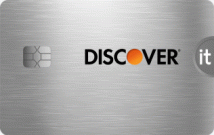

The Discover it® Chrome Credit Card is a straightforward cash-back credit card designed for consumers who want to earn rewards on everyday purchases without paying an annual fee, with particular emphasis on gas stations and restaurants. Unlike a secured card, the Discover it Chrome is an unsecured credit card intended for applicants with an established credit profile, and its simple rewards structure can make it appealing to people who prefer predictable cash back rather than complicated points systems or premium travel benefits. The card offers 2% cash back at gas stations and restaurants on up to a combined quarterly purchase limit, followed by 1% cash back on additional eligible purchases, while eligible new cardmembers can also receive Cashback Match at the end of their first year. With no annual fee and no foreign transaction fee, the card can be useful for consumers who want a relatively simple rewards card for fuel, dining and everyday expenses. The Discover it Chrome is particularly worth considering for consumers who value an easy-to-understand cash-back structure and want to avoid paying an annual fee, although shoppers who spend heavily in other categories may find that a rotating-category or higher-rate cash-back card provides greater rewards potential.
- Strong Rewards on Dining and Travel
- Flexible Chase Ultimate Rewards
- Affordable $95 Annual Fee
- 25% Travel Redemption Bonus
- Primary Rental Car Insurance
- No Airport Lounge Access
- Limited Bonus Categories
- No Intro APR Offer
- No Premium Travel Credits
- No In-Person Branch Support
Favorable Details:
- 2% Gas and Restaurant Rewards: Earn 2% cash back on the first $1,000 in combined eligible U.S. gas station and restaurant purchases each calendar quarter without activation.
- Unlimited Cashback Match: Eligible new cardmembers receive an automatic dollar-for-dollar match of qualifying cash back earned during their first 365 days, with no traditional published maximum.
- Unlimited 1% Cash Back: Purchases outside the 2% categories and qualifying category purchases above the quarterly cap generally earn unlimited 1% cash back.
- $0 Annual Fee: Cardholders do not need to offset an annual membership fee before beginning to receive positive rewards value.
- 0% Introductory APR: The current broadly marketed offer provides 0% introductory APR for 15 months on purchases and qualifying balance transfers.
- No Category Activation: Gas and restaurant bonus rewards apply automatically when qualifying purchases are correctly coded by the merchant.
- Flexible Cash-Back Redemptions: Rewards can generally be redeemed for statement credits, bank deposits, gift cards, charitable donations, and supported Pay with Rewards transactions.
- Rewards Do Not Expire: Cashback Bonus rewards do not expire for the life of an active account under current program terms.
- No Foreign Transaction Fee: Discover does not charge a foreign transaction fee on the card, although international merchant acceptance should be checked.
- Security Features: Cardholders receive fraud-monitoring resources, $0 fraud liability for qualifying unauthorized transactions, account-freeze tools, and other digital security controls.
Unfavorable Details:
- Low Quarterly Bonus Cap: Only the first $1,000 in combined eligible gas station and restaurant purchases each quarter receives the 2% rate, limiting bonus-category earnings to $20 per quarter before considering Cashback Match.
- 1% Base Cash Back: Everyday purchases outside the bonus categories earn only 1%, which trails numerous competing cards offering unlimited 1.5% or 2% cash back.
- No High-End Dining Rewards: Consumers spending heavily at restaurants may earn considerably more from competing cards offering unlimited 3% or higher dining rewards.
- No Dedicated Grocery Bonus: Grocery-store purchases normally earn only the card’s standard 1% rate unless they separately qualify under another promotion.
- Certain Gas Purchases May Not Qualify: Gas stations affiliated with supermarkets, supercenters, and wholesale clubs may not receive the 2% bonus depending on merchant coding.
- Some Restaurant Purchases May Be Excluded: Restaurants operating inside hotels, retail stores, or businesses coded under another merchant category may not qualify for the elevated reward rate.
- No Travel Transfer Partners: Cashback Bonus cannot be transferred to airline or hotel loyalty programs for potentially higher-value award travel.
- No Airport Lounge Access: Discover it Chrome does not provide airport lounge membership or lounge credits.
- Balance Transfer Fee: Transferring debt creates an upfront fee even while a qualifying transfer receives the promotional APR.
- Regular APR Can Be Expensive: Carrying debt after the introductory period can produce significant interest charges at a variable APR as high as 26.49% under the current range.
Discover it® Chrome Credit Card Facts Table
| Feature | Details |
| Credit Card Issuer | Discover Bank |
| Payment Network | Discover |
| Rewards Type | Cash Back Rewards Card – 0% Intro APR Credit Card |
| Recommended Credit | Good Credit to Excellent Credit Score (690-850) |
| Annual Fee | $0 |
| Rewards | 2% cash back at eligible gas stations and restaurants on up to $1,000 in combined purchases each quarter; unlimited 1% cash back on other qualifying purchases |
| Welcome Bonus | Unlimited Cashback Match of qualifying cash back earned during the first 365 days for eligible new cardmembers |
| Intro Purchase APR | 0% introductory APR for 15 months under the current broadly marketed offer |
| Intro Balance Transfer APR | 0% introductory APR for 15 months on qualifying balance transfers under the current broadly marketed offer |
| Regular APR | 17.49%–26.49% Variable APR |
| Balance Transfer Fee | 3% on amounts transferred during the qualifying introductory period; 5% can apply to balances transferred under future promotional APR offers |
| Foreign Transaction Fee | $0 |
| Best For | Gas station purchases, restaurant spending, first-year cash back, commuters, and simple automatic rewards |
| Notable Benefits | Unlimited first-year Cashback Match, no category activation, flexible rewards redemption, no annual fee, no foreign transaction fee, account-freeze controls, fraud protection, and credit-monitoring tools |
2% Cash Back at Gas Stations
Discover it Chrome earns 2% cash back on qualifying purchases at stand-alone gas stations as part of the card’s combined $1,000 quarterly gas-and-restaurant spending allowance, making it particularly useful for drivers, commuters, rideshare workers, road-trip travelers, and households that regularly purchase gasoline. Eligible gas purchases can generally include transactions made inside or at the pump at merchants primarily classified as gasoline stations, and certain qualifying public electric vehicle charging purchases may also be included under Discover’s current category definition. However, merchant coding is important because fuel purchased from supermarkets, supercenters, warehouse clubs, or other businesses that do not process the transaction under an eligible gas-station merchant code may earn only the standard 1% rate. The bonus applies automatically without requiring quarterly activation, allowing cardholders to use Chrome at qualifying stations throughout the year without monitoring rotating reward calendars.
2% Cash Back at Restaurants
Cardholders also earn 2% cash back on qualifying U.S. restaurant purchases, subject to the same combined $1,000 quarterly limit shared with eligible gas purchases. Qualifying restaurant transactions can include full-service restaurants, fast-food establishments, cafes, cafeterias, and certain restaurant delivery services when the merchant is correctly classified within an eligible restaurant category. This makes Chrome useful for consumers who regularly purchase lunch during the workweek, dine out with family, order restaurant delivery, or stop for meals while traveling domestically. Purchases at restaurants operating inside hotels, retail stores, entertainment venues, or other businesses may not qualify if the transaction is coded under the host business rather than an eligible restaurant merchant category. The 2% rate is easy to use but modest compared with cards offering unlimited 3% or 4% dining rewards.
$1,000 Combined Quarterly Rewards Cap
The Discover it Chrome bonus-category limit applies to the first $1,000 in combined eligible gas station and restaurant purchases during each calendar quarter, meaning the maximum standard 2% category reward is $20 per quarter or $80 over four quarters if the entire annual $4,000 category allowance is maximized. Purchases beyond the $1,000 quarterly limit generally continue earning the standard 1% rate rather than stopping rewards entirely. This cap is adequate for consumers whose combined gasoline and dining spending averages roughly $333 per month, but households routinely spending substantially more may receive stronger ongoing value from an uncapped 3% dining or gas card. During the first year, Unlimited Cashback Match can double the qualifying rewards earned, so maximizing all four quarterly category caps could ultimately produce approximately $160 in combined first-year category rewards after the match, before including rewards from other purchases.
Unlimited 1% Cash Back on Other Purchases
Purchases that do not qualify for the 2% gas and restaurant categories earn unlimited 1% cash back, including common expenses such as groceries, department stores, utilities, streaming subscriptions, online shopping, clothing, home improvement, pharmacies, travel, entertainment, and many other everyday purchases. The advantage is consistency because every eligible purchase can earn something even when it falls outside the card’s primary categories, but 1% is relatively weak in today’s cash-back market because numerous no-annual-fee cards offer unlimited 1.5% or 2% returns on general purchases. Discover it Chrome therefore works best when it is used primarily at qualifying gas stations and restaurants while another higher flat-rate card handles uncategorized spending, although consumers who value simplicity may prefer using one card despite the lower base rate.
How the Discover it Chrome Credit Card Works
Discover it Chrome is an unsecured revolving rewards credit card that provides an approved credit line and allows cardholders to make purchases, repay balances, earn Cashback Bonus, complete eligible balance transfers, and manage account activity through Discover’s digital tools. Qualifying gas and restaurant transactions receive the 2% rate until the combined quarterly spending limit is reached, after which those purchases and most other eligible transactions earn 1%. Cashback Bonus is generally added to the rewards balance after qualifying transactions process and can be redeemed through supported cash, statement-credit, gift-card, charitable, and merchant-payment options. New cardmembers receive the first-year Cashback Match after the applicable matching period, while promotional APR terms can temporarily reduce borrowing costs on eligible balances. The card delivers its strongest financial value when rewards are earned on purchases already included in the household budget and the balance is repaid before interest can offset the cash back.
$0 Annual Fee
Discover it Chrome carries a $0 annual fee, which is especially important because its regular rewards rates are designed for everyday spending rather than premium travel or luxury benefits. Cardholders do not need to spend a minimum amount each year simply to recover a membership charge, and consumers can keep the card open after the first-year Cashback Match ends without paying an annual fee solely for maintaining the account. A no-annual-fee structure can also make the card useful as a long-term secondary account for gas and restaurant purchases even if another card eventually becomes the primary everyday spender. Keeping an older no-fee account open can sometimes contribute positively to credit age and available revolving credit, although account-management decisions should always consider the consumer’s complete financial situation rather than being based solely on credit scoring.
No Security Deposit
Discover it Chrome is an unsecured credit card and does not require applicants to place a refundable security deposit before receiving an approved credit limit. This separates the standard Chrome product from Discover it Secured, which is specifically intended for consumers building or rebuilding credit and requires collateral. Discover determines the Chrome credit limit during underwriting according to factors that can include income, payment history, existing revolving obligations, utilization, credit history length, recent applications, and other financial information. Consumers who cannot currently qualify for an unsecured rewards card should not borrow money solely to create a security deposit elsewhere and may instead benefit from comparing secured or starter products designed for their credit profile.
Discover Cashback Bonus Rewards Program
Discover’s Cashback Bonus program emphasizes simplicity because rewards are maintained in dollar-and-cent values rather than an abstract points currency with changing redemption values. If a cardholder earns $25 in cash back, the rewards account generally reflects approximately $25 of usable reward value instead of requiring conversion from thousands of points. Chrome rewards can be accumulated or redeemed in small amounts through qualifying options, and there is no need to learn airline award charts, hotel categories, transfer ratios, or complicated travel portals. This straightforward structure is particularly attractive for consumers who want to know exactly how much their rewards are worth, although sophisticated travel-rewards users may prefer transferable points capable of providing higher value through premium airline or hotel redemptions.
Automatic Bonus Categories
One of Discover it Chrome’s most convenient features is that the 2% gas station and restaurant categories do not require quarterly activation. Cardholders simply use the card with qualifying merchants and receive the applicable reward rate automatically until the combined quarterly spending cap is reached. This differentiates Chrome from Discover it Cash Back, where the higher 5% rotating categories require activation and change throughout the year. Consumers who frequently forget to activate rotating bonuses or dislike planning purchases around quarterly calendars may prefer Chrome’s predictability even though the maximum reward rate is lower. The automatic structure makes it especially appropriate for cardholders who want a set-it-and-forget-it cash-back strategy centered around common driving and dining expenses.
Gas and Restaurant Merchant Coding
Credit card rewards are generally determined by merchant category codes assigned through the payment-processing system rather than by the specific item purchased, meaning an expense that appears to be gasoline or restaurant spending from the consumer’s perspective may not always qualify for Discover it Chrome’s 2% rate. Fuel purchased from a warehouse club may be processed under the warehouse merchant category instead of gas stations, while a restaurant located inside a hotel may appear as a hotel transaction. Cardholders cannot normally force a merchant to use a different classification simply to obtain bonus rewards, so consumers should review reward activity and learn which frequently visited merchants consistently qualify. The coding limitation is common across the credit card industry and should be considered when estimating potential annual cash back.
Electric Vehicle Charging Purchases
Discover’s current gas-category language can include certain qualifying public electric vehicle charging stations, making Chrome more relevant to drivers who have transitioned from gasoline-powered vehicles to electric cars. Eligibility depends on how the charging merchant is classified and processed, so not every EV charging expense should automatically be assumed to earn 2%. Home electricity used to charge a vehicle would ordinarily remain a utility expense rather than a gas-station transaction and therefore would generally receive the card’s standard rate. Consumers who spend substantially on public charging should compare their actual merchant coding and annual charging expenses with cards that specifically advertise broader EV charging rewards before deciding whether Discover it Chrome is the strongest option.
No Relationship Rewards Requirement
Cardholders do not need to maintain a large checking balance, savings balance, investment portfolio, or premium banking relationship to receive Discover it Chrome’s published reward rates. The standard 2% and 1% structure applies based on qualifying purchase categories rather than relationship status, giving consumers the freedom to maintain checking, savings, brokerage, and retirement accounts with other financial institutions. This can make Discover it Chrome more accessible than rewards cards whose maximum earning rates depend on maintaining $20,000, $50,000, $100,000, or more in qualifying relationship balances. Consumers with substantial assets may still find relationship-based competing cards more rewarding, but Chrome’s structure is easier to understand and does not require moving money simply to increase credit card earnings.
No Annual Statement Credit
Discover it Chrome does not provide a recurring annual dining, travel, gasoline, streaming, or lifestyle statement credit comparable with some higher-end rewards cards. Instead, value comes from cash back, first-year matching, the introductory APR, no annual fee, flexible redemptions, and Discover account protections. This approach is generally better for consumers who dislike tracking monthly or quarterly statement credits because there are fewer benefits that can expire unused. However, households that naturally spend enough to maximize recurring credits on competing cards may receive greater overall value from another product even if that card charges an annual fee. The correct comparison should measure credits that would genuinely be used rather than their headline advertised value.
Domestic Travel and Road Trip Benefits
Discover it Chrome can be a useful domestic road-trip card because qualifying gasoline purchases and restaurant stops naturally align with the card’s two elevated cash-back categories. Travelers driving between cities can earn 2% on qualifying fuel purchases, restaurant meals, fast food, and eligible cafes until the combined quarterly spending cap is reached, while hotels, attractions, groceries, tolls, and most other travel purchases generally earn 1%. Discover’s broad U.S. merchant acceptance makes domestic use practical at most locations that take credit cards, although consumers should still carry an alternative payment method for merchants that do not accept Discover. The card is not designed as a premium travel product, but occasional travelers may prefer simple cash back and no annual fee to paying for luxury travel benefits they rarely use.
No Airport Lounge Access
Discover it Chrome does not include complimentary Priority Pass membership, proprietary airport lounge access, airline-club membership, or annual lounge credits. This limitation is unsurprising for a $0-annual-fee cash-back card designed around gas stations and restaurants rather than premium air travel. Consumers who only fly occasionally may not care about lounge access and could be better served by avoiding the substantial annual fees charged by premium travel cards. Frequent flyers who regularly use lounges, however, should consider a separate travel card and may use Chrome primarily for domestic gasoline or restaurant purchases rather than relying on it as a complete travel-rewards solution.
No Dedicated Concierge Service
Discover it Chrome does not center its benefits around a premium travel or lifestyle concierge program. Cardholders instead receive Discover’s standard customer-service and digital account-management resources for routine account questions, fraud concerns, payments, and rewards. Most consumers can independently arrange restaurant reservations, travel bookings, entertainment tickets, and other everyday needs without concierge assistance, making the missing perk relatively unimportant for the card’s target audience. Consumers who regularly rely on premium concierge teams for luxury travel arrangements, difficult restaurant reservations, or event access will generally need a higher-end Visa Infinite, Mastercard, or premium American Express product.
Security and Fraud Protection
Discover it Chrome includes account-security features intended to help consumers reduce the financial impact of unauthorized transactions and respond quickly when a card is misplaced or compromised. Eligible cardholders receive $0 fraud liability for qualifying unauthorized purchases and can use digital account-freeze controls to prevent most new transactions when a card cannot be located. Discover can also provide transaction alerts, fraud monitoring, credit-related notifications, and additional account-security resources. These protections do not replace basic cybersecurity practices, so consumers should still use unique passwords, enable available authentication controls, avoid sharing security codes, review statements regularly, and immediately report suspicious transactions or lost cards.
Cashback Rewards Limits
The card places a specific limit on elevated earnings rather than on overall cash back. The first $1,000 in combined eligible gas station and restaurant purchases each calendar quarter earns 2%, which means up to $4,000 per year can receive the standard bonus-category rate if each quarterly allowance is fully utilized. Category purchases above the quarterly cap and ordinary eligible purchases continue earning 1%, so the card does not stop generating rewards once the limit is reached. Unlimited Cashback Match also does not use a traditional fixed maximum for eligible new cardmembers, which means a consumer’s first-year match grows with qualifying rewards earned. Nevertheless, cardholders should never increase unnecessary spending merely to generate a larger match.
Redeeming Discover Cash Back
Discover cash back can generally be redeemed in flexible amounts through several options, allowing cardholders to use rewards according to changing financial priorities instead of restricting value to travel or merchandise. Consumers may apply cash back as a statement credit, direct eligible rewards toward a bank account, redeem through participating merchant checkout programs, select certain gift cards or certificates, or donate rewards to participating charities. This flexibility means a commuter who originally planned to use rewards for gasoline can instead redirect them toward a monthly bill or savings goal. Consumers should compare redemption values when choosing gift cards or merchant options because straightforward cash or statement-credit redemptions provide an easy baseline against which other options can be evaluated.
Statement Credit Redemptions
Using Cashback Bonus as a statement credit is one of the simplest redemption methods because the reward directly reduces the amount owed on the credit card account. A cardholder with $75 in available rewards can generally use the cash back to reduce the account balance by the qualifying redeemed amount. However, a rewards statement credit should not normally be treated as a replacement for the required minimum payment because cardholders remain responsible for satisfying payment requirements according to their statement and account terms. Consumers using the card’s 0% introductory APR should continue following their established repayment schedule even when rewards are applied to the balance so the promotional debt is fully eliminated before the regular APR begins.
Cash Deposit Redemptions
Eligible cardholders may redeem Cashback Bonus as cash deposited into a qualifying bank account, which gives the rewards true cash-like flexibility rather than forcing them to remain inside the Discover ecosystem. A direct cash redemption can be useful for building emergency savings, paying a household expense, funding another financial goal, or simply separating rewards from normal credit card spending. Consumers who prefer behavioral budgeting may find depositing rewards into savings particularly useful because the cash becomes visibly separated from monthly purchase activity. Redemption eligibility, bank-account linking, processing timing, and security verification can apply, so cardholders should use Discover’s official account tools when setting up or changing deposit information.
Gift Card and eCertificate Redemptions
Discover may allow Cashback Bonus to be exchanged for gift cards or instant electronic certificates from participating partners, sometimes with promotional value that can exceed the face amount of cash rewards used. This option can be worthwhile when the cardholder already planned to spend money with a participating merchant and the gift-card redemption provides genuine additional value. However, gift cards are less flexible than cash because they limit where the reward can be spent, and buying an unnecessary product simply because a redemption appears discounted reduces the economic value of the reward. Consumers should compare partner promotions with straightforward cash redemptions and select whichever option best fits spending they would have made regardless.
Amazon and PayPal Pay With Rewards
Eligible Discover it Chrome cardholders can enroll in supported Pay with Rewards programs at participating online merchants such as Amazon or PayPal, allowing Cashback Bonus to be applied directly during checkout. This can be convenient for consumers who want to reduce the cash portion of an online purchase without separately requesting a statement credit. The reward balance may be linked to the participating merchant account once enrollment is completed, so users should be careful when their Discover card is associated with a shared Amazon or PayPal profile because other people with account access could potentially see or use available rewards. Cash redemptions remain a useful alternative when a consumer prefers maximum flexibility rather than applying rewards during checkout.
Cashback Bonus Expiration
Discover Cashback Bonus does not expire for the life of an active account under current rewards program terms, allowing consumers to accumulate cash back for larger redemptions without worrying about a normal annual expiration date. This can be particularly useful for low spenders who earn rewards gradually or consumers who prefer saving cash back toward a specific goal. Discover’s program terms govern how rewards are handled if an account becomes inactive or is closed, and the issuer may credit or otherwise distribute an outstanding reward balance under applicable policies. Cardholders considering closing the account should review their rewards balance and current program terms before proceeding, particularly if they have accumulated significant Cashback Bonus.
Unlimited Cashback Match Welcome Offer
Discover it Chrome replaces a traditional fixed welcome bonus with Unlimited Cashback Match for eligible new cardmembers. Discover automatically matches qualifying cash back earned from the date the new account is approved through the first 365 days and generally adds the match after the first-year period according to program timing. There is no traditional requirement to spend $500, $1,000, or several thousand dollars within the first three months, which reduces pressure to accelerate purchases simply to avoid losing a sign-up bonus. A cardholder earning $300 in qualifying first-year cash back would receive another $300 through the match, producing $600 in total rewards before any redemptions or adjustments. The structure is especially valuable for high natural spenders because the match is tied to earned rewards rather than a fixed bonus ceiling.
Why the First-Year Cashback Match Matters
Unlimited Cashback Match can effectively double Discover it Chrome’s first-year rewards after the matching cash is added, creating an approximate 4% effective return on qualifying gas and restaurant spending within the quarterly caps and an approximate 2% effective return on other eligible first-year purchases. For example, a cardholder spending the full $1,000 gas-and-restaurant allowance in each of four quarters would earn approximately $80 in standard category cash back, which could receive another $80 from Cashback Match for roughly $160 total. If the same cardholder also spent $16,000 on purchases earning the standard 1% rate, those purchases would generate another $160 plus an eventual $160 match, bringing total rewards to approximately $480 on $20,000 of first-year qualifying spending. The match makes Chrome far more competitive during year one than its regular earning rates suggest.
0% Introductory Purchase APR
The current broadly marketed Discover it Chrome offer provides 0% introductory APR for 15 months on purchases, creating an opportunity to finance qualifying expenses temporarily without purchase interest. This can be useful for a planned home appliance, car repair, furniture purchase, moving expense, travel cost, or other substantial purchase when the cardholder already knows how the balance will be repaid. A $6,000 financed purchase divided evenly over 15 months requires approximately $400 per month to reach zero before the promotional period ends, assuming no additional charges. Consumers should treat the introductory expiration date as a firm repayment deadline because the card’s regular variable APR can be substantially higher and may quickly erase rewards value if a large balance remains afterward.
0% Introductory Balance Transfer APR
Discover it Chrome currently provides a 0% introductory APR for 15 months on qualifying balance transfers under the broadly marketed offer, making the card potentially useful for consolidating higher-interest credit card debt while earning cash back on new eligible purchases. Consumers considering a transfer should first verify that the existing debt is eligible, confirm the transfer amount fits within the available credit limit, and establish a repayment schedule that eliminates the transferred balance before the promotional period expires. A balance transfer does not reduce the principal owed and can become counterproductive if the consumer begins rebuilding debt on the original account. The strongest strategy is to stop adding unnecessary revolving balances and redirect the interest savings toward faster principal repayment.
Balance Transfer Fee
A 3% balance-transfer fee currently applies to amounts transferred during the qualifying introductory transfer period, while a 5% fee can apply to balances transferred under certain future promotional offers. Transferring $5,000 at 3% creates approximately $150 in upfront cost, $10,000 costs approximately $300, and $20,000 costs approximately $600, so the financial benefit depends on how much interest would otherwise be paid on the original debt. A borrower transferring from an account charging 25% APR may save significantly more than the transfer fee if the balance is aggressively repaid during the 0% window, whereas transferring debt that would have been paid off quickly anyway may provide less benefit. The fee should therefore be treated as part of the total debt-consolidation calculation.
Cash Advance APR and Fee
Cash advances should generally be avoided on Discover it Chrome because the current cash-advance APR is substantially higher than the introductory purchase APR and interest typically begins accruing without the same grace-period benefits available to ordinary purchases. The current cash-advance fee is the greater of $10 or 5% of the amount advanced, meaning obtaining $500 in cash could create a $25 fee before interest is considered. Cash advances also do not normally earn cash-back rewards, making them one of the least economical ways to use the card. Consumers needing emergency cash should compare lower-cost alternatives such as available savings, appropriate personal loans, or other legitimate financing options before using a credit card cash advance.
17.49%–26.49% Variable Regular APR
After applicable promotional periods expire, Discover it Chrome currently applies a regular variable purchase APR ranging from 17.49% to 26.49%, with the specific rate depending on creditworthiness and other underwriting factors. This interest range is significantly higher than the card’s 1% to 2% standard rewards rate, meaning regularly carrying balances can quickly make the cash back economically insignificant. A consumer who earns $200 in annual cash back but pays $700 in interest is losing substantially more through financing costs than the rewards program provides. The best long-term use is therefore to pay the statement balance in full whenever possible after the introductory period and to use the card primarily as a payment-and-rewards tool rather than a source of continuing revolving debt.
No Penalty APR
Discover generally does not impose a separate penalty APR on this account merely because a payment is late, which can distinguish the card from products that raise the account’s APR after certain payment problems. This does not make late payments harmless because the issuer can charge applicable late fees after the first qualifying late-payment forgiveness, report serious delinquencies to credit bureaus, restrict account activity, or take other actions permitted under the cardholder agreement. Consumers should establish AutoPay for at least the minimum due and preferably pay the entire statement balance by the due date. Avoiding a penalty APR is valuable, but maintaining an uninterrupted on-time payment record is far more important for long-term credit health.
First Late Payment Fee Policy
Discover is known for not charging a late fee the first time a qualifying cardholder pays late under applicable account terms, while subsequent late payments can generate a fee up to the amount stated in the current pricing schedule. The first-time waiver can provide financial relief when an isolated payment mistake occurs, but it should not be treated as a recurring benefit or permission to ignore due dates. A late payment can still create operational or credit consequences depending on how long the account remains delinquent. Setting automatic payments and account alerts is the safest strategy because preventing late payments is considerably better than relying on a fee waiver after a mistake occurs.
Paying the Balance in Full
Paying Discover it Chrome in full by the statement due date is generally the strongest long-term strategy because cash-back rewards remain genuinely profitable when interest charges are avoided. After the introductory period, even a relatively short period of revolving debt at a variable APR above 20% can offset months of 1% or 2% cash-back earnings. Consumers using the promotional 0% APR can temporarily carry eligible balances without purchase interest, but they should still establish fixed monthly payments that eliminate the debt before the promotional expiration date. Once the offer ends, returning to full statement-balance payments allows the card to function primarily as a cash-back tool instead of a high-cost borrowing account.
Building Credit With Discover it Chrome
Responsible Discover it Chrome usage can help consumers build or maintain credit because the card is a revolving account whose payment history, balances, credit limit, and account status can influence credit reports and scoring models. Paying on time is particularly important because payment history is a major credit-scoring factor, while keeping balances manageable relative to the credit limit can help prevent high utilization from pressuring scores. Opening a new card can temporarily reduce average account age and normally involves a hard inquiry after a full application, so consumers should not expect an immediate score increase simply because the account is opened. Long-term benefits come from consistent responsible management rather than short-term credit-score manipulation.
Reporting to the Major Credit Bureaus
Discover credit card account information is generally reported to the major consumer credit bureaus, allowing on-time payment history and responsible account management to become part of the cardholder’s broader credit profile. The issuer can report account balances, available credit information, payment status, delinquency, and other relevant data, meaning both positive and negative behavior can affect future credit decisions. Credit-reporting timing can differ from the card’s payment due date, so consumers attempting to manage utilization may want to understand when statement balances are typically reported. Cardholders should periodically review their credit reports for errors and dispute inaccurate information through appropriate channels rather than assuming every score change results from Discover activity alone.
Managing the Credit Limit
The credit limit assigned to Discover it Chrome is determined individually during underwriting rather than being standardized for every applicant. Factors can include income, payment history, existing debt, credit utilization, length of credit history, recent applications, and the consumer’s overall credit profile. Cardholders using the 0% introductory APR should pay particular attention to their available credit because financing a large purchase can create high utilization even when no interest is being charged. A $4,000 balance on a $5,000 limit represents substantially different credit usage than the same balance on a $20,000 limit. Consumers should never treat an approved credit line as spending money because every dollar charged remains a financial obligation that must be repaid.
Credit Limit Increase Potential
Discover may periodically evaluate qualifying accounts for credit-limit adjustments, and cardholders may have opportunities to request an increase through available account-management channels. Approval depends on factors such as payment history, reported income, existing utilization, account age, current credit conditions, and the issuer’s internal underwriting criteria. A larger credit line can provide additional purchasing flexibility and potentially reduce utilization when normal spending remains unchanged, but requesting more credit simply to support additional borrowing can create unnecessary financial risk. Cardholders should provide accurate updated income information and review whether a credit inquiry may be involved under current procedures before submitting a request.
Good-to-Excellent-Credit Applicants
Discover it Chrome is generally best suited to consumers with good to excellent credit, though Discover does not guarantee approval based on any specific FICO score or other scoring model. Applicants in the upper 600s, 700s, and 800s may fit the broad profile typically associated with mainstream unsecured rewards cards, but issuers can also consider total debt, income, housing expenses, payment history, credit-file depth, recent inquiries, and existing relationships. A score above 700 does not guarantee approval, a particular credit limit, or the lowest advertised APR, and applicants should evaluate their complete financial profile before applying. Consumers with weaker credit may find Discover’s secured or student-oriented products more appropriate depending on their circumstances.
Applying for the Discover it Chrome Credit Card
A Discover it Chrome application generally requires personal identification information, Social Security number or other required taxpayer identification information, contact details, employment or income information, housing information, and permission for the issuer to review creditworthiness. A completed credit application normally results in a hard inquiry that can temporarily affect a credit score, and approval may be immediate or may require additional verification. Applicants should carefully review the exact rewards structure, introductory APR duration, balance-transfer offer, regular APR, and pricing disclosures shown during their application because promotional terms can vary by application channel and targeted offer. Information submitted should always be complete and accurate rather than adjusted in an attempt to improve approval odds.
Checking Preapproval Before Applying
Discover provides a preapproval process that can allow consumers to check for potential credit card offers without the initial check itself affecting their credit score in the same manner as a full application. This can be particularly useful for someone comparing Discover it Chrome, Discover it Cash Back, Discover it Miles, or another Discover product because personalized options can be reviewed before committing to a hard inquiry. Preapproval is not final approval, and completing the application still requires full underwriting and may generate a hard credit inquiry. A consumer’s financial circumstances can also change between preapproval and final application, so an offer should never be viewed as a guaranteed approval or guaranteed credit limit.
Consumers Building Credit
Consumers who already have enough established credit to qualify for Discover it Chrome can use the card responsibly as part of a long-term credit-building strategy by making planned purchases, keeping balances manageable, paying every bill on time, and maintaining the account in good standing. The $0 annual fee can make it relatively inexpensive to retain for many years, potentially allowing account age to increase without requiring recurring membership payments. However, Chrome is not primarily positioned as a starter or rebuilding card, and consumers with little credit history may have better qualification prospects with a student or secured product. Cash back should remain secondary to sound account management because a few dollars of rewards cannot compensate for missed payments or excessive debt.
Consumers Rebuilding Credit
Discover it Chrome may not be the most realistic first option for consumers rebuilding after major delinquencies, charge-offs, collections, bankruptcy, or severe utilization problems because it is an unsecured rewards card generally targeted toward stronger credit profiles. A secured card can often provide a more appropriate path when approval odds for mainstream rewards products remain low. Consumers should avoid submitting repeated applications merely hoping one issuer will approve them because each unnecessary hard inquiry can add another short-term negative factor. Once credit has improved through time, reduced debt, and consistent payment history, Chrome may become a useful rewards account, but it cannot erase accurate negative information from earlier accounts.
Commuters and Drivers
Discover it Chrome is especially well suited to commuters who purchase gasoline regularly because gas stations represent one of the card’s two primary 2% bonus categories. Someone spending $200 per month at qualifying gas stations and another $100 at restaurants would use approximately $900 of the $1,000 quarterly allowance, allowing most of that recurring spending to receive the elevated rate automatically. Drivers who spend far more than $1,000 every quarter across gas and dining should compare uncapped alternatives because Chrome’s bonus rate falls to 1% after the combined quarterly limit is reached. The card can still be an effective low-maintenance choice for moderate spenders who prefer predictable rewards without category activation.
Restaurant and Dining Customers
Consumers who dine out regularly can also receive useful value because qualifying restaurants automatically earn 2% until the combined gas-and-dining quarterly cap is reached. The category can cover many full-service restaurants, fast-food outlets, cafes, cafeterias, and qualifying delivery services, making Chrome reasonably broad for everyday dining. However, numerous competing no-annual-fee cards offer unlimited 3% dining rewards, and premium dining cards can offer even higher rates, so Chrome is not the strongest standalone restaurant card for heavy spenders after its first-year Cashback Match ends. Its appeal comes from combining restaurants with gasoline, first-year matching, introductory financing, and simple automatic rewards in one no-fee account.
Families and Everyday Households
Families can benefit from Discover it Chrome when gasoline and restaurant purchases represent predictable monthly expenses, particularly in households with multiple drivers or frequent takeout spending. Authorized-user purchases can contribute toward rewards and the quarterly bonus limit, making it possible to centralize eligible household spending on one account. However, families that spend heavily on groceries, utilities, wholesale clubs, streaming subscriptions, and general household purchases may be better served by pairing Chrome with a 2% flat-rate card or a product offering elevated grocery rewards. The card works most effectively as a category-focused complement rather than necessarily as the only card in a household wallet.
Students and Young Adults
Discover offers a separate Discover it Student Chrome product for qualifying college students, so younger applicants with limited credit history should compare that student card with the standard Discover it Chrome rather than assuming both products have identical eligibility or promotional terms. The standard Chrome card can still appeal to younger adults with established credit, particularly those commuting to work or school and spending frequently on restaurants and gasoline. A $0 annual fee and simple rewards structure make the account easy to understand, but young cardholders should pay particular attention to the promotional APR expiration and should avoid treating the credit limit as disposable income. Building a strong credit history depends far more on on-time payments and controlled balances than on reward optimization.
Domestic Acceptance
Discover is accepted at the vast majority of U.S. locations that accept credit cards, making domestic merchant acceptance unlikely to be a major concern for most Discover it Chrome cardholders. Gas stations, restaurants, retailers, online merchants, service businesses, and many other U.S. establishments accept the Discover network, allowing the card’s core rewards to be used broadly. There may still be individual merchants that accept Visa or Mastercard but not Discover, so carrying a backup payment method is prudent when traveling or making an important purchase. Domestic acceptance is particularly relevant to Chrome because the 2% gas-and-restaurant bonus categories are based on eligible U.S. purchases.
No Foreign Transaction Fee
Discover it Chrome does not charge a foreign transaction fee, which can save approximately 3% compared with cards that impose a common foreign-purchase surcharge. This makes the card potentially useful for online purchases from foreign merchants and international travel when Discover is accepted. Currency conversion still applies, and merchants may offer dynamic currency conversion that can produce unfavorable exchange rates even when the card itself charges no foreign transaction fee. Travelers should normally understand whether paying in the local currency provides better value and should carry another internationally accepted payment card because avoiding a foreign transaction fee provides no benefit when a merchant cannot process the Discover network.
Discover International Acceptance
Discover can be used internationally through Discover Global Network and various network relationships, but acceptance is not as consistently universal as Visa or Mastercard across every country, city, or merchant type. Certain destinations have broad coverage while other regions may provide limited acceptance, so international travelers should research their destination before relying on Chrome as a primary card. Carrying a backup Visa or Mastercard can reduce the possibility of encountering a merchant that cannot process Discover. The absence of foreign transaction fees is valuable when the card is accepted, but consumers who travel internationally frequently may prefer a card combining no foreign transaction fees with broader worldwide network acceptance.
Digital Account Management
Discover’s digital account tools allow cardholders to review transactions, monitor available credit, make payments, manage Cashback Bonus, configure alerts, freeze a misplaced card, review statements, and access other account features through online and mobile interfaces. These tools can be particularly useful when managing the $1,000 quarterly gas-and-restaurant limit because cardholders can monitor rewards activity and determine whether spending is still receiving the elevated rate. Digital management also supports responsible use of the introductory APR because consumers can track the remaining balance and establish payments designed to eliminate promotional debt before expiration. Mobile convenience should complement a personal budget rather than substitute for one.
Security and Credit Monitoring
Discover provides security and monitoring tools that can help consumers identify suspicious activity and maintain visibility into their credit profile. Account alerts can notify cardholders about transactions or account activity, digital freeze controls can restrict most new charges when the card is misplaced, and Discover provides qualifying cardholders with access to credit-score and monitoring resources. These features add meaningful value to a $0-annual-fee card even though they do not directly increase cash-back rewards. Consumers should still monitor all financial accounts, protect login credentials, and recognize that legitimate transactions voluntarily authorized during a scam may be treated differently from straightforward unauthorized card theft.
Customer Service
Discover has historically emphasized customer service as an important part of its cardholder experience, and account support can be valuable when handling fraud, payment issues, balance transfers, rewards questions, lost cards, or transaction disputes. Many routine actions can be completed through digital account tools, while more complicated issues may require direct assistance. Customer-service quality cannot compensate for a rewards structure that does not fit a consumer’s spending, but it can meaningfully affect long-term satisfaction when account problems arise. Cardholders should use the contact information printed on the card or shown securely inside their account rather than relying on phone numbers received through unsolicited emails or text messages.
Discover it Chrome vs. Discover it® Cash Back
Discover it Chrome and Discover it Cash Back both charge no annual fee and provide Discover’s first-year Cashback Match, but their reward strategies are substantially different. Chrome automatically earns 2% at eligible gas stations and restaurants on up to $1,000 in combined purchases each quarter and 1% elsewhere, while Discover it Cash Back can earn 5% in rotating quarterly categories up to the applicable limit after activation and 1% on other purchases. Chrome is easier because the bonus categories remain consistent and require no activation, whereas Discover it Cash Back offers much greater upside to consumers willing to track changing categories. Someone prioritizing simplicity and consistent gas-and-dining rewards may prefer Chrome, while a rewards maximizer will generally have more earning potential with Discover it Cash Back.
Discover it Chrome vs. Discover it® Miles
Discover it Chrome focuses on category rewards, while Discover it Miles offers a flat unlimited earning structure on eligible purchases. Chrome is potentially stronger when gas and restaurant spending makes up a meaningful portion of the household budget, particularly during the first year when Cashback Match can double the qualifying rewards. Discover it Miles may be easier for consumers whose spending is spread across many categories because there is no quarterly cap to track and every eligible purchase earns the same standard Miles rate. Both products have no annual fee and emphasize simple rewards, making the decision largely dependent on whether the consumer values gas-and-dining bonuses or flat-rate earning.
Discover it Chrome vs. Discover it® Student Chrome
Discover it Chrome and Discover it Student Chrome share similar gas-and-restaurant reward concepts, but they are intended for different applicant profiles and can carry different promotional APR terms. The student version is designed specifically for qualifying college students who may have more limited credit histories, while standard Chrome is positioned as a mainstream unsecured rewards card. Students should compare the application requirements and current personalized terms rather than assuming they need to establish enough credit for the standard card immediately. A student who qualifies for Student Chrome can begin building credit through responsible use while earning rewards, and there is generally little reason to pursue the standard product solely because the names are similar.
Discover it Chrome vs. Wells Fargo Active Cash®
Wells Fargo Active Cash can provide a stronger general-purpose earning rate because qualifying purchases receive unlimited flat-rate cash rewards rather than only 1% outside designated categories. Discover it Chrome can be more attractive during the first year because Cashback Match has the potential to double all qualifying rewards, and Chrome specifically provides 2% on gas and dining within its quarterly limits. A consumer seeking one card for nearly all everyday purchases may prefer a flat 2% structure, whereas someone who wants Discover’s first-year match, no foreign transaction fee, gas-and-dining categories, and security features may prefer Chrome. The strongest long-term strategy can also involve using Chrome for qualifying bonus spending while a 2% card handles everything else.
Discover it Chrome vs. Capital One Savor
Capital One Savor is generally more attractive for consumers whose largest discretionary spending occurs in dining and entertainment because it offers stronger ongoing category rewards without Chrome’s modest combined quarterly gas-and-restaurant limit. Discover it Chrome counterbalances this with gasoline as a bonus category, Unlimited Cashback Match for eligible first-year cardmembers, and a straightforward introductory APR offer. A commuter who buys significant gasoline and only occasionally dines out may find Chrome better aligned with actual expenses, while an urban consumer who rarely drives but spends heavily on restaurants and entertainment may favor Savor. Consumers should compare annual spending rather than focusing solely on a card’s highest advertised percentage.
Discover it Chrome vs. Bank of America® Customized Cash Rewards
Bank of America Customized Cash Rewards gives cardholders more control by allowing a selected bonus category and can provide higher earning potential in areas such as gas and EV charging, dining, online shopping, travel, drugstores, or home improvement, subject to its own combined quarterly spending limits and current program terms. Discover it Chrome is less customizable but easier because gas and restaurant rewards are automatic and there is no category-selection decision to manage. Chrome’s Unlimited Cashback Match can create a powerful first-year advantage, while Bank of America’s card may become more rewarding over the long term for consumers who strategically choose a category or qualify for enhanced relationship rewards. The better card depends on desired simplicity, banking relationships, and spending concentration.
Discover it Chrome vs. 2% Flat-Rate Cash Back Cards
A 2% flat-rate cash-back card generally provides stronger ongoing rewards than Discover it Chrome for consumers whose purchases are spread broadly across many categories. Chrome earns 2% only on the first $1,000 of combined qualifying gas and restaurant purchases per quarter and 1% elsewhere, whereas a flat-rate 2% card can earn the same higher rate on groceries, utilities, shopping, travel, insurance, and other eligible purchases without category limits. The major exception is Chrome’s first year, when Cashback Match can effectively double qualifying rewards after the match is applied, potentially making the account far more competitive. Consumers should distinguish first-year promotional value from long-term reward value when deciding which card should remain their primary spender.
Discover it Chrome vs. Premium Dining Credit Cards
Premium dining cards can earn substantially more than Chrome’s 2% rate and may include travel credits, airport lounge benefits, transfer partners, hotel perks, or additional protections, but these cards often require annual fees of $95 to several hundred dollars. Discover it Chrome costs nothing annually and automatically rewards both restaurants and eligible gasoline purchases without requiring cardholders to use monthly credits or travel portals. Occasional diners and moderate spenders may receive better net value from Chrome because there is no membership cost to recover, while heavy restaurant spenders who can maximize premium benefits may easily justify a more expensive card. Net annual value matters more than the headline reward rate.
Is Discover it Chrome Good for Gas Purchases?
Discover it Chrome can be a good gas credit card for moderate spenders because qualifying stand-alone gas station purchases automatically earn 2% cash back until combined gas and restaurant spending reaches $1,000 for the quarter. The first-year Cashback Match further strengthens the value for eligible new cardmembers by doubling qualifying rewards earned during the match period after the match is posted. The limitation is that 2% is not market-leading and supermarket, warehouse-club, or supercenter fuel locations may not always qualify due to merchant coding. Drivers spending several thousand dollars per year on fuel should compare uncapped 3%, 4%, or 5% gas rewards products before choosing Chrome primarily for this category.
Is Discover it Chrome Good for Restaurants?
Discover it Chrome provides simple automatic restaurant cash back but is better for moderate diners than heavy restaurant spenders. The 2% reward applies to qualifying restaurant purchases until the combined $1,000 quarterly gas-and-restaurant cap is reached, after which eligible spending generally receives 1%. During the first year, Cashback Match can effectively improve the ultimate reward on qualifying purchases, making the card temporarily much more competitive. However, numerous no-annual-fee cards provide unlimited 3% dining rewards, so consumers regularly spending several hundred dollars each month at restaurants can often earn more elsewhere after the first-year promotion ends.
Is Discover it Chrome Good for Road Trips?
Discover it Chrome is particularly well aligned with road trips because gasoline and restaurant purchases are two of the most common expenses associated with driving vacations, and both categories can receive the card’s 2% cash-back rate when eligible. There is no need to activate a travel category, and domestic Discover acceptance is broad enough for most gas stations and restaurants. The main limitation is that hotels, rental cars, attractions, tolls, and many other travel expenses normally earn only 1%, so Chrome is not a complete travel-rewards card. Combining it with a stronger flat-rate or travel card can provide more comprehensive rewards during a trip.
Is Discover it Chrome Good for Good or Excellent Credit?
Discover it Chrome can be a worthwhile option for good- or excellent-credit consumers who value a $0 annual fee, predictable gas and dining rewards, Unlimited Cashback Match, introductory financing, and flexible cash redemptions. Applicants with stronger credit profiles may have better chances of approval and potentially more favorable APR pricing, although no specific score guarantees either outcome. Consumers with excellent credit also have access to many competing products earning 2% flat-rate cash back or 3% to 5% in selected categories, so Chrome should be chosen because its particular reward combination fits spending rather than because it is the only available option.
Is Discover it Chrome Good for Beginners?
Discover it Chrome can be an excellent rewards card for beginners who already qualify because the cash-back structure is considerably easier to understand than rotating-category or transferable-points programs. Gas stations and restaurants automatically earn the higher rate within the quarterly limit, other qualifying purchases earn 1%, Cashback Match automatically rewards first-year spending, and cash back has straightforward monetary value. Beginners still need to understand APRs, statement balances, due dates, utilization, and the fact that rewards do not make borrowing inexpensive. A simple reward structure is helpful, but responsible payment behavior is what determines whether the card improves or harms a consumer’s finances over time.
Is Discover it Chrome Good for Rebuilding Credit?
Standard Discover it Chrome is generally not designed primarily for consumers rebuilding severely damaged credit. Applicants recovering from recent defaults, collections, charge-offs, bankruptcy, or significant delinquency may find Discover it Secured or another rebuilding-focused product more realistic. Applying for mainstream rewards cards before the credit profile is ready can create unnecessary hard inquiries without producing meaningful benefit. Once credit improves sufficiently, Chrome can serve as a useful no-annual-fee rewards card that reports normal revolving account activity, but approval itself does not erase previous negative credit history or automatically raise a credit score.
Is Discover it Chrome Worth It in 2026?
Discover it Chrome is worth considering in 2026 for consumers who regularly purchase gasoline and restaurant meals, want an automatic cash-back structure, value first-year Cashback Match, and prefer paying no annual fee. The current introductory APR can add meaningful financing value, and the combination of flexible redemptions, no foreign transaction fee, security tools, broad domestic acceptance, and no category activation makes ownership easy. Its biggest long-term weakness is rewards competition: a 2% rate capped at $1,000 in combined quarterly gas and dining purchases and a 1% base rate are no longer exceptional. Consumers who maximize Cashback Match during the first year can receive excellent initial value, while long-term cardholders may benefit from pairing Chrome with a higher flat-rate or specialized category card.
Credit Requirements
Good to excellent credit is generally recommended for Discover it Chrome, although applicants should not interpret any suggested score range as an approval guarantee. Discover can consider credit history, payment patterns, utilization, income, debt obligations, housing expenses, account age, recent inquiries, and other financial information when determining approval, credit limits, and APRs. Consumers should review their credit reports for errors before applying and may benefit from reducing high revolving balances that could make their credit profile appear riskier. Discover’s preapproval tool can provide an additional indication of potential eligibility without the initial check itself affecting the credit score like a formal application.
Credit-Building Strategy
A practical Discover it Chrome credit-building strategy is to place small predictable expenses on the card, pay every statement on time, keep balances manageable, and avoid financing purchases merely to earn Cashback Bonus. Gas and restaurant purchases can provide natural recurring activity that keeps the account in use without requiring excessive spending, while AutoPay can reduce the risk of missed due dates. Consumers using the introductory APR for a major expense should calculate a monthly payment that reaches zero before the promotional period ends. Over time, the combination of consistent payment history, controlled utilization, and increasing account age can support a stronger credit profile, though no specific score improvement can be guaranteed.
Avoiding Excessive Debt
Discover’s Cashback Match and introductory APR can create psychological incentives to spend more, but rewards should never be allowed to override basic budgeting. Spending an unnecessary $1,000 at restaurants simply to earn 2% cash back creates $1,000 of debt in exchange for only $20 of standard rewards before any first-year match, which is clearly not financially beneficial. The 0% introductory APR similarly delays interest rather than eliminating the principal obligation. Cardholders should use Chrome for purchases they would make regardless, avoid carrying unnecessary balances, and establish automatic repayment schedules. Financial discipline creates much more value than maximizing every possible cash-back opportunity.
Long-Term Value
Discover it Chrome has reasonable long-term value because it has no annual fee, cash-back rewards do not expire during the life of an active account, and the gas-and-restaurant categories remain easy to use without activation. The card can serve as a secondary account even after a consumer obtains more rewarding products, particularly when maintaining the account helps preserve available credit and account history. However, cardholders should periodically compare the 1% base rate and capped 2% categories with newer competitors because the rewards market changes constantly. Keeping Chrome can still make sense even if another card receives most spending because there is no annual membership charge forcing the account to justify its existence through a minimum level of yearly rewards.
Final Verdict
The Discover it® Chrome Credit Card is a strong no-annual-fee cash-back card for moderate gas station and restaurant spenders who want simple automatic rewards, first-year matching, introductory financing, and flexible cash-back redemptions without managing rotating categories. Cardholders earn 2% cash back at qualifying gas stations and restaurants on up to $1,000 in combined purchases each calendar quarter and unlimited 1% on most other eligible purchases, while Unlimited Cashback Match automatically matches qualifying first-year cash back for eligible new cardmembers and can dramatically increase initial value. The card’s $0 annual fee, current 0% introductory APR offer, no foreign transaction fee, no category activation, flexible rewards, account-freeze controls, fraud protections, credit-monitoring resources, and broad domestic acceptance create a practical package for commuters, diners, beginners, and consumers looking for uncomplicated everyday rewards. The disadvantages are the relatively low quarterly bonus cap, weak 1% general-purchase rate, lack of premium travel benefits, no transfer partners, and less predictable international acceptance compared with Visa and Mastercard. Overall, Discover it Chrome is most compelling during the first year because Cashback Match can effectively double qualifying rewards, while its long-term value is strongest for consumers whose gas and restaurant spending fits comfortably within the quarterly cap and who appreciate simplicity more than maximizing every purchase category.
