10 Best Rated Fifth Third Credit Cards in 2026
Fifth Third Bank offers a smaller credit card portfolio than the largest national issuers, but its 2026 lineup covers more financial needs than the card count initially suggests. Consumers can choose among flat-rate cash-back cards, a long introductory financing card, and a secured card, while qualified relationship clients can access stronger rewards or unusually competitive ongoing rates. Fifth Third also serves small businesses, healthcare practice owners, middle-market companies, and accounts-payable teams through specialized cards and virtual payment programs. This detailed review ranks the 10 best Fifth Third credit card options and card programs for 2026 according to value within each product’s intended market, not simply by the size of its rewards rate. The comparison considers annual fees, introductory and ongoing APRs, rewards, eligibility, international usability, account controls, and overall fit. Because some entries are available only through Fifth Third banking, Private Bank, business, healthcare, or commercial relationships, the best choice depends on whether you want everyday cash back, low-cost financing, credit building, employee purchasing controls, or automated supplier payments.
Important Note About Fifth Third Credit Card Offers
Credit card pricing, partner benefits, eligibility standards, introductory offers, and application availability can change, so applicants should confirm the current terms displayed by Fifth Third before submitting an application. APR ranges in this review are variable and generally depend on creditworthiness, the Prime Rate, and the specific card agreement; an introductory 0% APR does not eliminate balance-transfer fees, minimum payments, late-payment consequences, or interest on balances remaining after the promotional period. Fifth Third issues the products covered here, generally on the Mastercard network, while Provide is a Fifth Third subsidiary serving healthcare businesses and commercial programs may use customized agreements. Private Bank and Preferred cards require qualifying relationships, business cards require legitimate business use, the Secured Card requires collateral and an eligible Fifth Third deposit relationship, and commercial or virtual-card programs are not consumer revolving credit cards. Editorial ratings are comparative assessments for the intended user and are not guarantees of approval, credit limits, rewards, or savings. This article is informational and prospective applicants should review the official application, pricing disclosure, and cardmember agreement.
What Are the Best Fifth Third Credit Cards in 2026?
The best all-around public consumer option is the Fifth Third 1.67% Cash/Back Card because it combines unlimited flat-rate rewards, no annual fee, no international transaction fee, and an introductory balance-transfer offer without requiring a premium relationship. The Fifth Third Preferred Cash/Back Card is stronger for eligible Preferred Banking clients because it earns unlimited 2% cash back, while the Private Bank Credit Card ranks first overall for qualified private-banking clients due to its 2% rewards, low published variable APR, premium benefits, and $0 annual fee. Consumers prioritizing time to repay new purchases or transferred debt should consider the Truly Simple® Credit Card, whereas the Fifth Third 1% Cash/Back Card combines a longer introductory period than the 1.67% card with modest rewards. Simply Business leads the small-business choices, the Provide Card is tailored to healthcare practice owners, and the Secured Card is the primary Fifth Third credit-building option. Larger organizations should evaluate the Commercial Card and ePay Virtual Card Program according to controls, rebates, reconciliation, and working-capital impact rather than consumer reward conventions.
How We Rated the Best Fifth Third Credit Cards
Each card or program was scored on a five-point editorial scale after comparing its annual cost, reward potential, introductory financing, ongoing APR, foreign transaction cost, audience fit, ease of qualification, protections, and administrative usefulness. Consumer cash-back cards received more credit for simple rewards, no annual fee, flexible redemption, and transparent public terms; financing cards were judged on promotional duration, post-intro pricing, and whether they charge a penalty APR; secured cards were evaluated on deposit requirements, bureau reporting, and the realistic cost of rebuilding credit. Relationship cards were rated on the value they add for clients who already satisfy banking eligibility instead of being penalized merely for exclusivity. Small-business and healthcare cards were assessed on rewards, financing, employee controls, and sector fit, while commercial and virtual-card programs were evaluated on program management, fraud controls, data, supplier acceptance, rebates, and payment automation. Ratings do not imply that a specialized commercial product is appropriate for a consumer, and a lower-ranked card may be the better choice for a particular borrowing, credit-building, or business objective.
Favorable Aspects of Fifth Third Credit Cards
- Multiple consumer cards have a $0 annual fee.
- Flat-rate cash back avoids rotating categories and quarterly activation.
- The top relationship cards can earn unlimited 2% rewards.
- Several cards charge no international transaction fee.
- Introductory 0% APR choices cover purchases, balance transfers, or both.
- Truly Simple offers an especially long introductory financing period.
- The Secured Card reports activity to all three major credit bureaus.
- Business and commercial programs provide controls beyond basic consumer cards.
Unfavorable Aspects of Fifth Third Credit Cards
- Fifth Third’s public consumer card lineup is relatively small.
- The richest consumer options require qualifying banking relationships.
- Public cards generally lack large, widely advertised welcome bonuses.
- The Secured Card charges an annual fee and requires a pledged deposit.
- Balance transfers generally incur a fee even during a 0% APR period.
- Some specialized products require branch, banker, or relationship-manager enrollment.
1. Fifth Third Private Bank Credit Card
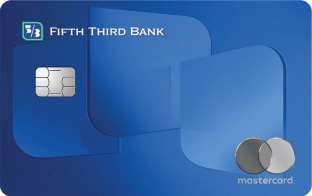
The Fifth Third Private Bank Credit Card earns the top position because it pairs unlimited 2% rewards with a $0 annual fee, no international transaction fee, premium Mastercard benefits, and a notably low published variable APR for an unsecured rewards card. Eligible Private Bank clients can use it as a straightforward everyday card without managing bonus categories or annual reward caps, and rewards do not expire while the account remains open and in good standing under the program terms. Its travel and lifestyle features may include concierge assistance, airport concierge access, trip-cancellation coverage, purchase assurance, contactless payments, and time-limited Mastercard partner offers, making it more complete than a basic flat-rate cash-back product. The decisive advantage is the combination of rewards and financing cost: the published 12.74% variable purchase and balance-transfer APR is much lower than the ranges attached to Fifth Third’s public cash-back cards, although a balance-transfer fee still applies. The limitation is substantial because the card is restricted to Private Bank clients, so it is not an open-market recommendation. For an already-eligible household that values simplicity, service, and low ongoing borrowing costs, however, it is Fifth Third’s strongest credit card package.
Fifth Third Private Bank Credit Card Quick Facts
| Quick fact | Current 2026 detail |
| Issuer and network | Fifth Third Bank; Mastercard |
| Best for | Existing Fifth Third Private Bank clients |
| Rewards | Unlimited 2% rewards; no published earning cap |
| Welcome offer | No broadly advertised public bonus |
| Intro APR | No public introductory APR |
| Regular purchase and balance-transfer APR | 12.74% variable in the published pricing reviewed for 2026 |
| Balance-transfer fee | Greater of $5 or 4% of each transfer |
| Annual fee | $0 |
| International transaction fee | None |
| Notable benefits | Premium travel, concierge, purchase, and Mastercard benefits subject to terms |
| Company and official link | Fifth Third Bank — Private Bank Credit Card |
Why the Fifth Third Private Bank Credit Card Ranks First
This card ranks first because no other Fifth Third option combines a 2% unlimited reward rate, $0 annual fee, no international transaction fee, premium service features, and a published ongoing APR near the low teens. The Preferred Cash/Back Card matches the reward rate but not the Private Bank card’s low published APR or premium positioning, while the public 1.67% Cash/Back Card sacrifices part of the reward rate and carries a much higher regular APR range. The ranking assumes the cardholder already qualifies for Fifth Third Private Bank services; opening or maintaining a wealth relationship solely to obtain a credit card would require a much broader financial evaluation. Cardholders who always pay in full will primarily benefit from the uncomplicated rewards and benefits, while those who occasionally revolve a balance may find the lower APR meaningful, though paying in full remains the best way to avoid interest. Within its narrow but valuable audience, this is the most balanced product in the Fifth Third portfolio.
2. Fifth Third Preferred Cash/Back Card
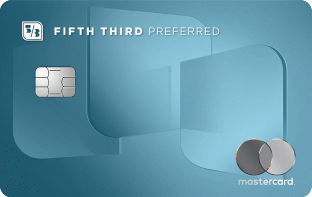
The Fifth Third Preferred Cash/Back Card is the best pure cash-back choice for eligible Preferred Banking clients, earning unlimited 2% cash back on qualifying net purchases without rotating categories, activation requirements, or an annual fee. Its uncomplicated structure makes it suitable for groceries, dining, commuting, utilities, travel, and miscellaneous purchases that may not fit the bonus categories of competing cards. Rewards can generally be redeemed without a stated minimum and do not expire while the account stays open and in good standing, giving cardholders flexibility to redeem as cash back according to program rules. The card also has no international transaction fee, an important advantage for a no-annual-fee product used outside the United States or with foreign merchants. Its weakness is financing: there is no widely advertised introductory APR, the regular variable APR range is considerably higher than the Private Bank card’s published rate, and each balance transfer carries a fee. Applicants must also qualify for Fifth Third Preferred Banking, making the card unavailable to general consumers. For an existing Preferred client who pays statements in full, the 2% rate is strong and exceptionally easy to manage.
Fifth Third Preferred Cash/Back Card Quick Facts
| Quick fact | Current 2026 detail |
| Issuer and network | Fifth Third Bank; Mastercard |
| Best for | Fifth Third Preferred Banking clients who want simple cash back |
| Rewards | Unlimited 2% cash back on qualifying net purchases |
| Welcome offer | No broadly advertised public bonus |
| Intro APR | No public introductory APR |
| Regular purchase and balance-transfer APR | 18.99%–28.99% variable |
| Balance-transfer fee | Greater of $5 or 4% of each transfer |
| Annual fee | $0 |
| International transaction fee | None |
| Redemption | No published minimum; rewards do not expire while eligible |
| Company and official link | Fifth Third Bank — Preferred Cash/Back Card |
Why the Fifth Third Preferred Cash/Back Card Ranks Second
The Preferred Cash/Back Card ranks second because unlimited 2% cash back with no annual fee represents excellent long-term value for a cardholder who already meets the banking relationship requirement. A household spending $30,000 per year on eligible purchases would earn about $600 before accounting for returns or excluded transactions, compared with about $501 from the 1.67% card and $300 from the 1% card. The card falls behind the Private Bank product because it lacks the same low published APR and premium package, and it is less accessible than Fifth Third’s public cards. It also does not lead the portfolio for introductory financing, so anyone planning a large purchase or debt transfer should compare the Truly Simple and 1% Cash/Back cards. Used as intended—by an eligible Preferred client who pays in full—it is the clearest high-reward consumer option in Fifth Third’s lineup.
3. Fifth Third 1.67% Cash/Back Card
The Fifth Third 1.67% Cash/Back Card is the best broadly available Fifth Third rewards card for consumers who prefer a single earning rate over category tracking. It earns unlimited 1.67% cash back on qualifying net purchases, charges no annual fee, has no international transaction fee, and does not impose a stated minimum redemption requirement. New accounts also receive a 0% introductory APR on balance transfers for the first 12 months after opening, although transfers incur a fee and the promotional rate does not extend to new purchases based on the public offer reviewed. After the introductory period, the published variable APR for purchases and balance transfers is 18.99%–28.99%, so carrying an unpaid balance can quickly outweigh the rewards. Eligible Mastercard partner offers may add limited value through services such as Lyft, Peacock, or Instacart, but enrollment, transaction, platform, and expiration rules mean these should be treated as secondary benefits rather than permanent card value. The 1.67% earning rate is unusual but easy to understand: every $1,000 of eligible spending earns approximately $16.70, with no need to predict where spending will occur.
Fifth Third 1.67% Cash/Back Card Quick Facts
| Quick fact | Current 2026 detail |
| Issuer and network | Fifth Third Bank; Mastercard |
| Best for | General consumers seeking flat-rate cash back |
| Rewards | Unlimited 1.67% cash back on qualifying net purchases |
| Welcome offer | No broadly advertised cash welcome bonus |
| Intro APR | 0% on balance transfers for 12 months after account opening |
| Regular purchase and balance-transfer APR | 18.99%–28.99% variable |
| Balance-transfer fee | Greater of $5 or 4% of each transfer |
| Annual fee | $0 |
| International transaction fee | None |
| Additional value | Eligible time-limited Mastercard partner offers |
| Company and official link | Fifth Third Bank — 1.67% Cash/Back Card |
Why the Fifth Third 1.67% Cash/Back Card Ranks Third
This card ranks third because it delivers the best blend of public accessibility, flat-rate rewards, low ownership cost, and international usability in Fifth Third’s consumer portfolio. It trails the two relationship cards because 1.67% is lower than 2%, but it does not require Private Bank or Preferred status and therefore has a much wider potential audience. It outranks the Truly Simple and 1% Cash/Back cards for ongoing everyday use because its higher reward rate compounds across nearly every eligible purchase. The introductory balance-transfer period adds useful flexibility, although borrowers should calculate the transfer fee and establish a payoff schedule before the 12-month period ends. Applicants focused on rewards should pay statements in full, because even one month of interest at the regular APR can erase a meaningful amount of cash back. For consumers who want one Fifth Third card to use at home and abroad without category maintenance, this is the default recommendation.
4. Fifth Third Truly Simple® Credit Card
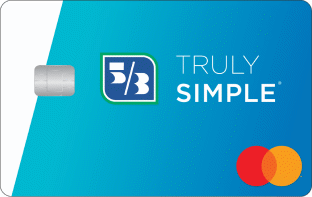
The Fifth Third Truly Simple® Credit Card is designed for financing rather than rewards, and its defining feature is a 0% introductory APR on both purchases and balance transfers for the first 18 billing cycles. That period is longer than the introductory offers attached to Fifth Third’s 1% and 1.67% cash-back cards, which can make Truly Simple the better tool for a planned purchase, temporary cash-flow need, or qualifying transferred balance. After the promotion, the published variable APR range is 14.24%–25.24%, comparatively favorable within the public lineup, and the card does not apply a penalty APR solely because of a missed payment. It also charges no annual fee. The card earns no cash back or points, so it is not the right long-term spending choice for someone who pays in full and wants ongoing rewards. A balance-transfer fee applies, and applicants should verify international transaction pricing, late fees, transfer timing, and all current terms in the application disclosure. “No penalty APR” also does not mean a late payment is cost-free: fees, credit reporting, loss of promotional treatment under applicable terms, and account consequences may still occur.
Fifth Third Truly Simple Credit Card Quick Facts
| Quick fact | Current 2026 detail |
| Issuer and network | Fifth Third Bank; Mastercard |
| Best for | Long introductory financing on purchases or transferred balances |
| Rewards | None |
| Welcome offer | 0% introductory financing rather than a cash bonus |
| Intro APR | 0% on purchases and balance transfers for 18 billing cycles |
| Regular purchase and balance-transfer APR | 14.24%–25.24% variable |
| Penalty APR | No penalty APR for a missed payment; other consequences may apply |
| Balance-transfer fee | Applies; verify the current application disclosure |
| Annual fee | $0 |
| International transaction fee | Verify the current pricing disclosure before foreign use |
| Company and official link | Fifth Third Bank — Personal Credit Card Lineup |
Why the Fifth Third Truly Simple Credit Card Ranks Fourth
Truly Simple ranks fourth because it is Fifth Third’s strongest public promotional financing product and can create more practical value than rewards when a borrower uses the interest-free period responsibly. A cardholder financing a $6,000 purchase and repaying it evenly over 18 billing cycles would need to pay roughly $334 per cycle, excluding any other charges, to reach a zero balance before the regular APR begins. Its published post-intro APR range also starts below the ranges of the public cash-back cards, and the absence of a penalty APR offers an extra layer of pricing simplicity. It ranks below the 1.67% card because it produces no ongoing rewards and because promotional financing is valuable only when paired with a disciplined payoff plan. It ranks above the 1% card for consumers whose primary need is maximum 0% APR duration, making it the portfolio’s most focused debt-management and large-purchase option.
5. Fifth Third 1% Cash/Back Card
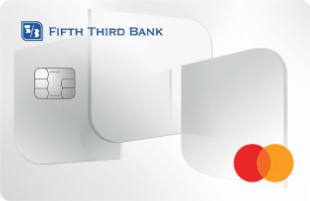
The Fifth Third 1% Cash/Back Card occupies the middle ground between a rewards card and a financing card. It earns unlimited 1% cash back on qualifying net purchases, charges no annual fee, and offers a 0% introductory APR on both purchases and balance transfers for the first 15 months. That makes it more flexible than the 1.67% card for consumers who need to finance a purchase, because the higher-earning card’s public introductory offer applies to balance transfers rather than purchases. After the promotional period, a variable APR of 18.49%–29.49% applies, and transferred balances are subject to a fee. The card has no international transaction fee and may include eligible time-limited Mastercard partner offers, which can add convenience for travel or everyday services. Its main disadvantage is opportunity cost: 1% cash back is modest for a modern no-annual-fee card, so cardholders who do not need the 15-month financing period would generally earn more with the 1.67% card. It works best when the introductory APR is the immediate priority and ongoing rewards are a welcome secondary feature.
Fifth Third 1% Cash/Back Card Quick Facts
| Quick fact | Current 2026 detail |
| Issuer and network | Fifth Third Bank; Mastercard |
| Best for | Combining a 15-month intro APR with modest rewards |
| Rewards | Unlimited 1% cash back on qualifying net purchases |
| Welcome offer | No broadly advertised cash welcome bonus |
| Intro APR | 0% on purchases and balance transfers for 15 months |
| Regular purchase and balance-transfer APR | 18.49%–29.49% variable |
| Balance-transfer fee | Greater of $5 or 4% of each transfer |
| Annual fee | $0 |
| International transaction fee | None |
| Additional value | Eligible time-limited Mastercard partner offers |
| Company and official link | Fifth Third Bank — 1% Cash/Back Card |
Why the Fifth Third 1% Cash/Back Card Ranks Fifth
The 1% Cash/Back Card ranks fifth because it offers a useful compromise: three fewer promotional billing periods than Truly Simple but the ability to keep earning cash back after the introductory period. It is especially reasonable for a consumer who expects to make a planned purchase, can repay it within 15 months, and wants a no-fee card that remains usable afterward. It ranks below Truly Simple for financing because the promotional period is shorter, and below the 1.67% card for rewards because the earning rate is 0.67 percentage point lower. On $20,000 of eligible annual spending, that difference is approximately $134, so long-term users should not overlook it. Nevertheless, having a 0% offer for both purchases and transfers, no annual fee, and no international transaction fee makes this a credible hybrid choice rather than merely a weaker cash-back card.
6. Fifth Third Simply Business Card
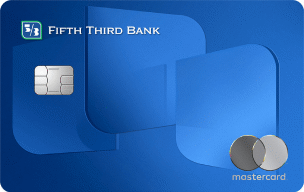
The Fifth Third Simply Business Card is the strongest conventional option for eligible small-business owners in the issuer’s portfolio. It earns unlimited 1.67% cash back on qualifying net purchases, charges no annual fee or international transaction fee, and offers a 0% introductory APR on purchases and balance transfers for the first 12 billing cycles. After the promotional period, the published variable APR is 15.49%–26.49%, while balance transfers incur a fee. This combination supports both ongoing operating expenses and short-term financing, although a business should never spend merely to earn rewards or depend on revolving debt as permanent working capital. Digital account tools, employee-card management, Mastercard identity-theft assistance, rental-car coverage, and zero-liability protections may add value subject to benefit terms. Eligibility is narrower than a fully public online card: Fifth Third states that the business must have an eligible Fifth Third checking or savings relationship open for at least 90 days and in good standing. For an established Fifth Third small-business customer, the card’s simplicity and absence of an annual fee make it a practical everyday expense tool.
Fifth Third Simply Business Card Quick Facts
| Quick fact | Current 2026 detail |
| Issuer and network | Fifth Third Bank; Mastercard |
| Best for | Existing Fifth Third small-business banking customers |
| Rewards | Unlimited 1.67% cash back on qualifying net purchases |
| Welcome offer | Introductory financing rather than a public cash bonus |
| Intro APR | 0% on purchases and balance transfers for 12 billing cycles |
| Regular purchase and balance-transfer APR | 15.49%–26.49% variable |
| Balance-transfer fee | Greater of $5 or 4% of each transfer |
| Annual fee | $0 |
| International transaction fee | None |
| Relationship requirement | Eligible business checking or savings account open at least 90 days and in good standing |
| Company and official link | Fifth Third Bank — Simply Business Card |
Why the Fifth Third Simply Business Card Ranks Sixth
Simply Business ranks sixth overall and first among Fifth Third’s general small-business choices because it adapts the consumer 1.67% cash-back concept to business spending while adding a purchase APR promotion and administrative benefits. A company charging $50,000 in qualifying annual expenses could earn approximately $835 in cash back before returns and exclusions, without subtracting an annual fee. The relationship requirement reduces accessibility, and owners seeking rich category bonuses, transferable travel points, or large public welcome offers may find stronger options outside Fifth Third. It also should not be confused with a corporate card: personal or business liability, employee controls, underwriting, and repayment terms must be confirmed in the agreement. For a business already banking with Fifth Third, however, consolidating expenses and rewards in the same ecosystem can simplify cash management and make the card more valuable than its reward rate alone suggests.
7. Fifth Third Provide Credit Card
The Provide Card is a specialized Fifth Third-affiliated product aimed primarily at healthcare practice owners and professionals who use Provide’s broader practice-finance ecosystem. It charges no annual fee and, under the public card agreement reviewed for 2026, offers a 0% introductory APR on purchases and balance transfers for the first 12 billing cycles, followed by a 15.49%–26.49% variable APR. A balance-transfer fee applies, while no foreign transaction fee is listed in the reviewed pricing. The card’s value is less about a standardized public reward proposition and more about aligning day-to-day purchasing with a financial relationship designed for dentists, veterinarians, physicians, and other eligible practice owners. That can be helpful when a growing practice wants one provider for acquisition financing, equipment, banking, and operating expenses, but the card should still be compared independently on APR, fees, protections, employee access, and reporting. Public rewards are not as prominently standardized as Simply Business cash back, so applicants should not assume an earning rate that does not appear in their specific offer. The product is best treated as a sector-focused financing and spending tool rather than a universal business rewards card.
Provide Card Quick Facts
| Quick fact | Current 2026 detail |
| Issuer and company | Fifth Third Bank; offered through Provide, a Fifth Third subsidiary |
| Best for | Eligible healthcare practice owners in the Provide ecosystem |
| Rewards | Offer-specific; confirm any rewards in the application |
| Welcome offer | Introductory financing rather than a standardized cash bonus |
| Intro APR | 0% on purchases and balance transfers for 12 billing cycles |
| Regular purchase and balance-transfer APR | 15.49%–26.49% variable in the reviewed agreement |
| Balance-transfer fee | Greater of $5 or 4% of each transfer |
| Annual fee | $0 |
| International transaction fee | None in the reviewed pricing |
| Application route | Provide relationship or representative; availability and underwriting apply |
| Company and official link | Fifth Third Bank — Provide Card Agreement |
Why the Provide Card Ranks Seventh
The Provide Card ranks seventh because its healthcare specialization may create meaningful convenience for the right practice owner, but it is less transparent and less broadly useful than Simply Business for general applicants. Its no-annual-fee structure and 12-billing-cycle introductory APR can support equipment, supplies, software, or other planned expenses when the business has a reliable payoff plan. It may also reduce financial fragmentation for a practice already using Provide, yet ecosystem convenience should not replace a cost comparison with other business cards or lending products. The card ranks above the Secured Card because eligible established businesses can access a more conventional unsecured financing product, but below Simply Business because there is no equally clear public promise of unlimited flat-rate cash back. Healthcare owners should request the exact application disclosure and confirm rewards, guarantees, employee-card features, reporting, and repayment terms before deciding.
8. Fifth Third Secured Credit Card
The Fifth Third Secured Credit Card is designed for consumers who want to establish or rebuild credit through a card backed by their own deposit. Applicants must generally be existing Fifth Third customers with an eligible checking or savings relationship and place $300 to $5,000 in a Fifth Third Momentum Savings Account, with at least 100% of the credit line secured by the deposit. Fifth Third reports account activity to Equifax, Experian, and TransUnion, so responsible use—low utilization, on-time payments, and full repayment when possible—can contribute to a stronger credit profile over time. The tradeoffs are significant: the card charges a $24 annual fee, earns no advertised rewards, has no introductory APR, applies a 27.49% variable APR to purchases and balance transfers, and charges a 3% international transaction fee. The deposit remains the cardholder’s money and the required savings account may earn interest, but the funds are pledged and therefore unavailable for ordinary use while securing the account. California residents are not eligible under the current public terms, and approval is not guaranteed merely because collateral is provided.
Fifth Third Secured Credit Card Quick Facts
| Quick fact | Current 2026 detail |
| Issuer and network | Fifth Third Bank; Mastercard |
| Best for | Fifth Third customers building or rebuilding credit |
| Rewards | None advertised |
| Security deposit | $300–$5,000; at least 100% of the credit line in a required Momentum Savings Account |
| Credit-bureau reporting | Equifax, Experian, and TransUnion |
| Intro APR | None |
| Regular purchase and balance-transfer APR | 27.49% variable |
| Balance-transfer fee | Greater of $5 or 4% of each transfer |
| Annual fee | $24 |
| International transaction fee | 3% |
| Geographic restriction | California residents are not eligible under the published offer |
| Company and official link | Fifth Third Bank — Secured Credit Card |
Why the Fifth Third Secured Credit Card Ranks Eighth
The Secured Card ranks eighth because it addresses a necessary need that the higher-ranked rewards cards do not: giving some consumers with limited or damaged credit a structured opportunity to build payment history. Reporting to all three major credit bureaus is the central benefit, and the adjustable $300–$5,000 deposit range lets an approved applicant choose a line compatible with available cash. It ranks below unsecured cards because of the annual fee, locked collateral, high APR, foreign transaction fee, and lack of rewards. Applicants should compare it with no-annual-fee secured cards and should ask Fifth Third whether there is a documented pathway to an unsecured product or deposit release, because graduation policies can materially affect long-term value. The card works best when used for a small recurring charge, kept far below its limit, and paid in full every month; carrying a balance is counterproductive because interest does not improve a credit score.
9. Fifth Third Commercial Card
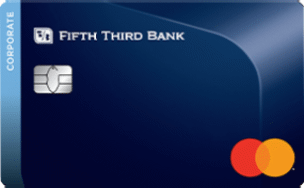
The Fifth Third Commercial Card is a pay-in-full corporate expense program for larger organizations, not a consumer credit card or ordinary revolving small-business card. It supports individual, departmental, and program-level spending limits, fraud monitoring, reporting through Fifth Third Direct, integration with ePay, and potential rebates based on the organization’s agreement and eligible volume. Because balances are generally due in full, there is no consumer-style purchase APR or introductory financing period to compare. Published program pricing includes a $250 annual fee when annual program spending is below $350,000, with the fee avoided when the stated spend threshold is met, although companies should confirm their exact proposal. Qualifying programs with at least five cards may receive MasterCoverage protection of up to $100,000 per cardholder under applicable terms. Fifth Third has also continued modernizing its commercial-card platform, so finance teams should confirm the current issuing, technology, liability, and integration structure presented for their organization. The real evaluation centers on controls, data quality, employee experience, rebate economics, implementation support, and the working-capital effect of the payment cycle.
Fifth Third Commercial Card Quick Facts
| Quick fact | Current 2026 detail |
| Issuer and network | Fifth Third Bank; commercial Mastercard program |
| Best for | Middle-market and larger organizations managing employee spend |
| Rewards | Agreement-based rebate opportunity rather than consumer cash back |
| Payment structure | Generally pay in full; no revolving consumer balance |
| Intro APR | Not applicable |
| Regular APR | Not applicable to the standard pay-in-full structure |
| Annual program fee | $250 when annual program spend is below $350,000; verify proposal |
| International transaction pricing | Contract-specific; review the commercial agreement |
| Administration | Fifth Third Direct reporting, limits, fraud controls, and ePay integration |
| Protection | MasterCoverage may provide up to $100,000 per cardholder for qualifying programs |
| Company and official link | Fifth Third Bank — Commercial Card |
Why the Fifth Third Commercial Card Ranks Ninth
The Commercial Card ranks ninth only because this list is ordered for a mixed audience; within the right corporate environment, it can be far more valuable than a consumer rewards card. Its advantage is organizational leverage: centralized reporting, configurable limits, potential rebates, and fraud controls can reduce leakage and manual work across hundreds or thousands of transactions. It ranks below Simply Business and Provide for accessibility because enrollment requires a commercial relationship, underwriting, implementation, and contract review, and it offers no revolving 0% financing. The $350,000 program-spend threshold also illustrates the intended scale. A company should model expected rebate revenue, annual and implementation fees, days of payment float, supplier acceptance, data integration, and staff time saved rather than comparing a headline reward percentage. For enterprises already using Fifth Third treasury services, the program may fit naturally into a broader payables strategy.
10. Fifth Third ePay Virtual Card Program
Fifth Third ePay is a virtual commercial-card and integrated-payables program that converts approved supplier invoices into controlled electronic card payments. Instead of issuing a general-purpose piece of plastic for everyday consumer spending, the system can generate payment credentials for specific vendors or transactions, apply amount and timing controls, transmit remittance information, and return reconciliation data to the company’s accounts-payable process. The organization may gain fraud reduction, faster vendor payment, improved auditability, working-capital benefits, and agreement-based rebates when suppliers accept virtual card payments. Pricing is customized, and there is no standard consumer annual fee, introductory APR, or rewards table because ePay is a treasury-management solution. Success depends heavily on supplier enablement, ERP or accounting integration, payment-file quality, implementation support, and the economic terms of the commercial agreement. Companies should compare ePay with ACH, checks, purchasing cards, and other integrated-payables platforms by measuring total processing cost, acceptance, exception handling, payment timing, security, and rebate potential.
Fifth Third ePay Virtual Card Program Quick Facts
| Quick fact | Current 2026 detail |
| Provider and network | Fifth Third Bank; commercial virtual-card network capabilities |
| Best for | Organizations automating eligible supplier payments |
| Primary value | Single-use or controlled credentials, reconciliation data, fraud controls, and rebate potential |
| Rewards | Contract-based commercial rebates may apply |
| Payment structure | Virtual commercial card; not consumer revolving credit |
| Intro APR | Not applicable |
| Regular APR | Not applicable to the standard supplier-payment program |
| Annual fee or price | Custom commercial pricing and implementation terms |
| International pricing | Contract, currency, and transaction-specific |
| Key requirement | Supplier acceptance and integration with the organization’s payables workflow |
| Company and official link | Fifth Third Bank — Commercial Card and ePay Program |
Why the Fifth Third ePay Virtual Card Program Ranks Tenth
ePay ranks tenth because it is the least relevant product for an individual seeking a traditional credit card, not because the technology lacks value. A well-implemented virtual-card program can produce savings that dwarf personal cash-back rewards by reducing check processing, limiting fraud exposure, improving reconciliation, capturing rebates, and extending payment float. Those benefits are not automatic: vendors may decline card acceptance or add surcharges, internal systems may need integration work, and customized pricing prevents an accurate universal cost comparison. The right buyer is a finance, treasury, or accounts-payable team with enough eligible supplier volume to justify implementation. Consumers and most small businesses should choose one of the higher-ranked cards, while larger organizations should request a quantified proposal and pilot plan before assessing ePay’s true return on investment.
10 Best Rated Fifth Third Credit Cards in 2026 Comparison Table
| Credit Card | Intro Offer | Reward Rate | Annual Fee | Intro APR | Regular APR |
|---|---|---|---|---|---|
| Fifth Third Private Bank Credit Card | No Public Bonus | 2% Rewards | $0 | N/A | 12.74% Variable |
| Fifth Third Preferred Cash/Back Card | No Public Bonus | 2% Cash Back | $0 | N/A | 18.99%–28.99% Variable |
| Fifth Third 1.67% Cash/Back Card | No Public Bonus | 1.67% Cash Back | $0 | 0% APR for 12M on BT | 18.99%–28.99% Variable |
| Fifth Third Truly Simple® Credit Card | No Public Bonus | N/A | $0 | 0% APR for 18 Billing Cycles on P&BT | 14.24%–25.24% Variable |
| Fifth Third 1% Cash/Back Card | No Public Bonus | 1% Cash Back | $0 | 0% APR for 15M on P&BT | 18.49%–29.49% Variable |
| Fifth Third Simply Business Card | No Public Bonus | 1.67% Cash Back | $0 | 0% APR for 12 Billing Cycles on P&BT | 15.49%–26.49% Variable |
| Provide Card | No Public Bonus | Offer-Specific | $0 | 0% APR for 12 Billing Cycles on P&BT | 15.49%–26.49% Variable |
| Fifth Third Secured Credit Card | N/A | N/A | $24 | N/A | 27.49% Variable |
| Fifth Third Commercial Card | N/A | Custom Rebates | $250* | N/A | N/A—Paid in Full |
| Fifth Third ePay Virtual Card Program | N/A | Contract-Based Rebates | Custom | N/A | N/A |
*The Commercial Card’s $250 annual fee is avoided when annual program spending reaches at least $350,000. P&BT means purchases and balance transfers; BT means balance transfers. Terms can change and are subject to approval.
How to Choose the Best Fifth Third Credit Card
Start with eligibility and purpose, because those two filters eliminate most unsuitable products immediately. General consumers should compare 1.67% Cash/Back for ongoing rewards, Truly Simple for the longest introductory financing period, 1% Cash/Back for a blend of financing and rewards, and Secured for credit building. Existing Preferred or Private Bank clients should compare their relationship cards before applying for a public option, since the 2% reward rates are stronger and the Private Bank card’s published APR is unusually low. Then estimate annual eligible spending, likely rewards, any annual fee, foreign transaction costs, and the interest or transfer fees associated with planned borrowing. A 0% APR offer is valuable only if the required monthly payoff fits the budget, and no reward rate compensates for carrying expensive debt. Business owners should separate personal and company spending and evaluate employee controls, accounting integration, liability, and cash flow. Commercial buyers should request pricing and calculate total program economics rather than relying on consumer-style rankings.
Fifth Third Personal Credit Cards vs. Business and Commercial Cards
Personal Fifth Third cards are designed for household purchases and are governed by consumer disclosures, while Simply Business and Provide are intended for legitimate business expenses and may require business information, guarantees, or existing relationships. The Commercial Card and ePay are different again: they are organization-level payment programs with negotiated terms, centralized controls, custom implementation, and pay-in-full or transaction-specific structures. A sole proprietor may qualify for a small-business card, but business use should still be documented accurately and expenses should be separated for accounting purposes. Employees should never apply for or use a corporate program without company authorization, and an owner should confirm who is legally responsible for repayment. The best personal card maximizes rewards or financing for an individual budget; the best business card supports company spending while simplifying bookkeeping; and the best commercial program improves procurement, compliance, data, and supplier payments at scale. Treating those products as interchangeable can lead to inaccurate comparisons and poor financial controls.
How to Apply and Check Preapproval for a Fifth Third Credit Card
Applicants can begin through the official Fifth Third product page, online banking, a branch, or a relationship banker, depending on the card. Public consumer applications generally request identity, residence, income, employment, housing, and contact information, while business applications may also require legal entity, tax identification, ownership, revenue, guarantor, and existing-account details. Fifth Third may display prequalified or preselected opportunities to some customers, but availability varies and a marketing message is not final approval. Before submitting, confirm whether the process will result in a hard credit inquiry, review the card’s current Schumer-box pricing, and avoid multiple applications made only to test eligibility. Preferred, Private Bank, Provide, commercial, and ePay products usually require the appropriate banker or program specialist, while Simply Business has an existing-deposit-relationship requirement and the Secured Card requires eligible Fifth Third banking plus collateral. Approval, APR, and credit limit depend on underwriting, and no applicant should report inaccurate income, business revenue, ownership, or intended use.
What Credit Score Is Needed for a Fifth Third Credit Card?
Fifth Third does not publish one guaranteed minimum credit score for every card, and approval depends on more than a score. The bank may consider payment history, utilization, recent inquiries, age and mix of accounts, income, debt obligations, banking relationship, collateral, business financials, and identity or fraud checks. Applicants with good to excellent credit are generally better positioned for unsecured rewards and relationship cards, but even a high score does not ensure approval, a specific APR, or a large limit. The Secured Card may be more suitable for a thin or damaged credit file because the deposit reduces issuer risk, yet underwriting still applies. Before applying, consumers can review credit reports for errors, pay down revolving balances, avoid unnecessary new accounts, and calculate whether the expected limit and terms meet the intended use. Business owners should also prepare accurate entity and financial documentation. Responsible behavior after approval—on-time payments, low utilization, and restrained borrowing—matters more than obtaining any single card.
Fifth Third Credit Card Annual Fees, APRs, and Other Costs
Most Fifth Third consumer rewards cards and the Truly Simple card charge $0 annual fees, as do Simply Business and the reviewed Provide Card, while the Secured Card charges $24 annually. The Commercial Card lists a $250 program fee below its published $350,000 annual-spend waiver threshold, and ePay uses customized commercial pricing. Interest costs vary widely: the Private Bank card has the lowest published ongoing rate in this ranking, Truly Simple has a lower-starting public range than the cash-back cards, and the Secured Card carries a high variable APR despite collateral. Balance transfers usually cost the greater of $5 or 4%, so transferring $5,000 would generally add $200 under that formula, and the fee itself must be included in the payoff plan. Cash advances commonly have a separate high APR and a fee, with interest often beginning immediately. Foreign transaction costs range from none on several unsecured cards to 3% on the Secured Card, while commercial pricing is agreement-specific. Late fees, returned-payment consequences, partner-benefit rules, and variable-rate changes should also be reviewed before applying.
Best Fifth Third Credit Card for Cash Back
The Private Bank Credit Card and Preferred Cash/Back Card share the highest advertised consumer reward rate at unlimited 2%, but eligibility determines the practical winner. Existing Private Bank clients should favor the Private Bank card because it adds a much lower published APR and premium benefits, while eligible Preferred clients can obtain the same straightforward 2% earning rate without an annual fee. For everyone else, the Fifth Third 1.67% Cash/Back Card is the best public cash-back choice because it charges no annual fee or international transaction fee and does not require category activation. The 1% Cash/Back Card is less rewarding for long-term spend but becomes competitive when its 15-month purchase and transfer promotion matches an immediate financing need. Small-business owners already banking with Fifth Third should compare Simply Business, which also earns unlimited 1.67% cash back. In every case, net value equals rewards and usable benefits minus annual fees, interest, transaction costs, and foregone rewards from a stronger alternative.
Best Fifth Third Credit Card for Balance Transfers
The Fifth Third Truly Simple Credit Card is the strongest balance-transfer choice in this lineup because its 0% introductory APR lasts 18 billing cycles and also covers purchases during the introductory period. The 1% Cash/Back Card follows with 15 months at 0% on purchases and balance transfers, while the 1.67% Cash/Back Card provides 12 months at 0% on transfers only under the reviewed public offer. Simply Business and Provide offer 12 billing cycles for eligible business applicants. A transfer fee applies even when the APR is 0%, so borrowers should divide the transferred balance plus the fee by the number of promotional cycles and pay at least that amount each cycle. Transfers must also satisfy timing, eligibility, and account rules, and balances generally cannot be transferred between cards from the same issuer. New purchases can complicate grace-period calculations unless they are also included in the promotion. The objective should be complete repayment before the regular variable APR begins, not simply moving debt without a payoff plan.
Best Fifth Third Credit Card for International Travel
Eligible clients will find the Private Bank Credit Card the most complete Fifth Third travel option because it combines no international transaction fee with premium travel, concierge, and purchase protections subject to detailed benefit terms. The Preferred Cash/Back, 1.67% Cash/Back, 1% Cash/Back, and Simply Business cards also list no international transaction fee, making them reasonable for foreign purchases even though they are not premium travel-rewards cards. The Secured Card is less attractive abroad because it charges a 3% international transaction fee, and Truly Simple applicants should verify current foreign transaction pricing before relying on it outside the United States. Travelers should carry a backup payment method, notify the issuer if recommended, use chip or contactless functionality, and decline dynamic currency conversion when a merchant offers to bill in U.S. dollars at an unfavorable exchange rate. Card benefits such as trip cancellation, rental-car protection, baggage coverage, or airport services have exclusions and claim procedures, so the official guide to benefits—not the card name—should determine whether coverage is adequate.
Final Verdict on the Best Fifth Third Credit Cards in 2026
Fifth Third’s 2026 portfolio is strongest for existing banking clients who value flat-rate rewards, introductory financing, or integrated business services. The Private Bank Credit Card is the best overall for eligible clients, the Preferred Cash/Back Card is the best 2% cash-back option for Preferred customers, and the 1.67% Cash/Back Card is the best widely accessible everyday rewards card. Truly Simple is the clear financing leader, while the 1% Cash/Back Card provides a useful compromise between a 15-month introductory APR and ongoing rewards. Simply Business is the best general small-business card in the lineup, Provide serves a narrower healthcare audience, and the Secured Card offers a credit-building path despite its fee and collateral requirements. Commercial Card and ePay belong in corporate payment discussions, not consumer card comparisons, but each can create substantial administrative and working-capital value at the right scale. The final choice should follow eligibility, repayment plans, realistic spending, and the latest official disclosure; applicants should never select a card based solely on a reward percentage or assume that an editorial ranking guarantees approval or savings.