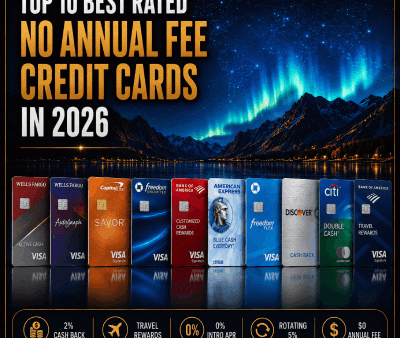
10 Best Rated Credit Cards for Fair Credit Score in 2026
Finding a valuable credit card with a fair credit score is easier in 2026 than it once was, but the best offer depends on whether the applicant wants unsecured credit, cash back, a refundable-deposit card, no credit check or a small-business account. The Mission Lane Gold Line Visa® earns our number-one position because its published offer combines a $0 annual fee with unlimited 3% cash back on gas, travel and dining, 1% on other qualifying purchases and a soft prequalification process. Capital One SavorOne Rewards for Fair Credit is the strongest major-bank category-rewards alternative, while Discover it® Secured Cash Back and U.S. Bank Cash+® Secured Visa® provide unusually competitive rewards for cardholders willing to fund a security deposit. This review compares ten current cards by issuer, official website, annual fee or deposit price, rewards, APR structure, foreign transaction costs, application accessibility and credit-building usefulness. Rates, fees, rewards, bonuses, benefits and eligibility requirements can change. All terms below were reviewed for August 2026, but applicants should verify the current official offer and pricing disclosure before applying.
Important Note About This Fair Credit Card Ranking
“Fair credit” commonly describes a FICO® score from about 580 to 669, but no score guarantees approval, and issuers may use a different score model or evaluate income, existing debt, recent inquiries, payment history and prior banking relationships. This ranking intentionally mixes unsecured cards with secured cards because a person near the lower end of the fair range may receive better value from a refundable-deposit card than from an unsecured card with high fees. A security deposit is collateral, not an annual fee, but it temporarily ties up cash. Mission Lane presents exact APR and issuer terms after prequalification, Chime requires a Chime Account, and Capital One Spark 1% Classic is a business card rather than a personal card. None of these editorial ratings is an approval guarantee, and applicants should use prequalification when available instead of submitting multiple applications merely to test eligibility.
What Are Credit Cards for Fair Credit?
Credit cards for fair credit are accounts designed or accessible for consumers whose profiles may not yet qualify for the best prime-card rates and bonuses. An unsecured card does not require collateral, but it may charge an annual fee, provide a modest starting limit or carry a high variable APR. A secured card requires refundable funds that usually establish the credit line, then reports account activity to the major credit bureaus like a conventional card. The cards in this review operate on Visa, Mastercard or Discover and are offered by Capital One, Mission Lane with TAB Bank or WebBank, U.S. Bank, Bank of America, Chime partner banks and Capital Bank through OpenSky. Responsible use can help build credit history, but simply opening an account does not ensure a higher score. On-time payments, low reported balances, restrained applications and long account age matter more than rewards. Consumers should also distinguish credit-building products from prepaid or debit cards, which generally do not create revolving-credit history.
How We Rated the Best Credit Cards for Fair Credit Score in 2026
Our editorial methodology gives the greatest weight to transparent pricing, realistic approval accessibility, credit-bureau reporting and long-term usefulness. We compared annual fees, refundable deposits, ongoing cash back, first-year rewards, welcome offers, introductory and regular APRs, balance-transfer availability, foreign transaction fees, prequalification tools, credit-limit policies, graduation possibilities, payment controls and account requirements. A no-annual-fee card generally outranks a fee-based card when the rewards and accessibility are comparable, but a refundable deposit can reduce a secured card’s ranking because the money remains unavailable while pledged. We also considered whether rewards require activation, category tracking, a qualifying direct deposit or portal booking. The Spark Classic business card was evaluated for employee controls, reporting and business-purpose use. Ratings reflect overall value for the intended fair-credit audience, not the likelihood that a specific person will be approved or receive a particular APR or credit limit.
Favorable Details of Credit Cards for Fair Credit
- Several $0 annual-fee choices: Mission Lane Gold Line, Discover it Secured, U.S. Bank Cash+ Secured, Bank of America Customized Cash Rewards Secured, Chime Card, Capital One Platinum, OpenSky Plus and Spark Classic publish no annual fee.
- Competitive rewards are available: The strongest cards earn 3% to 6% in selected categories, while flat-rate options can return 1% to 1.5% on ordinary purchases.
- Soft prequalification can reduce application risk: Mission Lane and Capital One let many applicants check eligibility before deciding whether to proceed with a full application.
- Secured cards can create a defined path: Discover, U.S. Bank, Bank of America and Capital One describe account reviews or potential movement to unsecured credit, although graduation is not guaranteed.
- Reporting supports credit building: The reviewed credit-building cards report account activity to the major credit bureaus when used responsibly.
- No-credit-check alternatives exist: Chime Card and OpenSky Plus provide application paths that do not depend on a conventional hard credit review.
- International-fee-free choices are available: Mission Lane Gold Line and Capital One products can be practical for foreign purchases when the current disclosure confirms no foreign transaction fee.
- A fair-credit business option exists: Capital One Spark 1% Classic offers cash back, employee cards and business tools without an annual fee.
Unfavorable Details of Credit Cards for Fair Credit
- APRs can be high: Fair-credit offers commonly carry variable purchase rates near or above 28%, making full monthly payment important.
- Two leading unsecured cards charge $39 annually: Capital One SavorOne for Fair Credit and QuicksilverOne require enough rewards or credit-building value to justify the fee.
- Secured cards lock up funds: Deposits ranging from $49 to $5,000 can reduce available emergency savings until the collateral is released.
- Rewards may require extra steps: Rotating categories, quarterly enrollment, merchant-category rules and direct-deposit thresholds can reduce real-world earnings.
- Low starting limits are possible: A small credit line can make utilization harder to manage unless balances are paid before the statement closes.
- Balance-transfer promotions are weak: None of the ranked fair-credit products is a standout introductory balance-transfer card under the reviewed public offers.
Secured-card deposits, promotional rewards, APRs and eligibility terms vary. Verify the current official pricing disclosure before applying.
1. Mission Lane Gold Line Visa® Credit Card – Best Overall for Unsecured Fair-Credit Rewards

The Mission Lane Gold Line Visa® Credit Card earns our top rating by combining an unsecured structure, no annual fee and category rewards that can compete with cards marketed to stronger credit profiles. Cardholders earn unlimited 3% cash back on qualifying gas, travel and dining purchases plus 1% on other purchases, and rewards are automatically redeemed as monthly statement credits. The current product page also advertises no foreign transaction fee, a typical starting line between $300 and $3,000, free TransUnion score access and automatic review for a possible credit-line increase in as few as seven months. Mission Lane’s prequalification uses a soft inquiry, displays the specific offer before acceptance and produces a hard inquiry only when the consumer accepts and is approved. The most important limitation is personalized pricing: general sample agreements show variable purchase APRs from 19.99% to 33.99%, while issuer, APR and other terms depend on the offer. There is no public introductory APR or broad welcome bonus. A cardholder spending $300 per month across gas, travel and dining could earn about $108 per year before other purchases, but carrying even a modest balance at a high APR can erase that value quickly.
Credit Card Quick Facts: Mission Lane Gold Line Visa
| Quick Fact | Details |
| Card Name | Mission Lane Gold Line Visa® |
| Company and Issuer | Mission Lane services the account; issued by TAB Bank or WebBank as identified in the offer |
| Official Website | Mission Lane — Gold Line Visa |
| Card Type | Unsecured cash-back and credit-building card |
| Payment Network | Visa |
| Annual Fee or Price | $0 annual fee; no security deposit |
| Rewards | Unlimited 3% cash back on qualifying gas, travel and dining; 1% on other qualifying purchases |
| Welcome Bonus | None publicly advertised |
| Intro APR | None publicly advertised |
| Regular APR | Offer-specific; current sample agreement range is 19.99%–33.99% variable |
| Balance Transfer Fee | Balance-transfer offer not advertised on the product page |
| Foreign Transaction Fee | 0% under the published Gold Line offer |
| Recommended Credit | Fair or limited credit; editorial guidance only |
| Best For | Consumers wanting unsecured category rewards without an annual fee |
| Notable Benefits | Soft prequalification, automatic rewards, free TransUnion score and possible line review in as few as seven months |
| Editorial Rating | 4.8/5 |
Why Mission Lane Gold Line Visa Ranks First
Gold Line ranks first because it avoids both the $39 annual fee charged by the leading Capital One fair-credit rewards cards and the cash commitment required by a secured card. Its unlimited 3% categories are broad enough to reward commuting, restaurants and travel, while automatic redemption removes a common source of unused rewards. It can outperform SavorOne for people who spend more on gas and travel than at grocery stores or entertainment merchants. Personalized pricing and the lack of a public introductory APR prevent a perfect rating, and not every prequalified applicant will receive Gold Line. The best candidate pays in full, confirms the displayed APR and issuer, and values a credit-line review more than a one-time bonus.
2. Capital One SavorOne Rewards Credit Card – Best for Groceries, Dining and Entertainment
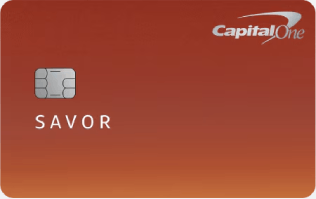
The Capital One SavorOne Rewards Credit Card is specifically labeled for fair credit on Capital One’s comparison page and offers a useful rewards structure for everyday household spending. The card earns 3% cash back at eligible grocery stores, on dining and entertainment, plus 1% on other purchases; grocery purchases at superstores such as Walmart and Target are excluded from the enhanced rate. Its $39 annual fee is the central cost, so a consumer must earn more than $39 above what a no-rewards card would provide. For example, $300 per month in qualifying 3% categories generates approximately $108 annually, leaving about $69 after the fee before considering other purchases. Capital One does not advertise a welcome bonus or introductory APR for this fair-credit version, and the variable purchase APR is disclosed during eligibility and application. Benefits include eligibility checking without a score impact, fraud controls, digital account management and no foreign transaction fee under Capital One’s standard consumer-card pricing. The card is best used as a stepping-stone: pay every statement in full, track whether category rewards justify the fee and periodically check whether a no-fee product change or stronger card becomes available.
Credit Card Quick Facts: Capital One SavorOne Rewards
| Quick Fact | Details |
| Card Name | Capital One SavorOne Rewards for Fair Credit |
| Company and Issuer | Capital One, N.A. |
| Official Website | Capital One — Compare Current Credit Card Offers |
| Card Type | Unsecured category cash-back card |
| Payment Network | Mastercard |
| Annual Fee or Price | $39 annual fee; no security deposit |
| Rewards | 3% cash back at eligible grocery stores, on dining and entertainment; 1% on other purchases |
| Welcome Bonus | None advertised for the fair-credit version |
| Intro APR | None advertised for the fair-credit version |
| Regular APR | Variable APR shown in the live eligibility or application disclosure |
| Balance Transfer Fee | No introductory transfer offer advertised; verify live disclosure |
| Foreign Transaction Fee | $0 under Capital One’s published card terms; verify offer |
| Recommended Credit | Fair credit; Capital One labels this version “Fair Credit” |
| Best For | Frequent spending on groceries, dining and entertainment |
| Notable Benefits | Soft eligibility check, category rewards, account alerts and broad Mastercard acceptance |
| Editorial Rating | 4.7/5 |
Why Capital One SavorOne Rewards Ranks Second
SavorOne ranks second because its 3% categories cover recurring expenses that many households can predict, and Capital One directly markets the card for fair credit. It can beat Gold Line for grocery-heavy or entertainment-heavy spending, especially when gas and travel are less important. However, Gold Line provides a similar 3% framework without the $39 annual fee. SavorOne also lacks the introductory APR and cash bonus attached to versions intended for stronger credit. The card makes financial sense when expected incremental rewards exceed the fee by a comfortable margin and the balance is paid in full. Applicants who would earn less than $39 annually should favor Capital One Platinum or a no-fee secured alternative.
3. Discover it® Secured Cash Back Credit Card – Best First-Year Secured Rewards
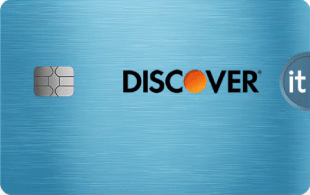
The Discover it® Secured Cash Back Credit Card stands out because its current 2026 offer combines a $0 annual fee, a potentially reduced deposit and substantial first-year rewards. Discover advertises no credit score requirement to apply, although it may use a score when available and can still decline an application. Depending on creditworthiness, a refundable deposit of $49, $99 or $200 can unlock a credit line starting at $200, reducing the cash barrier for some approved applicants. The card earns 5% cash back in rotating quarterly categories up to the applicable quarterly maximum after activation and 1% on other purchases. Discover also automatically matches all cash back earned during the first 365 days for new cardholders under the current offer. Account status is reported to the three major bureaus, and responsible use may lead to a returned deposit and upgrade to Discover it Cash Back. The drawbacks are quarterly activation, category changes, an offer-specific variable APR and the possibility of Discover acceptance being less universal outside the United States than Visa or Mastercard. This is a credit-building tool, not a reason to carry debt or spend more to enlarge the first-year match.
Credit Card Quick Facts: Discover it Secured Cash Back
| Quick Fact | Details |
| Card Name | Discover it® Secured Cash Back Credit Card |
| Company and Issuer | Discover, a Capital One company; verify the issuer named in the current agreement |
| Official Website | Discover — Discover it Secured Cash Back |
| Card Type | Secured rotating-category cash-back card |
| Payment Network | Discover |
| Annual Fee or Price | $0 annual fee; refundable deposit of $49, $99 or $200 based on creditworthiness for a line starting at $200 |
| Rewards | 5% in rotating categories up to the quarterly maximum after activation; 1% elsewhere |
| Welcome Bonus | Unlimited first-year Cashback Match for eligible new cardholders |
| Intro APR | None prominently advertised on the reviewed public page |
| Regular APR | Variable APR disclosed in the current application offer |
| Balance Transfer Fee | Verify current application disclosure; no featured transfer promotion |
| Foreign Transaction Fee | Verify the current pricing disclosure before international use |
| Recommended Credit | No score required to apply; useful for fair, limited or rebuilding credit |
| Best For | Consumers willing to use a secured card to maximize first-year rewards |
| Notable Benefits | Three-bureau reporting, deposit as low as $49 for some applicants, first-year match and potential unsecured upgrade |
| Editorial Rating | 4.6/5 |
Why Discover it Secured Cash Back Ranks Third
Discover it Secured ranks third because its first-year match and 5% categories can create more reward value than most credit-building cards, while the annual fee remains $0. It trails the top two because it is secured and therefore may require collateral, category activation and careful tracking. The updated deposit structure improves accessibility, yet the exact required amount depends on creditworthiness. This card is particularly attractive to someone who has cash for the deposit, wants bureau reporting and will align normal purchases with the rotating calendar. A consumer who prefers predictable flat-rate rewards or needs worldwide Visa or Mastercard acceptance may find QuicksilverOne or Mission Lane Gold Line easier to manage.
4. Capital One QuicksilverOne Cash Rewards Credit Card – Best Flat-Rate Unsecured Cash Back
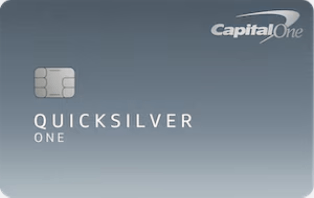
The Capital One QuicksilverOne Cash Rewards Credit Card is a straightforward unsecured rewards card officially labeled for fair credit. It earns unlimited 1.5% cash back on every qualifying purchase without category enrollment or a spending cap, making it easier to manage than rotating or choice-category cards. Capital One charges a $39 annual fee and does not advertise a new-card bonus or introductory APR for this version. At a 1.5% rate, the card requires $2,600 in annual spending merely to earn $39 and offset the fee; $10,000 in yearly purchases would produce $150 before the fee and about $111 after it. That math makes QuicksilverOne most useful for an applicant who wants an unsecured card, expects meaningful card spending and cannot qualify for a comparable no-fee flat-rate offer. Capital One provides eligibility checking, digital controls, fraud monitoring and automatic consideration for credit-line changes based on account history and creditworthiness. The variable APR can be expensive, so this is not a borrowing card despite the convenience of cash back. Consumers should compare the eligibility result with Capital One Platinum and Mission Lane offers before accepting the fee.
Credit Card Quick Facts: Capital One QuicksilverOne
| Quick Fact | Details |
| Card Name | Capital One QuicksilverOne Cash Rewards Credit Card |
| Company and Issuer | Capital One, N.A. |
| Official Website | Capital One — QuicksilverOne |
| Card Type | Unsecured flat-rate cash-back card |
| Payment Network | Mastercard |
| Annual Fee or Price | $39 annual fee; no security deposit |
| Rewards | Unlimited 1.5% cash back on qualifying purchases |
| Welcome Bonus | None advertised for QuicksilverOne |
| Intro APR | None advertised |
| Regular APR | Variable APR disclosed in the live eligibility and application offer |
| Balance Transfer Fee | No featured transfer promotion; verify current disclosure |
| Foreign Transaction Fee | $0 under Capital One’s published card terms; verify offer |
| Recommended Credit | Fair credit; officially labeled “Fair Credit” by Capital One |
| Best For | Simple rewards without category tracking |
| Notable Benefits | Soft eligibility check, unlimited rewards, fraud controls and mobile account management |
| Editorial Rating | 4.5/5 |
Why Capital One QuicksilverOne Ranks Fourth
QuicksilverOne ranks fourth because its flat 1.5% earning rate is simple, unlimited and available in an unsecured product explicitly intended for fair credit. It falls below SavorOne because a consumer with substantial grocery, dining and entertainment spending can earn faster at 3%, and it falls below Discover because the secured card’s first-year rewards can be much higher. The $39 fee is the main obstacle: low spenders may earn little or no net reward after paying it. QuicksilverOne is the better choice for varied spending that does not fit bonus categories and for applicants unwilling to place a deposit, provided the expected annual cash back comfortably exceeds the fee and statements will be paid in full.
5. U.S. Bank Cash+® Secured Visa® Credit Card – Best for Customizable Secured Categories

The U.S. Bank Cash+® Secured Visa® Credit Card combines serious reward potential with the credit-building structure of a secured card. It has a $0 annual fee and requires a refundable $300 to $5,000 deposit, which generally becomes the credit line and is held in an interest-bearing, FDIC-insured secured savings account. Cardholders earn 5% cash back on the first $2,000 in combined eligible purchases each quarter in two activated categories, 2% in one selected everyday category and 1% on other eligible purchases. They can also earn 5% on prepaid air, hotel and car reservations booked directly through the U.S. Bank Travel Center. Categories must be selected each quarter or purchases may earn no more than 1%, and exclusions apply to grocery and fuel transactions at supercenters, discount stores and wholesale clubs. U.S. Bank reports account activity to the three major bureaus and may automatically graduate an eligible account to the unsecured Cash+ Visa Signature, returning the deposit. Rewards start at a stated $25 redemption threshold and can expire after 36 months. Applicants should review the live pricing disclosure because the public product page does not prominently display a fixed universal APR.
Credit Card Quick Facts: U.S. Bank Cash+ Secured Visa
| Quick Fact | Details |
| Card Name | U.S. Bank Cash+® Secured Visa® Card |
| Company and Issuer | U.S. Bank National Association |
| Official Website | U.S. Bank — Cash+ Secured Visa |
| Card Type | Secured customizable cash-back card |
| Payment Network | Visa |
| Annual Fee or Price | $0 annual fee; $300–$5,000 refundable deposit |
| Rewards | 5% on up to $2,000 combined quarterly spend in two chosen categories; 2% in one everyday category; 1% elsewhere; activation required |
| Welcome Bonus | None advertised |
| Intro APR | None prominently advertised on the public page |
| Regular APR | Variable APR provided in the live application and cardmember agreement |
| Balance Transfer Fee | Current fee appears in the application disclosure; no featured introductory transfer offer |
| Foreign Transaction Fee | Verify the current application disclosure before foreign purchases |
| Recommended Credit | Fair, limited or rebuilding credit; approval not guaranteed |
| Best For | Households able to plan spending around selected quarterly categories |
| Notable Benefits | Potential automatic graduation, three-bureau reporting, interest-bearing deposit account and selectable due date |
| Editorial Rating | 4.4/5 |
Why U.S. Bank Cash+ Secured Visa Ranks Fifth
Cash+ Secured ranks fifth because its 5% and 2% categories can outperform flat-rate cards even while the account is secured and charges no annual fee. It sits below Discover because Discover’s current deposit may be lower and its first-year match is easier to value, while U.S. Bank requires at least $300 and quarterly category selection. Its strength is customization: home utilities, streaming, fast food, cell service and other categories can match a stable household budget. The card is less suitable for someone who forgets activation, needs a low initial deposit or wants effortless rewards. Used strategically and paid in full, it can serve as both a credit-building account and a long-term category card after possible graduation.
6. Bank of America® Customized Cash Rewards Secured Credit Card – Best First-Year Choice Category
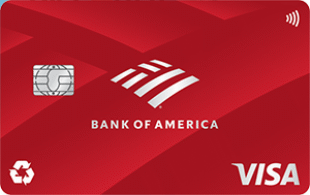
The Bank of America® Customized Cash Rewards Secured Credit Card allows an approved applicant to build credit while selecting where the highest reward rate applies. The current 2026 offer earns 6% cash back for the first year in a chosen category—gas and EV charging; online shopping, including eligible cable, internet, phone and streaming; dining; travel; drugstores and pharmacies; or home improvement and furnishings. After the first year, that category earns 3%. Grocery stores and wholesale clubs earn 2%, and other purchases earn 1%. The 6% and 2% rates apply to the first $2,500 in combined choice-category, grocery and wholesale-club purchases each quarter, after which purchases earn 1%. A refundable deposit of at least $200 and up to $5,000 is required, subject to approval and the credit line assigned, while the annual fee is $0. Bank of America periodically reviews accounts and may return the deposit without closing the card, but graduation is not promised. The current sample agreement dated June 2026 lists a 27.49% variable purchase APR, a 4% to 5% balance-transfer fee and a 3% foreign transaction fee. Applicants should still rely on their final disclosure because actual pricing can vary.
Credit Card Quick Facts: Bank of America Customized Cash Rewards Secured
| Quick Fact | Details |
| Card Name | Bank of America® Customized Cash Rewards Secured Credit Card |
| Company and Issuer | Bank of America, N.A. |
| Official Website | Bank of America — Customized Cash Rewards Secured |
| Card Type | Secured choice-category cash-back card |
| Payment Network | Mastercard under the current product presentation; verify final issuance |
| Annual Fee or Price | $0 annual fee; $200–$5,000 refundable security deposit |
| Rewards | 6% first year in one choice category, then 3%; 2% grocery and wholesale clubs; 1% elsewhere; $2,500 combined quarterly cap on enhanced rates |
| Welcome Bonus | First-year additional 3% in the selected category under the current offer |
| Intro APR | None advertised |
| Regular APR | 27.49% variable in the June 2026 sample agreement; actual pricing may vary |
| Balance Transfer Fee | 4%–5% in the current sample agreement |
| Foreign Transaction Fee | 3% in the current sample agreement |
| Recommended Credit | Fair, limited or rebuilding credit; secured underwriting applies |
| Best For | Consumers who can concentrate spending in one predictable category |
| Notable Benefits | Choice category, possible deposit return after review, free credit-score access and $0 annual fee |
| Editorial Rating | 4.3/5 |
Why Bank of America Customized Cash Rewards Secured Ranks Sixth
This card ranks sixth because its 6% first-year choice category is one of the highest advertised rates in the fair-credit market, but the quarterly cap, full security deposit and 3% foreign transaction fee reduce its broad appeal. It can outperform U.S. Bank Cash+ for a person who wants one stable category and prefers not to reselect two 5% categories each quarter. U.S. Bank ranks higher because its long-term 5% opportunities continue beyond the first year. Bank of America’s card works best when the applicant can comfortably fund at least $200, uses the selected category for planned purchases and pays in full. The reward rate should never justify locking away emergency cash or carrying a 27.49% balance.
7. Chime Credit Builder Visa® Credit Card – Best for No-Interest Credit Building
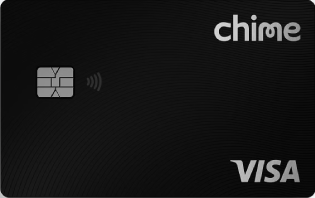
The Chime Credit Builder Visa® Credit Card with a different risk structure from traditional revolving cards. It charges no annual fee, no interest and no application fee, requires no conventional credit check and has no stated minimum security deposit. A Chime Account and secured deposit account are opened or used with the card, and the amount funded establishes the available spending balance. Chime can automatically set aside money used for purchases and apply it to the statement through Safer Credit Building, helping reduce the chance of missed payments. Chime reports payment activity to Equifax, Experian and TransUnion but does not report a conventional utilization percentage because the card has no preset credit limit. The current product also advertises 5% cash back in one selected category with qualifying direct deposits of $3,000 or more per month; consumers without that deposit level should not value the card as a 5% rewards product. Important drawbacks include the Chime Account requirement, the need to fund before spending, no conventional unsecured graduation option and the possibility that closing the account can affect credit history. It is best viewed as a controlled credit-building and banking ecosystem, not emergency borrowing capacity.
Credit Card Quick Facts: Chime Card
| Quick Fact | Details |
| Card Name | Chime Card™ secured credit card |
| Company and Issuer | Chime Financial technology platform; card issued by The Bancorp Bank, N.A. or Stride Bank, N.A. |
| Official Website | Chime — Chime Card |
| Card Type | Secured credit-building card funded with the cardholder’s money |
| Payment Network | Visa |
| Annual Fee or Price | $0 annual fee, no minimum security deposit and no interest; Chime Account required |
| Rewards | Up to 5% in one selected category with qualifying direct deposits; terms and tier requirements apply |
| Welcome Bonus | None universally advertised |
| Intro APR | Not applicable; no interest charged |
| Regular APR | 0% because the card does not charge interest |
| Balance Transfer Fee | Balance transfers are not offered |
| Foreign Transaction Fee | Verify current Chime fee schedule; optional and out-of-network services may cost extra |
| Recommended Credit | Fair, limited, no or rebuilding credit; no credit check to apply |
| Best For | Consumers who want guardrails against interest and overspending |
| Notable Benefits | Three-bureau reporting, no utilization percentage reported, Safer Credit Building and no preset limit |
| Editorial Rating | 4.2/5 |
Why Chime Card Ranks Seventh
Chime Card ranks seventh because no interest, no annual fee and no credit check make it unusually forgiving for disciplined credit building. It could rank higher for someone already committed to Chime, but the required account ecosystem, prefunding structure and direct-deposit condition for the best rewards reduce its usefulness as a general-purpose credit card. Unlike a conventional secured card, it does not create borrowing capacity beyond the funds supplied, and there is no standard transition to an unsecured Chime card. It is most valuable to an applicant who wants automated payment guardrails and bureau reporting, not someone seeking an emergency line, a future product upgrade or unconditional cash back.
8. Capital One Platinum Credit Card – Best No-Fee Unsecured Card Without Rewards
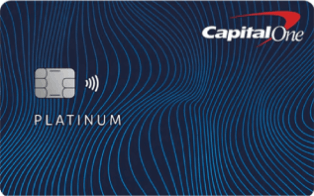
The Capital One Platinum Credit Card is a simple unsecured card officially categorized for fair credit. It charges no annual fee, requires no security deposit and offers no cash back, points or public welcome bonus. That basic structure can be an advantage for someone whose priority is establishing a positive payment record without paying for rewards that might encourage extra spending. Capital One lets consumers check eligibility in as little as about 90 seconds without affecting their credit score, although accepting an offer and completing an application can lead to a hard inquiry. The account includes digital controls, fraud monitoring, CreditWise access and potential consideration for a higher line based on payment history and creditworthiness. The variable purchase APR is disclosed in the specific offer and can make carrying debt expensive; the card also lacks an advertised introductory purchase or balance-transfer promotion. Because there is no annual fee, an approved cardholder can keep the account open after qualifying for stronger cards, subject to responsible management and the issuer’s terms. Capital One Platinum is a better economic choice than QuicksilverOne for low spenders who would not recover the $39 fee through 1.5% cash back.
Credit Card Quick Facts: Capital One Platinum
| Quick Fact | Details |
| Card Name | Capital One Platinum Credit Card |
| Company and Issuer | Capital One, N.A. |
| Official Website | Capital One — Platinum Credit Card |
| Card Type | Unsecured credit-building card |
| Payment Network | Mastercard |
| Annual Fee or Price | $0 annual fee and no security deposit |
| Rewards | None |
| Welcome Bonus | None advertised |
| Intro APR | None advertised |
| Regular APR | Variable APR disclosed in the eligibility and application offer |
| Balance Transfer Fee | No featured introductory offer; verify final disclosure |
| Foreign Transaction Fee | $0 under Capital One’s published card terms; verify offer |
| Recommended Credit | Fair credit; officially labeled “Fair Credit” by Capital One |
| Best For | Low-spending applicants who want unsecured credit without an annual fee |
| Notable Benefits | Soft eligibility check, CreditWise, fraud alerts and potential credit-line review |
| Editorial Rating | 4.1/5 |
Why Capital One Platinum Ranks Eighth
Capital One Platinum ranks eighth because its $0 annual fee and unsecured structure are valuable, but it returns no rewards and offers no introductory financing. It can nevertheless outperform QuicksilverOne for a light spender: if annual card purchases total only $1,500, QuicksilverOne would earn $22.50 before charging a $39 fee, while Platinum costs nothing annually. The card belongs below the rewarded secured products because those accounts can build credit while returning cash, assuming the applicant can fund a deposit. Platinum is most appropriate when avoiding a security deposit matters more than rewards and the applicant plans to pay in full, keep utilization low and preserve the account as a long-term credit-history anchor.
9. OpenSky® Plus Secured Visa® Credit Card – Best for Applying Without a Credit Check

The OpenSky® Plus Secured Visa® Credit Card is designed for applicants who want to bypass a traditional credit check while still obtaining an account that reports to Equifax, Experian and TransUnion. Capital Bank, N.A. issues the Visa, the annual fee is $0 and the refundable deposit generally ranges from $300 to $3,000, establishing the credit line. OpenSky advertises up to 10% cash back through participating merchant offers rather than a guaranteed flat reward on every purchase, so shoppers should review the rewards terms and not assign 10% to ordinary spending. The issuer also advertised a limited deposit-funding promotion of up to $70 at the time of review, but limited-time offers can disappear and should not drive a long-term decision. Published 2026 materials have displayed variable APRs around 28.24% to 28.99%, making statement payment in full important. The card’s value is access: no credit check, no annual fee, mobile account tools and bureau reporting. Its disadvantages are the $300 minimum deposit, high APR, merchant-dependent rewards and no guaranteed path to an unsecured account. Consumers who can qualify for Discover, U.S. Bank or Bank of America secured cards may receive stronger recurring rewards or clearer graduation reviews.
Credit Card Quick Facts: OpenSky Plus Secured Visa
| Quick Fact | Details |
| Card Name | OpenSky® Plus Secured Visa® Credit Card |
| Company and Issuer | OpenSky, a division of Capital Bank; issued by Capital Bank, N.A. |
| Official Website | OpenSky — Plus Secured Visa |
| Card Type | No-credit-check secured card |
| Payment Network | Visa |
| Annual Fee or Price | $0 annual fee; $300–$3,000 refundable deposit |
| Rewards | Up to 10% cash back through qualifying merchant offers; program terms apply |
| Welcome Bonus | Limited deposit-funding offers may apply; verify before funding |
| Intro APR | None advertised |
| Regular APR | Current 2026 disclosures have displayed approximately 28.24%–28.99% variable; verify the application disclosure |
| Balance Transfer Fee | Balance transfers are not a featured benefit; verify agreement |
| Foreign Transaction Fee | Verify the current cardholder agreement |
| Recommended Credit | Fair, poor, limited or no credit; no credit check to apply |
| Best For | Applicants prioritizing access without a conventional credit inquiry |
| Notable Benefits | Three-bureau reporting, no annual fee, adjustable deposit and mobile credit-building tools |
| Editorial Rating | 4.0/5 |
Why OpenSky Plus Secured Visa Ranks Ninth
OpenSky Plus ranks ninth because its no-credit-check application can solve an accessibility problem that higher-ranked cards do not, but the $300 minimum deposit and high variable APR reduce flexibility. Chime also avoids a credit check without charging interest, while Discover may require as little as $49 from an approved applicant. OpenSky remains useful when a consumer does not want a hard credit review, prefers a conventional preset secured limit and can afford the deposit. Its “up to 10%” rewards should be treated as merchant offers rather than universal cash back. The best user places one or two small recurring purchases on the card, activates autopay, keeps balances low and reassesses the market after building a longer record.
10. Capital One Spark 1% Classic Credit Card – Best Business Credit Card for Fair Credit

The Capital One Spark 1% Classic Credit Card is the only dedicated small-business card in this ranking and is officially labeled for fair credit. It charges a $0 annual fee, earns unlimited 1% cash back on ordinary qualifying purchases and 5% on eligible hotels and rental cars booked through Capital One Business Travel. Capital One publishes a 28.99% variable purchase APR for the current offer and no welcome bonus or introductory APR, so the card should be paid in full rather than used for expensive working-capital borrowing. Business features include free employee cards, spending controls, year-end summaries, fraud protection, software integrations and flexible due-date selection. The application generally requires personal and business information, and a personal guarantee or hard inquiry may apply; business revenue, debt and the owner’s credit profile can affect approval. It ranks tenth only because most readers need a personal card, not because it lacks value for its intended audience. A sole proprietor or young company with fair personal credit may use Spark Classic to separate business expenses and build a record while earning modest rewards, then compare stronger business cards after the credit profile and revenue improve.
Credit Card Quick Facts: Capital One Spark 1% Classic
| Quick Fact | Details |
| Card Name | Capital One Spark 1% Classic Credit Card |
| Company and Issuer | Capital One, N.A. |
| Official Website | Capital One — Small Business Credit Cards |
| Card Type | Unsecured small-business cash-back card |
| Payment Network | Mastercard under the current product; verify final issuance |
| Annual Fee or Price | $0 annual fee |
| Rewards | Unlimited 1% cash back; 5% on eligible hotels and rental cars through Capital One Business Travel |
| Welcome Bonus | None |
| Intro APR | None |
| Regular APR | 28.99% variable under the reviewed August 2026 offer |
| Balance Transfer Fee | No featured balance-transfer promotion |
| Foreign Transaction Fee | $0 under Capital One’s published business-card benefits; verify agreement |
| Recommended Credit | Fair credit; business underwriting and personal credit may apply |
| Best For | Sole proprietors and small businesses building credit while separating expenses |
| Notable Benefits | Free employee cards, year-end summaries, account controls and business-travel rewards |
| Editorial Rating | 3.9/5 |
Why Capital One Spark 1% Classic Ranks Tenth
Spark Classic ranks tenth because its audience is narrower than the consumer products above it. For a legitimate small business, however, no annual fee, 1% cash back and free employee cards can be more useful than a personal card with richer consumer categories. The 28.99% variable APR and lack of a welcome bonus or introductory financing limit its value for cash-flow needs, and rewards lag prime business cards. It is the right choice when the owner has fair credit, wants expenses separated for bookkeeping and can pay statements in full. Personal purchases should remain on a personal card, and applicants should understand the guarantee, reporting and liability terms before issuing cards to employees.
10 Best Rated Credit Cards for Fair Credit Score in 2026 Comparison Table
| Credit Card | Intro Offer | Reward Rate | Annual Fee | Intro APR | Regular APR |
|---|---|---|---|---|---|
| Mission Lane Gold Line Visa® | No Public Bonus | 1%–3% Cash Back | $0 | N/A | 19.99%–33.99% Variable* |
| Capital One SavorOne Rewards for Fair Credit | No Public Bonus | 1%–3% Cash Back | $39 | N/A | Offer-Specific Variable APR |
| Discover it® Secured Cash Back | First-Year Cashback Match | 1%–5% Cash Back | $0* | N/A | Offer-Specific Variable APR |
| Capital One QuicksilverOne Cash Rewards | No Public Bonus | 1.5% Cash Back | $39 | N/A | Offer-Specific Variable APR |
| U.S. Bank Cash+® Secured Visa® | No Public Bonus | 1%–5% Cash Back | $0* | N/A | Offer-Specific Variable APR |
| Bank of America® Customized Cash Rewards Secured | 3% First-Year Category Bonus | 1%–6% Cash Back | $0* | N/A | 27.49% Variable* |
| Chime Card™ | No Public Bonus | Up to 5% Cash Back* | $0 | N/A—No Interest | 0% |
| Capital One Platinum Credit Card | No Public Bonus | N/A | $0 | N/A | Offer-Specific Variable APR |
| OpenSky® Plus Secured Visa® | Up to $70 Limited Funding Bonus* | Up to 10% at Eligible Merchants | $0* | N/A | 28.24%–28.99% Variable* |
| Capital One Spark 1% Classic | No Public Bonus | 1%–5% Cash Back | $0 | N/A | 28.99% Variable |
How to Choose the Best Credit Card for Fair Credit
Begin with a free three-bureau credit-report review and define the card’s job before comparing rewards. Applicants wanting unsecured rewards should prequalify for Mission Lane Gold Line and compare it with Capital One SavorOne or QuicksilverOne. Grocery, dining and entertainment spending favors SavorOne, while varied spending favors QuicksilverOne and gas or travel favors Gold Line. Consumers able to fund collateral should compare Discover’s lower potential deposit and first-year match, U.S. Bank’s 5% categories and Bank of America’s 6% first-year choice category. Chime is the strongest guardrail option for avoiding interest, Capital One Platinum suits low spenders seeking unsecured credit without a fee, and OpenSky Plus is a fallback when avoiding a credit check is essential. A business owner should use Spark Classic only for legitimate company expenses. Estimate rewards from actual spending, subtract every annual fee, consider the opportunity cost of a deposit and never spend extra or carry interest merely to earn cash back.
Fair Credit Personal Credit Cards vs. Business Credit Cards
Personal cards in this ranking are designed for household spending and place repayment responsibility on the individual cardholder, while Capital One Spark Classic is intended for business purchases and may request the company’s legal name, tax identification, structure, revenue and ownership information in addition to the owner’s personal credit and guarantee. A business card can provide employee cards, spending controls, year-end summaries and accounting integrations, but it may not receive every consumer-card protection in the same way and should not be used as a substitute for proper bookkeeping. Sole proprietors can sometimes qualify without employees or a corporation, yet they must describe business activity and income accurately. Separating business from personal expenses simplifies records, supports tax documentation and makes cash-flow analysis clearer. A fair personal score does not guarantee business-card approval, and business credit alone may not eliminate personal liability.
How to Apply or Check Credit Card Preapproval for Fair Credit
Use the official product links in each Quick Facts table and check prequalification before a full application whenever the issuer offers it. Mission Lane performs a soft inquiry for prequalification, then shows the available card, issuer, APR, annual fee and credit line before acceptance; a hard inquiry occurs only if the applicant accepts and is approved. Capital One’s eligibility tool can show potential personal-card offers without initially affecting the score, while its business-card preapproval covers selected Spark products. Discover offers a preapproval check, and Bank of America also provides prequalification tools, but product eligibility can vary. U.S. Bank and other issuers may proceed directly to an application. Chime and OpenSky advertise no conventional credit check, although identity, banking and eligibility verification still apply. Before submitting, unfreeze the appropriate credit files if necessary, report income and housing costs accurately, read the pricing box and avoid multiple applications in a short period. Preapproval is not final approval and does not guarantee the advertised limit or lowest APR.
What Credit Score Is Needed for a Credit Card for Fair Credit?
A FICO score from roughly 580 to 669 is commonly called fair, but an issuer may use VantageScore, a different FICO version or a proprietary risk model. Capital One explicitly labels SavorOne, QuicksilverOne, Platinum and Spark Classic for fair credit, while Avant’s public educational material also uses 580 to 669 as the fair range. Mission Lane evaluates prequalification across a wider set of profiles, and secured products may serve applicants with fair, limited or damaged credit. Approval also depends on income, existing obligations, recent applications, delinquencies, bankruptcy history, identity verification and the minimum credit line the issuer is willing to extend. Before applying, correct report errors, bring overdue accounts current, reduce revolving balances, avoid new inquiries and ensure monthly cash flow supports full payment. No reviewer can guarantee approval based on a score alone, and a lower required deposit does not mean underwriting has been waived.
Do Credit Cards for Fair Credit Have Annual Fees?
Annual fees in this ranking range from $0 to $39. Mission Lane Gold Line, Discover it Secured, U.S. Bank Cash+ Secured, Bank of America Customized Cash Rewards Secured, Chime Card, Capital One Platinum, OpenSky Plus and Spark Classic publish $0 annual fees, while SavorOne for Fair Credit and QuicksilverOne each charge $39. A secured card’s deposit is refundable collateral rather than a fee, but deposits range from as little as $49 for some approved Discover applicants to as much as $5,000 on the U.S. Bank and Bank of America products. Other costs matter: variable interest, balance-transfer charges, foreign transaction fees, late fees, cash-advance fees, optional services and the opportunity cost of locked collateral. A $0-fee card can still be expensive if the balance is carried, while a $39-fee rewards card can be worthwhile only when realistic net rewards exceed the fee.
Which Credit Card for Fair Credit Is Best for Cash Back?
Mission Lane Gold Line is the best overall cash-back card for fair credit because it pairs unlimited 3% earnings on gas, travel and dining with 1% elsewhere and no annual fee, although the applicant must actually receive the Gold Line offer. SavorOne can be better for grocery, dining and entertainment spending but charges $39. Among secured products, Discover it Secured has the strongest first-year proposition because it matches eligible cash back earned during the first 365 days, while U.S. Bank Cash+ Secured offers the best continuing 5% customization and Bank of America offers a 6% first-year choice category. At $6,000 of annual spending, a flat 1.5% card earns $90 before fees; QuicksilverOne would net about $51 after its $39 fee. Calculate value using purchases that would occur anyway, respect category caps and exclusions, and pay in full because interest can exceed a year of rewards in a single month.
Which Credit Card for Fair Credit Is Best for Balance Transfers?
None of the ten cards is a leading 0% balance-transfer product under the reviewed public 2026 offers. Bank of America’s secured card lists a 4% to 5% transfer fee and a regular variable APR in its sample agreement rather than a featured 0% promotion, while the other ranked cards either do not advertise transfers or disclose offer-specific terms during application. A consumer with fair credit should not move debt merely because a new limit becomes available; the fee and standard APR may cost more than leaving the balance in place. If a targeted 0% offer appears after prequalification, divide the transferred balance plus fee by the promotional months and automate enough payment to finish before expiration. Confirm the transfer deadline, same-issuer restrictions, post-promotion APR and whether new purchases lose their grace period. Improving utilization and payment history first may open better transfer offers later.
Are Credit Cards for Fair Credit Good for International Travel?
Some fair-credit cards can handle international purchases, but rewards and acceptance should be evaluated separately. Mission Lane Gold Line advertises a 0% foreign transaction fee and uses Visa, making it the strongest general travel choice in this ranking for applicants who receive the offer. Capital One consumer and business cards generally publish no foreign transaction fee, so SavorOne, QuicksilverOne, Platinum and Spark Classic can also be useful abroad when the final agreement confirms it. Bank of America Customized Cash Rewards Secured lists a 3% foreign transaction fee, and U.S. Bank, Chime, Discover and OpenSky applicants should confirm current pricing before departure. Visa and Mastercard typically offer broader international acceptance than Discover, so carry a backup card. Decline dynamic currency conversion when a merchant offers to charge in U.S. dollars at its own exchange rate, use secure travel alerts and do not assume that the absence of a foreign transaction fee includes trip insurance or premium travel protection.
Final Verdict: 10 Best Rated Credit Cards for Fair Credit Score in 2026
Mission Lane Gold Line Visa is our best overall credit card for fair credit in 2026 because its published offer delivers unlimited 3% cash back on gas, travel and dining, 1% on other qualifying purchases, no annual fee and soft prequalification. Capital One SavorOne Rewards is the strongest alternative for grocery, dining and entertainment spending when its $39 fee is justified, while QuicksilverOne provides simple 1.5% cash back for varied purchases. Discover it Secured offers the best first-year secured value through rotating 5% categories, a first-year match and a potentially reduced deposit. U.S. Bank Cash+ Secured is the best long-term customizable secured card, and Bank of America Customized Cash Rewards Secured leads for a first-year choice category. Chime Card is the safest no-interest structure, Capital One Platinum is the best no-fee unsecured choice without rewards, OpenSky Plus serves applicants prioritizing no credit check, and Spark Classic is the dedicated small-business option. The right card depends on the exact prequalified offer, available deposit cash, normal spending and the ability to pay in full. Verify current official terms before applying, keep reported balances low, automate on-time payments and treat rewards as secondary to building durable credit without interest.